
8 Living Room Lighting Ideas to Transform Your Space Efficiently
Lighting plays a key role in shaping the mood and function of a living room. It affects how the space feels and how well it serves different activities like relaxing, reading, or entertaining guests.
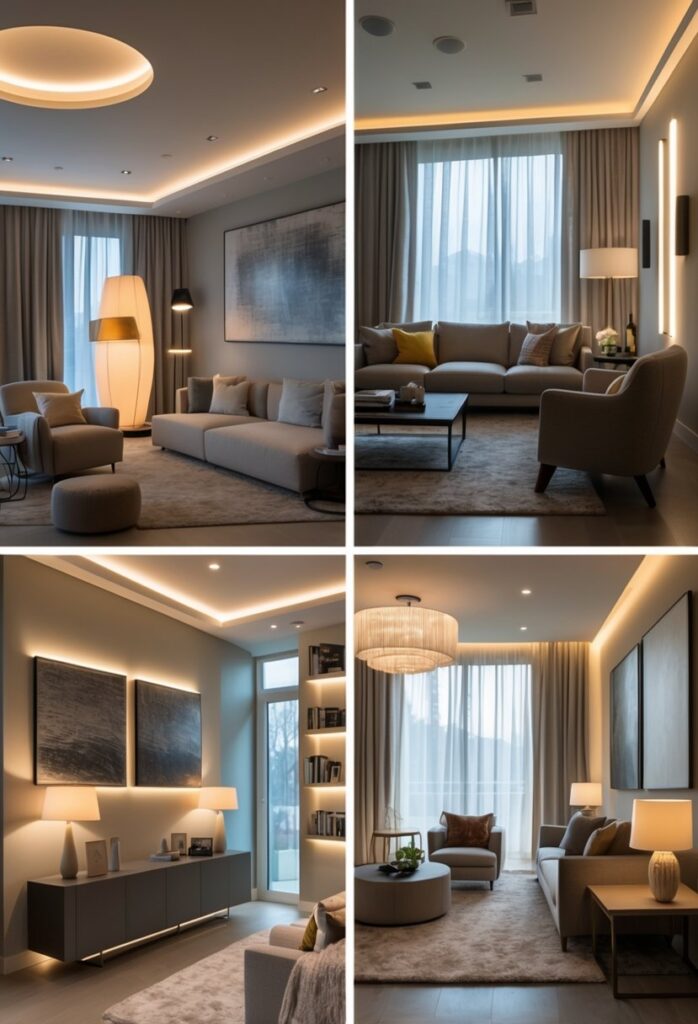
The right lighting can improve comfort, highlight design, and make a room more inviting. Understanding simple living room lighting ideas helps anyone create a better living environment without complicated changes.
1) Layer ambient, accent, and task lighting for versatility
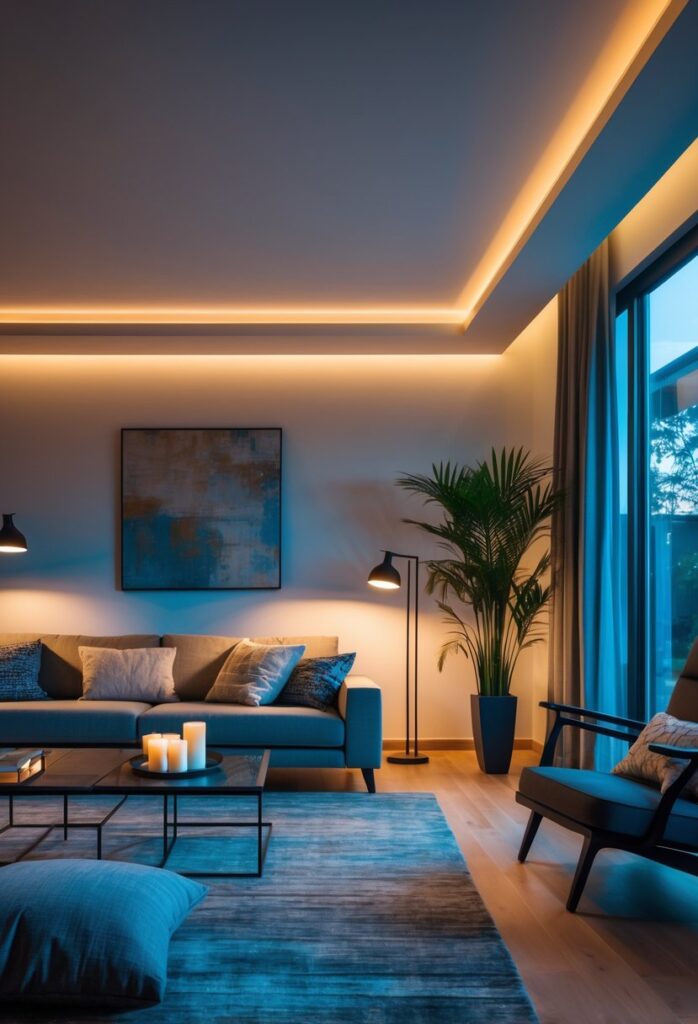
He can create a versatile living room by layering three types of lighting. Ambient lighting provides overall illumination, setting the base level of brightness in the space.
Accent lighting adds focus to specific features like artwork or architectural details. It helps create depth and visual interest.
Task lighting targets activities such as reading or working. Table lamps or floor lamps work well for this purpose.
Combining these three layers allows for easy control of mood and function. Each lighting type serves a distinct role but works together to improve comfort and style.
2) Install a sculptural three-piece pendant light as a focal point
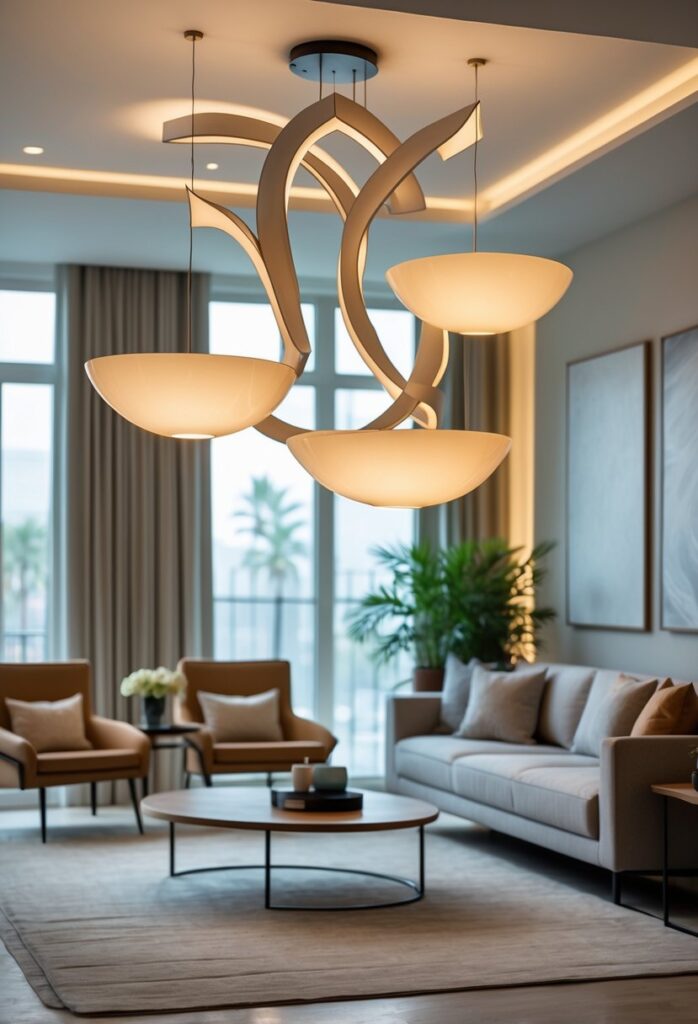
A sculptural three-piece pendant light adds both style and function to a living room. It creates a clear focal point that draws the eye and organizes the space.
This type of lighting works well in condos or rooms with limited space. It provides enough light while making the ceiling area visually interesting.
The design of these pendants can be bold or simple. Their shapes add artistic value without overwhelming other decor elements. Proper placement above seating or a coffee table maximizes impact.
Choosing a sculptural pendant helps solve common layout challenges. It balances the room’s look and improves lighting at the same time.
3) Use wall sconces to add warmth and dimension
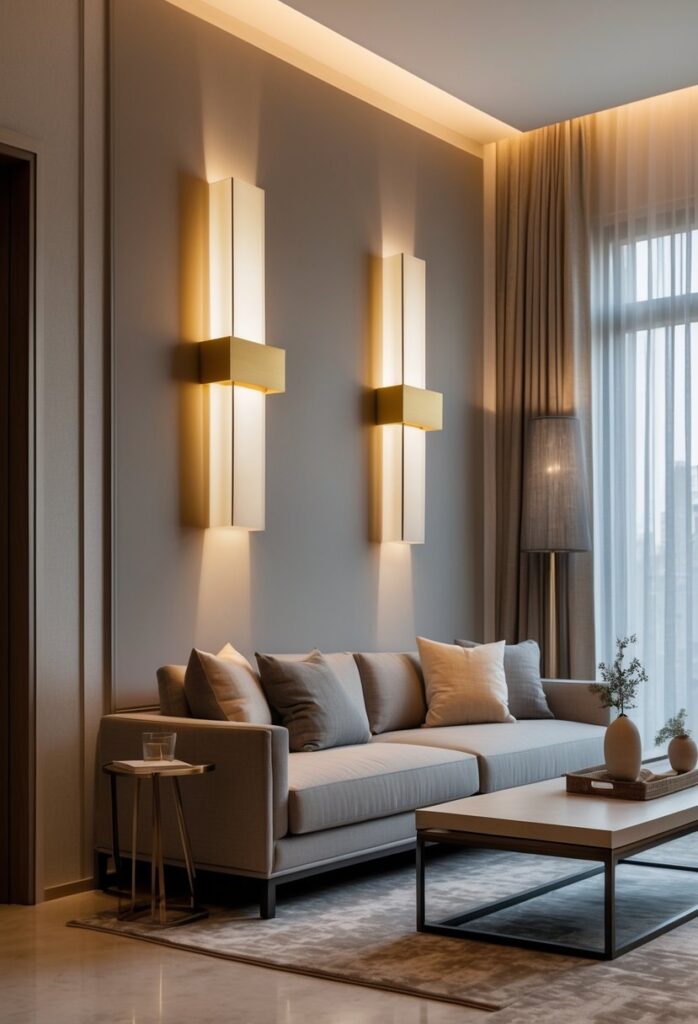
Wall sconces provide soft, warm light that enhances a living room’s atmosphere. They create layers of light, offering both function and style without using floor or table space.
These fixtures can highlight artwork or architectural features, adding depth to plain walls. Their placement can define seating areas and make the room feel more inviting.
Wall sconces come in many designs, from modern brass to classic crystal. This variety lets them fit any décor while improving the room’s visual interest.
Using sconces reduces the need for harsh overhead lights. They help balance the lighting to prevent shadows and brighten darker corners gently.
4) Incorporate recessed lighting for a clean, modern look
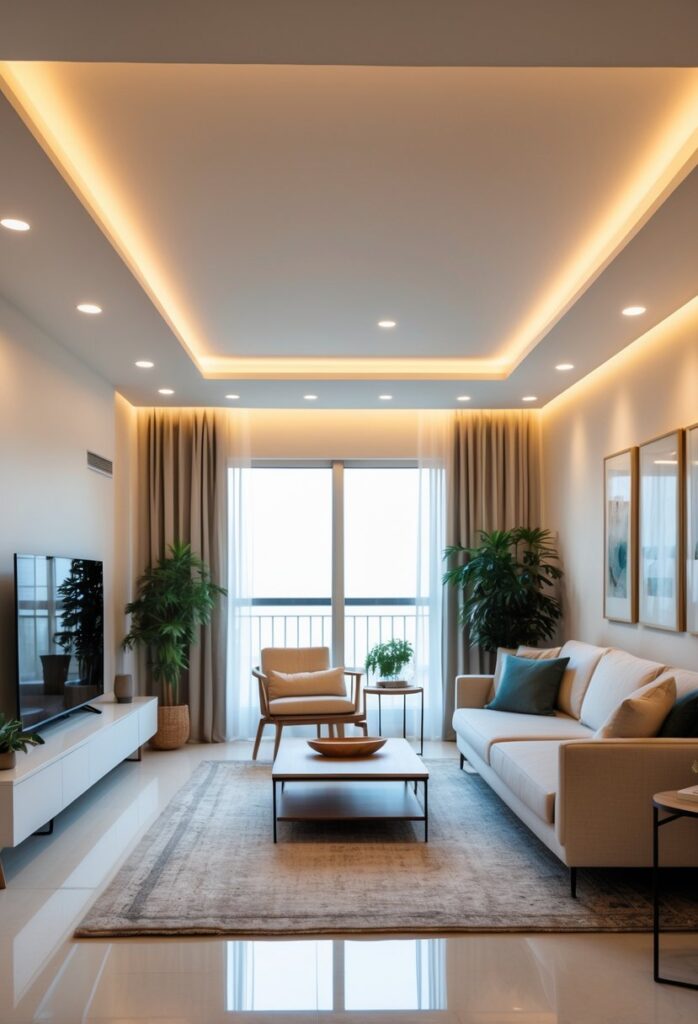
Recessed lighting offers a simple way to brighten a living room without cluttering the ceiling. It fits flush with the surface, creating a neat and tidy appearance.
This type of lighting works well in modern and minimalist spaces. It provides even light that fills the room softly and avoids harsh shadows.
Strategic placement is key. Lights around the perimeter or near key areas, like seating or artwork, help highlight features without overwhelming the space.
It also helps save space, especially in rooms with low ceilings or where hanging fixtures are not practical. Recessed lights can be dimmed to set different moods easily.
5) Add table lamps for cozy, localized illumination
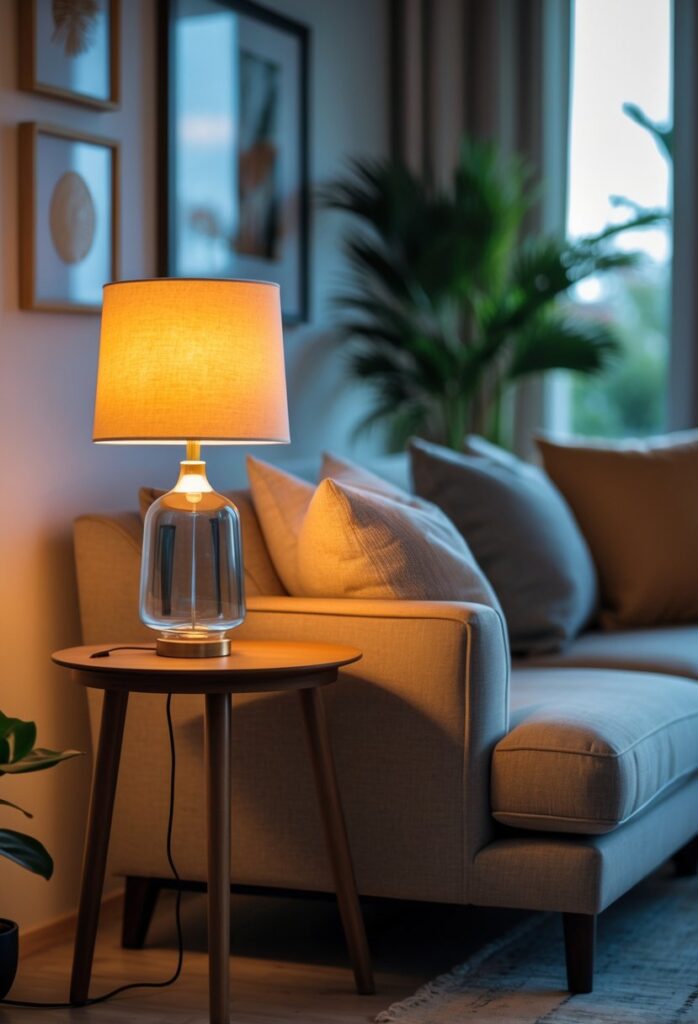
Table lamps offer focused light in specific areas. They are perfect for reading or close-up tasks.
They also create warmth and a sense of comfort. Placed on side tables, they add style and balance.
Table lamps can highlight textures and colors in the room. They serve both practical and decorative functions.
Choosing lamps with warm bulbs enhances the cozy feeling. The soft glow helps make the space inviting and relaxed.
6) Place floor lamps to brighten dark corners
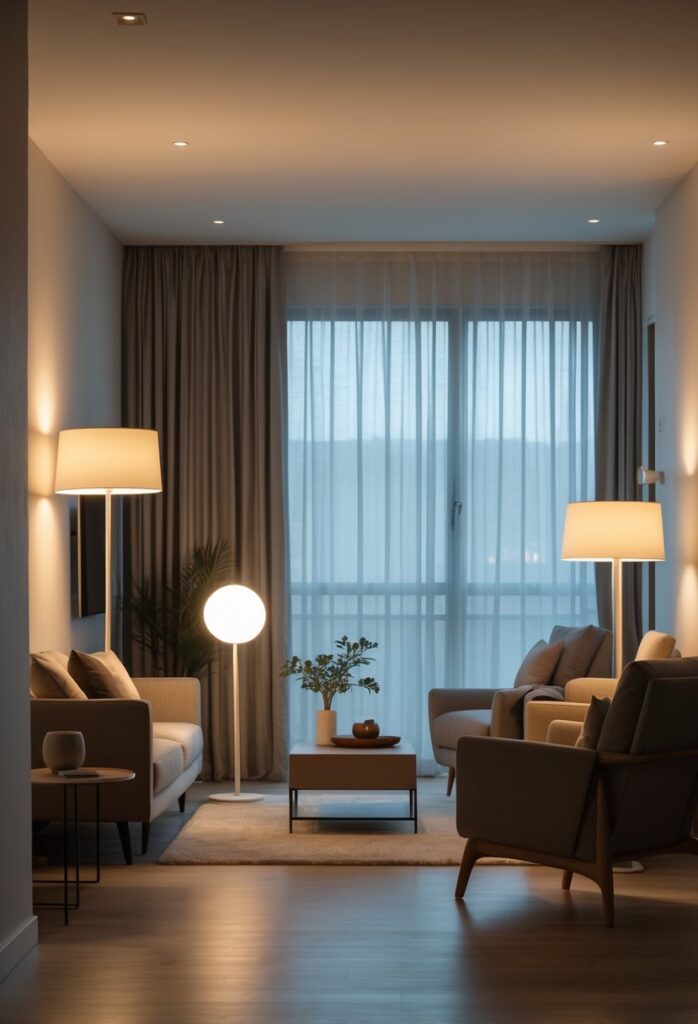
Floor lamps are a simple way to light up dark corners in a living room. They add soft light that can make the space feel more open and welcoming.
Positioning a floor lamp in an unused corner helps remove shadows without extra wiring or installation. It also highlights that part of the room, balancing the overall lighting.
Choosing the right style matters. A tall arc lamp can spread light widely, while a slim, adjustable lamp targets specific areas, like a reading nook or seating spot.
Floor lamps also serve as decor pieces. They bring shape and texture to empty corners, adding to the room’s design while improving function.
They work well with other types of lighting. Combining floor lamps with ceiling lights or table lamps creates layers of light for different moods and tasks.
7) Choose chandeliers that complement your living room style
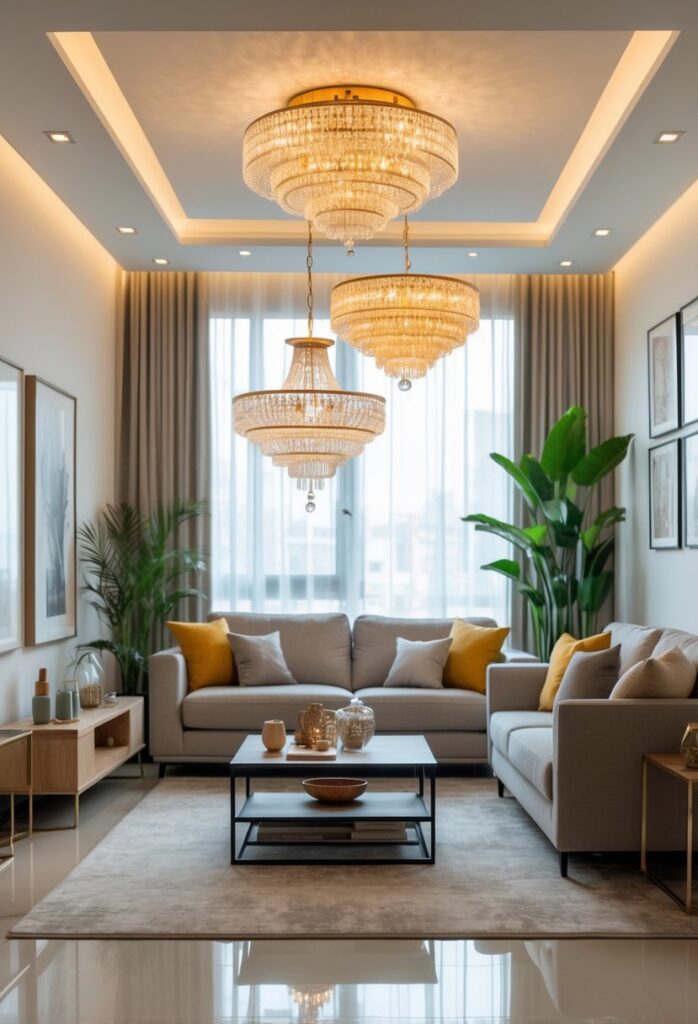
They should pick chandeliers that match the room’s overall design. A modern living room works well with sleek, minimal fixtures.
For rustic or vintage spaces, chandeliers with warm tones and classic shapes fit best. The style of the chandelier should feel like a natural part of the room.
Size matters too. The chandelier must fit the room’s scale. Too big or too small can throw off the balance.
They should also think about the ceiling height. A low ceiling calls for smaller or flush chandeliers. Taller ceilings can handle larger, more dramatic pieces.
The goal is to create lighting that adds charm without clashing. Proper style choices highlight the room’s personality and improve its atmosphere.
8) Use dimmable lights to adjust mood and brightness
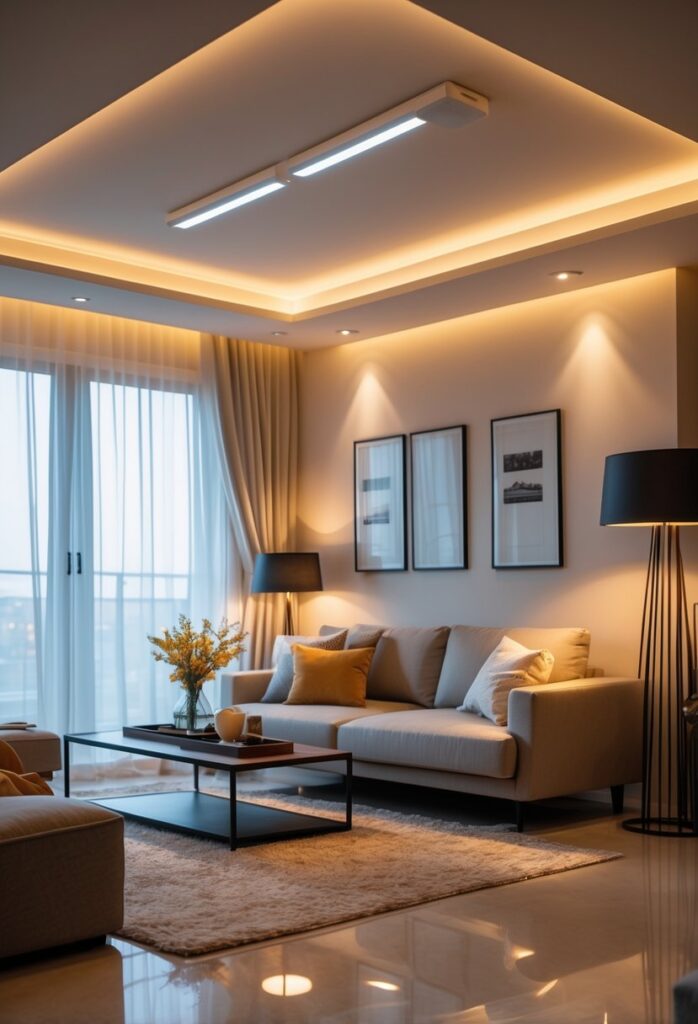
Dimmable lights give control over how bright or soft the room feels. They help create the right atmosphere for different times and activities.
By lowering the light, the space can feel cozy and calm. Brightening the lights makes the room more practical for tasks or gatherings.
Using dimmer switches also saves energy by reducing power when full brightness isn’t needed. This makes dimmable lighting both flexible and efficient.
Principles of Effective Living Room Lighting
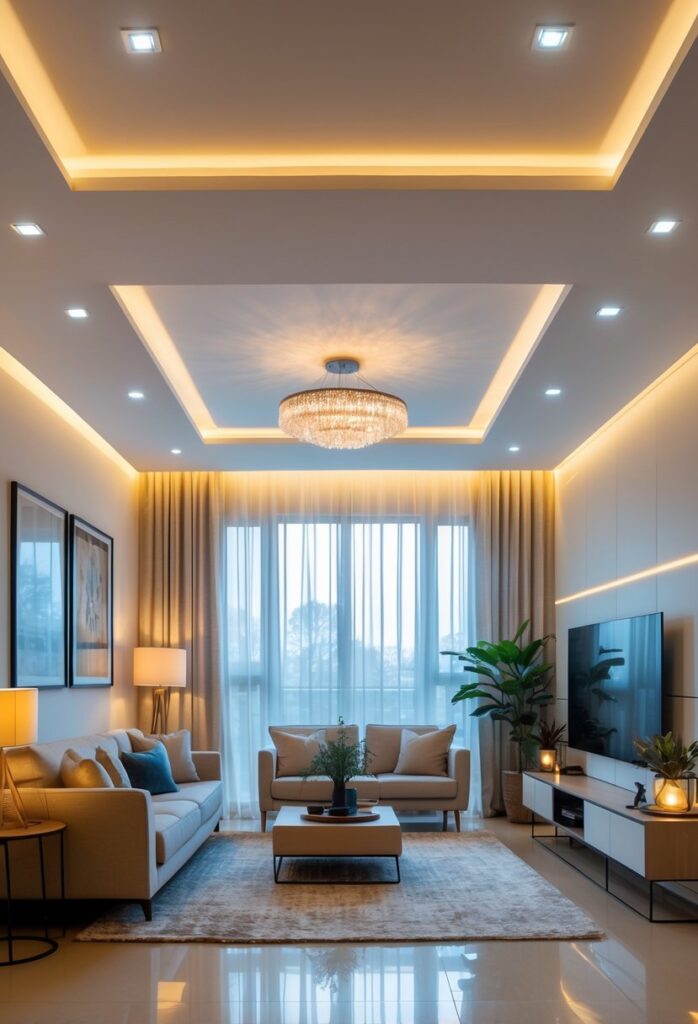
Effective lighting uses different types of light sources to make the space functional and comfortable. It helps highlight areas for specific tasks and creates a mood that suits various activities. The right mix and arrangement of lights avoid harshness and shadows, making the room inviting.
Balancing Ambient, Task, and Accent Lighting
Living rooms need three main types of lighting: ambient, task, and accent. Ambient lighting gives overall brightness. This can be ceiling fixtures or recessed lights that fill the room with soft, even light.
Task lighting focuses on spots where specific activities happen, like reading or working. Floor lamps, table lamps, or adjustable wall lights are common choices. They should be bright enough without causing glare.
Accent lighting highlights features such as artwork, plants, or architectural details. Small spotlights or LED strips work well here. Together, these three types create a layered, balanced light that suits both everyday use and special occasions.
Layering Techniques for Optimal Illumination
Layering lighting means placing different light sources at various heights and positions. This technique ensures no part of the room is too bright or too dark. For example, combining overhead lights with floor lamps and under-shelf LEDs creates depth and interest.
Placing lights at different levels helps separate areas—a reading corner with a task lamp, a seating group lit by a chandelier, and accent lights near décor. Using dimmers can adjust each layer, making the space flexible for different moods and tasks.
Proper layering avoids flat lighting. It also makes the living room feel larger and more welcoming by balancing brightness and shadow.
Choosing the Right Fixtures and Bulbs
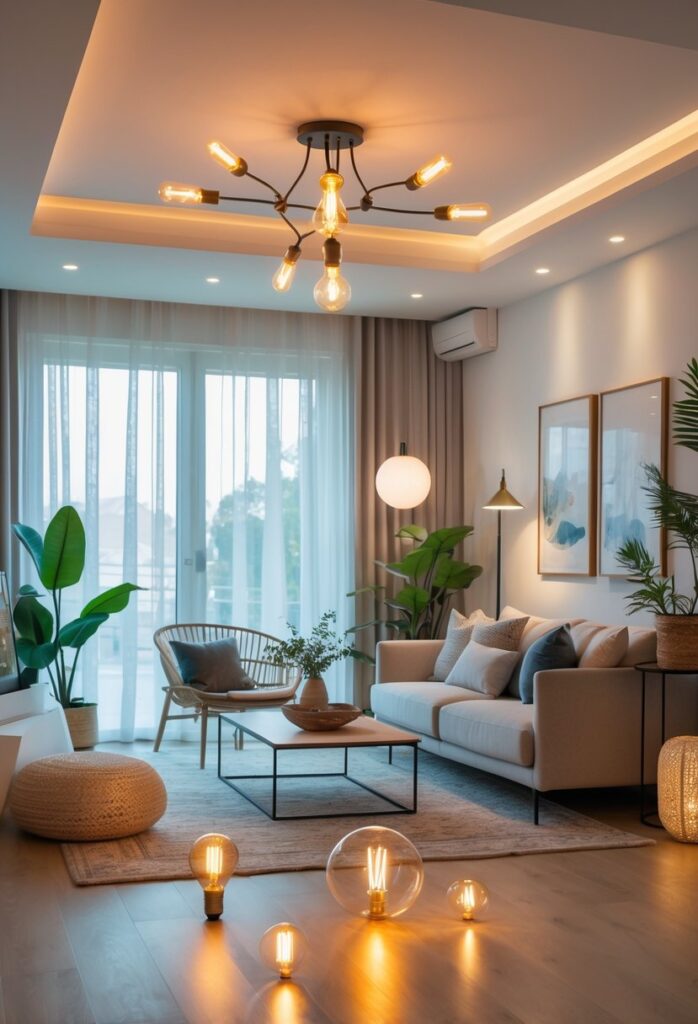
Lighting fixtures and bulbs affect both the look and function of a living room. Picking energy-saving options helps reduce electricity bills. Matching fixtures with the room’s style ties the space together and creates a balanced feel.
Selecting Energy-Efficient Lighting Solutions
Energy-efficient bulbs last longer and use less power. LED bulbs are the most common choice. They come in many shapes and brightness levels. Unlike traditional incandescent bulbs, LEDs produce less heat and are safer to use.
When choosing bulbs, consider the color temperature. Warm white bulbs (2700K-3000K) create a cozy, inviting mood. Cool white bulbs (3500K-4100K) are better for task lighting because they improve focus.
It’s smart to select dimmable bulbs and compatible fixtures. This allows adjusting the light intensity for different activities like reading or relaxing. Using smart bulbs adds control through apps or voice commands, increasing convenience in everyday use.
Matching Fixture Styles to Room Decor
A fixture should fit the room’s design and size. For example, modern rooms suit clean, simple fixtures with metal or glass. Traditional rooms pair well with ornate chandeliers or lampshades.
Size matters. Large fixtures can overpower a small space, while too-small fixtures may feel lost in a large room. Using a mix of fixture types, such as ceiling lights combined with floor or table lamps, helps provide balanced lighting.
Consider materials and colors that match furniture and wall colors. Matte finishes work well in casual rooms. Shiny or reflective finishes can add elegance to formal spaces.
| Room Style | Fixture Type | Finish Suggestions |
|---|---|---|
| Modern | Pendant lights, track lights | Brushed metal, black, white |
| Traditional | Chandeliers, wall sconces | Bronze, gold, wood |
| Casual/Cozy | Floor/table lamps | Matte, linen shades |