
8 Walkway Ideas to Enhance Your Outdoor Space with Style and Functionality
Walkways serve both practical and aesthetic purposes in outdoor spaces. They help guide visitors, protect lawns from foot traffic, and add structure to gardens or yards. Choosing the right walkway design can enhance the overall look and feel of a home’s exterior.
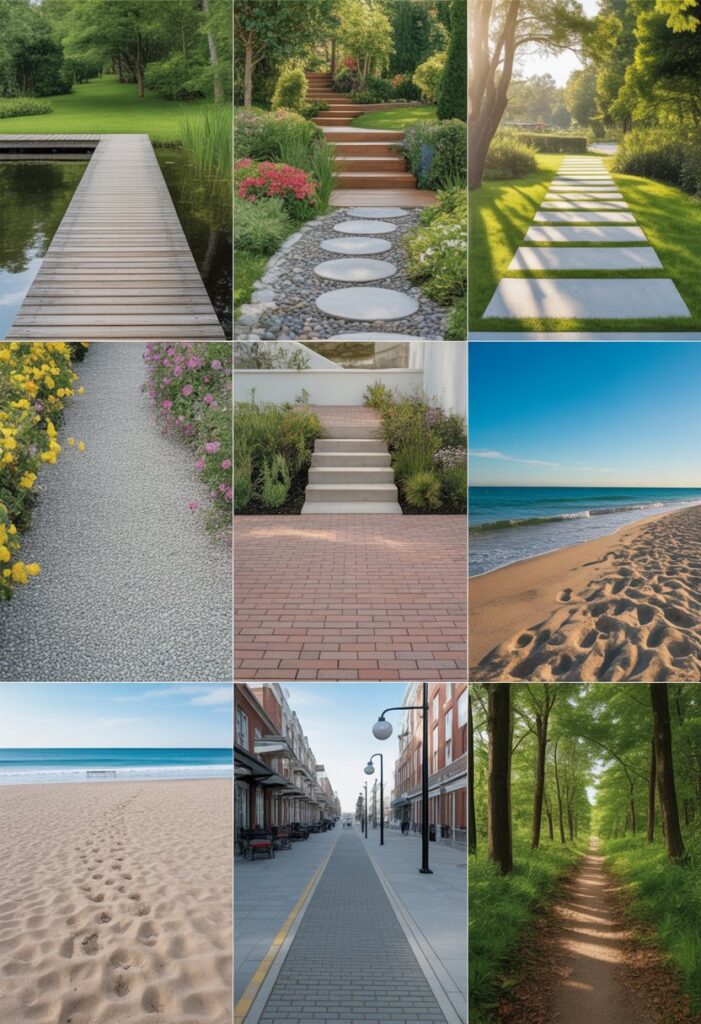
A well-planned walkway creates a welcoming path while complementing the surrounding landscape. There are many style options available, allowing homeowners to find ideas that suit their space, budget, and personal taste. This article explores eight walkway ideas to inspire outdoor improvements.
1) Classic Brick Pattern Walkway
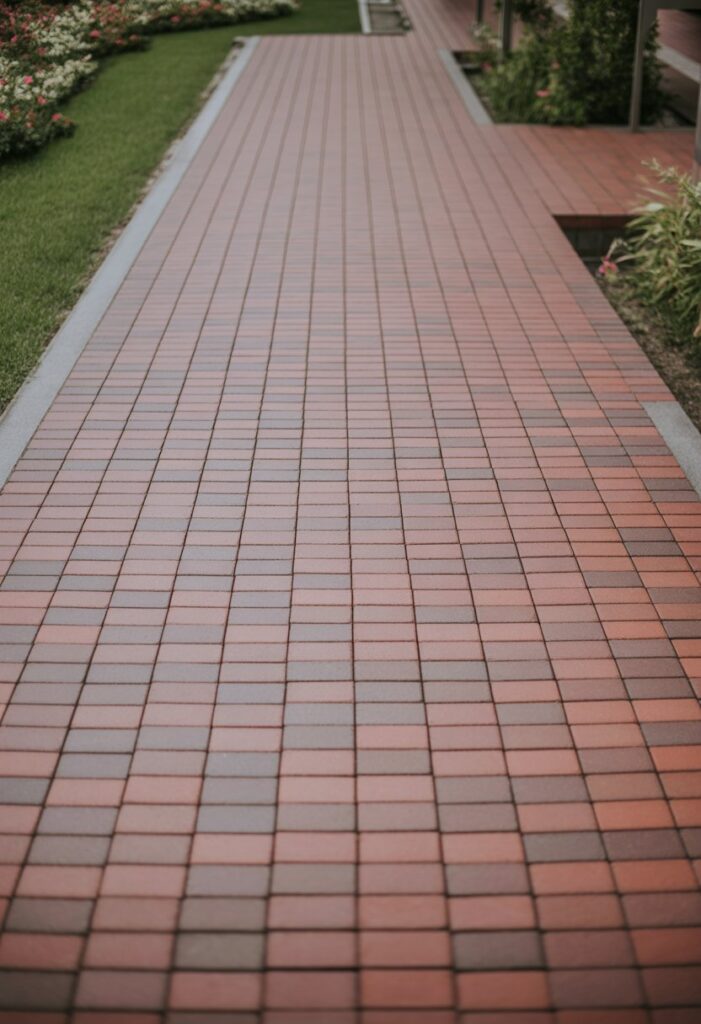
A classic brick pattern walkway uses bricks laid in a simple, straight design. This look works well for many home styles, giving a clean and neat appearance.
It adds durability and can last for years with proper care. The pattern is easy to install and maintain, making it a popular choice for walkways.
This style guides visitors smoothly to the entrance and enhances the home’s curb appeal. For ideas, see brick walkway patterns and designs from Light and Layer.
2) Natural Stone Stepping Stones
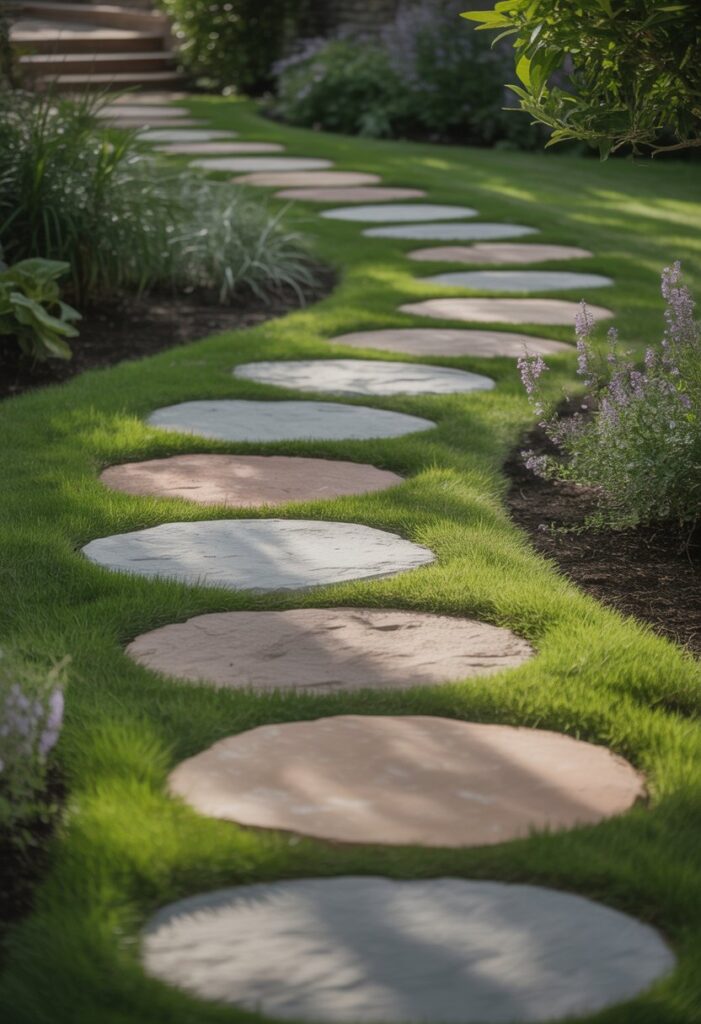
Natural stone stepping stones offer a timeless look for any walkway. Their textured surfaces add grip, making paths safer, especially when wet.
They blend well with most garden styles, giving an earthy and fresh feel. These stones are durable and require little maintenance over time.
Choosing stones with unique shapes or colors helps create a distinctive and stylish path that complements outdoor spaces naturally. For ideas, see inexpensive stepping stone walkway designs.
3) Pebble Mosaic Path
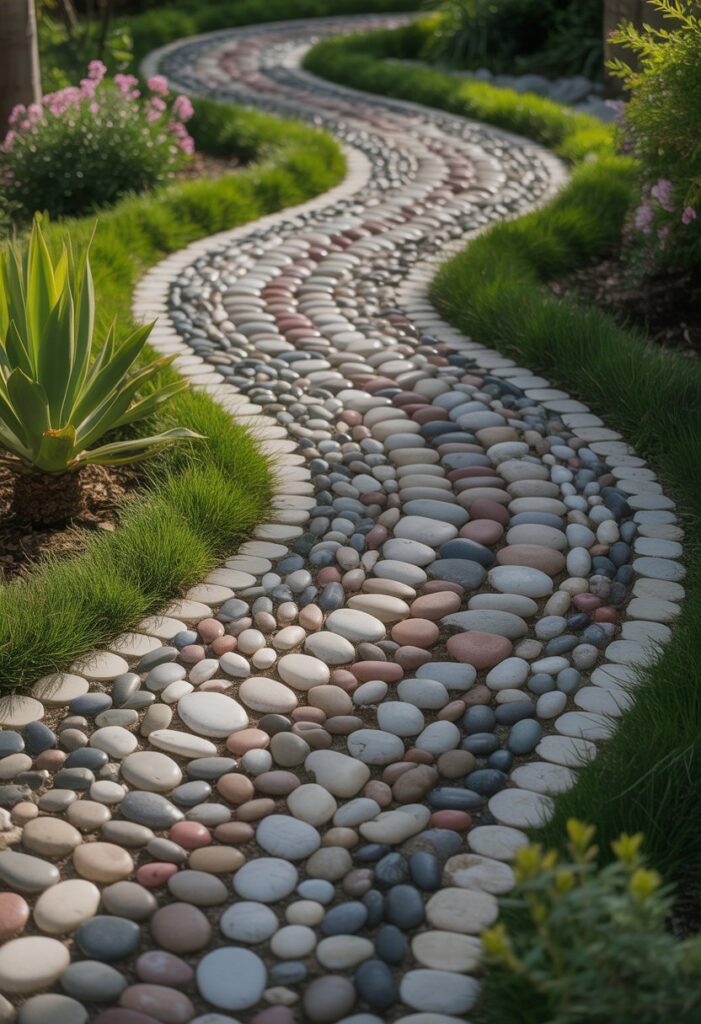
A pebble mosaic path brings both beauty and durability to outdoor spaces. It uses small, smooth stones arranged in patterns. These paths can range from simple designs to intricate swirls that add artistic detail.
Earth-toned pebbles often blend well with plants like lavender or olive trees. This creates a natural, rustic look that suits many garden styles. For ideas and tips, see a guide on creating pebble mosaic walkways.
4) Rustic Wooden Plank Walkway
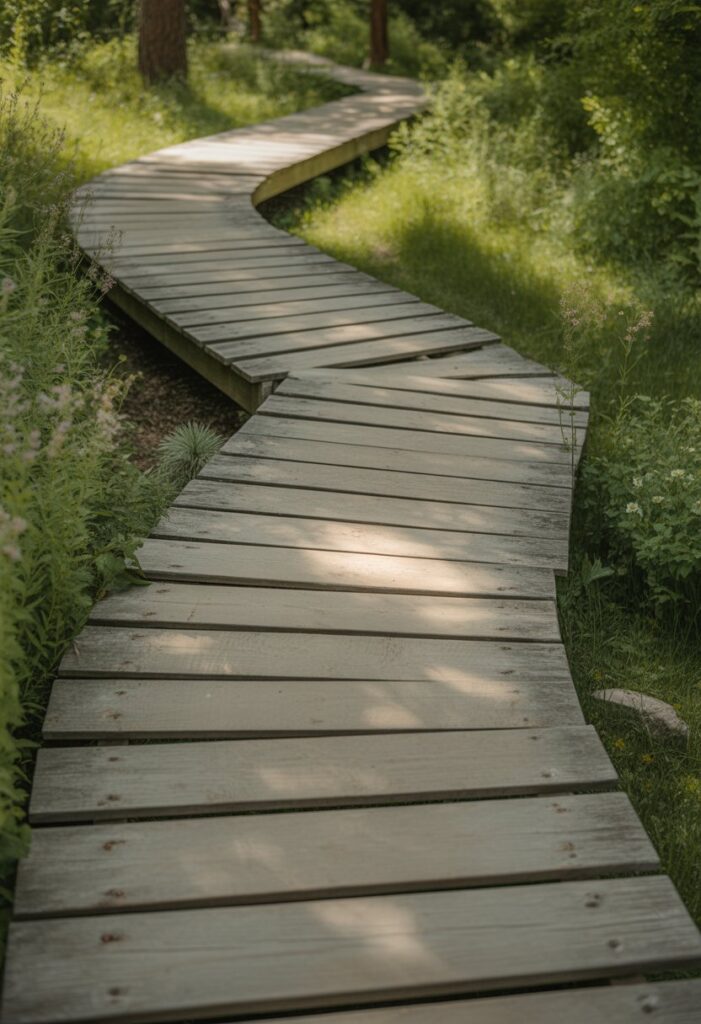
A rustic wooden plank walkway adds natural charm to any outdoor space. It uses weathered or reclaimed wood to create a worn, authentic look. This style blends well with gardens and wooded areas.
The planks can be arranged in straight or staggered patterns for visual interest. Adding stone borders or plants along the edges enhances the rustic feel while improving safety and appearance. For durability, the wood should be treated with a protective stain.
This walkway style is simple but effective for a welcoming outdoor path. More ideas can be found in this rustic outdoor walkway design collection.
5) Concrete Paver Path
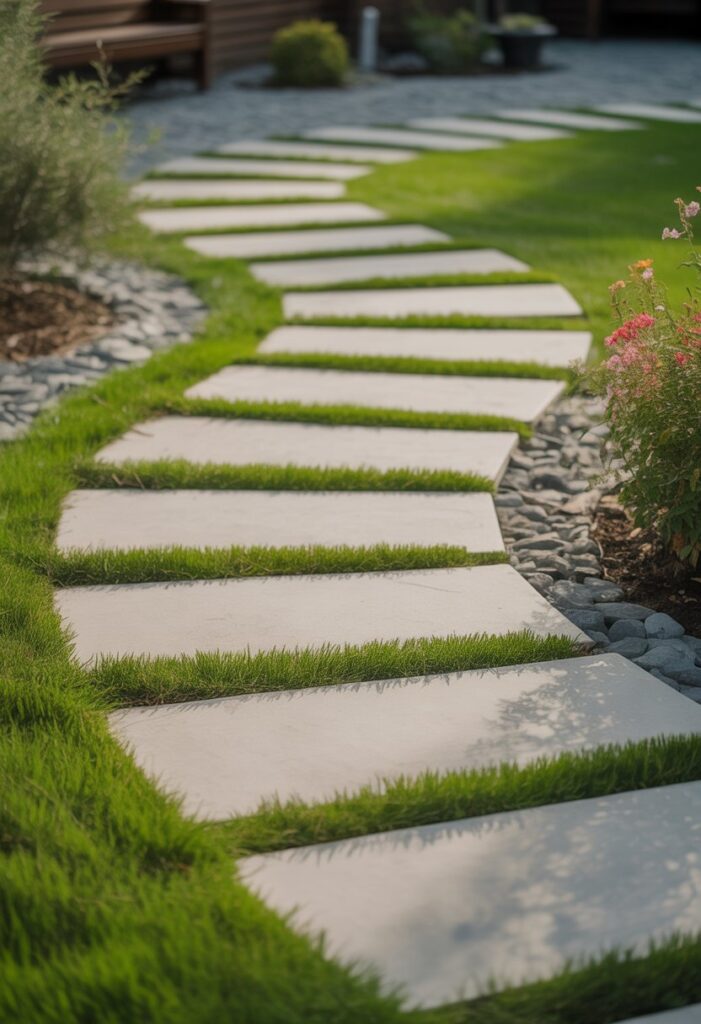
Concrete paver paths offer a strong and durable walkway option. They can be designed in various shapes and patterns, fitting both modern and classic styles.
Pavers also allow easy repairs since individual pieces can be replaced without disturbing the whole path. They provide good traction and withstand different weather conditions well.
Adding concrete pavers can enhance curb appeal and connect outdoor spaces smoothly. For ideas on designs and installation, see concrete paver walkway inspirations.
6) Bluestone Walkway
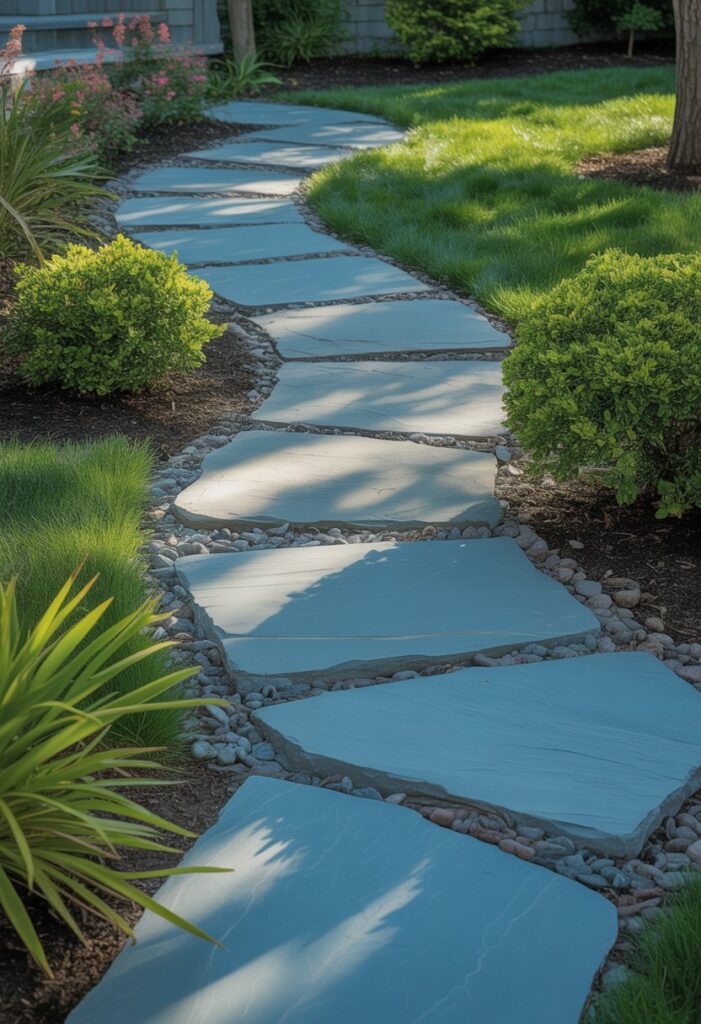
Bluestone walkways offer a classic look that suits many garden styles. The stone’s natural blue-gray color adds subtle elegance without being too bold.
It is durable and can handle heavy foot traffic, making it practical for outdoor paths.
Spacing and placement can be precise or rustic, depending on the design goal. Many choose bluestone for its balance of beauty and function.
For ideas on how to use bluestone effectively, see 25 bluestone walkway ideas for your garden.
7) Gravel Garden Path

A gravel garden path offers a simple and attractive way to connect different areas outdoors. It works well with both formal and casual garden styles, adding texture without overwhelming the space.
Gravel is easy to install and maintain, making it a budget-friendly option. It allows for good drainage and tends to stay cool underfoot. Choosing the right gravel size and color can enhance the overall look of the garden. For more ideas and tips, see gravel pathway designs.
8) Tumbled Glass Embedded Walkway
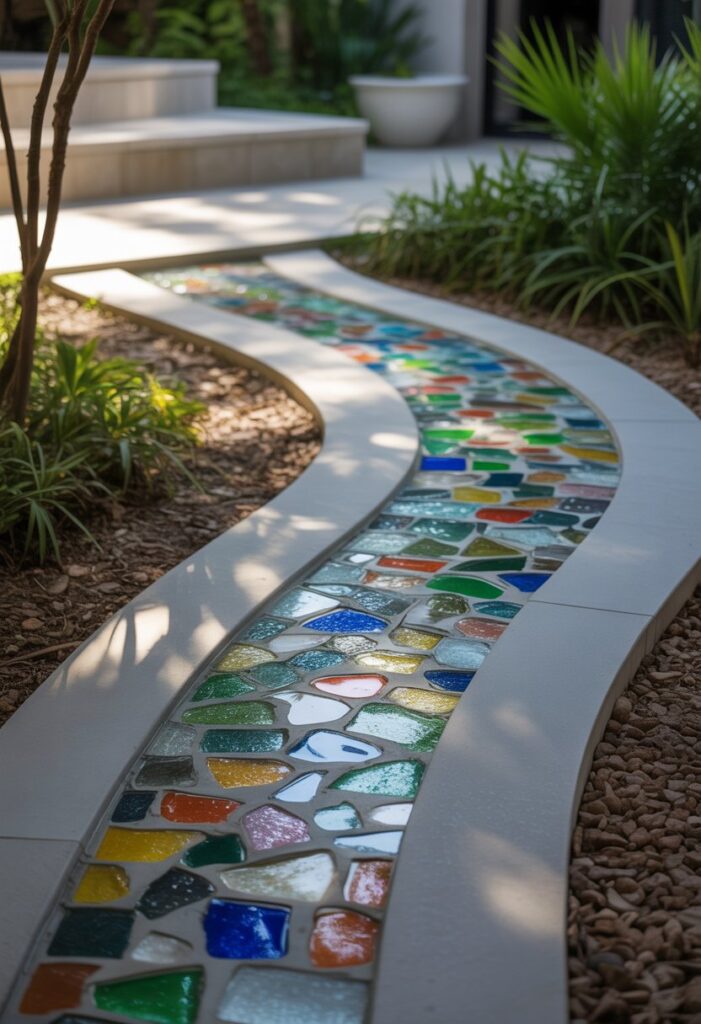
A tumbled glass embedded walkway offers a unique look using small pieces of smooth, recycled glass. The glass adds color and texture that changes with the light, creating subtle sparkle.
This type of walkway is durable and slip-resistant when set in concrete or resin. It suits gardens or patios where visual interest is desired without overwhelming the space.
For creative ideas, see examples of tumbled recycled glass walkways.
Design Principles for Walkways
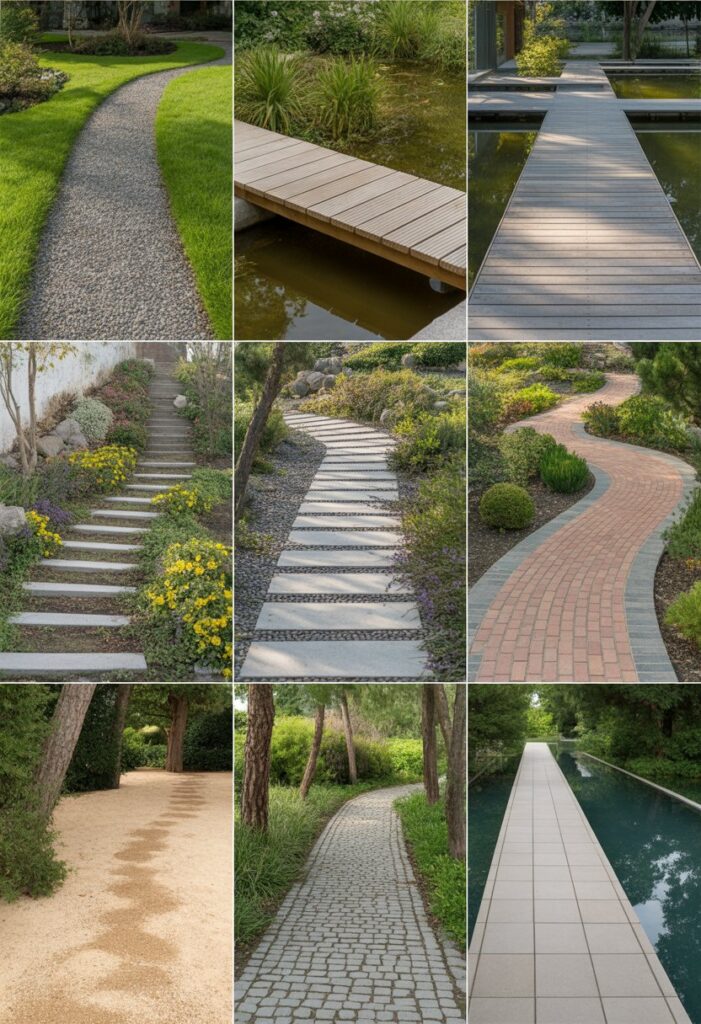
Walkway design focuses on creating paths that are both functional and visually appealing. Choosing the right materials affects durability and maintenance, while fitting the walkway style into the surrounding landscape makes the space feel complete. These factors work together to make walkways practical and attractive.
Material Selection Considerations
Choosing materials involves balancing durability, maintenance, safety, and budget. Common options include brick, natural stone, concrete pavers, and gravel. Each has unique benefits:
- Brick offers a classic look and good durability but may require sealing.
- Natural stone gives a rustic feel, is strong, but can be more expensive.
- Concrete pavers are versatile, affordable, and easy to replace.
- Gravel is budget-friendly and allows good drainage but can shift over time.
Slip resistance is important, especially for safety when wet. Materials should fit the walkway’s purpose, such as heavy foot traffic or decorative garden paths. Maintenance level should match the homeowner’s willingness to upkeep the area.
Blending with Landscape Styles
The walkway should complement the style of the yard and home. A formal garden may call for symmetrical brick paths or neatly cut stone. In a naturalistic setting, irregular stepping stones or a gravel path fit better.
Color and texture play a key role. Warmer tones work well with wood decks or flower beds, while cooler grays blend with modern landscapes. Borders or edging can create visual separation between the path and plants or lawn.
The walkway’s shape also matters. Straight lines suit formal layouts, while curves encourage exploration in informal gardens. Soft curves add flow and balance to the yard’s overall design.
Using materials and shapes that match the landscape style makes the walkway feel like a natural part of the outdoor space rather than an afterthought.
More details on materials and styles can be found in this guide to walkway design and ideas for creative paver walkways.
Maintenance Tips to Extend Walkway Lifespan
Proper upkeep helps keep walkways safe, clean, and durable. Regular care focuses on stopping damage before it starts and adjusting maintenance tasks with the seasons to protect the structure and appearance.
Preventing Common Issues
Cracks, stains, and erosion are frequent problems in walkways. Promptly filling small cracks with a suitable sealant prevents water from seeping in and causing larger breaks. Removing stains quickly using mild cleaners preserves the surface and avoids permanent discoloration.
Vegetation and debris should be controlled. Weeds between stones or concrete joints can crack surfaces over time. Regular sweeping and trimming plants near the walkway helps reduce damage.
Drainage is critical. Water pooling on or near the walkway weakens the base and causes erosion. Ensuring proper slope and clear drainage paths prevents standing water. Using sealing products can also protect concrete from moisture damage.
Seasonal Upkeep Strategies
Different seasons demand specific maintenance. In spring, cleaning away winter salts and debris is important because salt can corrode walkway materials. Checking for frost damage after winter allows early repair of cracks.
During summer, inspecting for sun damage and addressing any small signs of wear keeps walkways stable. Applying a sealant every few years protects surfaces from UV rays and water absorption.
In fall, clearing leaves and organic material prevents stains and slipping hazards. Preparing for winter by fixing loose boards or stones lowers risks of damage from freeze-thaw cycles.
Winter requires removing snow and ice carefully. Using plastic shovels and avoiding harsh chemicals prevents surface damage. Sand can provide traction without harming the walkway.
For more detailed care routines, see expert walkway maintenance tips.