
7 Living Room Wall Decor Ideas to Elevate Your Space
Living room wall decor ideas can change the entire feel of a space without needing a full makeover. It helps add personality and style while making a room more inviting and visually interesting.
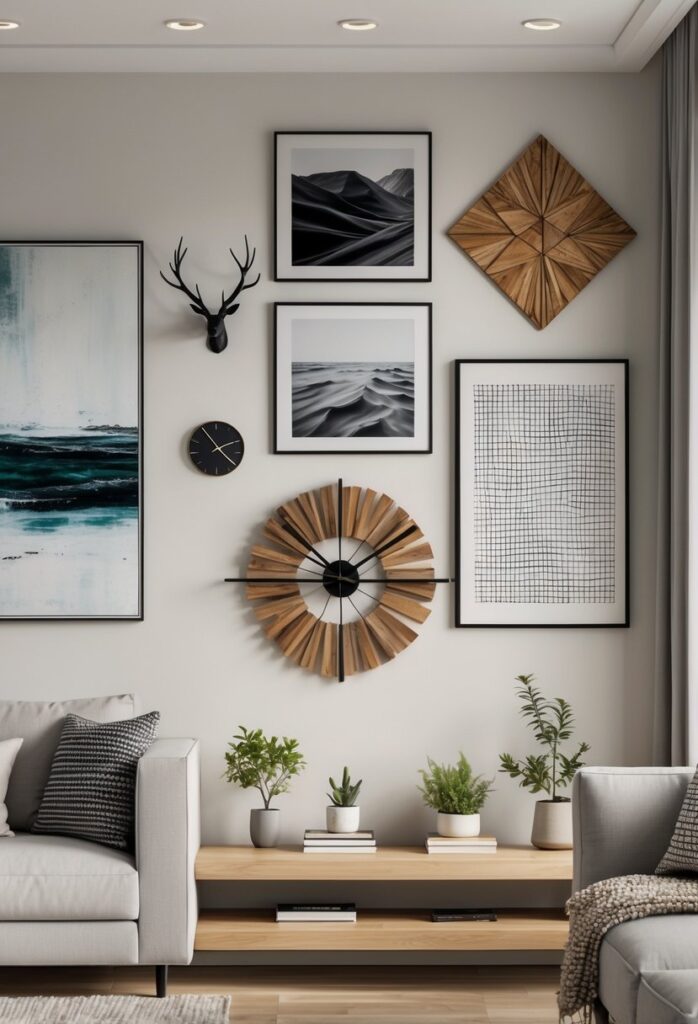
The key to improving a living room is choosing the right wall decor that matches the overall look and mood of the space. With thoughtful decoration, even simple walls can become a strong design feature that enhances the room’s comfort and character.
1) Gallery walls with framed art and photos
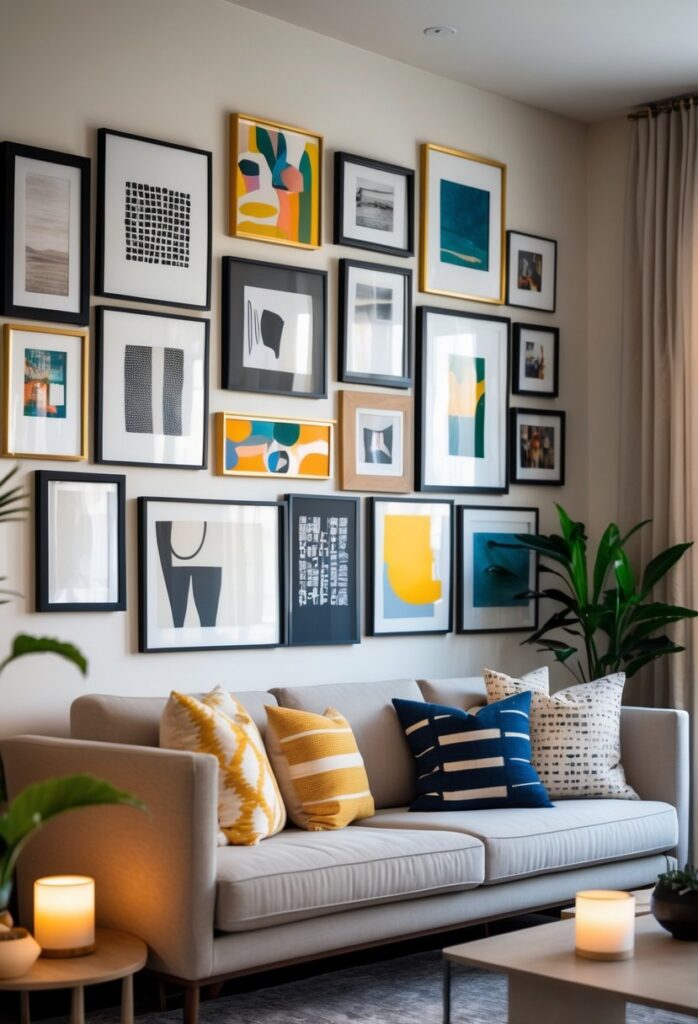
Gallery walls use framed art and photos to add personality to a living room. They bring life to blank walls and create a focal point in the space.
Choosing frames with similar colors or styles helps unify the look. Mixing different sizes and shapes adds visual interest without making it feel cluttered.
Curation is key. Selecting pieces thoughtfully over time gives the gallery a collected, balanced feel. This approach avoids a rushed or random display.
A gallery wall can tell a story through photos and art. It reflects the homeowner’s style and memories in a way other decor cannot.
2) 3D textured wall panels
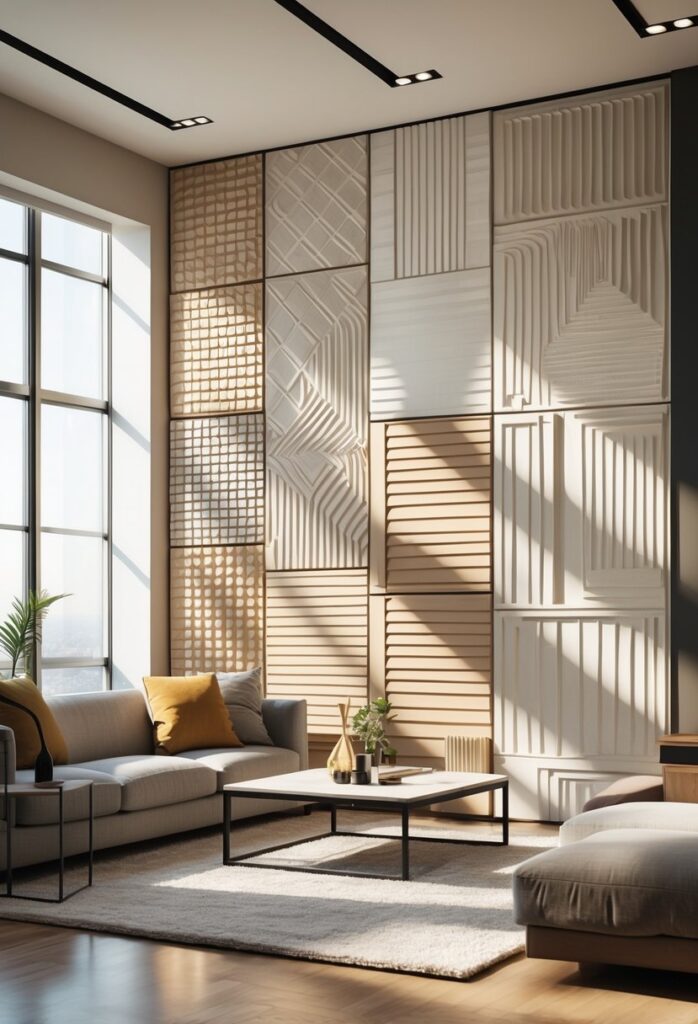
3D textured wall panels add depth and style to living room walls. They create visual interest by casting shadows and highlighting patterns.
These panels come in many designs, from geometric shapes to natural wood textures. Some are made of durable materials like PVC, which are easy to clean and install.
People use 3D panels to make a feature wall or add subtle texture. They work well with modern and rustic decor styles.
Panels can also help with noise reduction, making the room feel quieter. Their lightweight design makes updating a space simple without major construction.
Choosing the right panel depends on the room’s size and lighting. Lighter colors can brighten a space, while darker or wood tones add warmth.
3) Floating wooden shelves
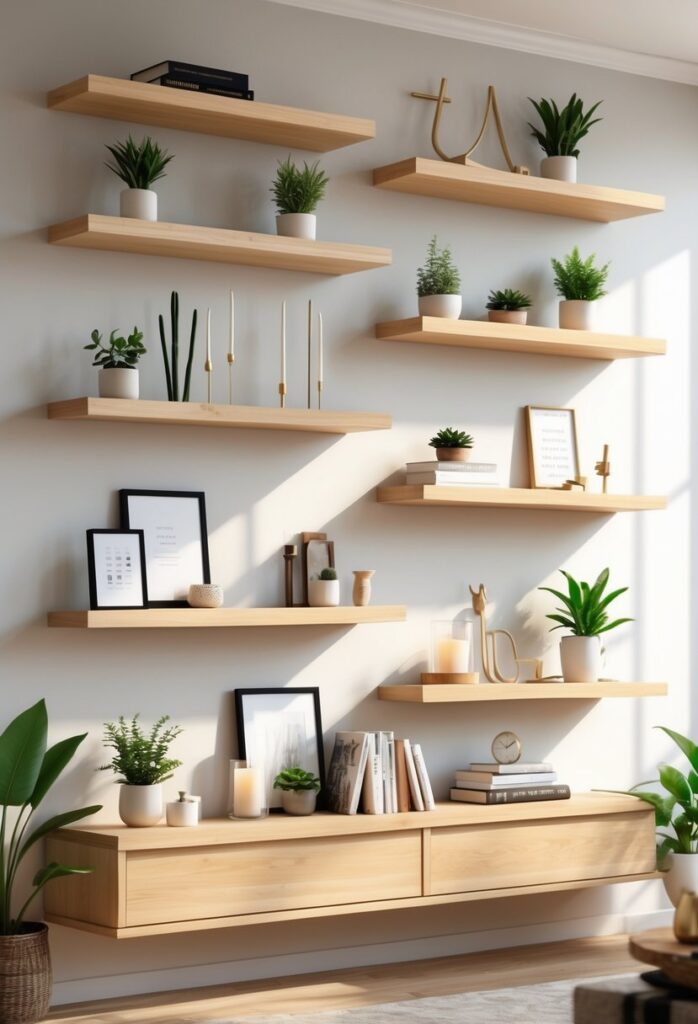
Floating wooden shelves offer a simple way to add both storage and style. They fit well in living rooms with many design styles.
These shelves can hold books, plants, or small decor items without taking up floor space. Their clean lines create a neat, modern look.
Wood tones vary from light maple to dark rustic brown. This variety lets people choose shelves that match their room’s colors.
Installed on walls, floating shelves can help organize clutter and display favorite items. They add function without overwhelming the space.
4) Reclaimed wood accent walls
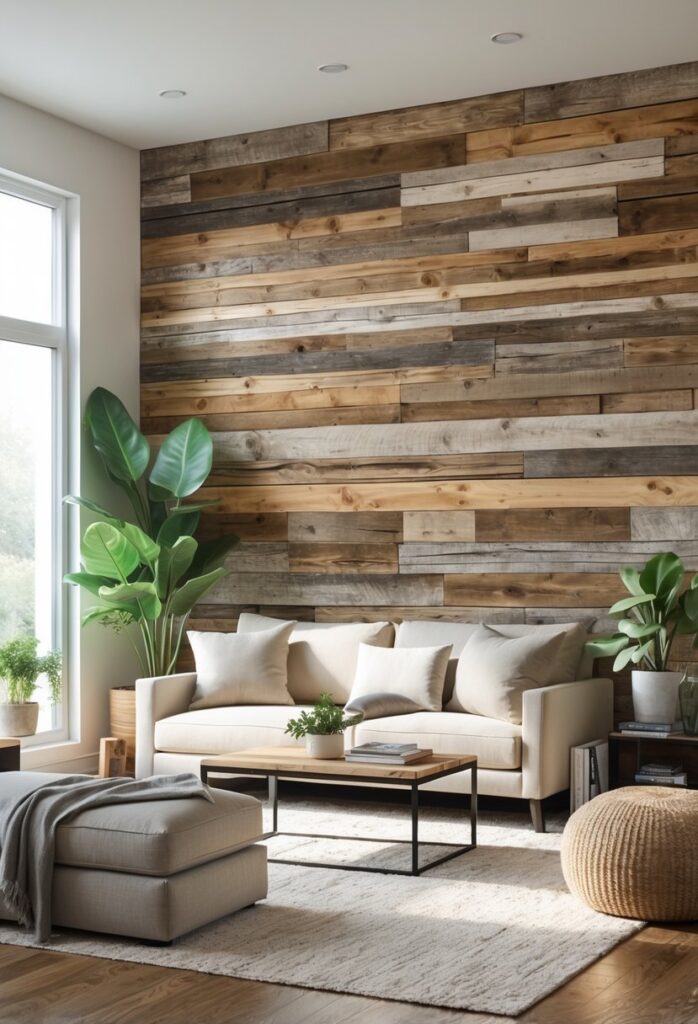
Reclaimed wood accent walls bring a sense of history and character to a living room. The wood’s natural texture and color add warmth without feeling overwhelming.
These walls work well in many styles, from rustic to modern. Some designs use gaps between planks to create patterns or stripes, adding visual interest.
Reclaimed wood can turn a plain wall into a focal point. It helps create a cozy, inviting atmosphere while adding natural charm to the space.
5) Large-scale abstract paintings
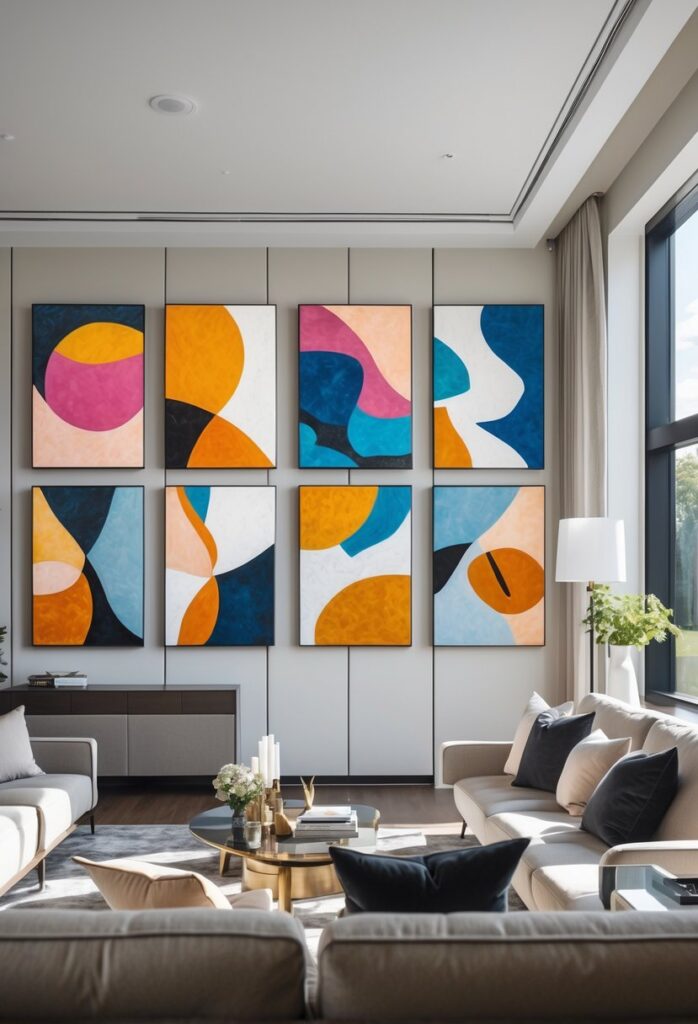
Large-scale abstract paintings make a strong visual impact in any living room. They often serve as a focal point, drawing attention to a main wall or above a sofa.
These paintings come in bold colors or simple shapes, fitting many decor styles. Choosing one that matches the room’s color scheme is important for harmony.
They also add texture and depth to a space. Many people prefer geometric designs, but organic forms can work well too.
Big artworks suit large walls and open spaces. They help fill empty areas and bring balance to the room’s layout.
6) Wallpaper with geometric patterns
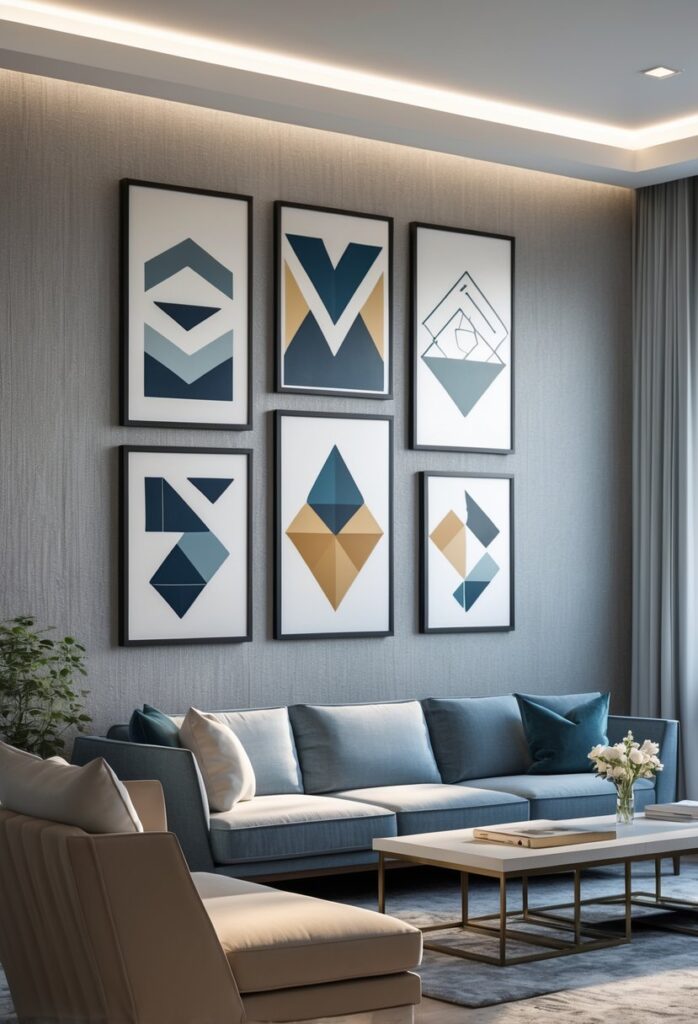
Wallpaper with geometric patterns adds structure and style to a living room. It offers clean lines and shapes like squares, triangles, and circles. These patterns help create visual interest without overwhelming the space.
Geometric wallpaper can serve as a bold statement wall or a subtle accent. The designs range from simple, repetitive shapes to complex arrangements. This flexibility allows homeowners to match patterns with different furniture and décor styles.
Colors vary widely, from black and white schemes to vibrant blues and metallic tones. This variety helps suit modern, minimalist, or classic living rooms. Geometric wallpaper is effective in bringing a fresh, modern look to any wall.
7) Eclectic wall hangings
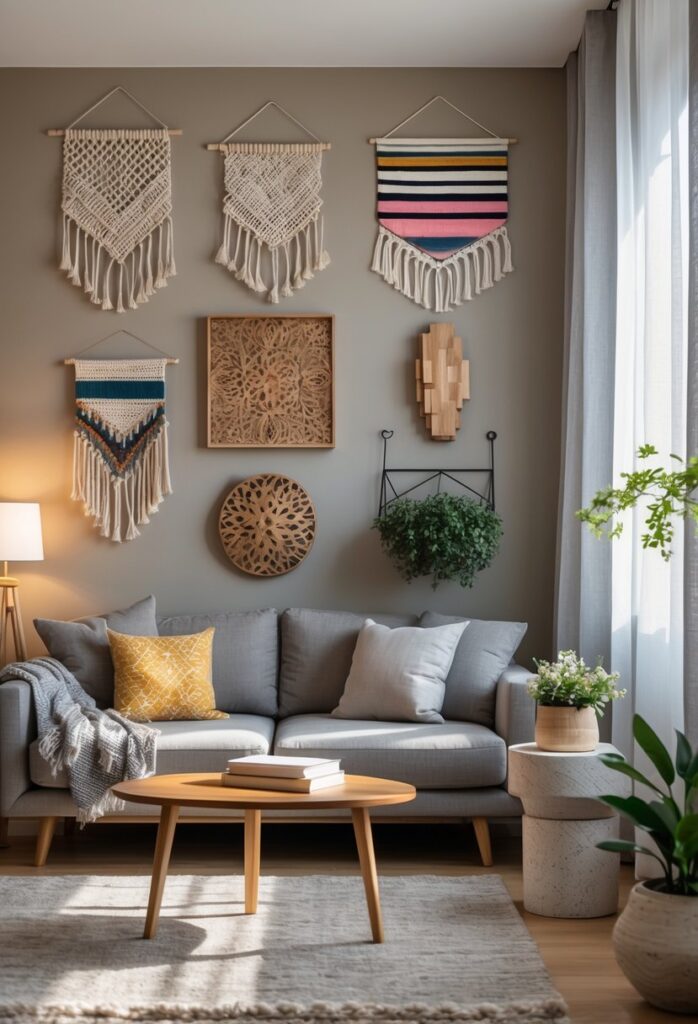
Eclectic wall hangings add a unique and personal touch to any living room. They often mix different styles, colors, and materials, creating visual interest.
These pieces can range from handmade items to vintage finds. They bring texture and character without overwhelming the space.
Choosing eclectic hangings lets people express their personality. It also allows for flexibility in decorating, with items that can be switched or added over time.
Fundamental Design Principles for Living Room Wall Decor
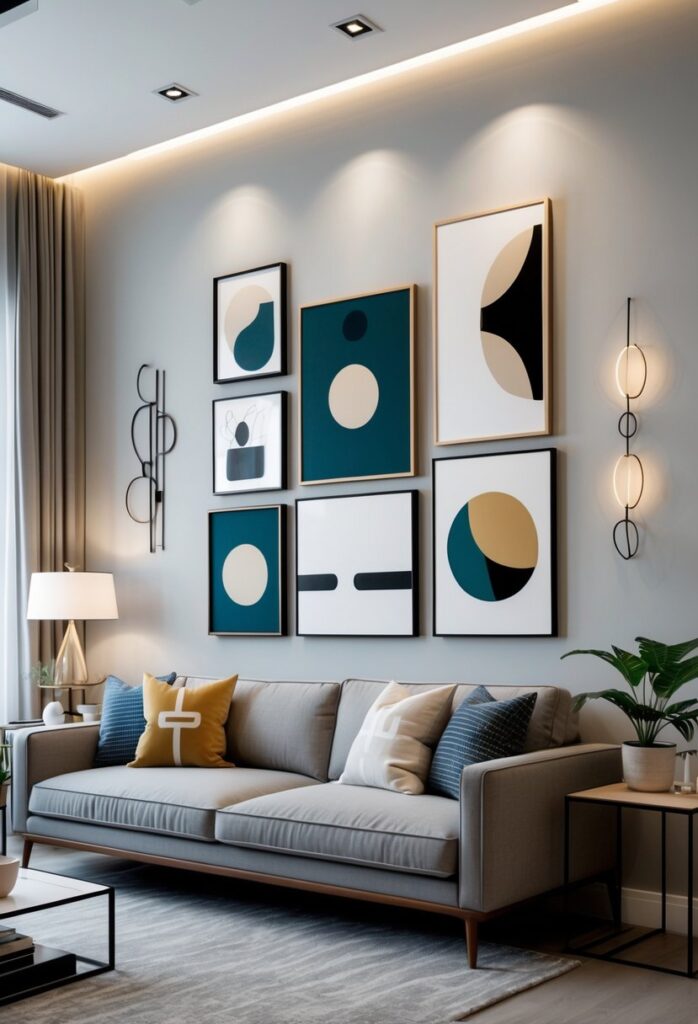
Living room wall decor works best when colors, sizes, and textures are carefully chosen to match the room’s style and purpose. Attention to these details creates a space that feels balanced and inviting. Each element should support the room’s overall design without overwhelming it.
Choosing the Right Color Palette
The color palette for living room walls sets the mood and ties the room together. Neutral colors like beige, gray, or soft white provide a calm backdrop that fits many styles. Bold colors such as deep blues or greens can add energy but should be used thoughtfully to avoid overpowering the space.
Accent walls or painted areas behind artwork can highlight key pieces. It’s important to consider natural light, as colors often look different in various lighting. Using a limited palette—two or three main colors—helps maintain harmony.
Balancing Proportions and Scale
Wall decor should match the size and shape of the walls and the room to avoid feeling crowded or empty. Large walls need bigger art or groupings, while small walls work better with a few modest pieces.
The placement matters too; items hung too high or low disrupt balance. A good rule is to align art at eye level and keep consistent spacing between grouped items. Proportional decor supports the feeling of flow and symmetry in the living room.
Layering Textures for Visual Interest
Adding different textures on the walls brings depth and keeps the space from looking flat. Options include textured paint, wallpaper, wooden panels, or fabric wall hangings.
Combining smooth and rough surfaces adds contrast, which can energize the room subtly. Textured decor also helps absorb sound, making the living room more comfortable. Care should be taken not to use too many textures, which can create visual chaos. Moderate layering always works best.
Enhancing Ambiance With Lighting and Accessories
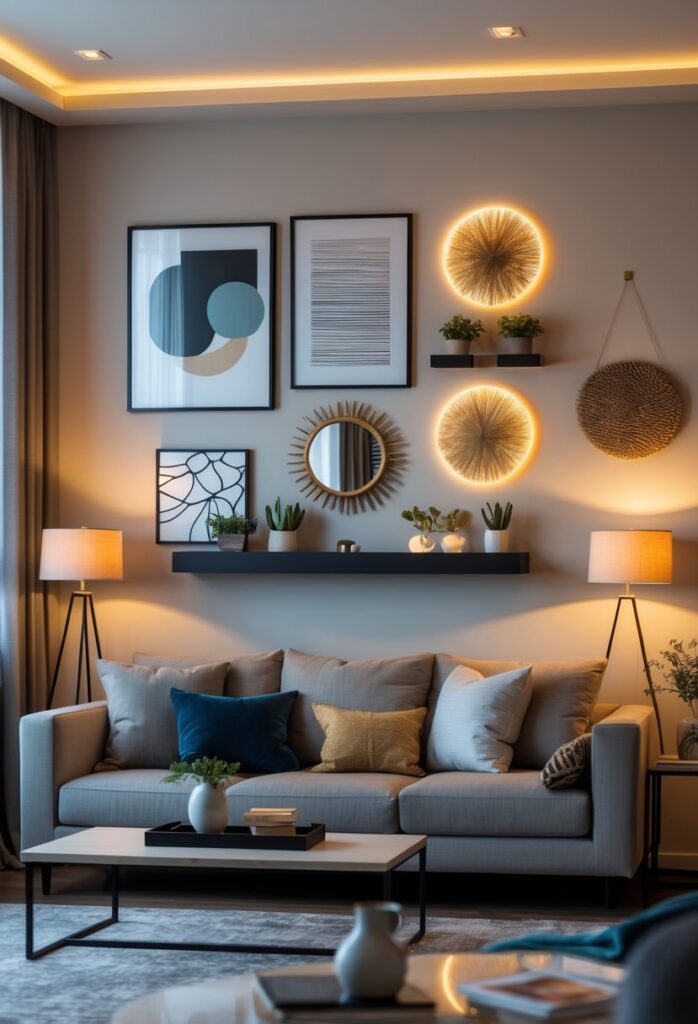
Using wall lighting and well-chosen decor can change the mood of a living room. Careful placement and style of lights, combined with matching accessories, boost both function and style. These elements create a layered look that adds depth and interest to the space.
Integrating Accent Lighting
Accent lighting focuses light on specific areas or pieces in the living room, such as artwork or architectural features. Wall sconces are popular for this because they use little space and can be placed strategically around seating areas or shelves.
The light from these fixtures should be soft but bright enough to create warmth without glare. Dimmable options are useful to adjust the atmosphere depending on the time of day or activity. LED bulbs are energy efficient and long-lasting, making them a practical choice.
A good rule is to mix direct and indirect lighting for layers. For example, sconces can highlight a painting while also serving as ambient light. This setup avoids flat or harsh lighting and keeps the room inviting.
Selecting Complementary Decor Pieces
Decor pieces on living room walls should match the style and scale of the lighting used. Mirrors can reflect light and make spaces feel larger and brighter. Small shelves can hold plants or sculptures to add texture without overcrowding.
Choosing artwork that matches the color tones of the room and lighting fixtures ties the design together. Avoid pieces that compete with lights for attention. Instead, prioritize items that enhance or balance the light’s effect.
The arrangement matters. Group items in odd numbers, like three or five, to create visual interest. Use consistent frames or finishes to maintain cohesion. This approach ensures the space feels organized while personalizing it.