
7 Japandi Living Room Design Ideas for Modern Minimalist Spaces
Japandi style is a popular design trend that combines the simplicity of Japanese minimalism with the cozy warmth of Scandinavian decor. It focuses on creating calm, functional spaces using natural materials, neutral colors, and clean lines.
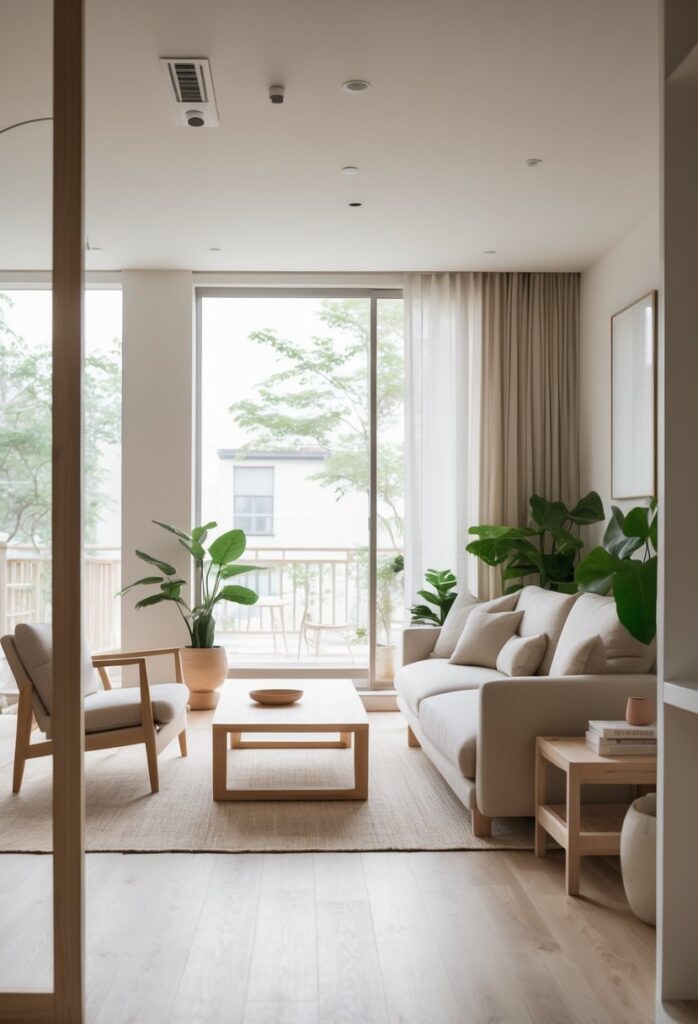
The main goal of Japandi living room design ideas is to blend elegance and comfort for a peaceful, inviting atmosphere. This article explores seven ideas that help achieve this balance, making a living room both stylish and soothing.
1) Incorporate low-profile wooden furniture with clean lines for authenticity
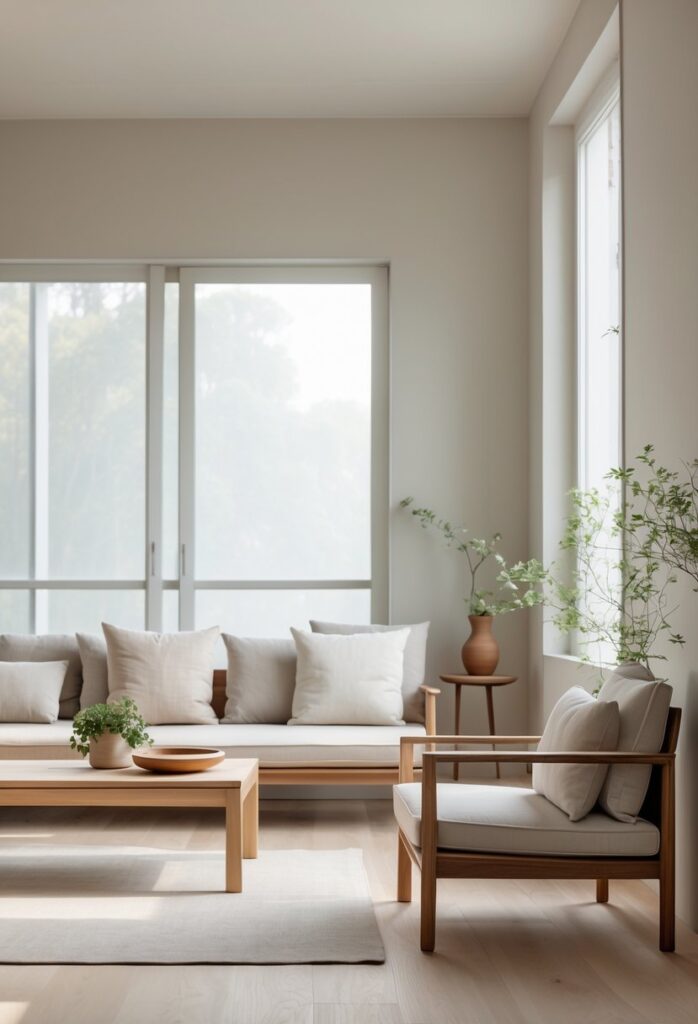
Japandi style focuses on simplicity and natural materials. Low-profile wooden furniture fits this well. It keeps the space open and easy to move around.
Clean lines without extra decoration highlight the furniture’s shape and wood grain. This approach matches both Japanese minimalism and Scandinavian warmth.
Using wood in light or muted tones helps maintain a calm look. Pieces like low sofas, simple coffee tables, and shelving create a balanced, authentic feel.
Choosing functional, straightforward designs supports Japandi’s goal of comfort and usefulness. This type of furniture blends beauty with practical daily use.
2) Use a neutral color palette with muted earth tones and occasional warm accents
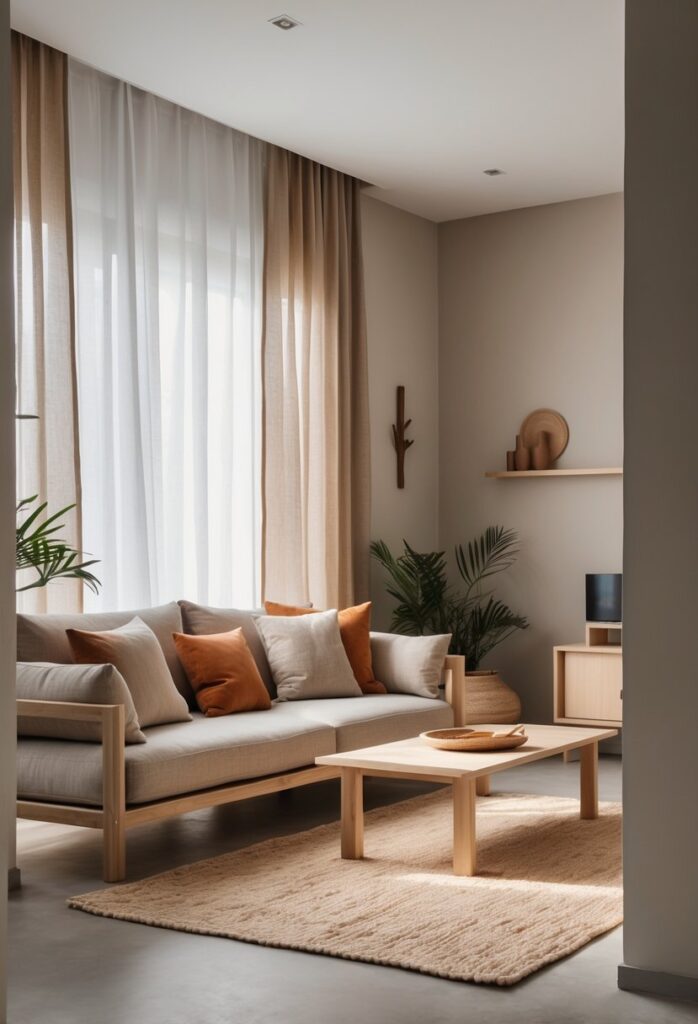
Japandi living rooms often feature neutral colors like soft greys, beiges, and taupes. These muted earth tones create a calm and natural feeling in the space.
Warm accents, such as brown or rust shades, add comfort without overpowering the room. They bring a subtle richness that balances minimalism with coziness.
This color scheme helps highlight natural materials like wood and stone. It keeps the room feeling light, open, and inviting while staying true to Japandi style.
3) Layer natural textiles such as linen and wool for texture and comfort.
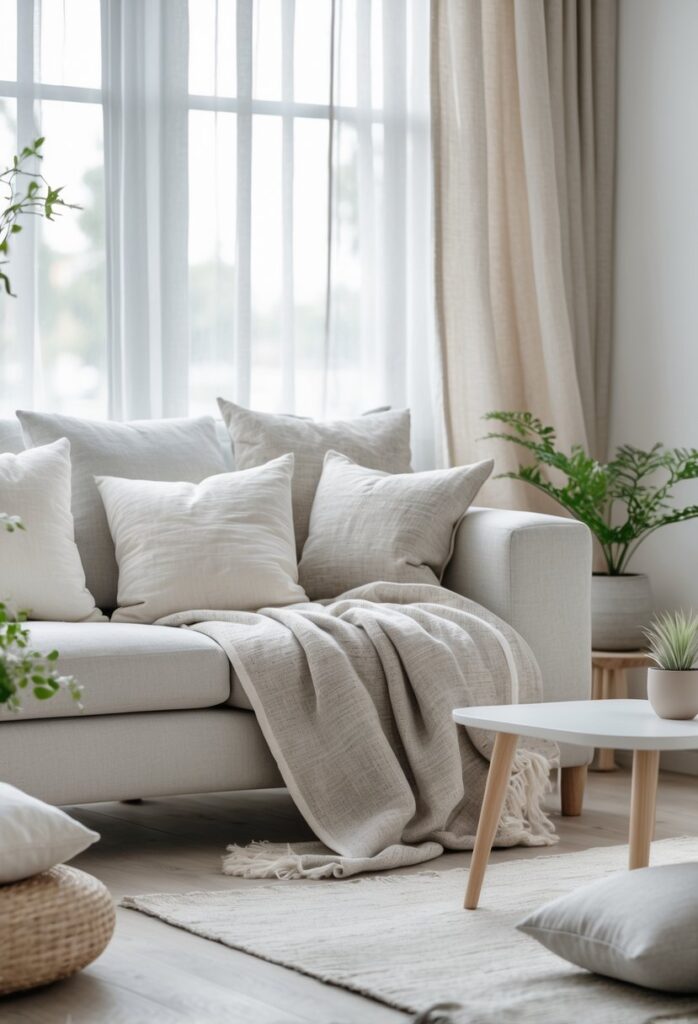
He can add linen and wool textiles to bring texture and warmth to the living room. These materials create a soft, inviting space that feels natural and calm.
She layers cushions, throws, and rugs made of these fabrics to make the room cozier. Mixing textures like smooth linen with chunky wool adds depth without clutter.
They choose natural fibers because they are durable and eco-friendly. Using these textiles also fits the Japandi style, which values simplicity and comfort.
4) Add curated ceramics and pottery for subtle Japanese influence.
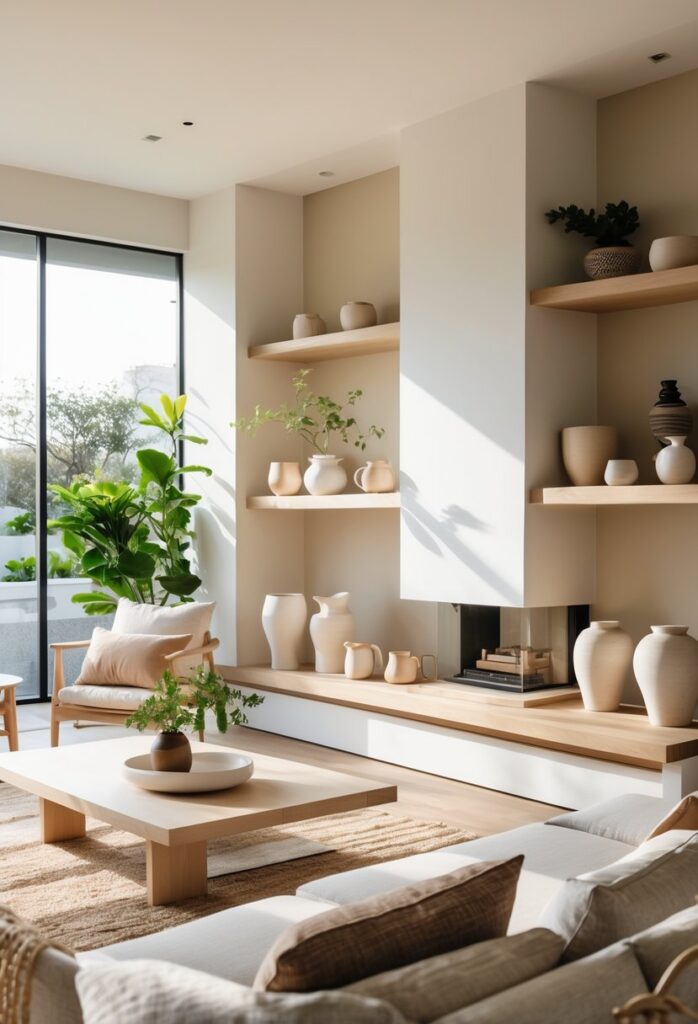
Adding ceramics and pottery brings a quiet, natural touch to the living room. These pieces reflect Japanese design’s love for handmade, simple, and organic forms.
Choosing smooth, earthy pottery creates a soft contrast with the room’s clean lines. Curated ceramics on shelves or tables add texture without clutter.
The shapes and tones of pottery gently echo nature. This helps deepen the calm, balanced feeling central to Japandi style.
5) Integrate soft, diffused lighting to create a calm atmosphere.
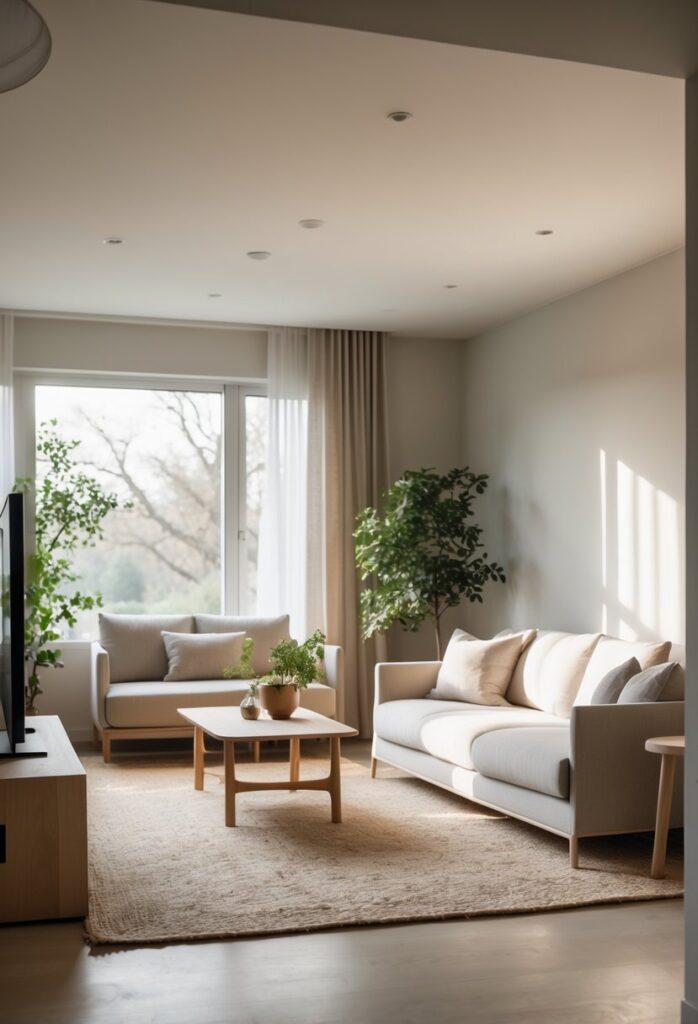
Soft, diffused lighting is key for a Japandi living room. It reduces harsh shadows and creates a gentle glow.
Using materials like rice paper lanterns or frosted glass fixtures helps spread the light evenly. This adds warmth without glare.
Dimmer switches give control over brightness. This allows adapting the light to different times or moods.
Natural wood or stone lighting fixtures fit well with the Japandi style. They bring a simple and peaceful feel.
Layering light from lamps, pendants, and sconces builds depth. It also keeps the room feeling cozy and inviting.
6) Include greenery like bonsai or simple plants to enhance natural vibes.
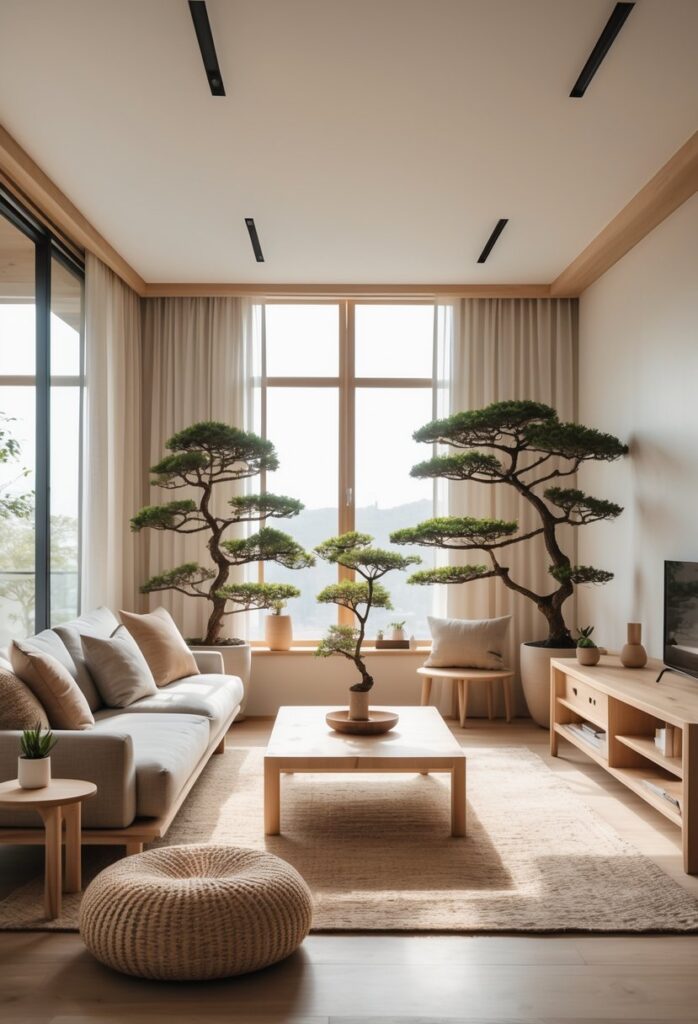
Adding plants like bonsai or snake plants brings nature into the living room. These choices fit well with Japandi’s focus on calm and simplicity.
Greenery helps create a peaceful atmosphere without adding clutter. Low-maintenance plants are ideal for keeping the space easy to care for.
Plants also improve air quality and add a subtle pop of color. They connect indoor spaces with the natural world outside.
Using simple pots and natural materials supports the Japandi theme. The plants should look neat but not forced or overly decorative.
Overall, adding greenery strengthens the balance between Japanese minimalism and Scandinavian warmth. It’s a key element for a natural living room feel.
7) Prioritize minimal clutter and open space to maintain serenity
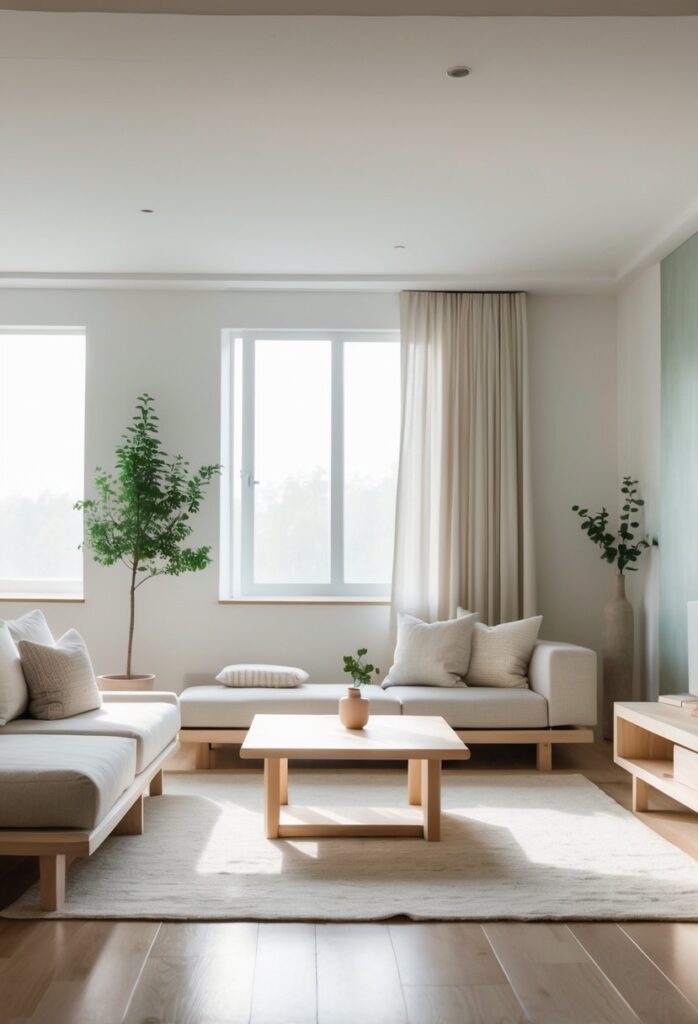
Japandi design focuses on keeping living areas clear and open. Clutter is removed to create a peaceful environment.
Furniture and decor are chosen for function and simplicity. Each item has its purpose, avoiding unnecessary pieces.
Open space allows natural light to move freely. This makes the room feel calm and welcoming.
Minimal clutter supports the Japandi goal of balance. It helps reduce visual distractions and promotes relaxation.
Essential Elements of Japandi Living Room Design
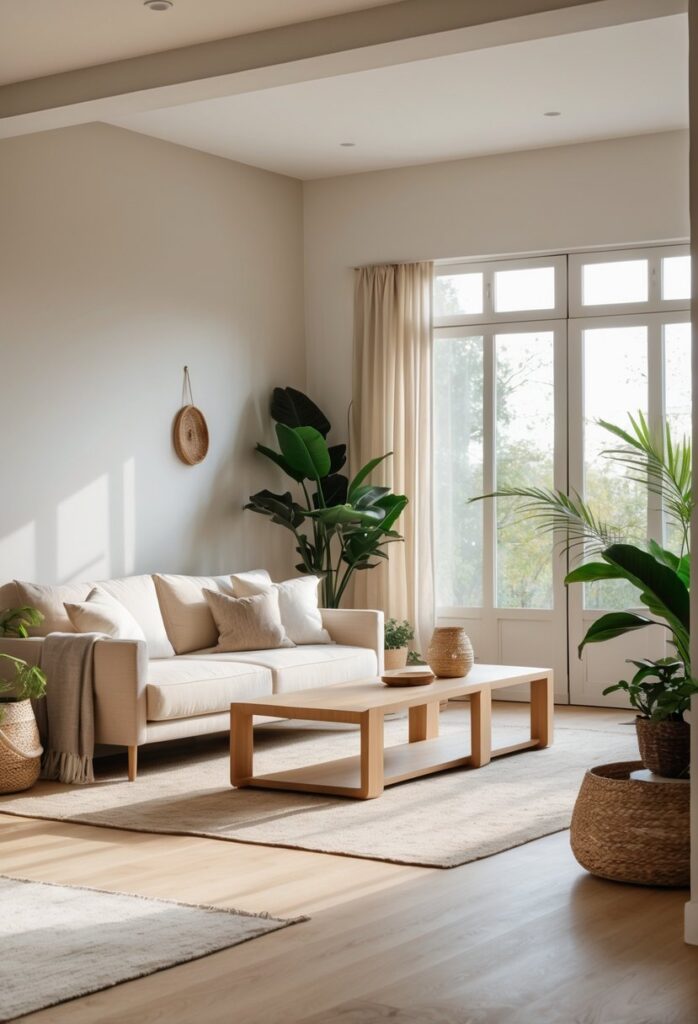
Japandi living rooms focus on creating calm, balanced spaces with a clear blend of simplicity and natural beauty. Key choices involve the right colors and materials, which set the tone and feel of the space.
Color Palette Choices
Japandi style favors soft, muted colors that create a peaceful atmosphere. Popular shades include warm beiges, creamy whites, and gentle grays. These neutrals serve as a calm base.
Accent colors tend to be earthy greens, soft blues, or muted pastels. These add subtle depth without overwhelming the senses. Black or dark wood tones are often used for contrast in furniture or decor accents.
This palette helps maintain the minimalistic look while making the space feel warm and inviting. It avoids bright or harsh colors, sticking instead to tones that promote relaxation and mindfulness.
Material Selection
Natural materials are essential in Japandi design, emphasizing authenticity and texture. Light to medium woods—such as oak, beech, or bamboo—are common. They bring warmth and a natural look.
Textiles also play a big role. Linen, cotton, and wool with simple weaves add softness without clutter. These fabrics contribute to a cozy yet clean feel.
Furniture tends to be low-profile and sleek, built with quality natural materials. Elements like paper lampshades, ceramic vases, and stone accessories often appear to reinforce the connection to nature.
This focus on natural, durable materials supports Japandi’s goal of creating lasting, serene living spaces.
Styling Tips for a Cohesive Japandi Space
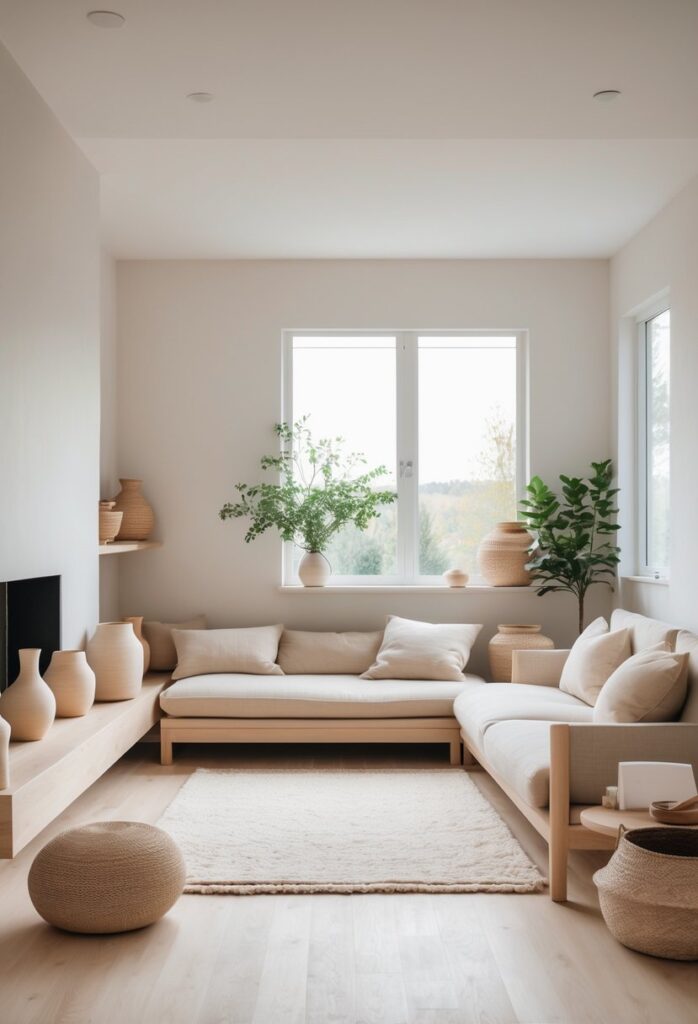
A Japandi living room blends clean lines with soft accents to feel both simple and inviting. Achieving this look relies on thoughtful use of color, texture, and carefully chosen items that serve a purpose. The space should feel balanced, with every piece adding to its calm, warm atmosphere.
Balancing Minimalism and Warmth
Japandi style mixes a minimal look with cozy elements. To balance this, use a neutral color palette, such as soft whites, taupes, and gentle grays. These tones create a calm base that invites relaxation without overwhelming the eye.
Warmth comes through texture. Include materials like light wood, linen, wool, and boucle fabric. These add subtle layers without cluttering the space. Avoid heavy patterns or bright colors that disrupt the calm feel.
Furniture choices also matter. Select pieces with clean, simple shapes but rounded edges or soft fabrics to keep the room feeling welcoming. This balance helps the space feel uncluttered yet comfortable.
Incorporating Functional Decor
In Japandi design, every decorative item should also be useful. For example, choose storage baskets made of natural fibers that blend in and keep the room tidy. Furniture should have clear practical purposes, like a low wooden coffee table that offers surface space without drawing too much attention.
Lighting is key for a functional and cozy vibe. Use soft, warm lights rather than harsh overhead fixtures. Lamps with natural wooden bases or simple ceramic stands work well.
Plants also play a role as decor that purifies air and adds life. Select low-maintenance greenery in simple pots to keep the style clean and calm.
In short, functional decor supports the look and feel of the room while preventing clutter and maintaining simplicity.