10 Hanging Plants Ideas to Enhance Your Indoor Space
Hanging plants are an easy way to add greenery and style to any indoor space. They use vertical space, making rooms feel more lively without taking up floor area. This makes them perfect for small apartments or rooms with limited surface space.
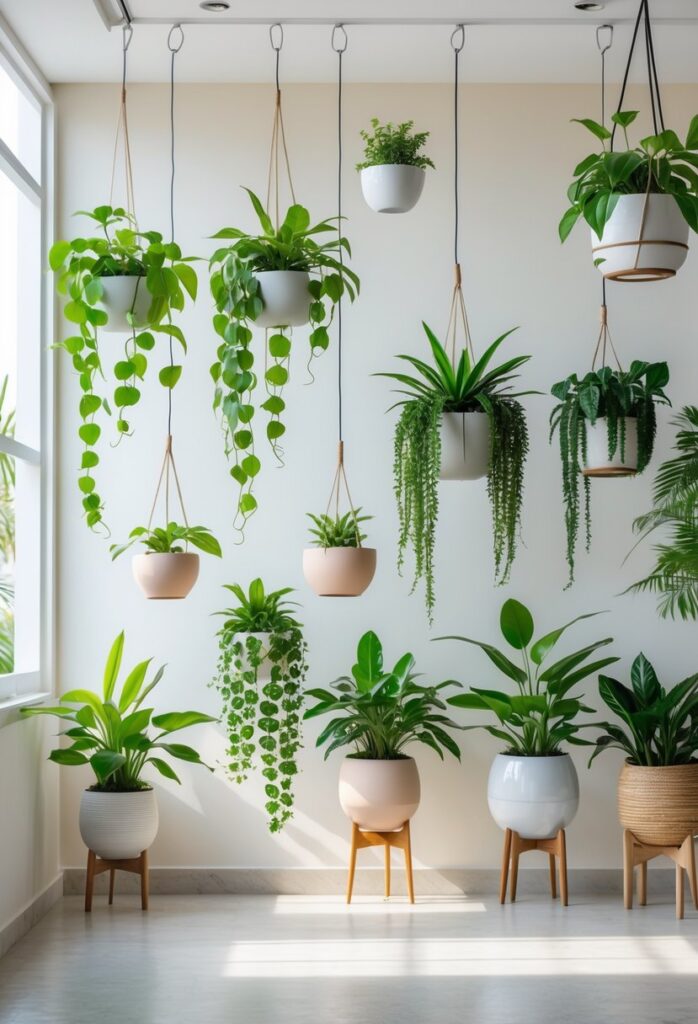
They bring natural beauty and improve air quality while serving as attractive decor elements. People choose hanging plants to create a fresh, calming atmosphere and to add texture and color to their homes. For those interested, exploring different hanging plant ideas can inspire new ways to brighten up living spaces.
1) Macrame Hanging Planter
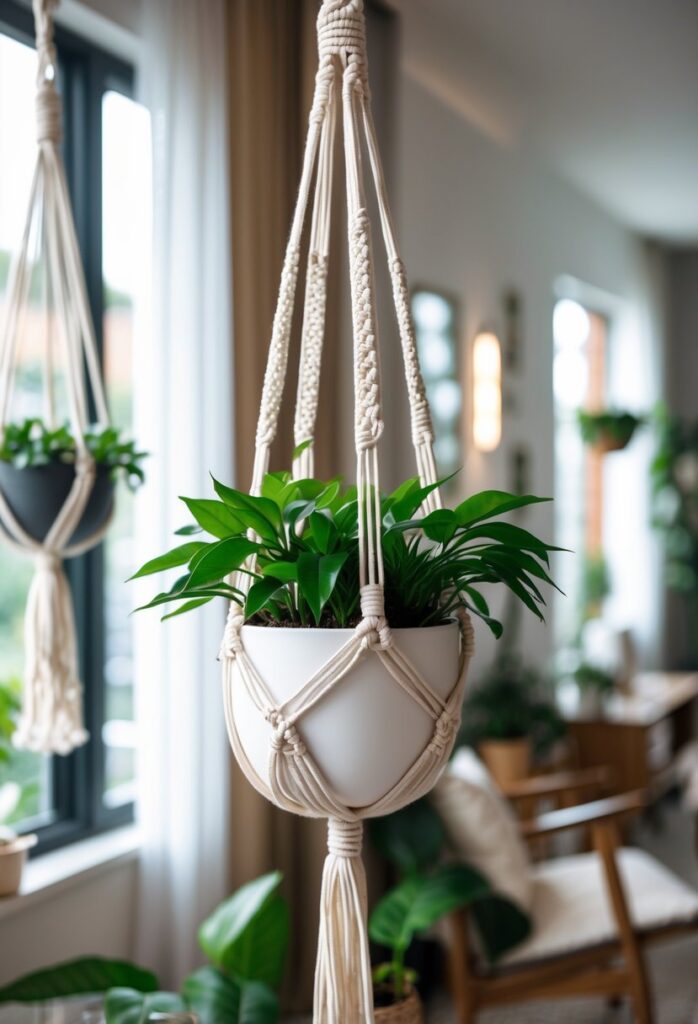
Macrame hanging planters add a stylish, handmade touch to any room. They use knotted cords to hold pots securely while allowing plants to hang in the air.
These planters are easy to make or buy and come in many designs. Some patterns use simple knots, making them perfect for beginners.
They also save floor space and work well indoors or outdoors. For clear instructions, many free macrame plant hanger patterns are available online.
2) String of Pearls Succulent
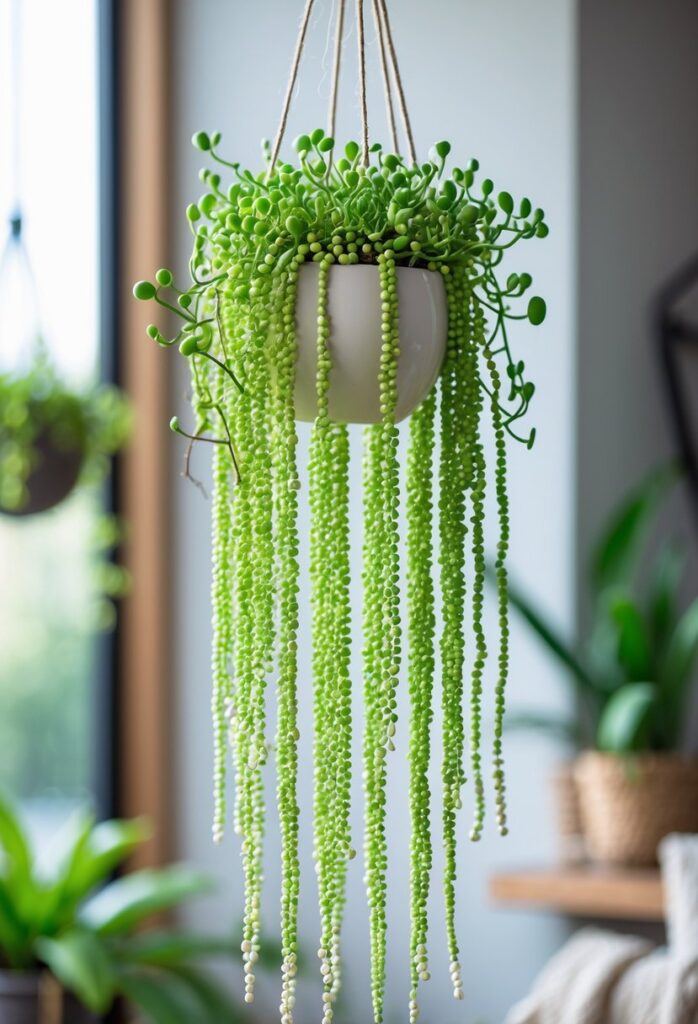
The String of Pearls succulent has small, round leaves that look like green beads. It trails down nicely, making it great for hanging pots or glass terrariums. This plant can grow several feet long, adding a dramatic effect to any space.
It stores water in its bead-like leaves, so it needs less frequent watering than many plants. It thrives in bright, indirect light and prefers well-draining soil. For more care tips and display ideas, see hanging String of Pearls suggestions.
3) Wooden Peg Plant Hanger
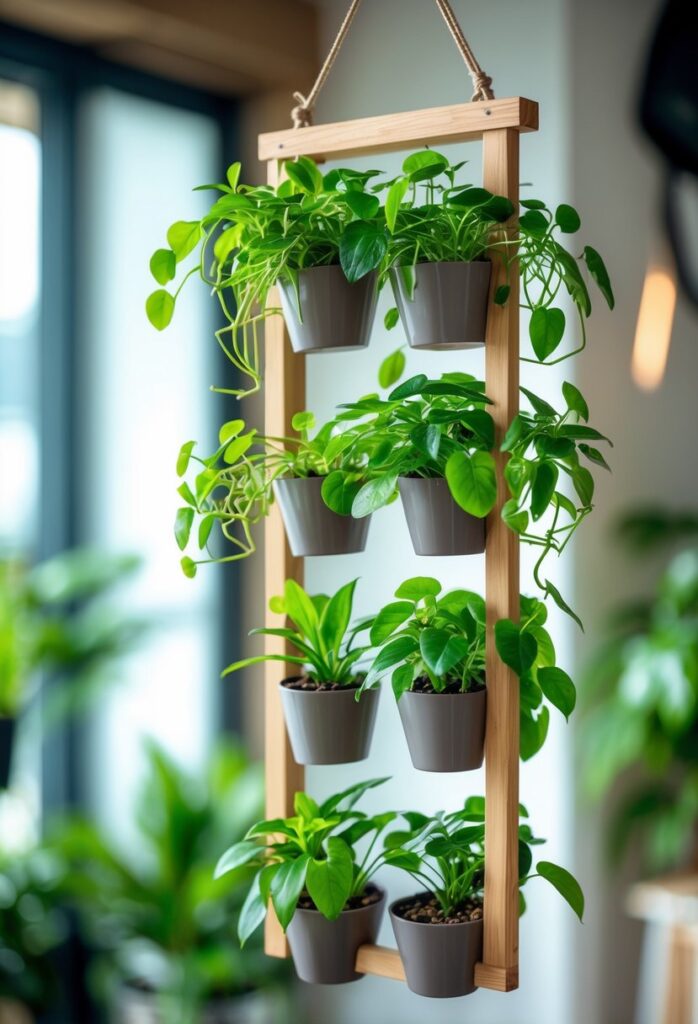
A wooden peg plant hanger uses simple pegs attached to a wood slice or board. It holds plant pots securely while showing off natural wood textures.
Holes need to be drilled evenly for balance. Twine or rope can be tied to the pegs to hang the plants.
This hanger style fits well in rustic or minimalist settings. It is easy to make and can be customized in size and shape. More ideas like this can be found in the 18 DIY plant hangers guide.
4) Hindu Rope Plant
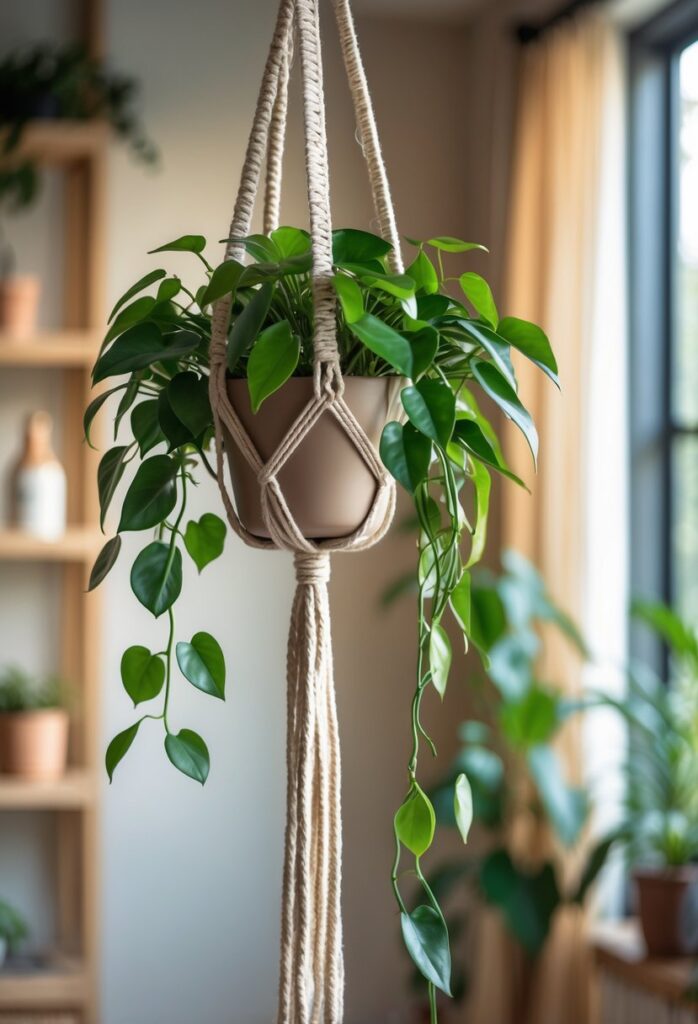
The Hindu Rope Plant has thick, curled leaves that twist along its vines. It is perfect for hanging pots because its trailing growth creates a unique look.
This plant grows slowly and needs moderate light to stay healthy. Its waxy leaves help it store water, making it easy to care for indoors.
People often use it in hanging gardens to add texture and interest. It works well with rope or macrame hangers for a natural style.
Learn more about its care and display ideas from this detailed guide.
5) Hanging Wood Slice Plant Stand
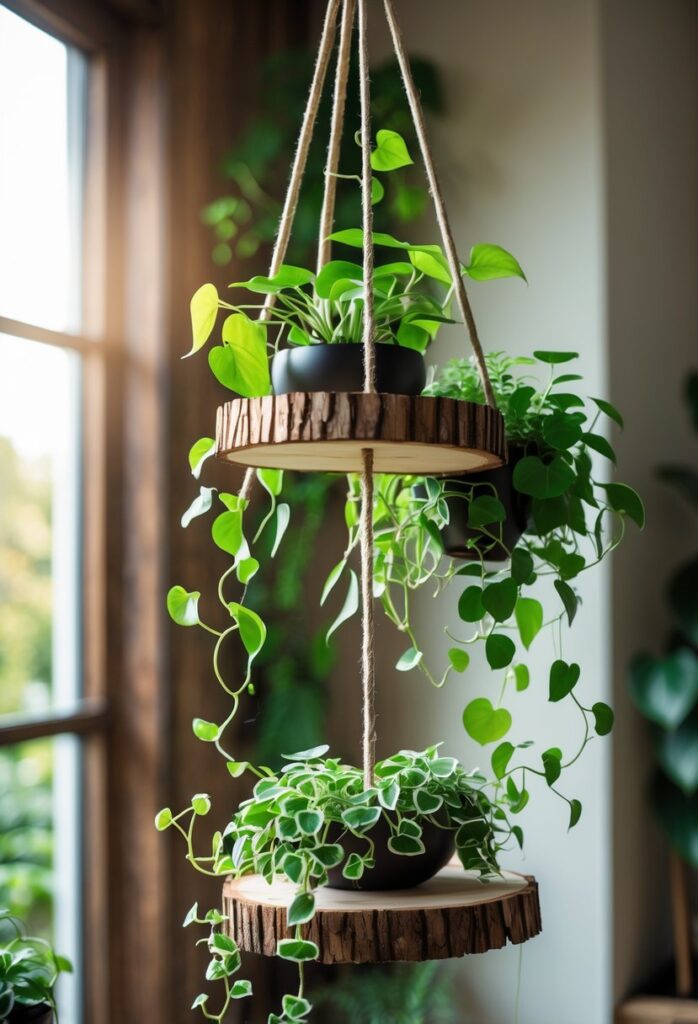
A hanging wood slice plant stand offers a natural, rustic look for displaying plants indoors. It is made by suspending a flat wood slice with ropes or chains, creating a simple, sturdy platform.
This type of stand works well for small to medium pots. It saves floor space while adding a unique touch to any room. For ideas and instructions, examples can be found at Balcony Garden Web.
6) Wall Hanging Ceramic Planter
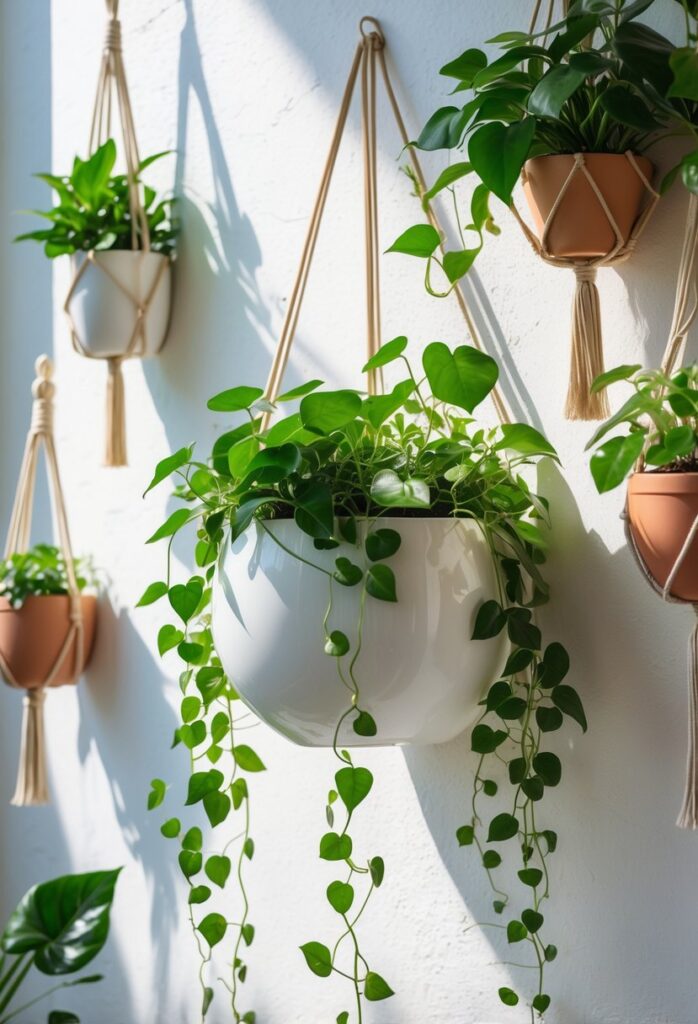
Wall hanging ceramic planters add a modern and clean look to any space. They are ideal for small plants like succulents or herbs. The ceramic material helps retain moisture, keeping plants healthy longer.
These planters can be hung with adjustable hooks or sturdy chains. They work well indoors or outdoors, adding texture and style to walls. Ceramic planters come in various shapes and colors, fitting different decor styles. For more ideas, see creative options for hanging ceramic planters.
7) Metal Bowl Hanging Planter
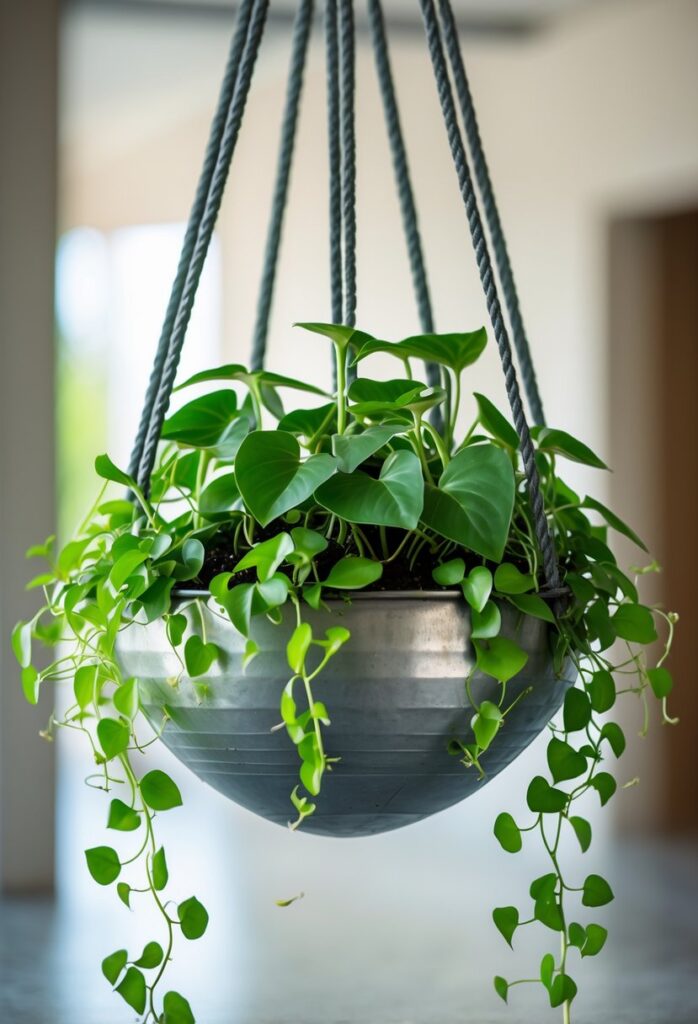
A metal bowl hanging planter offers a unique way to display plants indoors. It is durable and can hold soil and plants securely.
To make one, a metal bowl is drilled for drainage holes. Then, cords or chains are attached for hanging.
This style works well with succulents or small flowers. It adds a modern, industrial touch to any room. More details on creating these planters can be found in a metal bowl hanging planter tutorial.
8) Succulent Hanging Garden
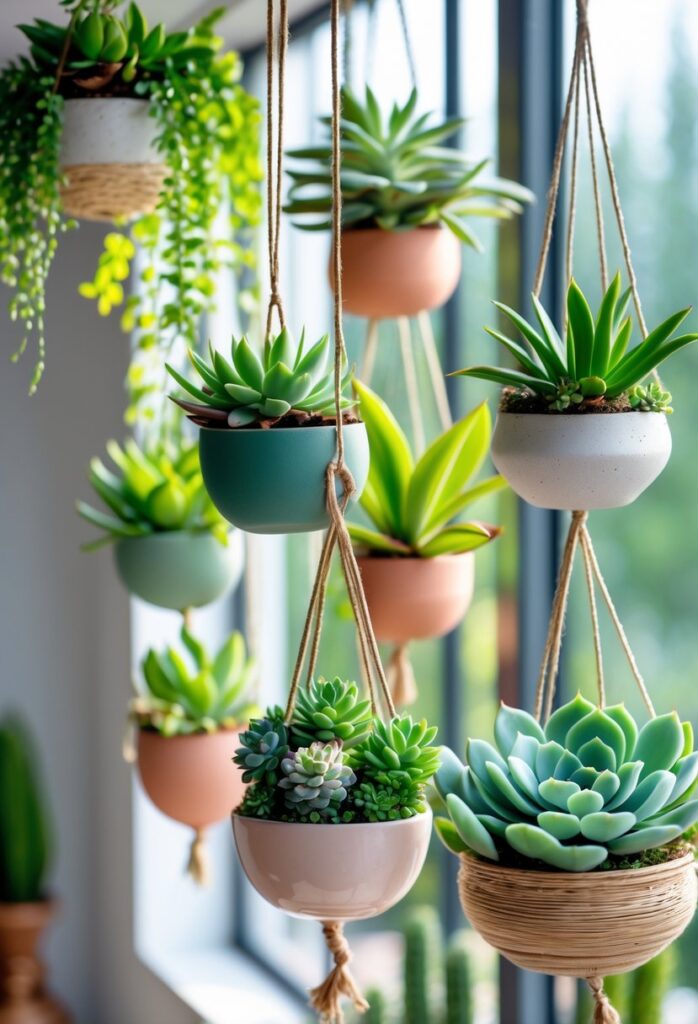
Succulent hanging gardens are a smart choice for anyone who wants low-maintenance greenery. These plants store water in their leaves, so they need less frequent watering than other types.
They do well in bright, indirect sunlight and prefer well-draining soil. Hanging them in decorative pots or macrame holders adds a modern touch to any space.
Trailing succulents create a natural cascading effect. This makes them perfect for small rooms or apartments where floor space is limited. Learn more about creative setups for these plants here.
9) Trailing Pothos Plant
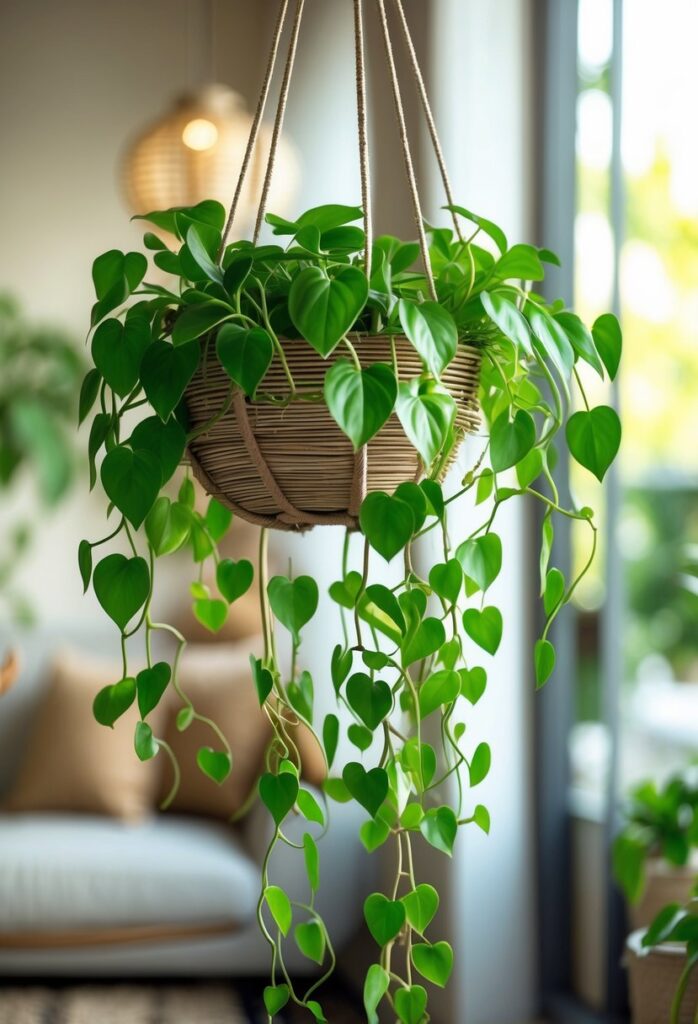
The trailing pothos plant is a popular choice for hanging planters. It grows well in low light and needs minimal care. Its long vines add a natural, flowing look to any room.
People often hang pothos in baskets or place them on shelves where the vines can cascade down. This plant fits well in many styles, from modern to bohemian. It is easy to grow and keeps a space feeling fresh and green. For more ideas, see creative ways to display pothos indoors.
10) Hanging Basket with Ferns
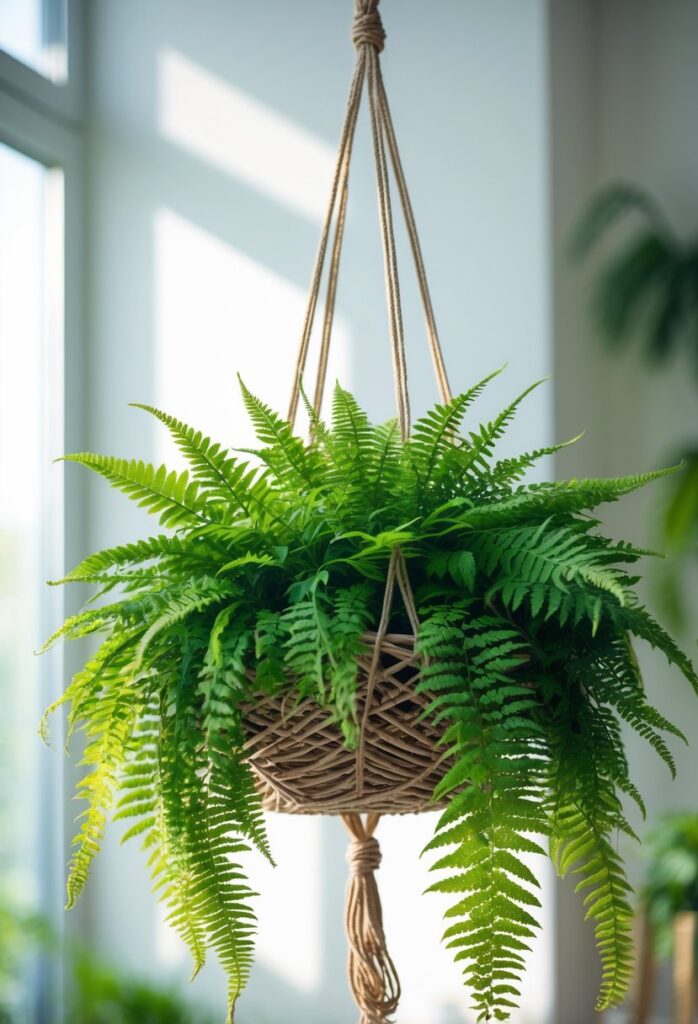
Ferns are a classic choice for hanging baskets. Their long, arching fronds add a soft, natural look to any space. They thrive well in shady or filtered-light areas, making them ideal for porches or indoor spots with indirect sunlight.
Boston ferns, in particular, are popular for their lush foliage. They need moist soil and regular care but reward with vibrant, cascading greenery. Using ferns in hanging baskets brings a timeless, elegant touch to small spaces. For more details, see the best hanging ferns.
11) Low Light Hanging Houseplants for Indoors
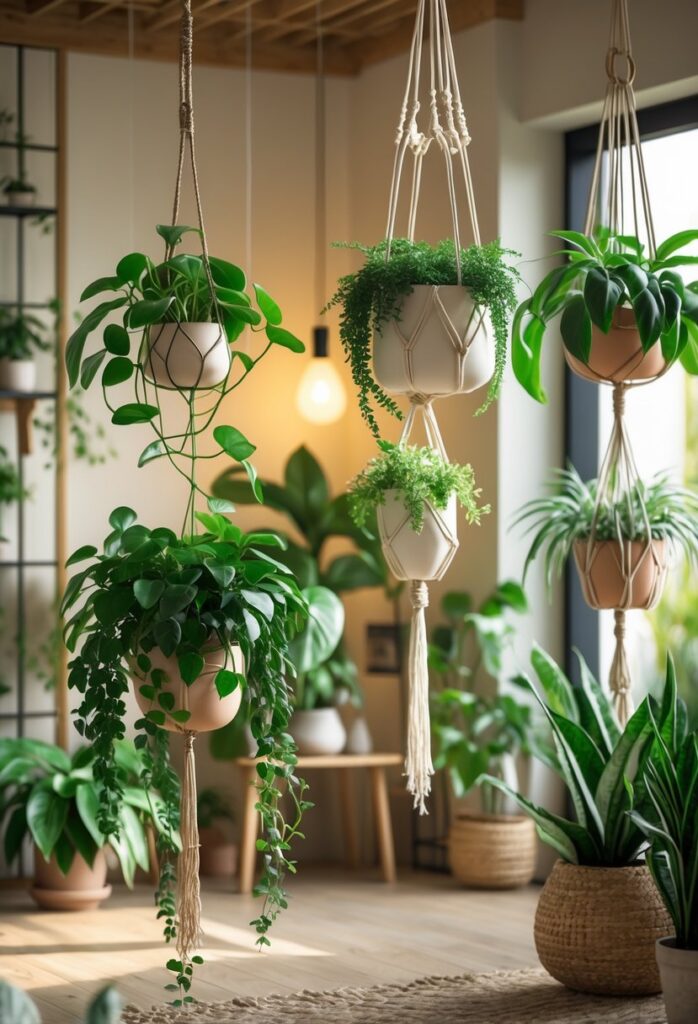
Low light hanging houseplants are ideal for indoor spaces with minimal sunlight. They can brighten dark corners without needing direct light. Plants like pothos, spider plants, and philodendrons thrive well in these conditions.
These plants often have trailing vines or arching leaves that create natural decor. They require less maintenance and help improve indoor air quality. Choosing low light hanging houseplants makes it easy to add greenery to any room.
For a reliable list of options, check out this guide on low light hanging plants.
12) Outdoor Hanging Plants
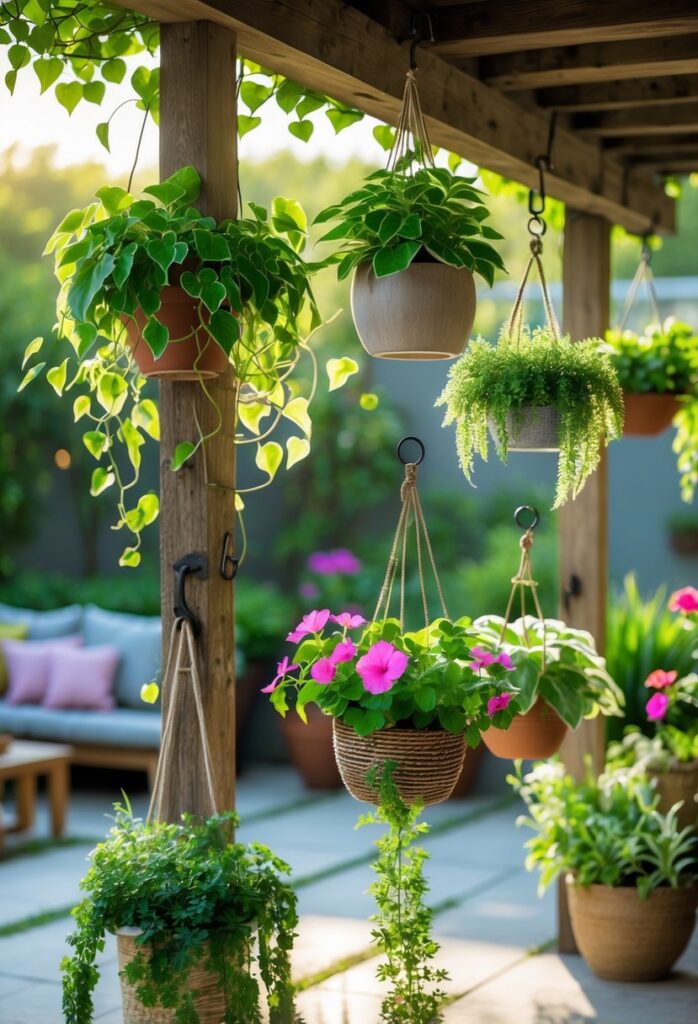
Outdoor hanging plants add life and color to patios, balconies, and porches. They can include flowering plants like petunias or leafy types like pothos and spider plants. Many outdoor hanging plants are low-maintenance and thrive in various light conditions.
These plants help maximize small spaces while creating a fresh, green atmosphere. Using outdoor hanging plants is a smart way to enhance any garden or outdoor area with natural beauty. For a detailed list of great options, see outdoor hanging plants ideas.
Choosing the Right Hanging Plant for Your Space
Selecting a hanging plant depends on the environment it will live in and the design of the room. Factors like light, humidity, and style play a big role in making sure the plant thrives and looks appealing.
Assessing Light and Humidity Needs
The amount of natural light available is crucial. Plants like pothos and spider plants do well in low to medium indirect light, making them great for rooms without bright windows. Ferns and tillandsias prefer higher humidity and indirect sunlight, so they are better suited to bathrooms or kitchens with windows.
A simple way to decide is to know where the plant will hang. South or west-facing windows give bright light, while north or east-facing windows provide softer, indirect light. If the room is dry, misting or using a humidifier helps plants that need moisture stay healthy.
| Light Level | Ideal Plants | Humidity Needs |
|---|---|---|
| Low/Indirect | Pothos, Spider Plant, Philodendron | Low to moderate |
| Medium/Bright | Boston Fern, English Ivy | Moderate to high |
| High/Direct | Succulents, String of Pearls | Low |
Matching Plant Types to Room Styles
Choosing plants that fit the room’s style can enhance the space. For modern spaces, sleek pots with trailing plants like string of pearls or hoya work well. Rustic or boho styles pair nicely with macramé hangers and fuller plants, such as Boston ferns or staghorn ferns.
Consider the size and shape of the plant too. Small trailing plants brighten shelves and corners, while large leafy plants make a bold statement when hung in open spaces. Safety matters as well—avoid heavy pots in high-traffic areas or places where children or pets could reach them.
Matching plant types with room aesthetics and function boosts both beauty and practicality. For more styling ideas, check creative hanging plant ideas to maximize small spaces.
Creative Placement and Display Tips
Choosing the right spot and height for hanging plants changes how they look and feel in a room. Pairing plants with walls and other décor can also make a space feel more balanced and lively.
Optimal Heights for Visual Impact
Hanging plants should be placed where they catch the eye without getting in the way. Generally, plants look best when hanging between 5 and 7 feet from the floor. This height keeps plants within sight but avoids bumping heads or cluttering walkways.
For taller plants or ones with long vines, hanging them slightly higher allows leaves to cascade naturally. Near windows, placing plants around 6 feet up helps them get light while creating an inviting view. In dining or seating areas, hanging plants lower—around eye level—adds a cozy feeling without blocking views or light.
Adjust the height depending on the room’s purpose and plant size. Using adjustable hooks or chains makes it easy to tweak placement over time.
Integrating Hanging Plants with Wall Decor
Plants can work as part of the overall wall design rather than just being added on. To create a balanced look, place hanging plants near framed art, mirrors, or shelves.
One strategy is to group plants with other wall elements to form a green corner or vertical garden. Mixing pots with varied shapes, sizes, and textures adds interest without overwhelming the space. Using wall-mounted plant grids or rods helps organize multiple plants neatly.
Plants look best when spaced out evenly but close enough to feel connected. Light-colored walls highlight green leaves well, while darker walls create a dramatic contrast. Adding plants near windows or light sources enhances their vibrancy and breathes life into the room.
For more ideas on hanging plants with wall décor, see 26 fantastic ways to hang plants on the wall like pros.
Frequently Asked Questions
Plants for hanging baskets vary depending on light, space, and style. Many options work well both indoors and outdoors, with different care levels and growth habits. Choosing the right plants and display methods helps create attractive, healthy arrangements.
Which plants are best for hanging baskets in full sun?
Succulents like the String of Pearls and Hindu Rope Plant thrive in bright, direct sunlight. These plants store water in their leaves, making them drought-tolerant and perfect for sunny spots. Mix small pots or wooden planters with these for a colorful, textured look.
How do you arrange plants in hanging baskets for visual appeal?
Use a combination of trailing, upright, and cascading plants for a balanced display. Place taller plants in the center or back and trailing plants like String of Pearls along the edges. Adding varied textures, like wooden peg plant hangers or hanging wood slice stands, can enhance the overall style.
What are some good hanging plants for a shaded balcony?
Plants that tolerate low light and indirect sun work best in shade. Ferns, pothos, and some trailing ivy varieties adapt well to these conditions. Using macrame hanging planters helps save space while adding a decorative touch without stressing the plants.
How can I create a DIY hanging plant display for indoors?
Start with a sturdy support, such as a macrame hanging planter or hanging wood slice plant stand. Choose easy-care plants like succulents or pothos to minimize maintenance. Combine different pot sizes and shapes to add visual interest, and ensure proper drainage to keep roots healthy.
What options are available for durable, low-maintenance outdoor hanging plants?
Succulents and drought-tolerant vines are good low-care choices. The Hindu Rope Plant and String of Pearls are particularly hardy outside under partial sun. Wooden peg plant hangers help protect delicate pots and improve air circulation in outdoor displays.
Can you recommend any flowering plants that will thrive in hanging baskets?
Petunias, fuchsias, and geraniums are popular flowering options for hanging baskets. They enjoy well-drained soil and regular watering. Mixing flowering plants with greenery in different holders, like macrame hangers, can create a vibrant and inviting look. For detailed care tips, see the guide on 10 Creative Hanging Plants Display Ideas.