
10 Tropical Plants Perfect for Indoor and Outdoor Gardening
Tropical plants offer a unique way to bring color, texture, and life to gardens and indoor spaces. Many people are drawn to their lush appearance and exotic feel, making them popular choices for landscaping and home decoration.
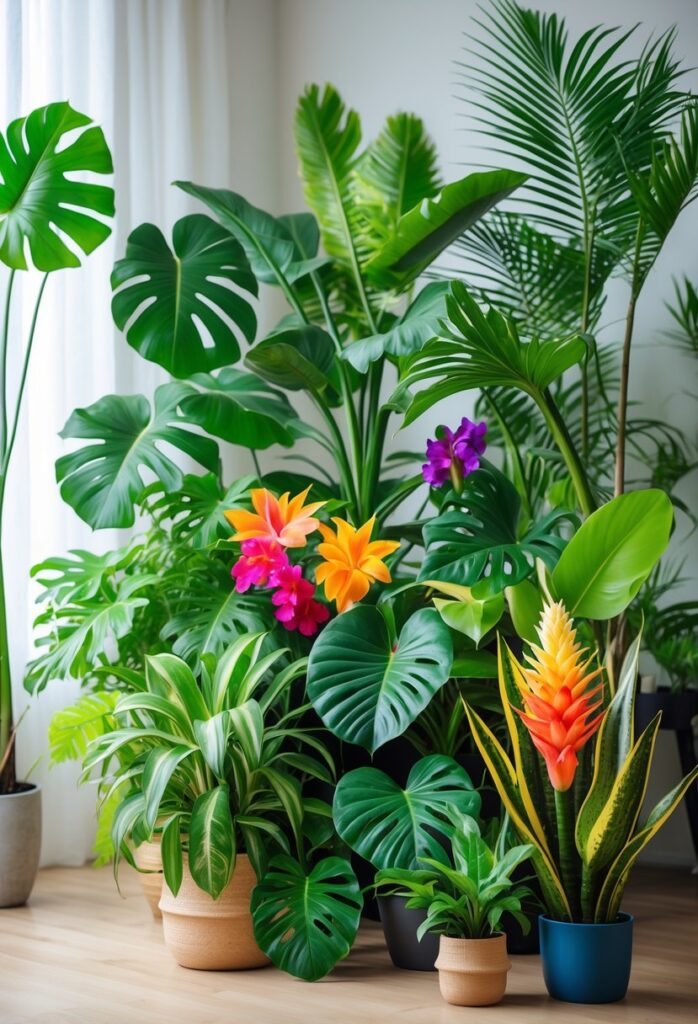
Choosing the right tropical plants can transform any space into a vibrant and inviting environment. These plants often thrive in warm, sunny areas and can vary widely in size and care needs, making it easier to find options for different settings.
1) Hibiscus
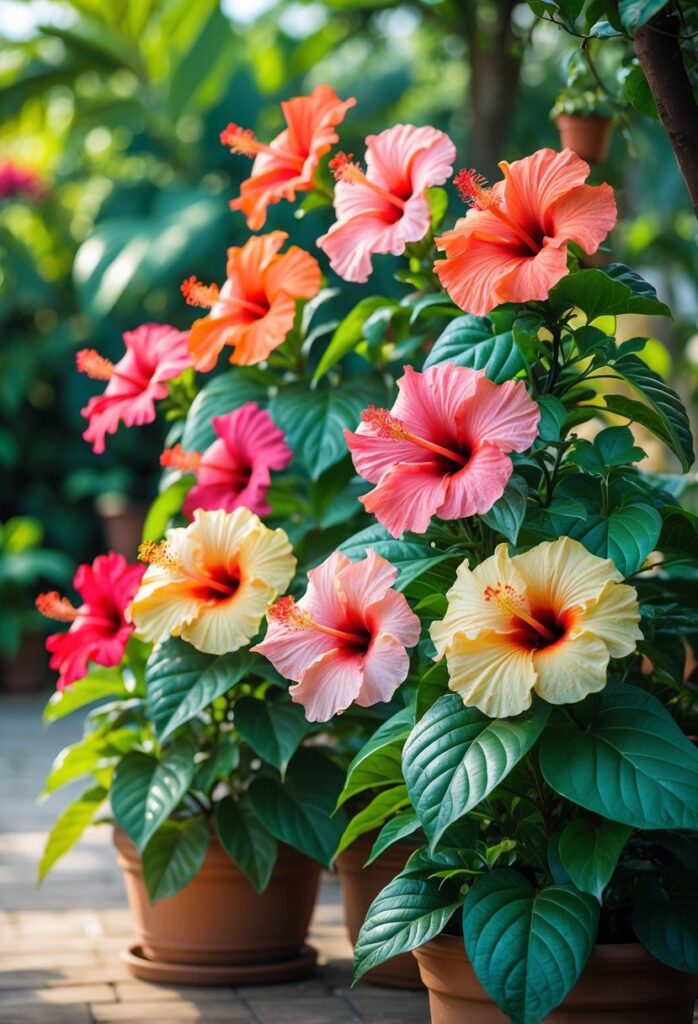
Hibiscus is a tropical plant known for its large, bright flowers. It grows well in warm climates and can be used in gardens or containers. The plant blooms in colors like red, yellow, pink, and orange, adding a vibrant look to any space.
Hibiscus plants need plenty of sunlight. They should get at least six hours of direct sun daily. This helps the flowers open fully and stay healthy.
Watering is important, especially when the plant is blooming. Hibiscus needs regular watering during spring and summer. In warm weather, daily watering is often required to keep the soil moist.
This tropical plant prefers temperatures between 60 and 90 degrees Fahrenheit. It grows best outdoors in USDA zones 9 to 11. Hibiscus can also be brought indoors during colder months.
The plant’s glossy green leaves and large flowers make it a popular choice for patios, walkways, or garden beds. It is easy to care for with proper light, water, and warmth. Learn more about caring for hibiscus from the Costa Farms 10 in. Hibiscus Bush.
2) Bird of Paradise (Strelitzia)
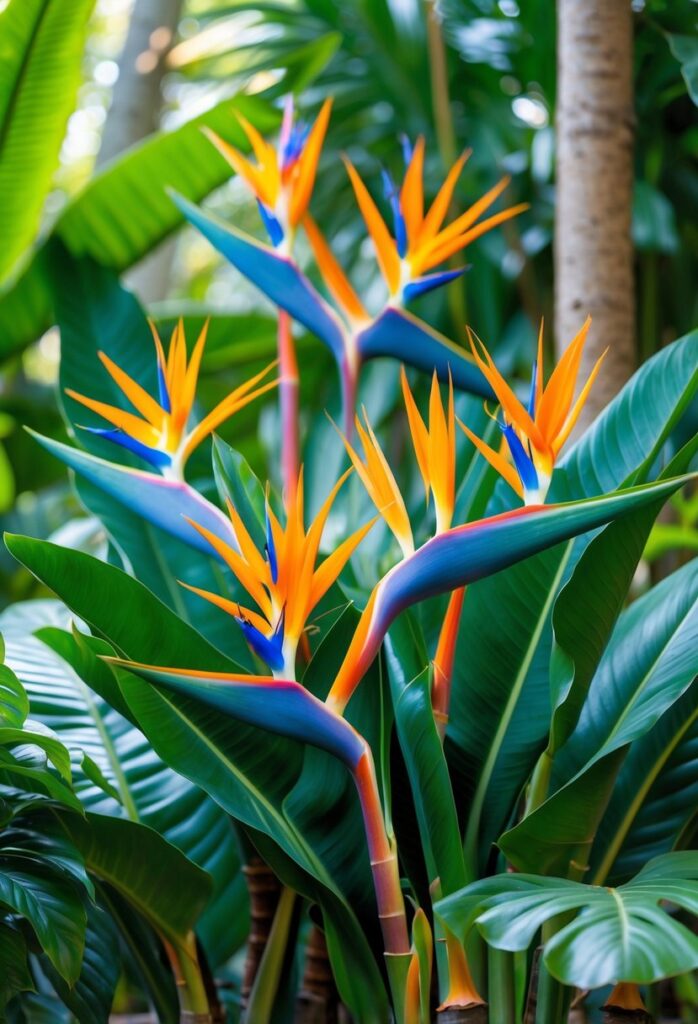
The Bird of Paradise, or Strelitzia, is a tropical plant known for its bright, colorful flowers. Its blooms look like a bird in flight, with striking orange and blue petals. It adds a tropical look to gardens and indoor spaces.
This plant grows best in warm, sunny places. It can reach heights of 3 to 5 feet. It thrives both outdoors in warm climates and indoors with plenty of indirect light.
Bird of Paradise is native to South Africa and prefers well-draining soil. It needs regular watering but should not be waterlogged. The leaves are large and green, adding to its striking appearance.
It can be grown as a houseplant or in outdoor landscapes. The plant is popular because of its dramatic flowers and easy care compared to other tropical plants. For detailed care tips, the Gardenia guide on Bird of Paradise plants provides useful advice.
3) Canna Lily
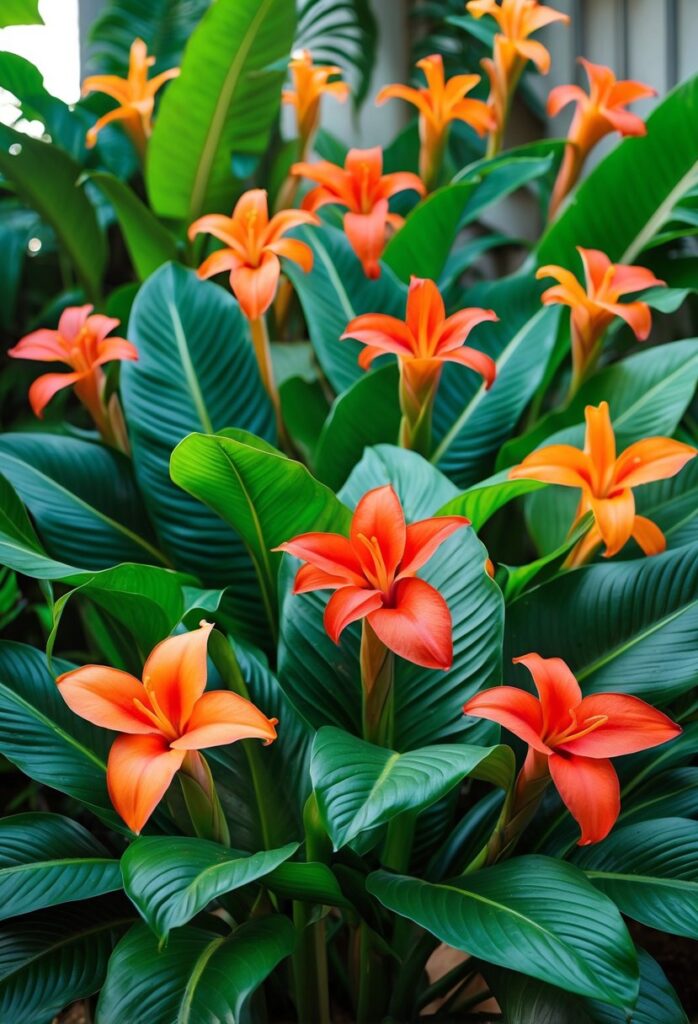
Canna lilies are tropical plants known for their large, colorful flowers and striking foliage. They come in many varieties with flowers in red, orange, yellow, and other bright colors. The leaves often resemble those of banana plants and can be green, bronze, or variegated.
These plants grow from rhizomes, which makes them perennials in warm climates. They prefer full sun and well-drained soil. Regular watering and balanced fertilizer help them thrive and bloom well.
Canna lilies are not true lilies but belong to the Cannaceae family. They are native to tropical and subtropical regions of the Americas but are widely grown in many gardens due to their tropical look and ease of care.
In cooler areas, the rhizomes can be dug up and stored during winter to protect them from frost. With proper care, canna lilies add bold color and texture to gardens and landscapes.
More detailed growing advice can be found at The Spruce’s guide on how to grow and care for Canna lilies.
4) Bougainvillea
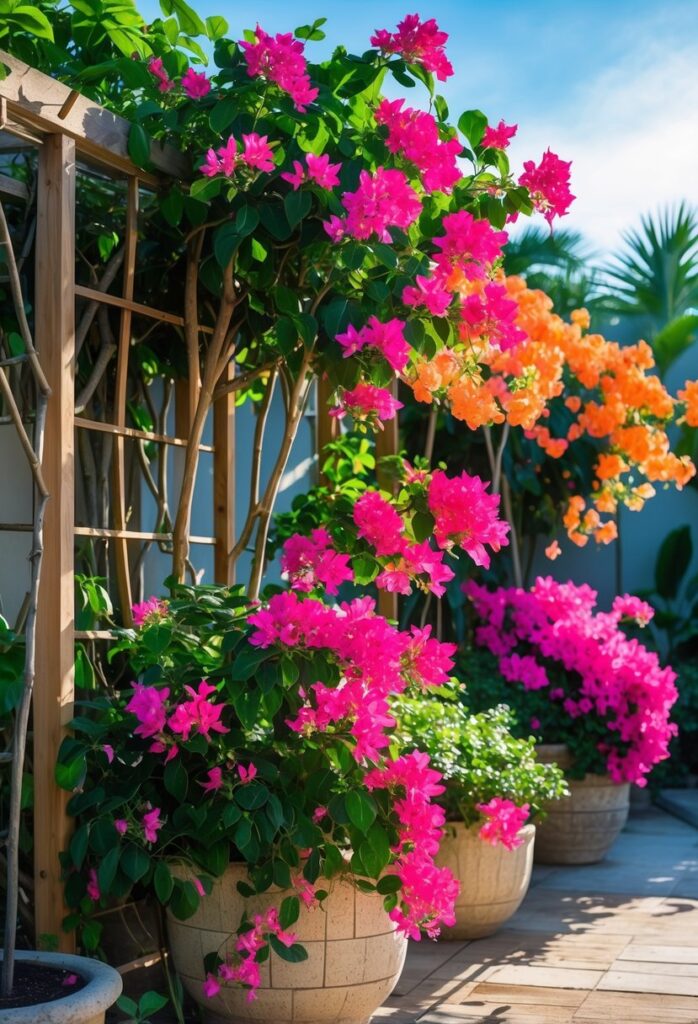
Bougainvillea is a tropical vine or shrub known for its bright, colorful bracts that surround small, less noticeable flowers. It grows best in warm climates and can reach up to 40 feet when given support.
This plant thrives in full sun and well-drained soil. It prefers zones 9 to 11 but can survive cooler areas if kept indoors during frost.
Bougainvillea blooms mainly from spring through fall. Regular pruning helps keep its shape and encourages more vibrant bracts.
It is drought-tolerant once established and does not need frequent watering. Overwatering can cause root problems.
Bougainvillea adds vivid color to gardens, fences, and trellises. It is a popular choice for both outdoor landscaping and as a potted plant in cooler climates.
Learn more about caring for bougainvillea from this detailed Bougainvillea care guide.
5) Banana Plant (Musa)
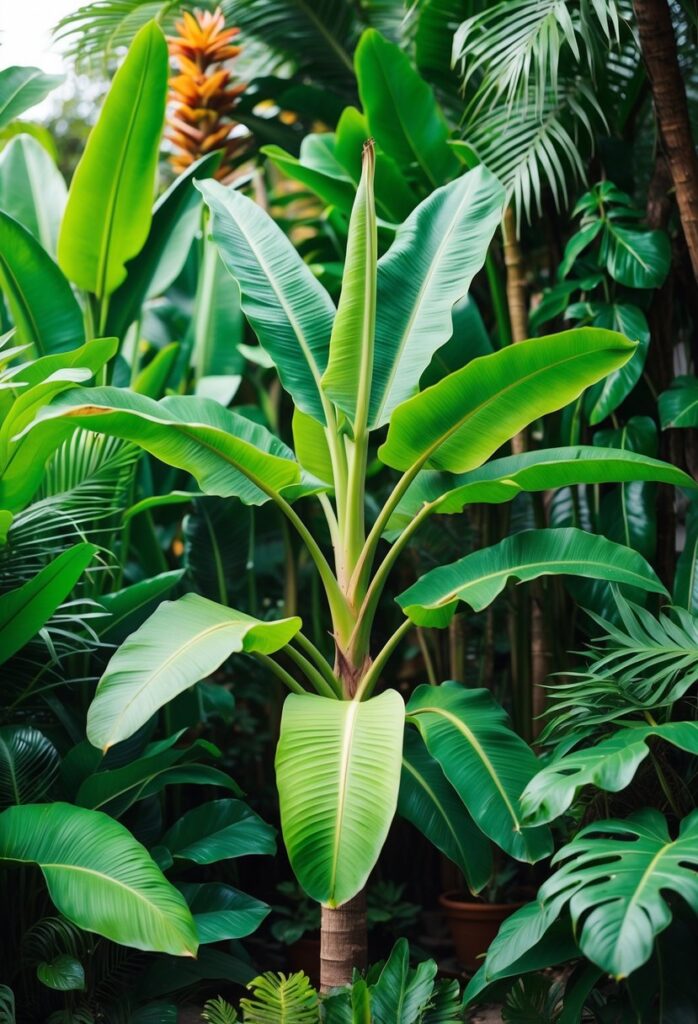
The banana plant, or Musa, is a fast-growing tropical herb with large, paddle-shaped leaves. It can grow both indoors and outdoors, adding a lush, tropical feel to any space. Banana plants are not true trees, but their size and appearance make them look like one.
They need plenty of sunlight and warmth to grow well. In cooler climates, they are more often grown for decoration than for fruit because they need a warm, humid environment. Banana plants also require a lot of water and humidity, as they come from rain forest regions.
Some varieties, like the Red Banana, have colorful fruit and leaves that add unique beauty to gardens. Banana plants do best when grouped together. Keeping them close helps keep moisture in the air and supports healthy growth.
For detailed care advice, see how to grow a banana tree in different climates at 10 Gorgeous Banana Plants for a Tropical Backyard.
6) Alocasia
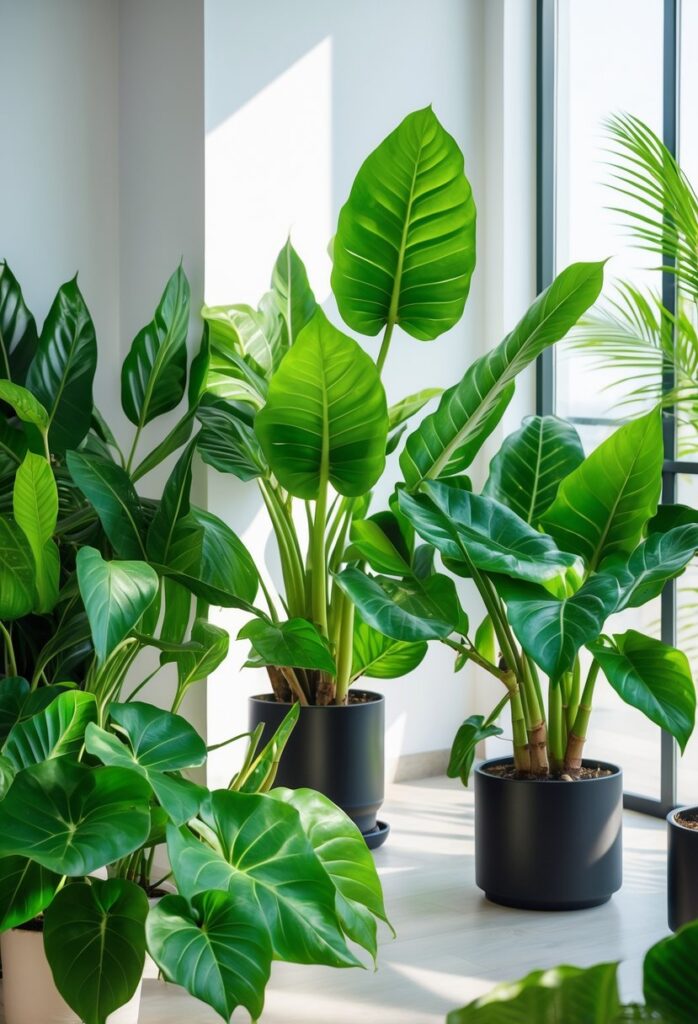
Alocasia is a tropical plant known for its large, striking leaves. These leaves often have heart or arrow shapes. Because of their size and shape, they are sometimes called elephant ears.
The plant belongs to the Araceae family and includes nearly 100 species. Many varieties show different leaf colors, shapes, and sizes. This variety makes Alocasia popular for indoor and outdoor decoration.
Alocasia prefers bright, indirect light. It needs well-draining soil and regular watering. However, the soil should dry out slightly between waterings to avoid root rot. High humidity helps keep the plant healthy and vibrant.
Their glossy, bold foliage adds a tropical feel to any space. Some popular types include the Alocasia Amazonica, which has boldly veined leaves.
Despite their beauty, Alocasia plants need some care. They do not like cold or dry conditions. With proper attention, they can thrive and become a striking feature in a home. Learn more about Alocasia varieties and care at Plant America.
7) Anthurium
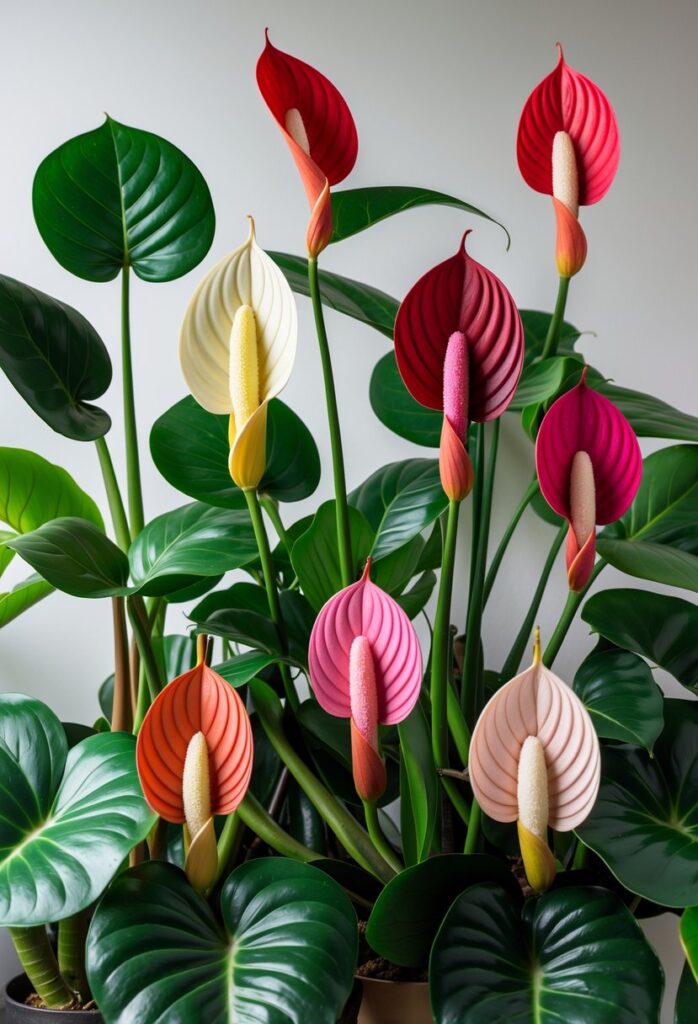
Anthurium is a tropical plant known for its bright, long-lasting flowers and glossy, heart-shaped leaves. It grows naturally in Central and South America and prefers warm, humid environments.
This plant can bloom year-round when cared for properly. Anthuriums need indirect sunlight and well-draining soil to thrive indoors.
Some popular types include Anthurium andraeanum and Anthurium crystallinum. They come in colors like red, pink, white, and green, adding a splash of color to any space.
Anthuriums grow well as houseplants because they require moderate care. Regular watering and high humidity help keep their leaves healthy and their flowers vibrant.
They are also known as flamingo flowers, named for their bright, spade-shaped blooms. Their tropical look makes them a favorite among plant enthusiasts who want a bold indoor plant.
More details on caring for Anthuriums can be found in this Anthurium care guide.
8) Dieffenbachia
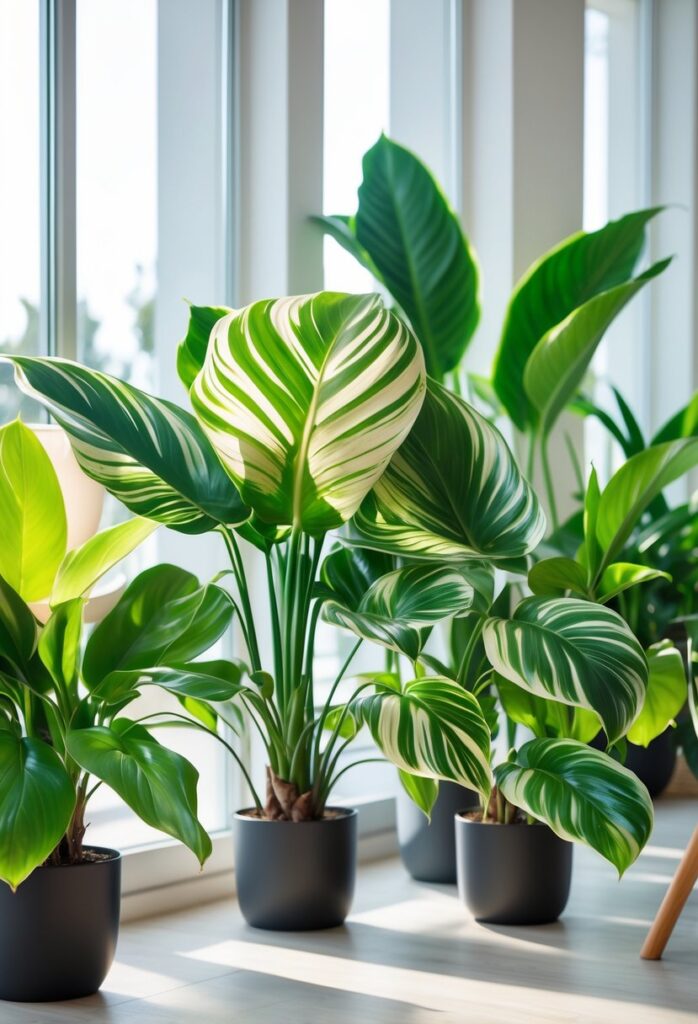
Dieffenbachia, also called dumb cane, is a popular tropical houseplant. It features large, broad leaves with unique patterns in green, white, yellow, or cream. These colorful leaves make it a common choice for adding visual interest indoors.
This plant thrives in warm, humid environments that mimic its native tropical forests. It grows best in bright, indirect sunlight. Direct sun can damage its leaves, so filtered light is ideal.
Dieffenbachia needs well-draining soil and consistent moisture. However, it should not sit in water to avoid root rot. It is usually grown indoors in cooler climates since it cannot tolerate frost.
There are many varieties available, each with different leaf shapes and colors. Some popular types include Dieffenbachia Parachute and other cultivars known for their attractive, bold foliage.
Handling Dieffenbachia requires care because its sap can irritate skin and is toxic if ingested. Despite this, it remains a favored houseplant due to its easy care and striking appearance.
For more information on these types and care tips, see 26 Types of Dieffenbachia Plants.
9) Orchids
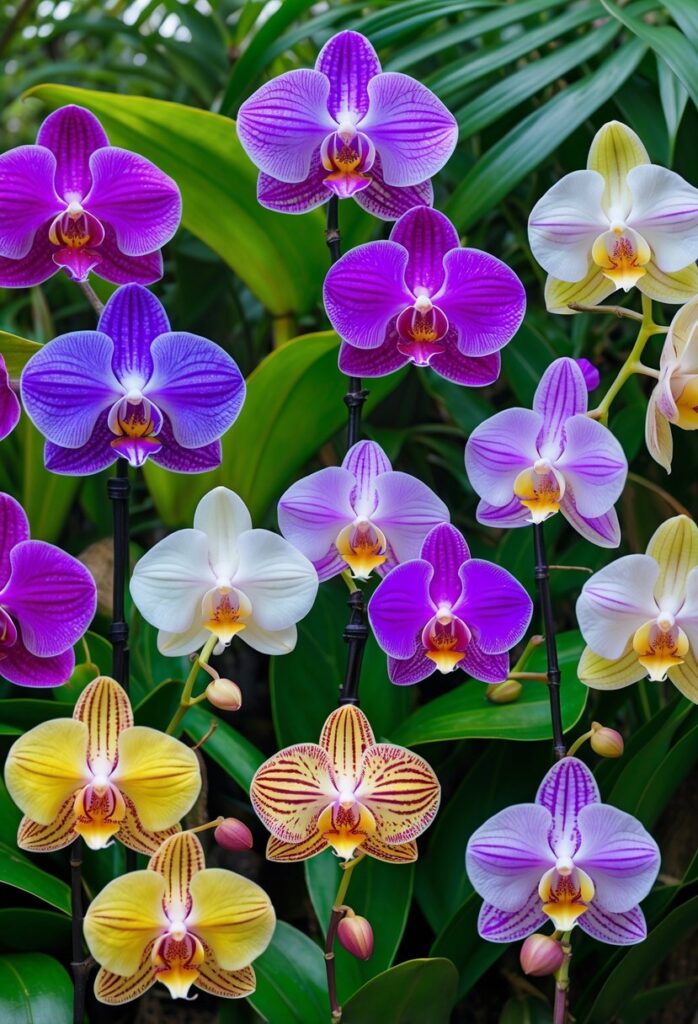
Orchids are a diverse group of tropical plants known for their unique and often intricate flowers. Many species grow naturally in warm, humid climates, making them popular tropical plants.
They can be found in various environments. Some orchids grow on trees, absorbing moisture and nutrients from the air, while others grow on the ground. Their wide variety means they can adapt to different conditions.
Many orchids are prized for their beauty and delicate blooms. Common types like Phalaenopsis and Cattleya are favored by gardeners for indoor and outdoor growing. They often need bright, indirect light and careful watering.
Orchids are not all tropical, but most bring a tropical feel to any space. They require some patience and care to thrive, rewarding growers with long-lasting flowers and vibrant colors. More details on their features and care can be found in this guide to exotic tropical orchids.
10) Bromeliads
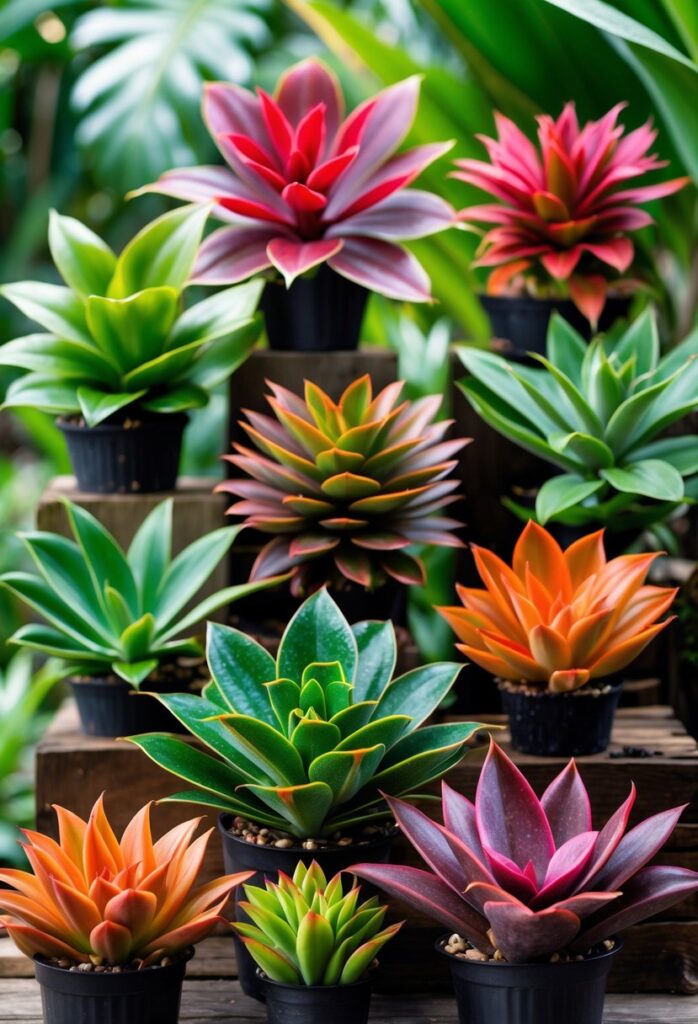
Bromeliads are tropical plants known for their bright colors and unique shapes. They come from the Americas, mostly growing in warm, humid climates. Some grow on trees, while others grow in soil or rocks.
They are easy to care for and add a tropical feel indoors or outdoors. Their leaves often form a cup that holds water, which helps the plant survive. Some bromeliads produce small, colorful flowers.
Many types can thrive inside homes with bright, indirect light. They do not need much water, just enough to keep the center cup filled. They are popular for their low-maintenance nature and striking appearance.
Bromeliads can also reproduce by producing small offshoots called pups. This makes it simple to grow more plants from one parent.
For those interested in tropical plants, bromeliads offer both beauty and variety. You can learn more about the different bromeliad types and care tips at 19 Stunning Types of Bromeliads to Grow Indoors.
Caring for Tropical Plants
Tropical plants need specific conditions to grow well. Their care mainly involves managing water, light, and nutrients correctly. Each factor affects the plant’s health and ability to thrive.
Watering and Humidity Needs
Tropical plants prefer consistent moisture but dislike standing water. Most need watering about once a week. It’s important to let the soil dry slightly between waterings to prevent root rot.
They thrive in humid environments, ideally around 60% humidity or higher. In dry indoor air, using a humidifier or placing a tray of water near the plant helps maintain moisture in the air. Misting leaves occasionally can also raise humidity but is less effective than other methods.
Water quality matters too; lukewarm, filtered, or rainwater is best. Cold or hard water can stress the plants and cause leaf damage.
Light Requirements
Most tropical plants need bright but indirect light. Direct sunlight can burn their leaves, especially in indoor settings. A spot near a window with filtered light or some morning sun is ideal.
Certain tropical plants like the Bird of Paradise or Fiddle Leaf Fig require more light and benefit from several hours of indirect sun daily. Others, such as Monstera, tolerate lower light but grow slower without enough brightness.
If natural light is limited, using grow lights designed for houseplants can support healthy growth. The key is to provide 12-14 hours of light while avoiding harsh direct sunlight.
Fertilizing and Soil Preferences
Tropical plants do best in well-draining soil that retains some moisture. A potting mix containing peat moss, perlite, and vermiculite works well. This type of soil lets air reach roots and prevents waterlogging.
Fertilizing should happen every two weeks during spring and summer when plants actively grow. Liquid fertilizers with balanced nutrients support leaf and root development.
In fall and winter, fertilizing can be reduced or stopped as plants enter dormancy. Avoid over-fertilizing because it can burn roots and harm the plant. Choosing the right fertilizer and soil mix is essential for tropical plants to stay healthy and vibrant.
For more detailed advice, see this expert guide on tropical plants care.
Common Challenges With Tropical Plants
Tropical plants need careful attention to thrive. They often face problems like pests and diseases that harm their growth. They are also sensitive to sudden temperature changes, which can cause stress or damage. Knowing how to manage these issues helps keep plants healthy and vibrant.
Managing Pests and Diseases
Tropical plants frequently attract pests such as spider mites, mealybugs, and scale insects. These pests thrive in warm, humid environments and can quickly damage leaves and stems. Checking plants regularly helps catch infestations early.
To treat pests, using insecticidal soap or neem oil is effective. Manual removal with a damp cloth can also work for small infestations. For fungal and bacterial diseases, proper air circulation and careful watering are essential to prevent spores from spreading.
Keeping tools clean and isolating new plants reduces the risk of disease transmission. Routine observation and quick action prevent minor problems from becoming major ones.
Overcoming Temperature Fluctuations
Tropical plants need stable, warm temperatures, usually between 65°F and 85°F (18°C to 29°C). Sudden drops or spikes can cause leaf drop, browning, or slowed growth. Indoor plants are especially vulnerable during cold winters or near air conditioners and heaters.
To protect plants, placing them away from drafty windows or vents is important. Using a humidifier helps maintain moisture levels since dry air increases stress. For outdoor tropical plants, moving them indoors or using frost cloth during cold nights can prevent damage.
Consistent temperature and humidity control support vibrant growth and reduce stress-related problems.
Frequently Asked Questions
Tropical plants need warm temperatures, plenty of light, and proper care to thrive. Attention to watering, feeding, and pest control is crucial to keep them healthy. Adjustments may be needed for different climates and indoor settings.
What are the ideal growing conditions for tropical plants?
Tropical plants like hibiscus and banana plants prefer temperatures between 65°F and 85°F. They grow best in bright, indirect sunlight or partial shade.
Soil should be well-draining and rich in organic matter. High humidity helps most tropical plants stay healthy and vibrant.
How do you care for tropical plants in non-tropical climates?
In cooler areas, tropical plants must be protected from frost and cold winds. It is best to grow them in containers that can be moved indoors during winter.
Using mulch and covering plants during cold snaps can also help. Indoor growth under grow lights is an option if outdoor conditions are unsuitable.
Which tropical plants are best suited for indoor cultivation?
Plants like bird of paradise and canna lily adapt well indoors if they receive enough light. Hibiscus and bougainvillea can also grow indoors but need bright, sunny spots.
Maintaining humidity with a humidifier or misting is important. Proper airflow and well-draining pots help prevent root problems.
What are some common pests and diseases affecting tropical plants, and how can they be managed?
Aphids, spider mites, and scale insects often affect tropical plants. Regular inspection and washing leaves with water can reduce infestations.
Fungal diseases like leaf spot occur if humidity is too high and airflow is poor. Using fungicides and pruning affected areas helps contain spread.
How often should tropical plants be watered and fertilized?
Watering depends on temperature and humidity but usually ranges from once a week to twice a week. Soil should be moist but not soggy to avoid root rot.
Fertilize tropical plants monthly with a balanced, water-soluble fertilizer during the growing season. Reduce feeding in winter when plants grow slower.
What are some tips for pruning and maintaining the health of tropical plants?
Prune dead or damaged leaves to encourage new growth and keep plants tidy. Regular trimming helps control size and shape, especially for fast growers like banana plants.
Use clean, sharp tools to avoid infection. Removing spent flowers can also promote more blooms.