
11 Best Shade Plants for Low-Light Garden Spaces and Easy Maintenance
Many gardens have shaded areas that receive little direct sunlight, making it difficult for some plants to grow well. Choosing the right plants for these spots is important to keep the garden healthy and attractive.

The best shade plants are those that can thrive with low light, adding color and life to darker corners of a yard. These plants offer gardeners options to create vibrant outdoor spaces without needing full sun. For help finding suitable plants, it’s useful to explore a list of top performers that do well in shade conditions.
1) Hosta

Hostas are popular plants for shady gardens. They have wide, often heart-shaped leaves that come in many colors, from blue-green to gold and variegated patterns.
They grow well in partial to full shade and need fertile, well-draining soil. Hostas vary in size, with some spreading wide and others staying compact.
Besides their attractive foliage, hostas produce small lavender or white flowers in summer. They are low-maintenance and reliable for adding texture to shaded spaces. More details about hosta varieties for shade can be found at Better Homes & Gardens.
2) Ferns

Ferns are reliable plants for shaded areas. They do well in low light and add a soft, natural look. Many types of ferns prefer moist, rich soil and thrive under trees or in other shaded spots.
They come in different sizes and shapes, making them useful for borders or ground cover. Some ferns stay green all year, providing steady color even when other plants fade. For gardeners seeking shade plants, ferns are a solid choice known for their easy care and graceful foliage. See more about the best ferns for shade at this shade-loving ferns guide.
3) Astilbe

Astilbe is a popular choice for shade gardens. It grows well in partial to full shade and prefers moist, rich soil. The plant produces feathery plumes in colors like pink, red, white, and lavender.
It typically grows between 1 to 4 feet tall. Astilbe’s fern-like leaves add texture to shaded areas. It blooms in summer, brightening darker spots with elegant flowers. This makes it a reliable option for low-light garden areas. For more details on growing Astilbe and its varieties, see this guide on Astilbe plants.
4) Heuchera (Coral Bells)

Heuchera, also known as coral bells, is a popular choice for shady gardens. They are valued for their colorful foliage, which comes in shades like deep purple, bright green, and soft peach.
These plants grow well in partial to full shade and prefer well-drained soil. Heucheras are low-maintenance perennials that add texture and color to darker garden spots.
Some varieties, such as ‘Blackberry Jam’ and ‘Peach Flambe,’ offer vibrant leaf colors that brighten up shade areas. They work well in beds or containers and pair nicely with other shade-loving plants.
Learn more about different coral bells at this guide to shade-tolerant coral bells.
5) Japanese Forest Grass

Japanese Forest Grass is a shade-loving ornamental plant that adds soft texture to gardens. It thrives best in full or part shade and prefers moist, well-drained soil.
This grass is low maintenance and slow to spread, making it ideal for garden borders or shaded areas. It also resists pests and deer, which reduces the need for extra care.
Propagation is usually done by dividing the clumps. Varieties like ‘Aureola’ and ‘All Gold’ offer attractive color variations for year-round interest in shaded spots. Learn more about growing Japanese Forest Grass here.
6) Bleeding Heart
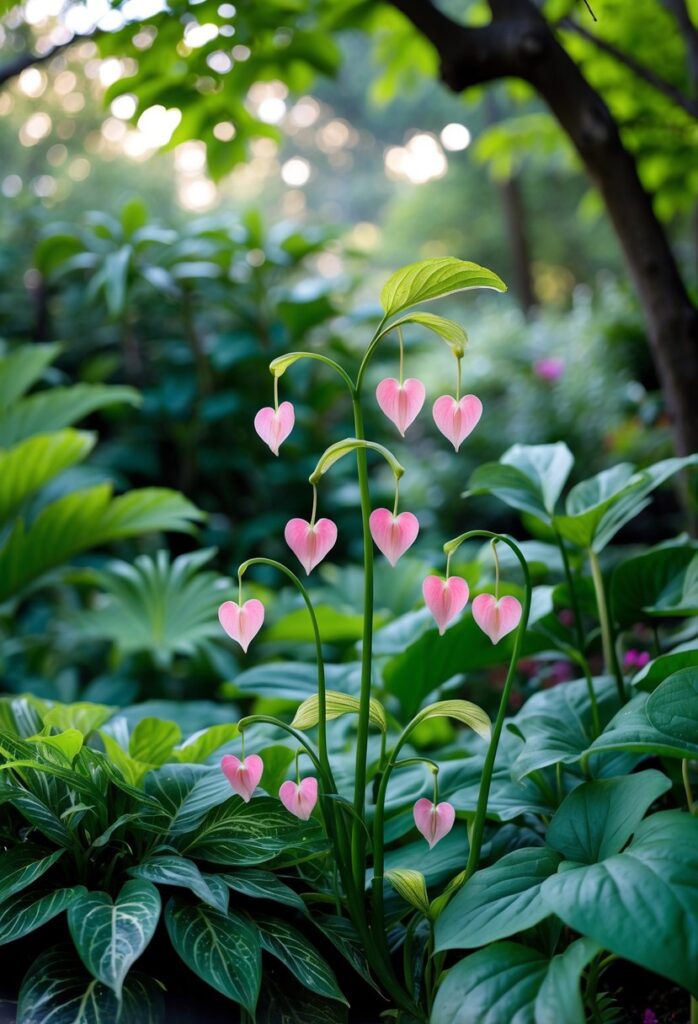
Bleeding Heart is a spring-flowering perennial with distinctive heart-shaped blooms. It grows best in partial to full shade and prefers well-drained soil rich in organic matter.
This plant adds a delicate, classic look to shady garden spots. It thrives where many other flowers struggle, making it a reliable choice for low-light areas.
Different varieties like Lamprocapnos spectabilis offer charming pink or white flowers. Bleeding Heart’s unique shape and color bring subtle charm to woodland-style gardens.
Learn how to care for this plant to ensure strong growth and vibrant blooms each season from expert guides on shade-loving plants.
7) Solomon’s Seal

Solomon’s Seal is a shade-loving perennial with long, arching stems and delicate, cream-colored flowers that hang like tiny lanterns. It thrives in cool, moist, and shaded garden areas, often under trees or in woodland settings.
This plant prefers rich, well-drained soil that stays damp but not waterlogged. It grows well in USDA Zones 3-9 and spreads slowly over time, creating a soft, flowing look in shady garden spaces. Solomon’s Seal pairs well with ferns and hostas to enhance a natural woodland garden feel.
Learn more about growing Solomon’s Seal in shade gardens.
8) Lungwort (Pulmonaria)
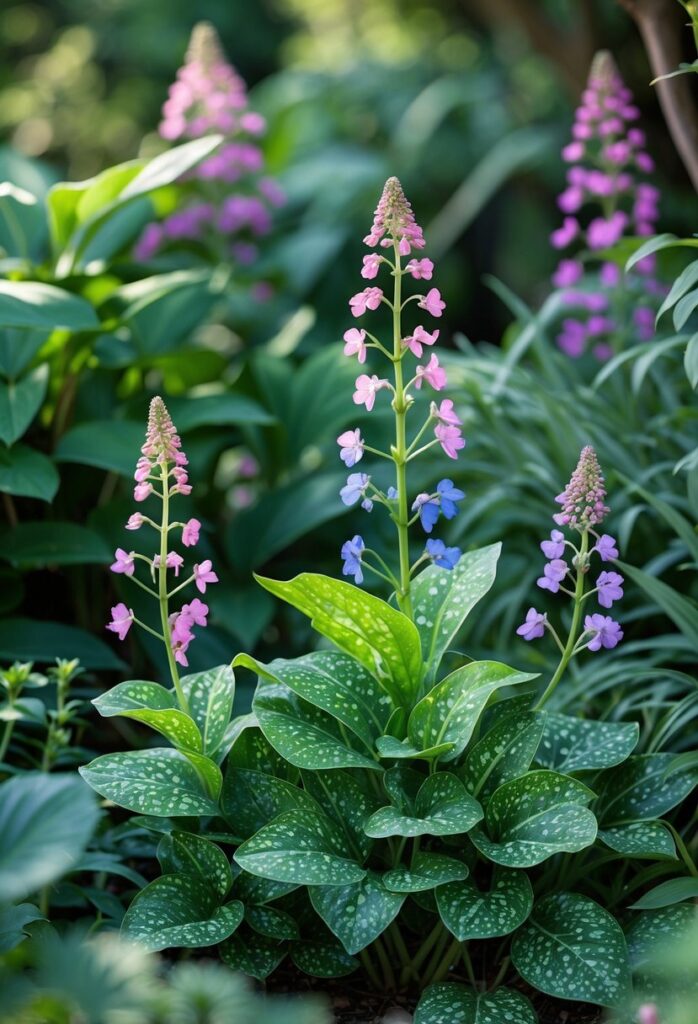
Lungwort thrives in shady, moist areas, making it ideal for gardens with limited sunlight. It has spotted, silver-marked leaves that add texture even when not in bloom.
In early spring, it produces small, tubular flowers that change color from pink to blue or purple. This plant prefers well-drained, organic-rich soil and benefits from occasional dividing every few years.
Lungwort pairs well with other shade-loving plants like hellebores and primroses, adding early color and interest to shaded garden beds. It is low-maintenance and tolerant of cool temperatures. For more details, see this guide on lungwort care and companion planting.
9) Foamflower (Tiarella)

Foamflower is a low-growing perennial that thrives in shady areas. It forms neat mounds about 8 inches tall with attractive, lobed leaves.
This plant prefers moist soil rich in organic matter and does well in part to full shade. It is hardy in cooler zones and tolerates deep shade where many plants struggle.
Its delicate, airy flowers bloom in spring, adding texture and softness to shade gardens. Foamflower requires little care and does not need pruning to stay healthy. For growing tips, see this detailed guide on foamflowers.
10) Toad Lily (Tricyrtis)
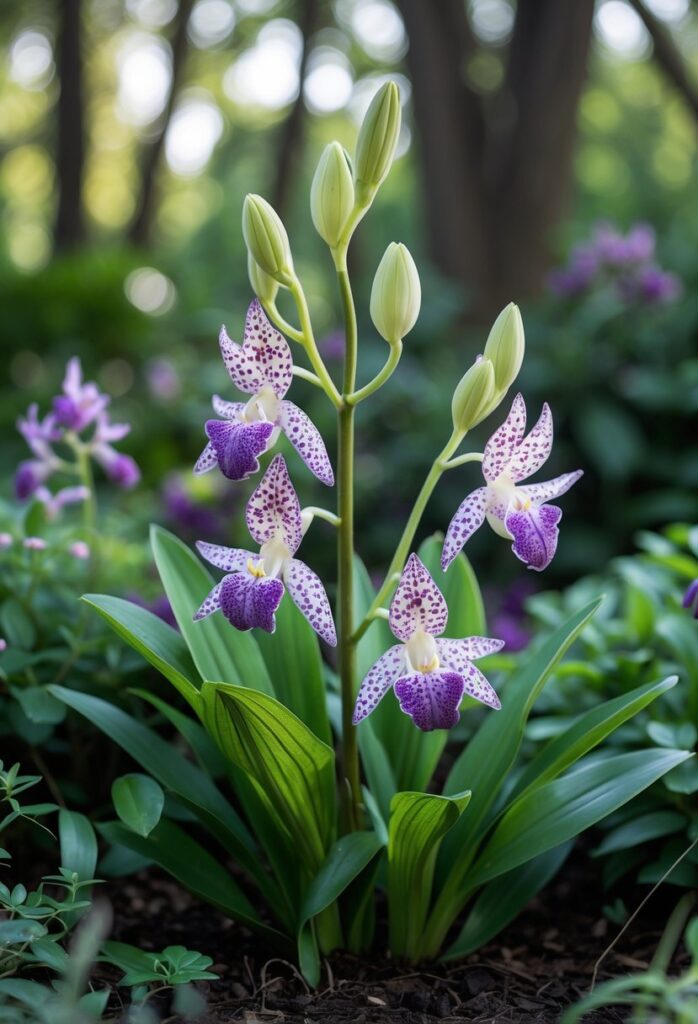
Toad lilies are shade-loving perennials with unique, spotted flowers that bloom in late summer and fall. They thrive in cool, shady spots, especially under trees or along woodland edges.
These plants are hardy in many climates and do well with moist, well-drained soil. Their delicate, orchid-like blooms add interest when many other plants have finished flowering.
Ideal for naturalized or woodland gardens, toad lilies bring subtle beauty without needing much sun. They are a strong choice for gardeners seeking a low-maintenance plant with late-season charm. Learn more about growing toad lilies in shade gardens at The Spruce.
11) Foxtail Fern

The Foxtail Fern grows well in partial shade and moist soil. It can tolerate some sun if it gets enough water. This evergreen perennial has bright green, bushy foliage that adds texture to shaded gardens.
It thrives best in warm climates, especially in USDA zones 9 to 11. The plant prefers morning sun and afternoon shade to avoid leaf burn. Foxtail Fern can be divided in spring to help it spread and stay healthy.
It is also popular as an indoor plant near an east-facing window where it receives indirect light. For more details, see this guide on growing foxtail ferns.
Understanding Shade Plant Growth
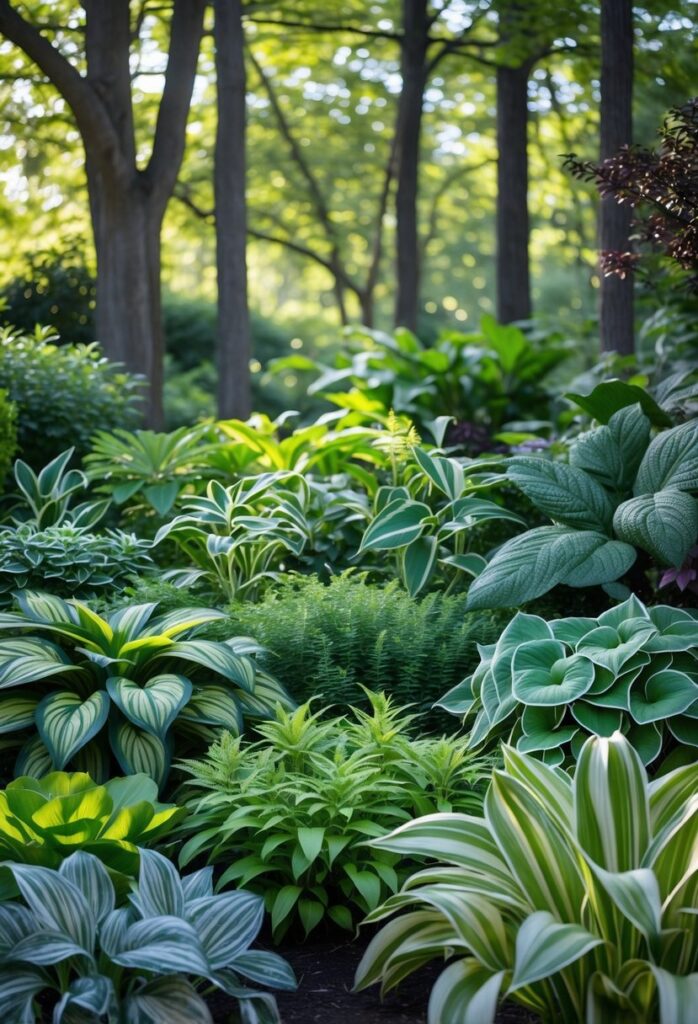
Shade plants grow best when their specific needs for light, soil, and care are met. These plants require less sunlight but often need nutrient-rich soil and consistent moisture. Managing challenges like pests or poor airflow is important to keep shade gardens healthy and vibrant.
Light Requirements for Shade Plants
Shade plants do not thrive in full sun but need some light to grow well. Most shade-tolerant plants prefer partial to full shade, meaning they get between 3 to 6 hours of indirect or dappled sunlight daily. Too much direct sun can scorch their leaves, while too little light slows their growth and weakens the plant.
Light quality matters as well. North-facing yards or areas blocked by large trees offer more filtered light. Knowing the type of shade — whether dense or light dappled shade — helps gardeners choose plants that can adapt to those conditions.
Soil Preparation and Maintenance
Soil for shade plants should be rich in organic matter and well-drained while retaining moisture. Adding compost improves fertility and texture. Most shade plants prefer slightly acidic to neutral pH levels depending on the species.
Regular mulching helps keep the soil moist and cool, reducing water evaporation. It also keeps weeds down, which compete for nutrients. Light soil aeration can prevent compaction and promote root growth. Avoid heavy fertilizers that may burn delicate shade plants.
Common Challenges in Shaded Gardens
Shaded areas often face problems like poor air circulation that leads to fungal diseases. Damp conditions encourage mold and mildew, so it’s important to space plants properly to allow airflow.
Pests such as slugs and snails thrive in cool, moist shade. Removing debris and monitoring regularly can control their population. Another challenge is competition from tree roots, which can limit nutrients and water available to shade plants.
Proper care can reduce these risks and help shade gardens flourish. For detailed advice on selecting and growing shade plants, see more on plants that thrive in shade.
Designing Lush Shade Gardens
A successful shade garden blends plants that thrive in low light with smart design choices. The key is to balance different plant types, shapes, and watering needs. This approach creates a garden that feels full and lively without overworking the soil or plants.
Choosing Companion Plants
Selecting the right companions helps plants grow well together and prevents overcrowding. Shade-loving plants like hostas, ferns, and astilbes often share similar soil and moisture needs, making them good partners. Mixing evergreen and deciduous shade plants ensures year-round interest.
Using plants of various heights also helps. Taller plants can provide light dappled shade for shorter ones. Pay attention to growth habits to avoid plants that spread too aggressively, which can choke out neighbors.
Plants that fix nitrogen or improve soil health, like certain ferns, can support others in the garden. Companion planting reduces pests too, such as pairing allergenic or pest-resistant species nearby.
Creating Texture and Layering
Texture and layers bring depth and visual appeal. Large, broad leaves contrast well with fine, feathery foliage. Examples include pairing hostas with ferns or lungwort.
Layer plants by height in groups or rows. Place taller species near the back or in shaded edges. Mid-height plants form the middle layer, and low groundcovers fill open patches.
Different leaf colors add variety. Shades of green combined with purples or silvers keep the garden vibrant. Using plants with glossy or matte leaves creates subtle contrasts.
Mixing textures also helps plants avoid disease by improving air circulation between layers.
Watering Strategies for Shade Gardens
Shade gardens usually need less water than sunny ones but require steady moisture. Soil in shaded areas often stays damp longer, so avoid overwatering, which causes root rot.
Check soil moisture regularly. Water deeply but less often, letting the top inch of soil dry before watering again. Mulching helps retain moisture and keeps roots cool.
Use soaker hoses or drip irrigation for slow, direct watering at the soil level, reducing water waste and leaf diseases. Be mindful of early morning watering to allow leaves to dry and prevent fungal issues.
Adjust watering amounts based on plant types. Some shade plants prefer moist soil, while others tolerate drier conditions. Observing the garden’s response helps fine-tune watering routines.
For detailed design ideas and plant choices, see shade garden tips and plant suggestions.