7 Bee Garden Ideas To Boost Pollination And Beauty
Many people want to create gardens that attract and support bees. These small pollinators play an important role in growing plants and maintaining healthy ecosystems. A garden designed with bees in mind can bring life and color while helping local nature thrive.
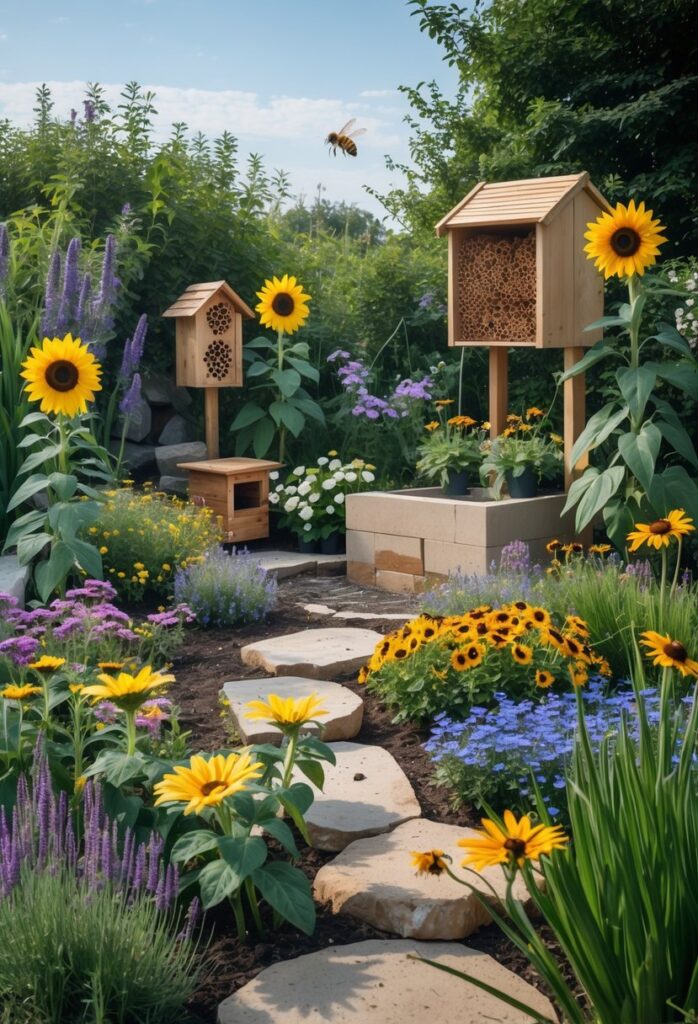
The key to a successful bee garden is choosing simple ideas that provide food, shelter, and water for pollinators. By making thoughtful choices, anyone can build a space that benefits bees and improves the garden’s beauty. This article shares seven practical ideas to create a garden that supports bee populations throughout the seasons.
1) Plant native wildflowers like coneflowers and milkweed
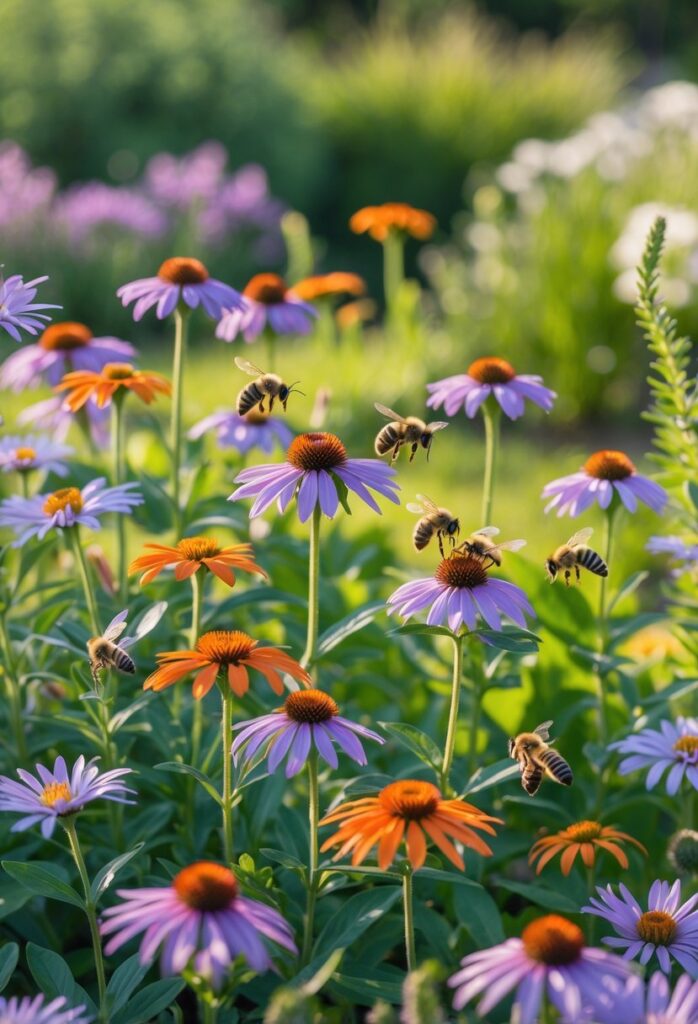
Native wildflowers such as coneflowers and milkweed create a natural food source for bees. These plants provide nectar and pollen that attract pollinators throughout the growing season.
Milkweed is especially important for supporting monarch butterflies, which are key pollinators. Coneflowers thrive in sunny areas and can grow tall, making them a strong garden staple.
Adding these native plants helps create a balanced, low-maintenance garden that supports local bee populations and other wildlife. For more ideas, see this guide on authentic native flower landscaping.
2) Build bee hotels using untreated wood and bamboo
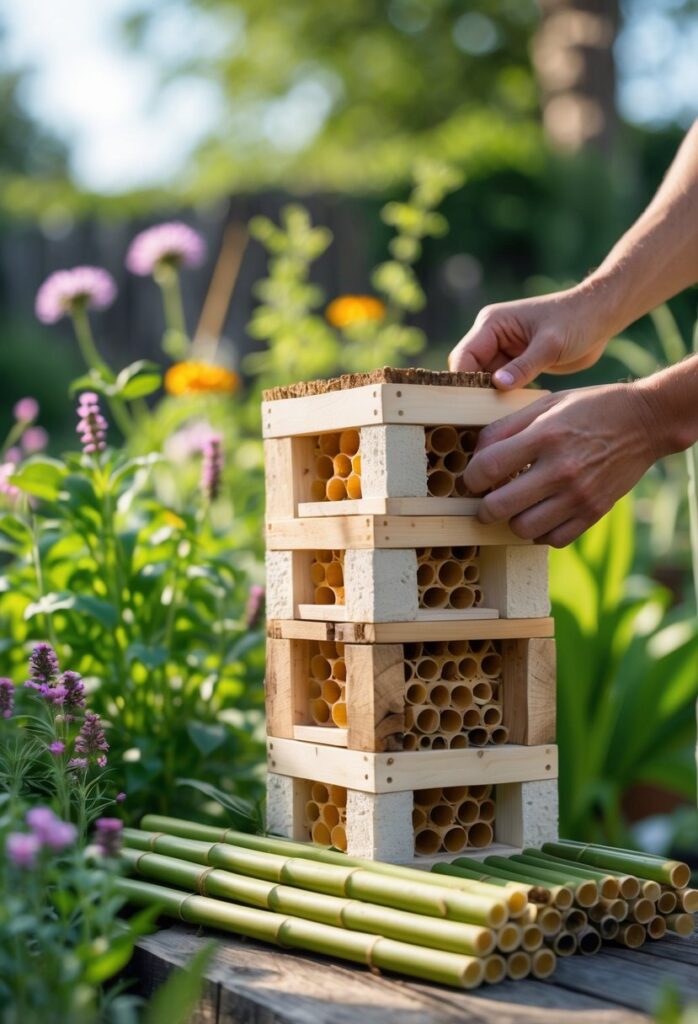
Bee hotels provide safe nesting spaces for solitary bees. They are best made from untreated wood or bamboo, which do not contain harmful chemicals.
Holes of different sizes, about 3-8 mm wide and 4-6 inches deep, suit various bee species. These materials mimic natural habitats, encouraging bees to take shelter.
Placing the hotel 3-6 feet high, facing southeast, helps keep it dry and warm. Using natural materials like this supports native bees without risk of toxins from treated wood or plastics. For more details, see how to create bee hotels using these materials.
3) Grow herbs such as lavender, thyme, and mint
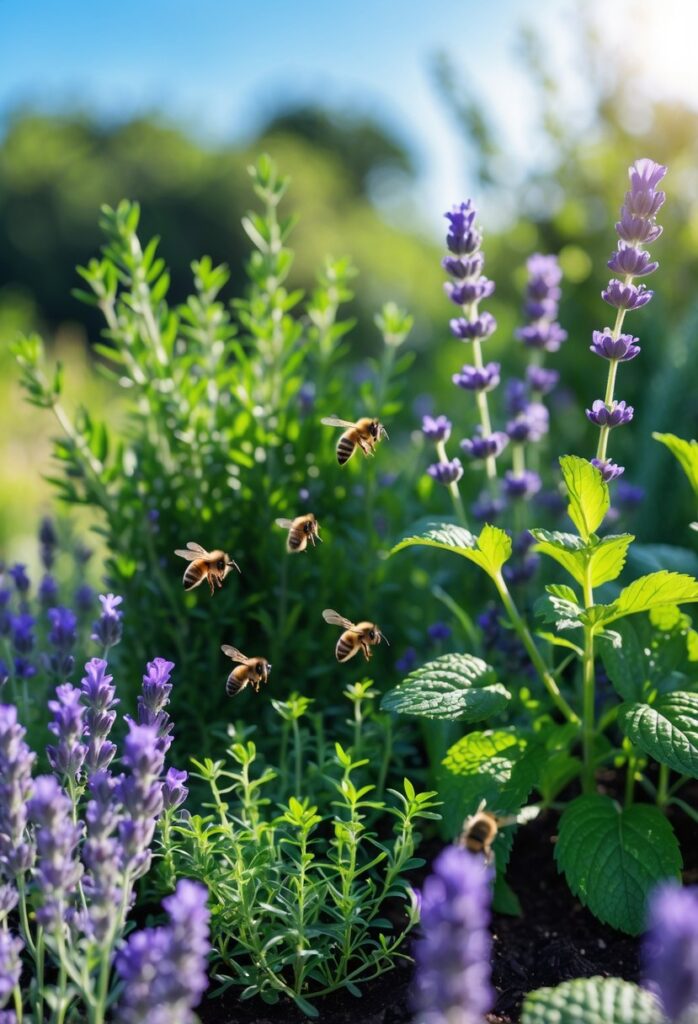
Lavender and thyme are great choices for bee gardens because they produce nectar-rich flowers that attract many pollinators. Both herbs thrive in sunny spots and need only moderate watering, making them easy to grow.
Mint also draws bees but should be planted in a separate container. Its roots spread quickly and can take over a garden bed, crowding out other herbs like rosemary and thyme. Using containers helps control mint’s growth while still supporting pollinators and adding fresh herbs to the garden bee garden ideas.
4) Include flowering shrubs like butterfly bush and holly
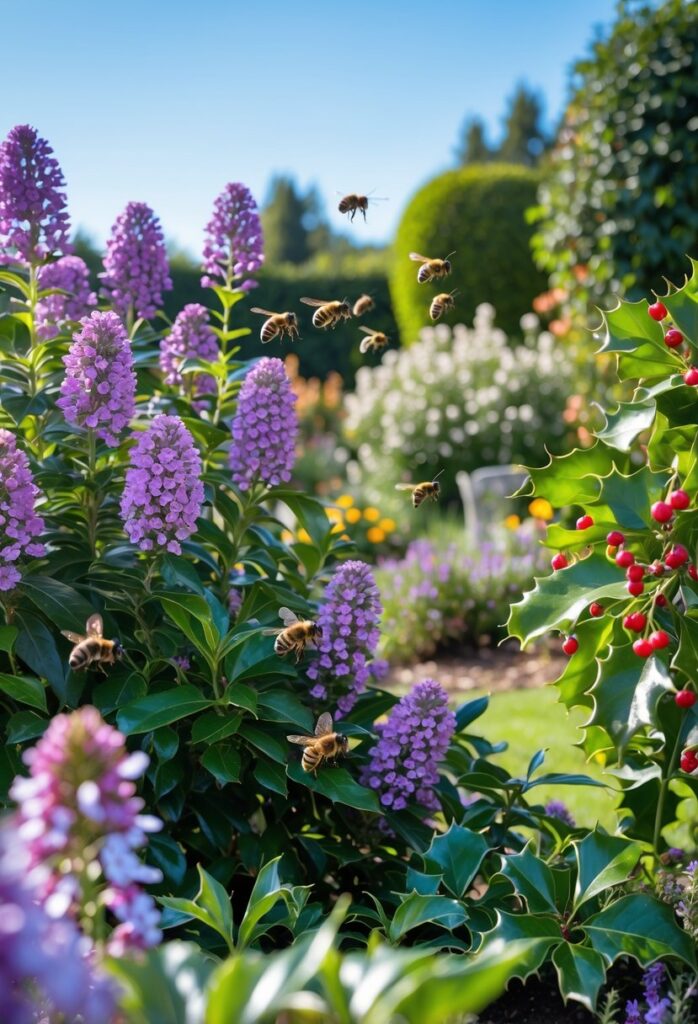
Flowering shrubs such as the butterfly bush attract many pollinators with their long, colorful flower clusters. These shrubs provide a reliable source of nectar throughout the summer and fall.
Holly shrubs offer additional benefits by providing shelter and sometimes berries that attract birds. Both plants add structure and interest to a garden while supporting bees and other pollinators.
Using these shrubs helps create a diverse habitat. This encourages a healthy and balanced pollinator community. For more details on butterfly bushes, visit 20 Blooming Bushes That Will Fill Your Garden With Butterflies.
5) Create a shallow water source with stones for bees to land on
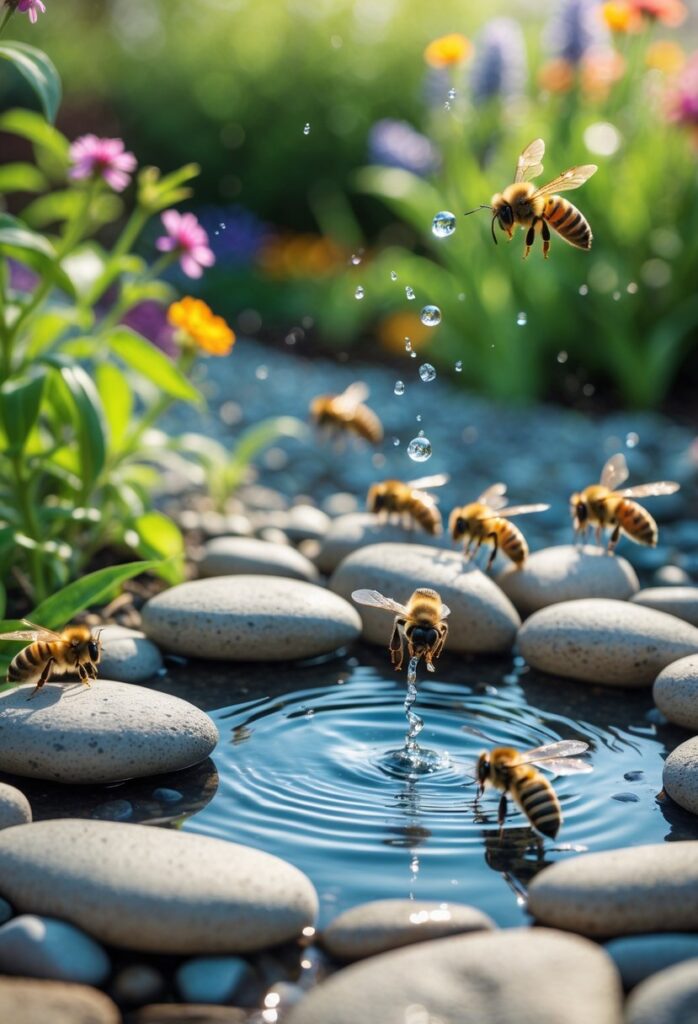
Bees need water, but they must avoid deep water to stay safe. A shallow container filled with water and topped with small stones or marbles gives bees a place to land and drink.
The stones keep bees from drowning by providing steady spots above the water. The water level should stay just below the stones’ surface.
Placing the water source near flowers helps attract bees naturally. Regularly refreshing the water keeps it clean and inviting for pollinators. This simple setup supports bee health effectively.
Create a bee-friendly watering station for your garden by following these steps. More details can be found on how to make a water source with stones for bees to land on.
6) Avoid using pesticides and herbicides in your garden
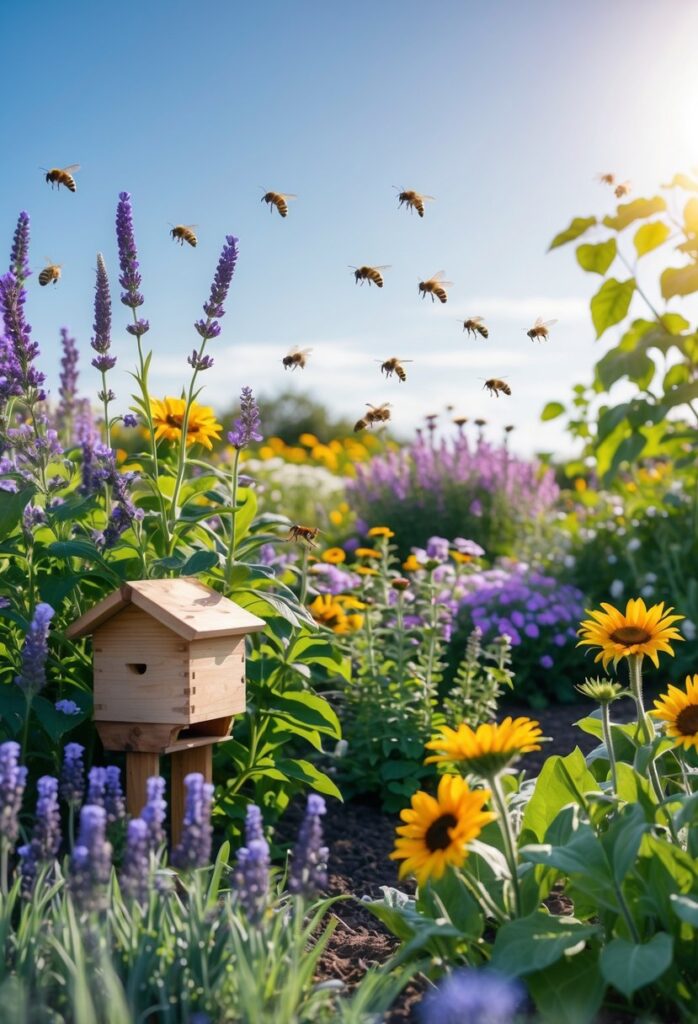
Pesticides and herbicides can harm bees and other pollinators. Many chemicals damage their ability to gather food and survive.
Choosing natural pest control methods helps protect these important insects. It also supports a healthier garden environment.
Gardeners should avoid known harmful pesticides like Orthene and Raid. Using safer alternatives ensures pollinators have a safe place to thrive. Learn more about protecting pollinators from pesticides at BeeAware Brisbane.
7) Provide continuous blooms by planting for all seasons
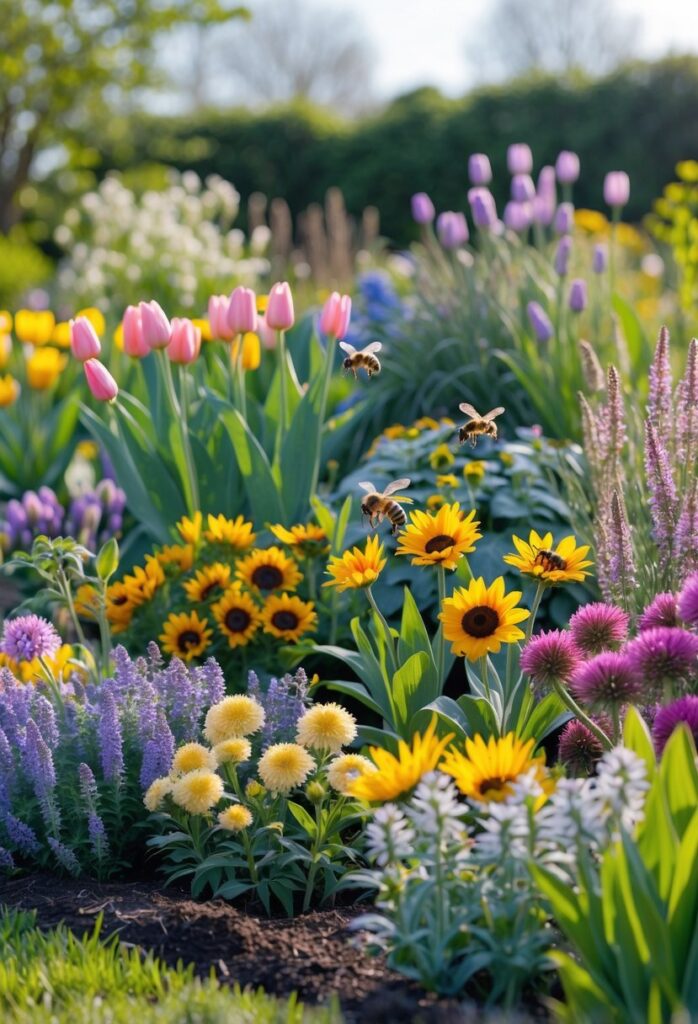
They should plant flowers that bloom at different times of the year. This ensures bees find food from early spring to late fall.
Including a mix of perennials and annuals helps keep nectar and pollen available. Spring crocus, summer bee balm, and fall asters are good examples.
Choosing native plants can also support local bee species better. A steady bloom helps maintain healthy bee populations throughout the year and keeps the garden active with pollinators 7 best seasonal flowers to plant for bee health.
Best Plants for Bee Gardens
Selecting the right plants is key to attracting and supporting bees. The focus should be on flowers that provide abundant nectar and pollen. It’s also important to choose plants suited to the local environment to ensure bees can access natural food sources and shelter.
Pollinator-Friendly Flower Varieties
Certain flowers stand out because they provide high-quality nectar and pollen throughout the growing season. Popular choices include lavender, sunflowers, and clover. These plants bloom at different times, offering a steady food supply.
Examples of pollinator-friendly flowers:
- Lavender: fragrant and attracts many types of bees
- Sunflowers: offer large pollen stores and nectar
- Clover: nitrogen-fixing and great for foraging
- Echinacea: hardy and supports native bees
- Salvia: long blooming with nectar-rich flowers
Planting a mix of these flowers can increase bee visits and support different bee species. Taller varieties like sunflowers can also give shelter and protection.
Choosing Native Species
Native plants are adapted to local conditions and are preferred by native bee species. They tend to require less care and offer the right kind of nectar and pollen bees have evolved to use. Including natives helps maintain the natural balance in the ecosystem.
Some native plants for many regions include coneflowers, goldenrod, and milkweed. These not only feed bees but also support other pollinators and wildlife. For example, milkweed is essential for monarch butterflies but also attracts bees.
Using native plants benefits both the bees and the gardener by creating a resilient, low-maintenance garden. Information about native options can be found in guides tailored for specific USDA zones or local recommendations like those listed for pollinator support.
Creating a Bee-Friendly Environment
Bees need certain conditions to thrive. Providing clean water and avoiding harmful chemicals are two key ways to help them stay healthy and active in any garden.
Safe Water Sources
Bees need water for drinking and cooling their hives. Still water without floating debris is best. A shallow dish or birdbath with stones or corks for landing spots works well. This setup prevents bees from drowning. It’s important to change the water often to keep it fresh and avoid mosquitoes.
Placing water near flowers reduces the energy bees spend flying, helping them stay strong. Avoid using chlorinated tap water if possible, as natural rainwater or filtered water is safer for bees. A small, consistent water source supports bees through dry or hot periods, making the garden a reliable habitat.
Pesticide-Free Practices
Using pesticides can harm bees directly or reduce the plants they rely on for food. The best approach is to avoid chemical pesticides altogether. Instead, gardeners can use natural pest control like introducing beneficial insects or hand-picking pests.
If pesticides must be used, choosing those labeled as safe for pollinators and applying them in the evening when bees are less active helps reduce risks. Always focus on targeted treatment rather than broad spraying. Maintaining a pesticide-free environment allows bees to forage and nest without stress, improving their survival chances and supporting a healthy ecosystem.
For more detailed tips on reducing pesticide impact, see Create a Haven for Bees with These Garden Ideas.