
14 Best Plants for Bedroom to Improve Air Quality and Enhance Decor
Many people enjoy adding plants to their bedrooms to create a more calming and inviting space. Indoor plants can improve the look of a room while also making it feel fresher and more comfortable. Choosing the right plants depends on factors like light availability and how much care a person can give them.
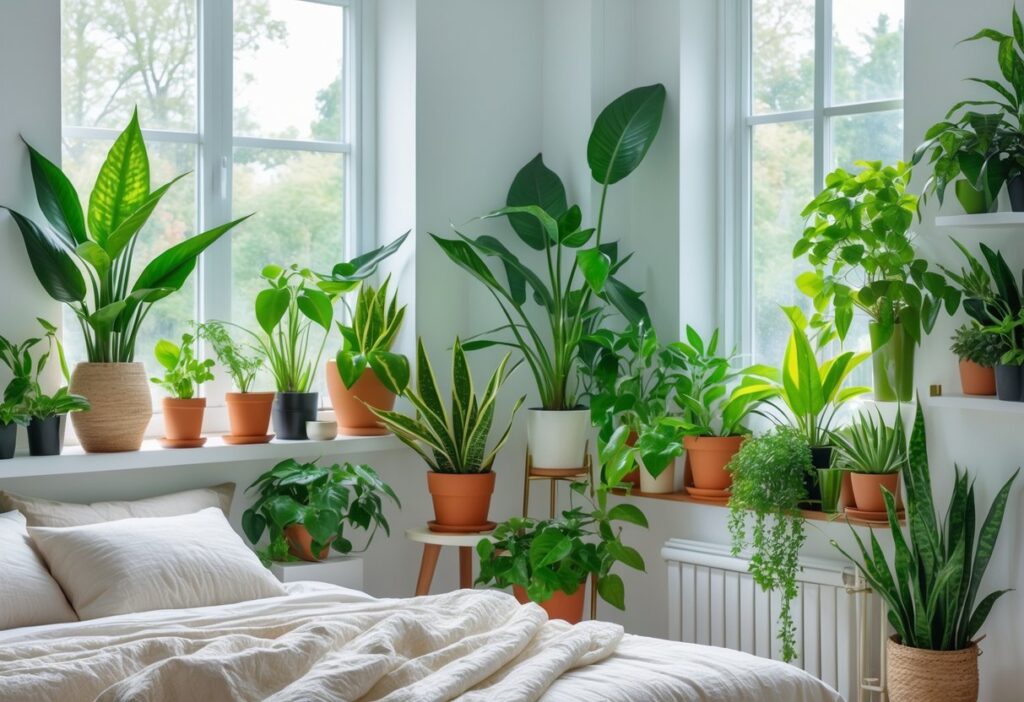
The best plants for bedrooms balance beauty with easy care and can also help improve air quality and relaxation. This article highlights 14 plants ideal for bedrooms, offering options that fit different lighting conditions and personal preferences. These choices help make the bedroom a peaceful place to rest and recharge. For more ideas on bedroom plants, visit 14 Easy-Care Indoor Plants for Bedrooms to Add Natural Greenery.
1) Snake Plant
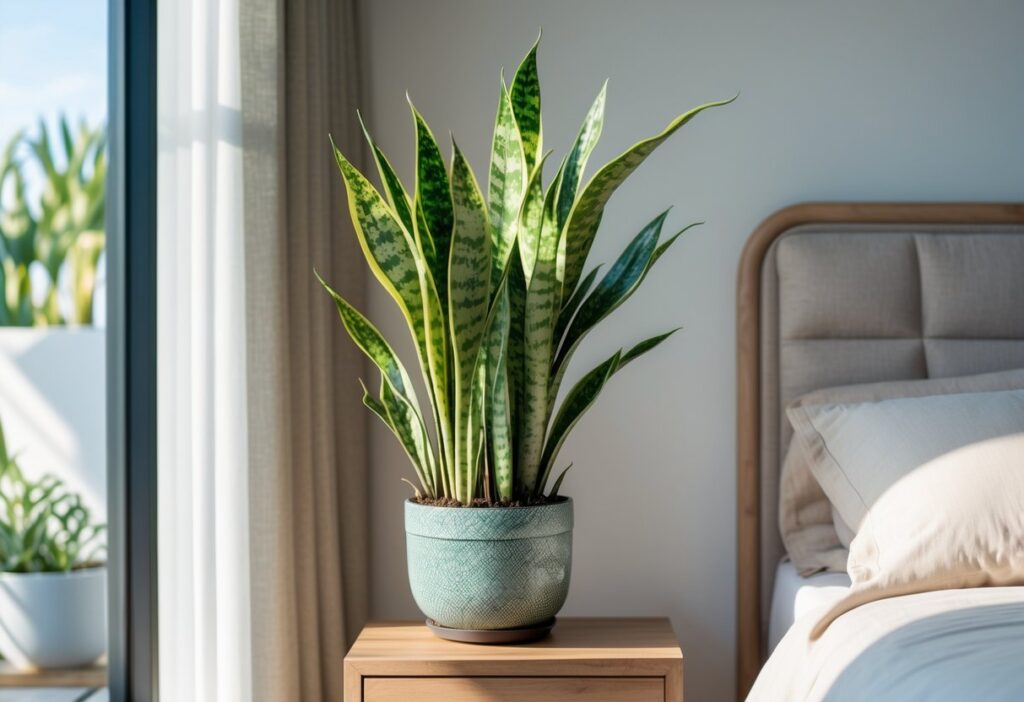
The snake plant is a popular choice for indoor plants in the bedroom. It is easy to care for and can survive in low light, making it ideal for bedrooms with limited natural sunlight. This plant is well known for its upright, sword-shaped leaves that add a modern touch to any room.
One of the main benefits of the snake plant is its ability to purify the air. It produces oxygen at night and helps remove toxins such as formaldehyde. This can contribute to a better sleeping environment by improving air quality.
The snake plant prefers well-draining soil and temperatures between 60 and 85 degrees Fahrenheit. It does not need frequent watering, which reduces the risk of overwatering issues. Smaller varieties, like the Sansevieria trifasciata Compacta, can fit comfortably in tight spaces without overwhelming the room.
Overall, the snake plant combines practical air-purifying qualities with simple care needs, making it a strong candidate for anyone looking to add a low-maintenance, beneficial plant to their bedroom environment. It is considered one of the best indoor plants for bedrooms due to these advantages. For more details, see snake plant indoor benefits.
2) Peace Lily
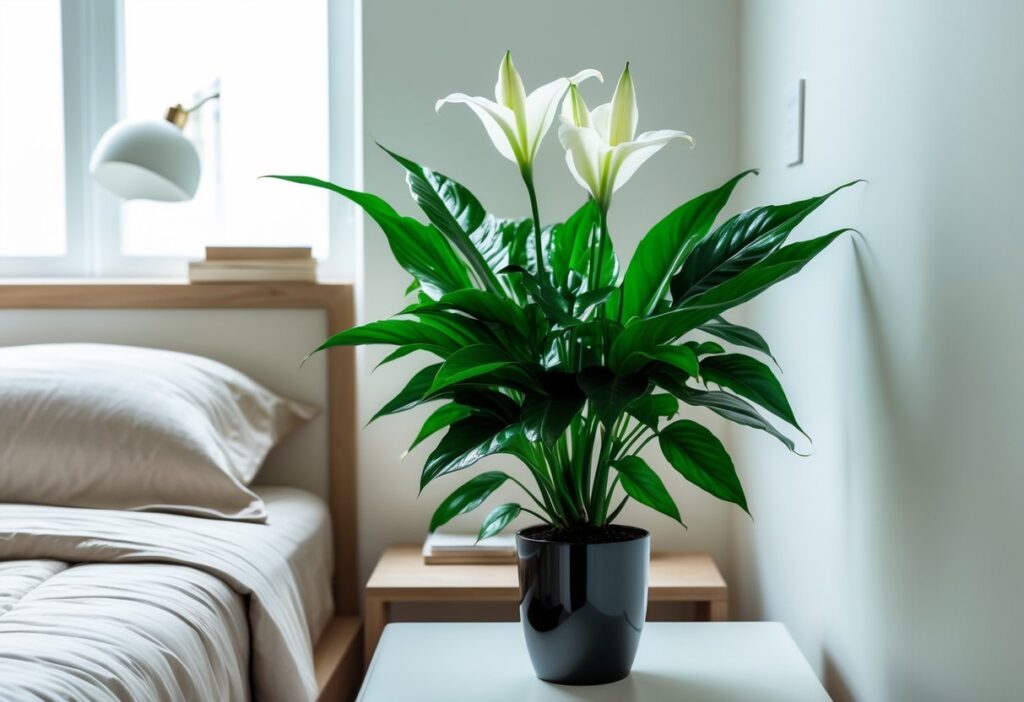
The Peace Lily is a popular choice for bedrooms due to its easy care and air-purifying qualities. It thrives in low to medium indirect light, making it ideal for rooms that don’t get much sunlight. This plant handles overwatering better than many others, which is helpful for beginners or those who tend to water plants too much.
Its glossy green leaves and white blooms add a calm, natural touch to bedroom decor. The Peace Lily also helps improve air quality by filtering out harmful toxins. Many people find its presence relaxing, which can contribute to better rest.
Caring for a Peace Lily is straightforward. It signals when it needs water by drooping slightly, so it “communicates” with its owner. The plant prefers moderate humidity and consistent, but not excessive, watering.
This combination of beauty, low light tolerance, and air-cleaning benefits makes the Peace Lily a strong candidate for anyone wanting a bedroom plant that looks good and supports a healthy space. More details on why it fits well in bedrooms can be found at Why The Peace Lily Belongs In Your Bedroom.
3) Spider Plant
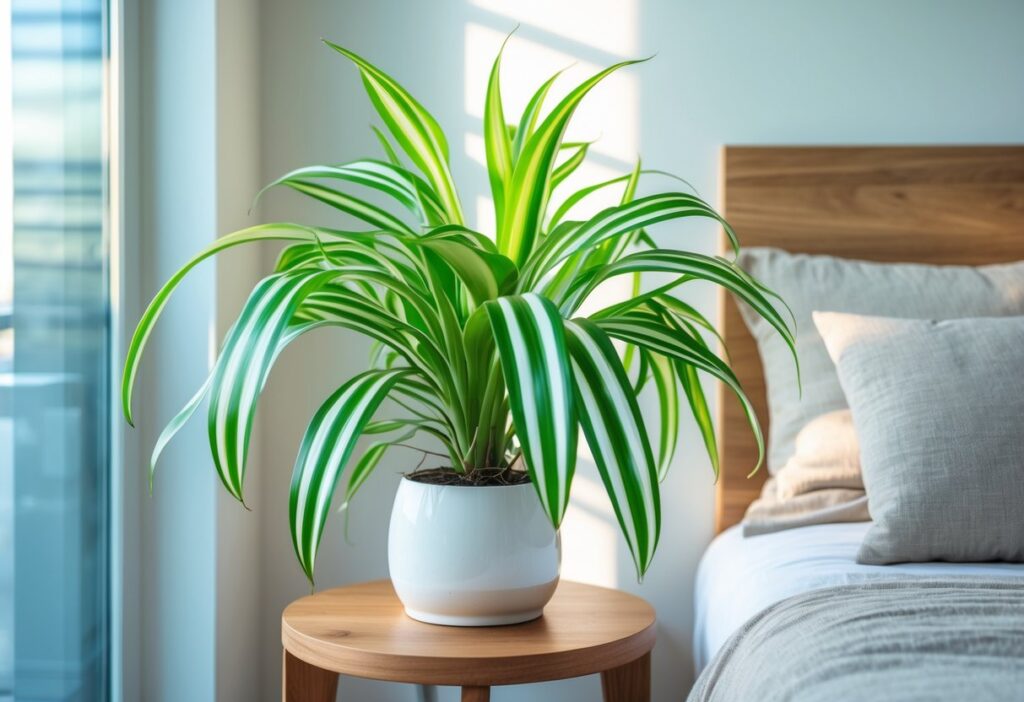
The spider plant is a popular choice for bedrooms because it is easy to care for and helps improve air quality. It can filter common indoor pollutants like formaldehyde and carbon monoxide. This makes the air cleaner and fresher, which can support better sleep and a healthier environment.
Spider plants do well in indirect light, but they can also tolerate low light conditions. This adaptability makes them perfect for many bedroom settings, even those without much natural sunlight. They need moderate watering and should not be overwatered to avoid root rot.
Besides its air-purifying qualities, the spider plant produces oxygen during the day, which benefits the room’s atmosphere. It is also non-toxic to pets, adding safety if you have animals at home. Its long, arching leaves provide a graceful look that fits well with many types of décor.
You can find more details about the benefits and care of spider plants at this Spider Plant in Your Bedroom: Benefits and Care page.
4) Fiddle-Leaf Fig
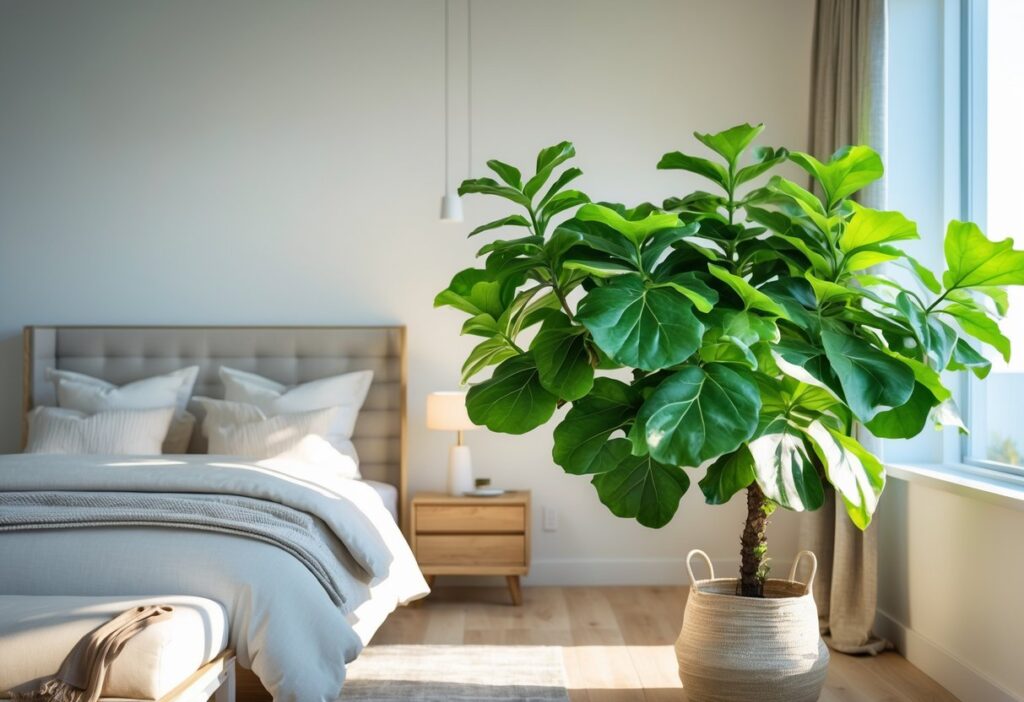
The fiddle-leaf fig is a popular choice for bedrooms because of its large, glossy leaves and tall shape. It adds a bold, natural look to any space. It can grow quite tall indoors, sometimes reaching up to 10 feet.
This plant needs bright, indirect light to thrive. Direct sunlight can burn its leaves, so placing it near a window with filtered light works best. It usually requires watering every 7 to 10 days when the topsoil feels dry.
People appreciate this plant for its ability to create a stylish and fresh atmosphere in a room. However, it does need some attention to prevent issues like leaf drop or pests. Maintaining consistent watering and sufficient light will help keep it healthy.
The fiddle-leaf fig adapts well to indoor life but is not low-maintenance. It prefers stable conditions and doesn’t like sudden changes in environment. Those who want a striking bedroom plant often choose it for its unique look and structured presence. For more detailed care tips, you can check this guide on the best houseplants for bedrooms.
5) ZZ Plant
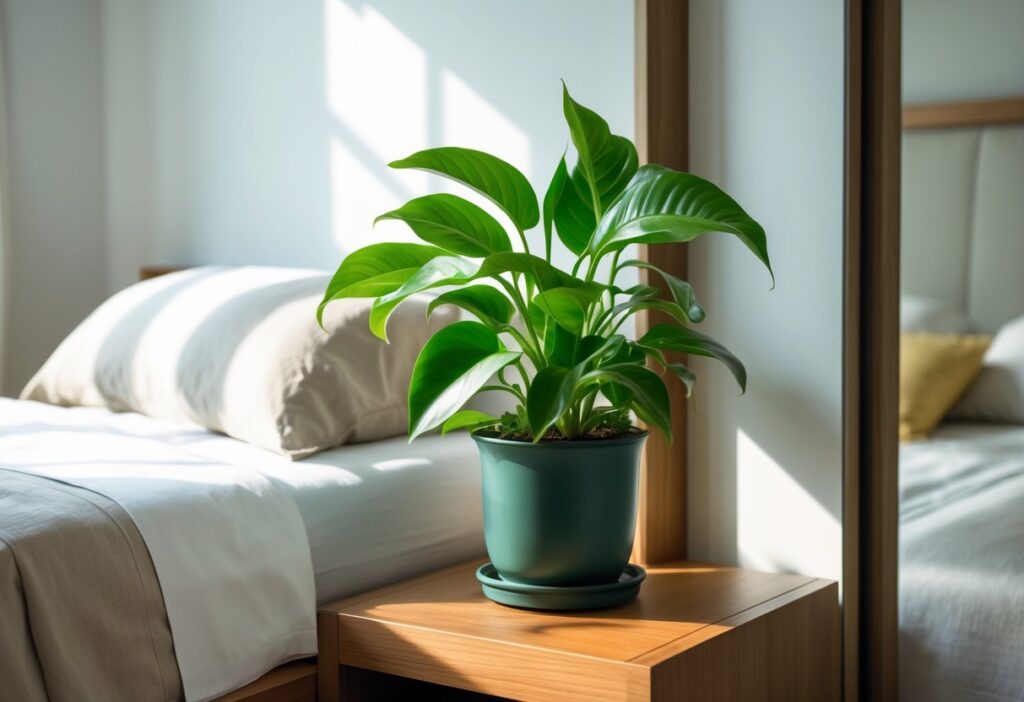
The ZZ plant is a popular choice for bedrooms because it can thrive in low light. It has shiny, dark green leaves that add a modern look to any room. This plant requires very little care, making it great for people new to indoor gardening.
It also helps improve air quality by filtering out toxins like benzene and xylene, which are common in household products. Cleaner air can contribute to a better sleep environment. The ZZ plant’s ability to survive with minimal water adds to its appeal in bedrooms that may not get much natural light or frequent attention.
Because it is low-maintenance and tough, the ZZ plant fits well among other plants that support restful sleep. It creates a calm space without demanding too much care. Its presence can make the bedroom feel greener and more peaceful throughout the night.
For more details on its benefits and care, see why the ZZ plant is often called a low-maintenance hero for bedrooms.
6) Philodendron
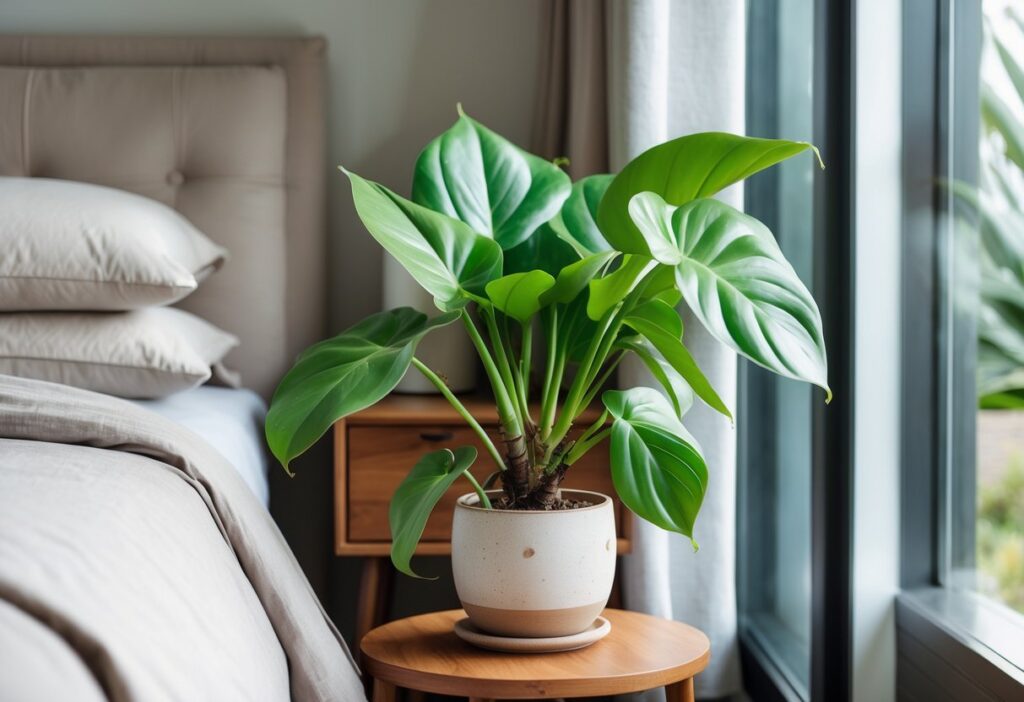
Philodendrons are popular for bedrooms because they are easy to care for and adapt well to indoor conditions. They usually have heart-shaped leaves that add a soft, natural look to any room. Many types can grow as trailing vines or upright plants, making them versatile for different spaces.
This plant does well in low to medium indirect light, which makes it ideal for bedrooms that don’t get a lot of sun. It only needs watering when the top inch of soil feels dry, helping prevent overwatering. Its simple care requirements mean it fits well with busy lifestyles.
Philodendrons also help improve air quality by reducing indoor toxins. However, all parts of the plant are toxic if swallowed, so it’s important to keep them out of reach of kids and pets. Their forgiving nature and attractive foliage make Philodendrons a solid choice for a calming bedroom environment.
For more on how to care for Philodendrons and why they work well in bedrooms, see this detailed guide on the best philodendrons for your bedroom.
7) Aloe Vera
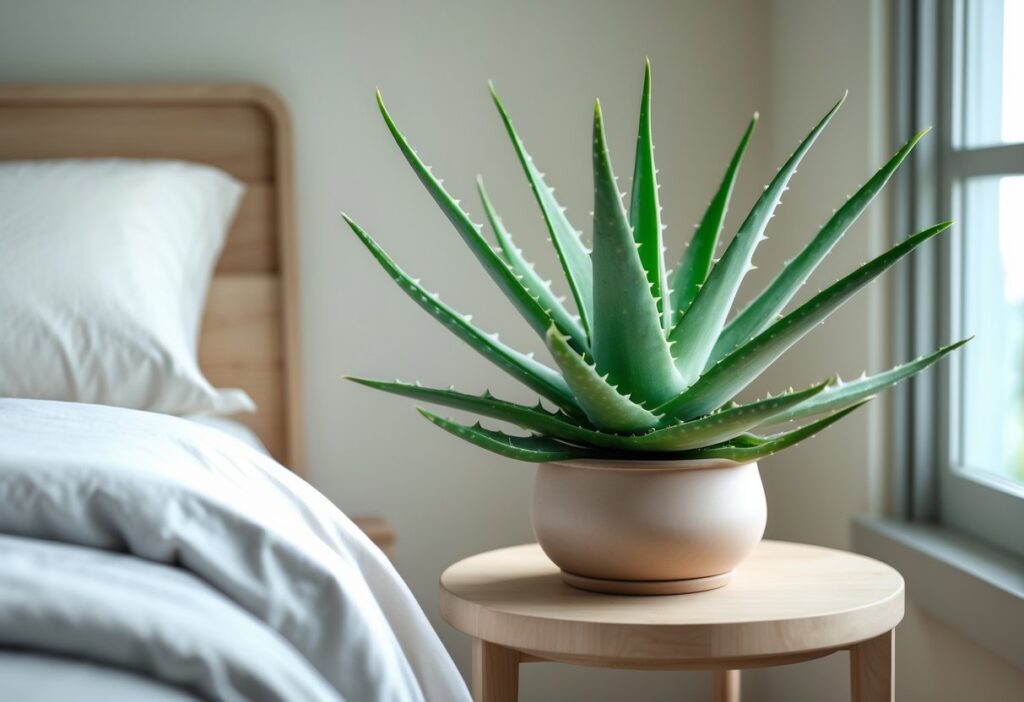
Aloe Vera is a popular plant for bedrooms because it is easy to care for and offers practical benefits. It is a succulent that needs little water and thrives in indirect sunlight. This makes it a good choice for many bedroom lighting conditions.
The plant is known for releasing oxygen at night. This can help improve air quality while you sleep. Aloe Vera also absorbs toxins, which may create a cleaner environment.
Besides its air-purifying properties, Aloe Vera has healing uses. Its gel is often used to soothe skin irritations and minor burns. Having the plant nearby provides easy access to its natural benefits.
Because of its low-maintenance nature and helpful qualities, Aloe Vera is often recommended as one of the best bedroom plants. It adds a touch of green without requiring much effort.
For more about Aloe Vera’s effects on sleep and air quality, see this detailed guide on how it can improve your bedroom environment.
8) English Ivy
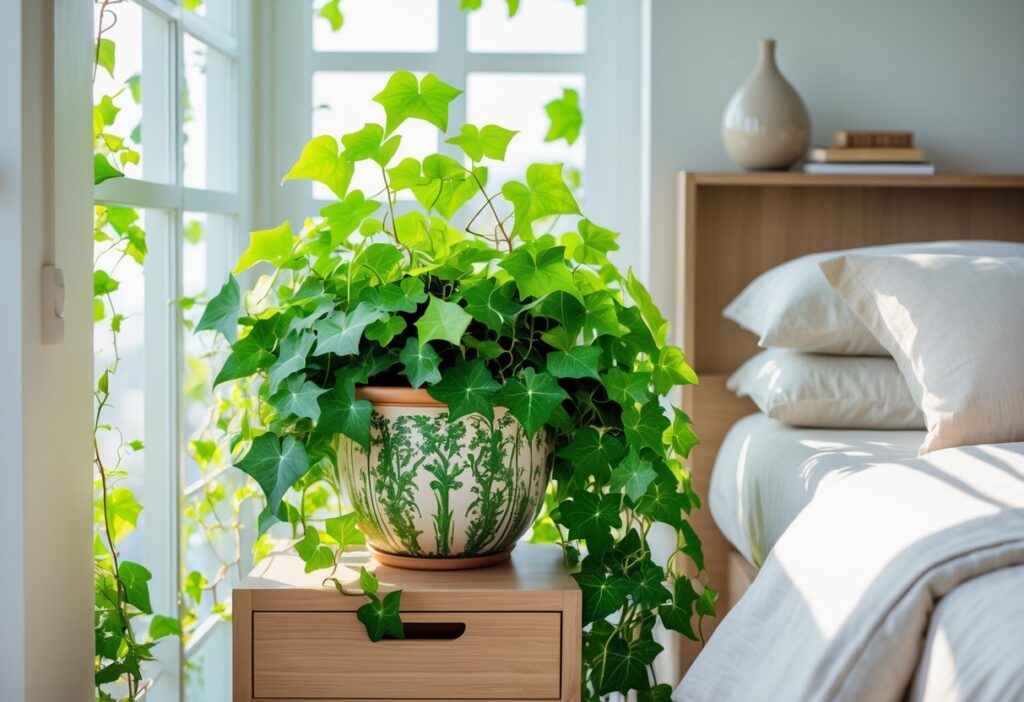
English Ivy is a popular choice for bedroom plants due to its attractive, trailing vines and dark green leaves. It can grow well in moderate, indirect light, making it suitable for indoor spaces that don’t get direct sunlight.
This plant prefers a cool room and consistent moisture but should not be waterlogged. Its ability to climb or trail works well in hanging pots or on shelves, adding natural decor to a bedroom.
English Ivy also helps improve air quality by filtering out common indoor toxins. It is relatively easy to care for, making it a good option for both beginners and experienced plant owners.
With proper care, this hardy plant can thrive indoors and add a refreshing, natural touch to a bedroom’s environment. For more detailed care tips and benefits, visit this guide on English Ivy for indoor decor.
9) Rubber Plant
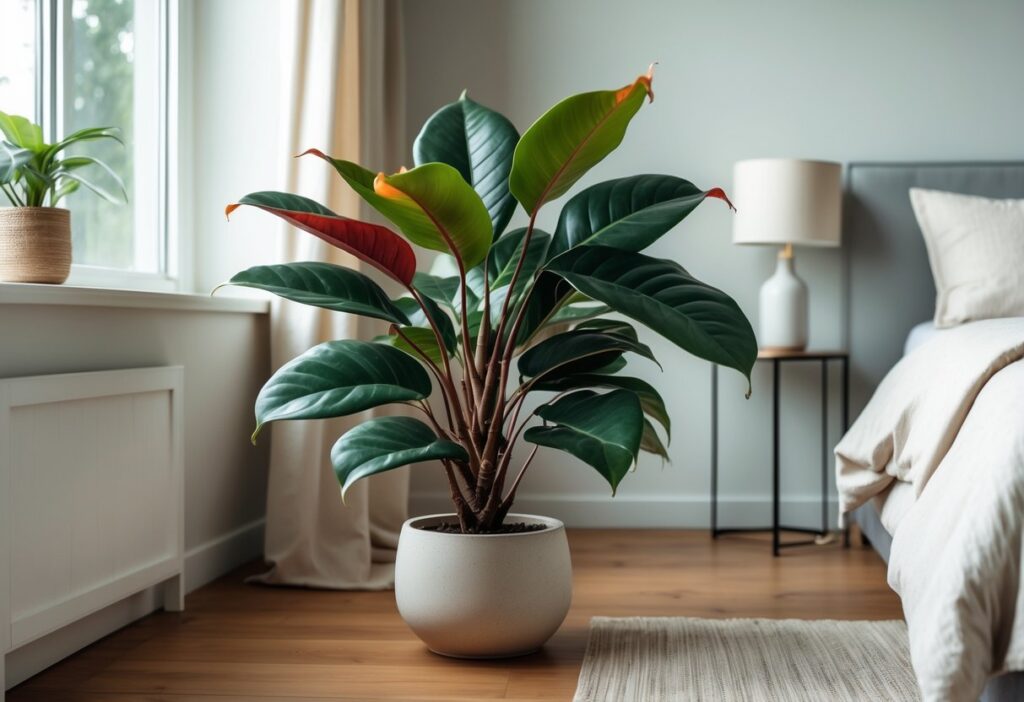
The Rubber Plant has large, shiny leaves that add a bold touch to any bedroom. It grows tall, making it a good choice for bigger rooms with extra space. Its dark green foliage brings a clean, natural look to the décor.
This plant is known to help improve indoor air quality by removing toxins. Better air can support easier breathing and a healthier sleeping environment. It does not need much care, which makes it a popular pick for bedrooms.
The Rubber Plant prefers bright but indirect light. It should be watered when the top of the soil feels dry to the touch. Overwatering can harm it, so it’s important to let the soil dry between waterings.
Overall, this plant combines style with simple maintenance. It fits well with many bedroom styles and is especially suitable for those who want a low-effort, attractive plant that may improve air quality. For more details, see the benefits of having a rubber plant in your bedroom at Good Housekeeping.
10) Boston Fern
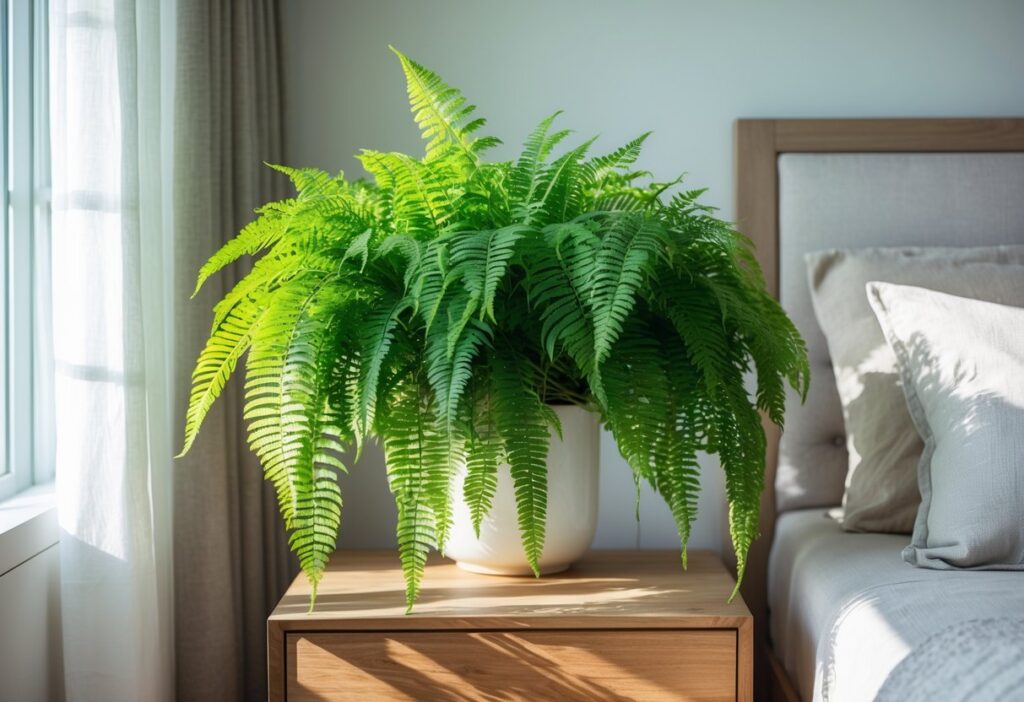
The Boston fern is a popular choice for bedrooms because it thrives in low light and warm conditions. Its lush, green fronds add a natural touch that can make the room feel calm and inviting. This plant prefers indirect sunlight and high humidity, which is why it often does well in bathrooms and kitchens, as well as bedrooms.
Boston ferns also help improve air quality by removing toxins from the air. They need consistent moisture in the soil but should not be overwatered. Regular misting can help keep their fronds healthy and vibrant.
This fern is known for being relatively easy to care for, making it a good option for beginners. It can also improve mental focus and may contribute to a more restful sleep when placed in a bedroom. For detailed care tips, one can refer to a complete guide on Boston fern care indoors.
11) Pothos
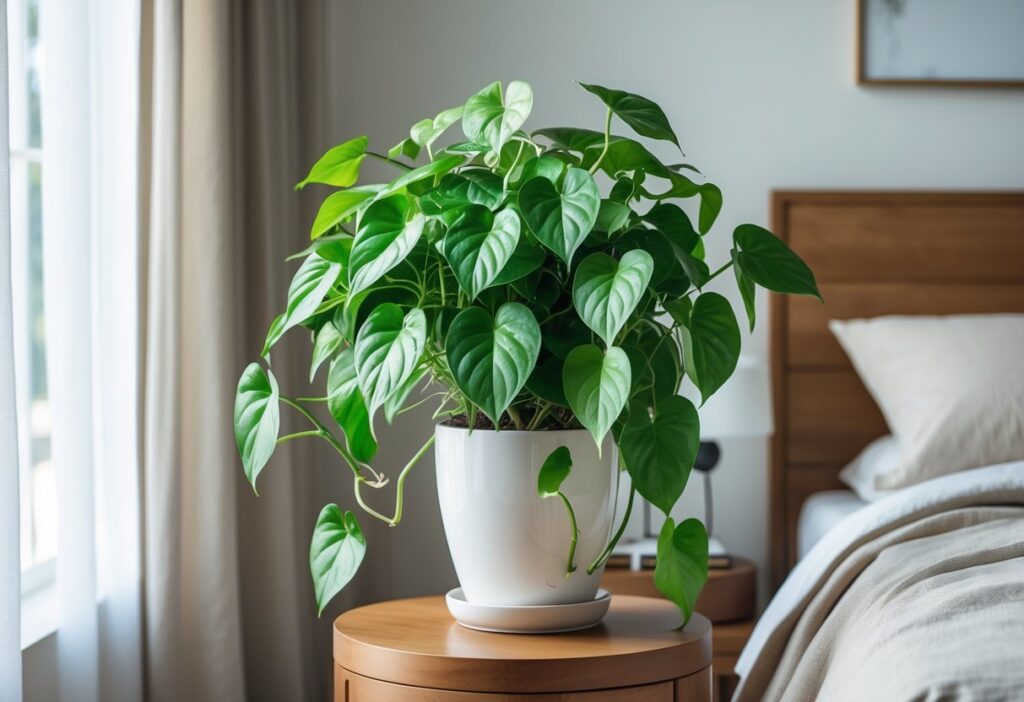
Pothos is a popular houseplant known for its easy care and attractive trailing vines. It adapts well to low light, which makes it suitable for bedrooms with limited natural sunlight. The plant can grow well in hanging baskets or on a shelf where its vines can drape down.
There are several varieties of pothos, including Golden, Marble Queen, and Jade. Each has different leaf colors and patterns, adding a touch of green or variegation to bedroom decor. Pothos is also valued for its ability to help purify indoor air, removing common toxins.
It requires minimal watering and can tolerate occasional neglect, making it a low-maintenance option for many. Pothos thrives in average room temperatures and does well when kept away from direct sunlight. This plant fits well in bedrooms because it does not demand constant care but still adds calm greenery to the space.
For those who want an easy way to maintain it, self-watering planters work well with pothos. This can help keep the soil moist without much effort. Its combination of beauty, air benefits, and low upkeep explains why pothos is a top choice for bedroom plants. For more details, see the best pothos varieties for bedrooms.
12) Bamboo Palm
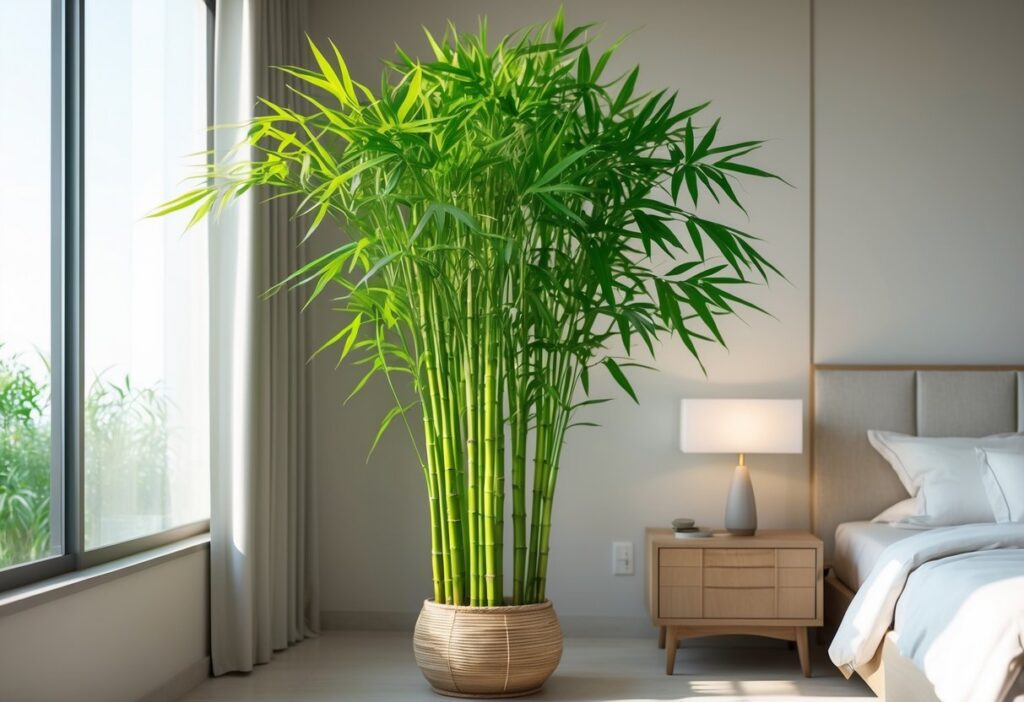
The Bamboo Palm is a popular choice for bedrooms because of its graceful, bamboo-like stems and soft, arching fronds. It brings a calm, tropical feel to any space without needing much care. This plant prefers bright, indirect light and moist soil, making it easy to grow indoors.
It also helps improve air quality by filtering toxins, which can make the bedroom environment feel fresher. The gentle movement of its leaves creates a peaceful atmosphere that can support better rest.
Thanks to its adaptability, the Bamboo Palm thrives in average humidity and moderate temperatures. It does not require constant attention, which is perfect for busy people or those new to houseplants. This plant adds both a stylish and natural touch to the bedroom setting. Learn more about caring for Bamboo Palms by visiting how to grow bamboo palms indoors.
13) Chinese Evergreen
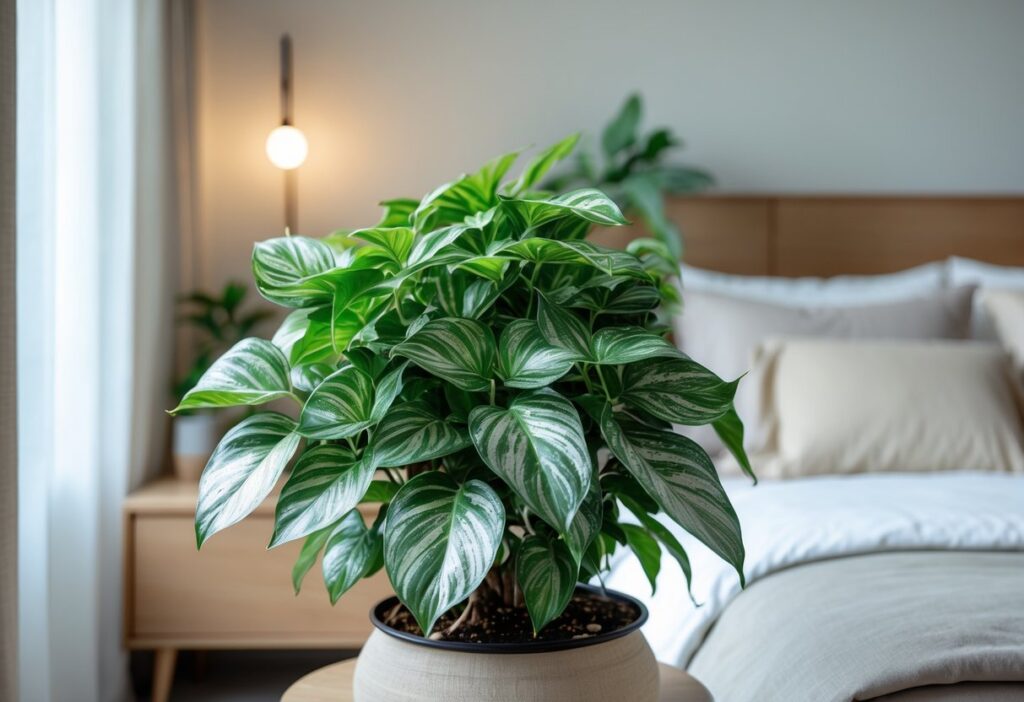
The Chinese Evergreen is a popular choice for bedrooms because it thrives in low to medium light. It has beautiful, variegated leaves that can be green, silver, or even pink, adding a subtle touch of color to any room. This plant is known for being easy to care for, making it suitable for beginners.
It prefers a humid environment, ideally above 75% humidity, but it can adapt if placed near a humidifier. The Chinese Evergreen does not require frequent watering and can tolerate occasional neglect. This makes it practical for indoor settings where natural conditions may vary.
Besides its attractive look, the Chinese Evergreen can help improve indoor air quality by filtering toxins. It fits well in bedrooms where clean air is important for sleep and relaxation. Overall, the plant offers both style and function without demanding much maintenance. You can find detailed care advice for the Chinese Evergreen from Parachute Home and House Plant Alley.
14) Lavender
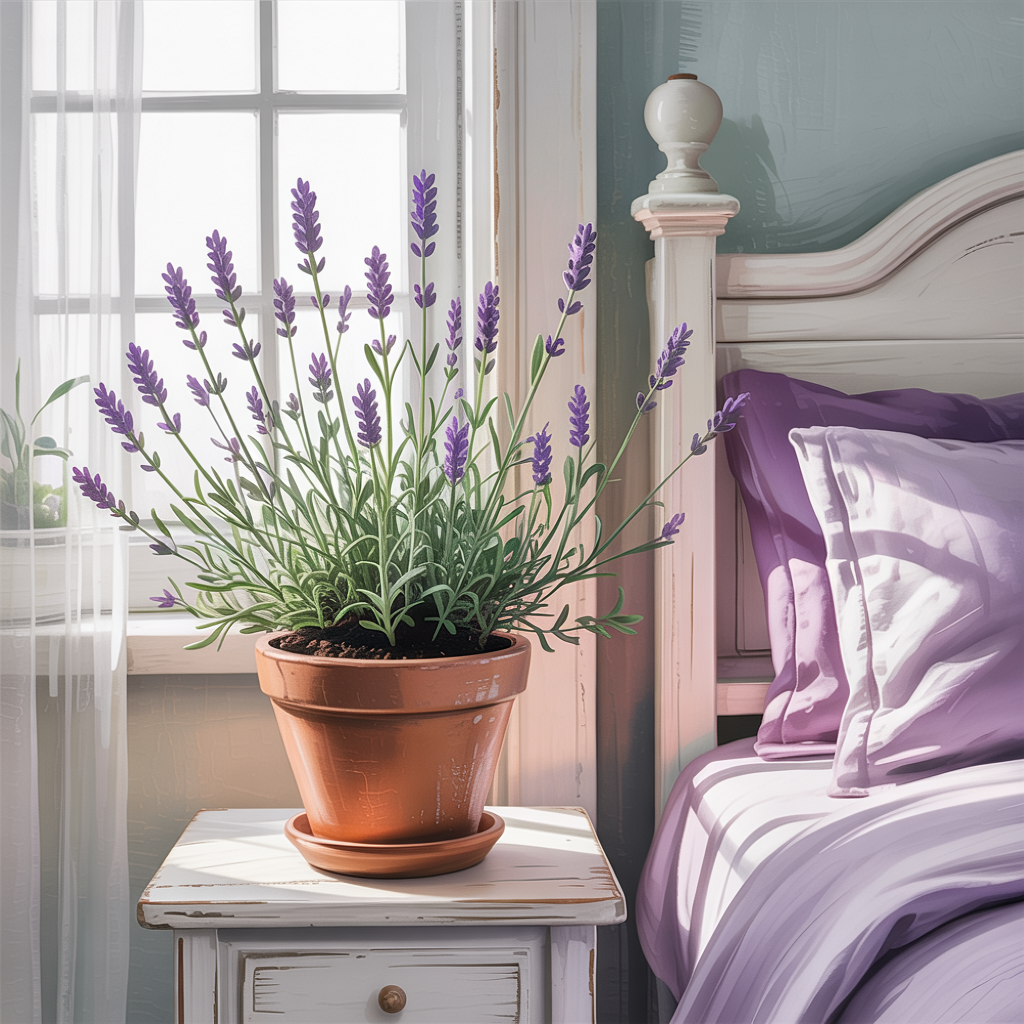
Lavender is a popular choice for bedrooms because it offers both beauty and beneficial effects. It is known for its calming scent, which can help reduce anxiety and improve sleep quality. Many people place lavender plants or dried lavender near their beds to create a more relaxing atmosphere.
The plant needs plenty of bright light and well-draining soil to stay healthy indoors. It is important to avoid overwatering, as lavender prefers drier conditions. When cared for properly, it can bloom with fragrant flowers that add natural decoration to the room.
Studies have shown lavender’s scent can ease symptoms of insomnia and lower stress levels. This makes it more than just a decorative plant—it supports a peaceful environment. Choosing the right size and type of lavender can help fit it well in any bedroom space.
To learn more about the benefits and care tips for lavender in the bedroom, visit this detailed guide on Is Lavender Plant Good For Bedroom? 6 Important Benefits & More Tips.
Benefits of Bedroom Plants
Bedroom plants can improve the environment in practical ways that help with air quality and mental well-being. They bring specific advantages that go beyond just decoration or style.
Air Purification and Oxygen Levels
Plants in the bedroom naturally clean the air by absorbing toxins like formaldehyde, benzene, and ammonia. This helps reduce indoor air pollution, which can cause headaches or irritation. Some plants, such as snake plants and peace lilies, are known for their strong air-purifying ability.
At night, many plants continue to release oxygen, which can improve air quality while sleeping. This oxygen release supports better breathing and provides fresher air throughout the night. It can be especially beneficial for people with allergies or asthma.
Enhanced Mood and Sleep Quality
Having plants in the bedroom can reduce stress and create a calmer atmosphere. Their presence encourages a sense of peace, which may lower anxiety and improve overall mood during the day.
Plants like lavender or jasmine are often linked to better sleep because their scent can promote relaxation. Studies show that exposure to greenery before bed helps lower heart rate and blood pressure. This combination supports falling asleep faster and enjoying deeper rest.
Creating the Ideal Plant Environment
A bedroom plant needs the right balance of light, humidity, watering, and care to thrive. Attention to these details keeps the plant healthy and helps it improve air quality and add natural beauty.
Light and Humidity Considerations
Most bedroom plants do well in indirect light because direct sunlight can burn their leaves. Low-light tolerant plants like snake plants or pothos are good choices for bedrooms with little natural light. Placing plants near a window with filtered light is ideal.
Humidity also affects plant health. Bedrooms are often drier, especially in winter with heating. Plants such as ferns or peace lilies prefer higher humidity levels. Using a small humidifier or grouping plants together can raise moisture in the air. Misting leaves occasionally helps but should not replace proper humidity.
Watering and Maintenance Tips
Overwatering is a common issue. Many bedroom plants prefer soil that dries out between waterings. It’s important to check soil moisture with a finger before adding water.
Using pots with drainage holes prevents root rot. Removing dead or yellow leaves helps avoid pests and disease. Regular dusting of leaves improves photosynthesis and air quality.
Some plants need occasional feeding with diluted fertilizer during growing seasons. Low-maintenance plants reduce care needs but still require attention to thrive. For more guidance on easy-care plants and maintaining them, see the list of best indoor plants for bedrooms.