
7 Indoor Vine Plants to Elevate Your Home’s Greenery Effortlessly
Indoor vine plants are popular for adding greenery and life to indoor spaces. They are versatile and can hang, climb, or trail, making them great for brightening corners, shelves, or walls. Many people choose them to create a natural and inviting atmosphere inside their homes.
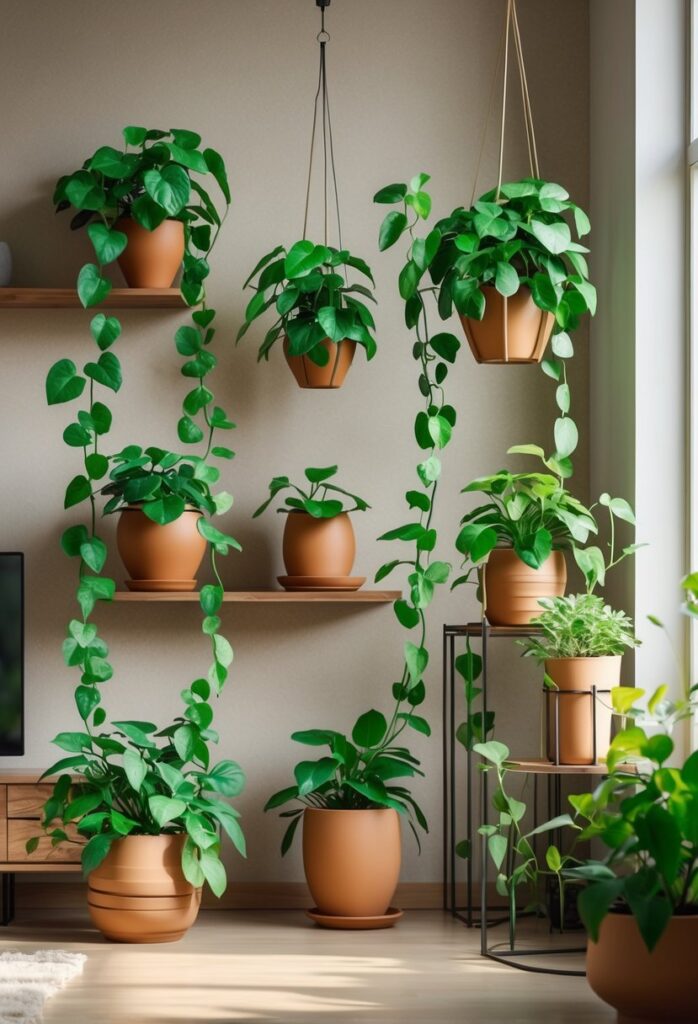
These plants are often easy to grow and maintain, making them suitable for a range of experience levels. They can bring texture and color to a room without requiring much space, fitting well into different styles of home decor. This article will introduce seven indoor vine plants that offer both beauty and ease of care.
1) Pothos (Epipremnum aureum)
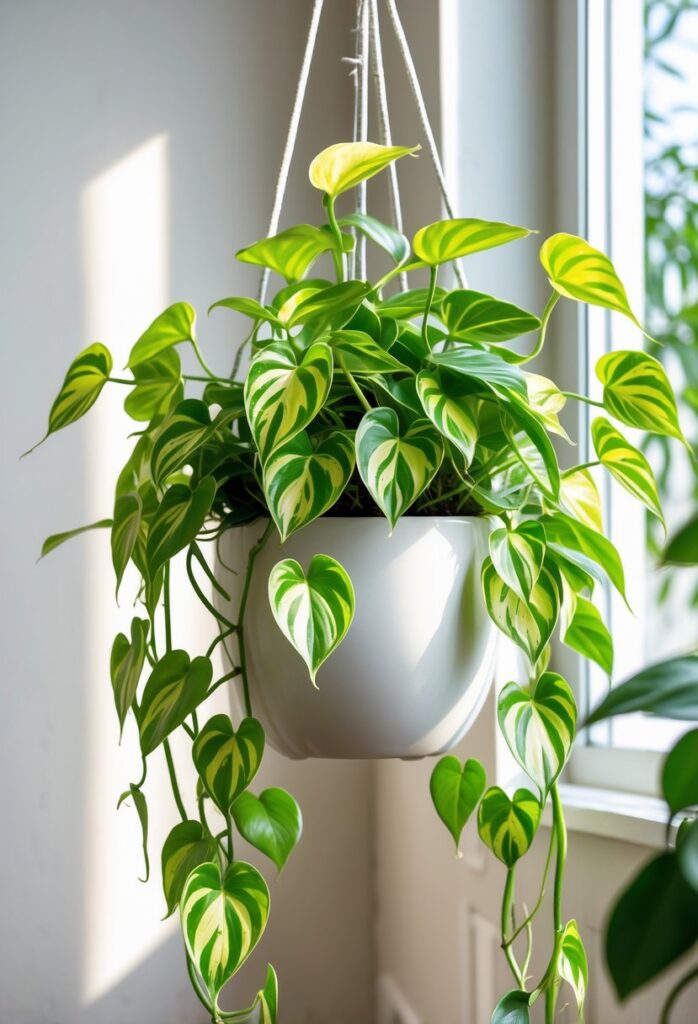
Pothos is a popular indoor vine known for its heart-shaped leaves and easy care. It adapts well to low light and needs minimal watering.
It can climb supports or trail from pots and hanging baskets. Pothos is great for beginners because it is tough and can survive some neglect. Its long stems and varied leaf patterns add a nice touch to any room.
2) Philodendron scandens
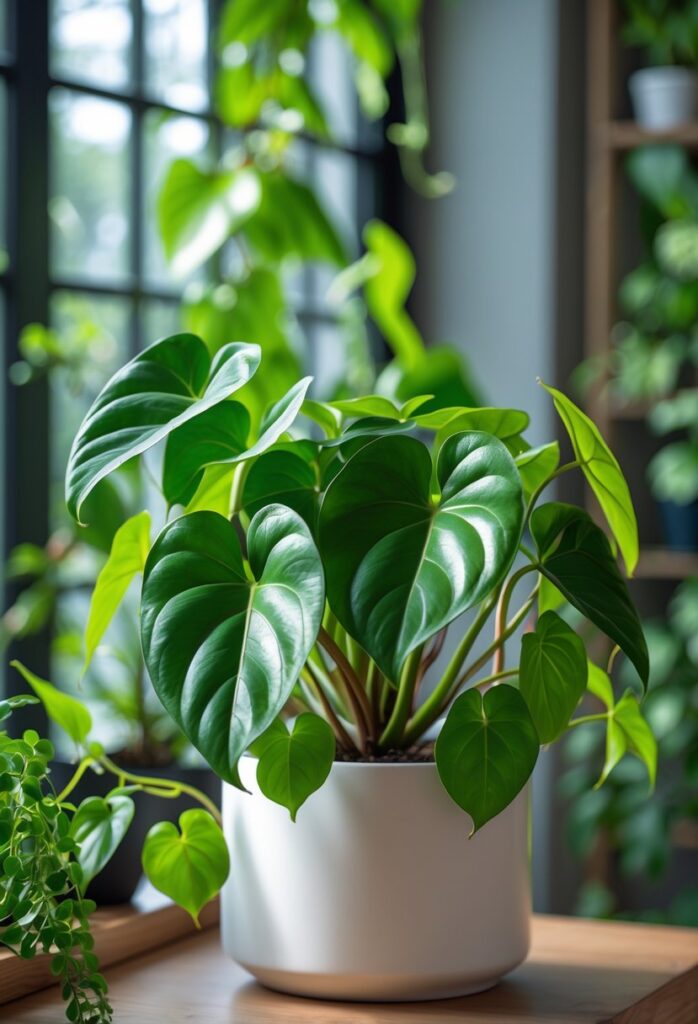
Philodendron scandens, also called Heartleaf Philodendron, is a popular indoor vine. It has glossy, heart-shaped leaves that grow on long, thin stems. This plant adapts well to different light levels but prefers medium to bright indirect light.
It climbs or trails easily, making it versatile for shelves or hanging baskets. The plant grows steadily with moderate watering and monthly feeding during spring and summer. It is low maintenance and can thrive in average indoor temperatures.
3) String of Hearts (Ceropegia woodii)
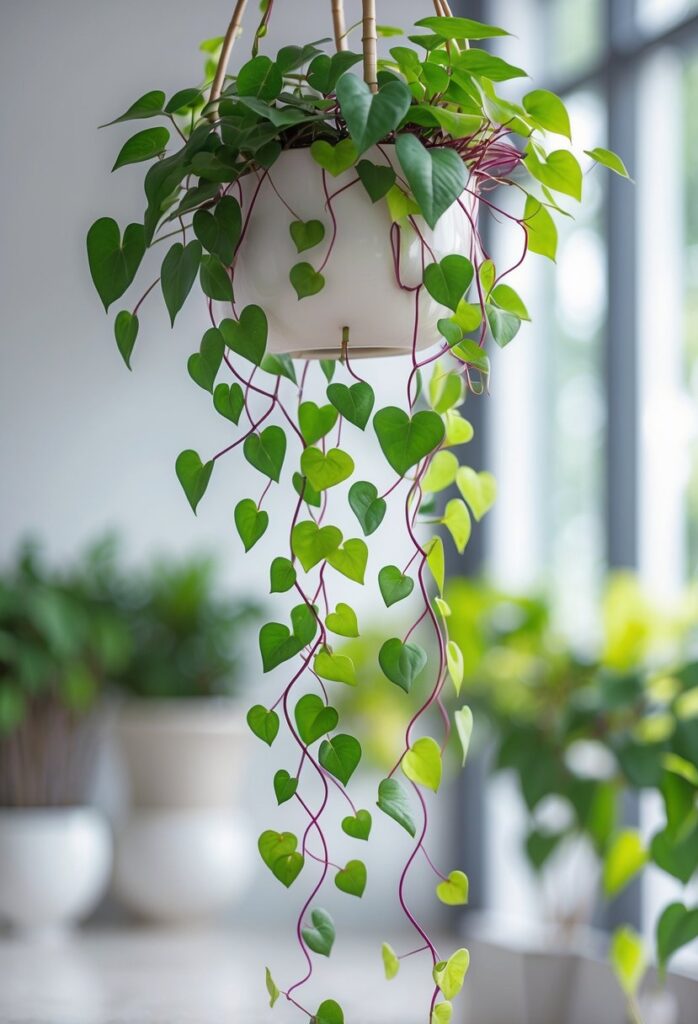
The String of Hearts is a small, trailing vine with heart-shaped leaves. It is a succulent, making it drought-tolerant and low-maintenance.
This plant prefers bright, indirect light and well-drained soil. It grows quickly and can add a delicate touch to indoor spaces with its long, thin vines.
It does well in average room temperatures and needs watering only when the soil feels dry.
4) English Ivy (Hedera helix)
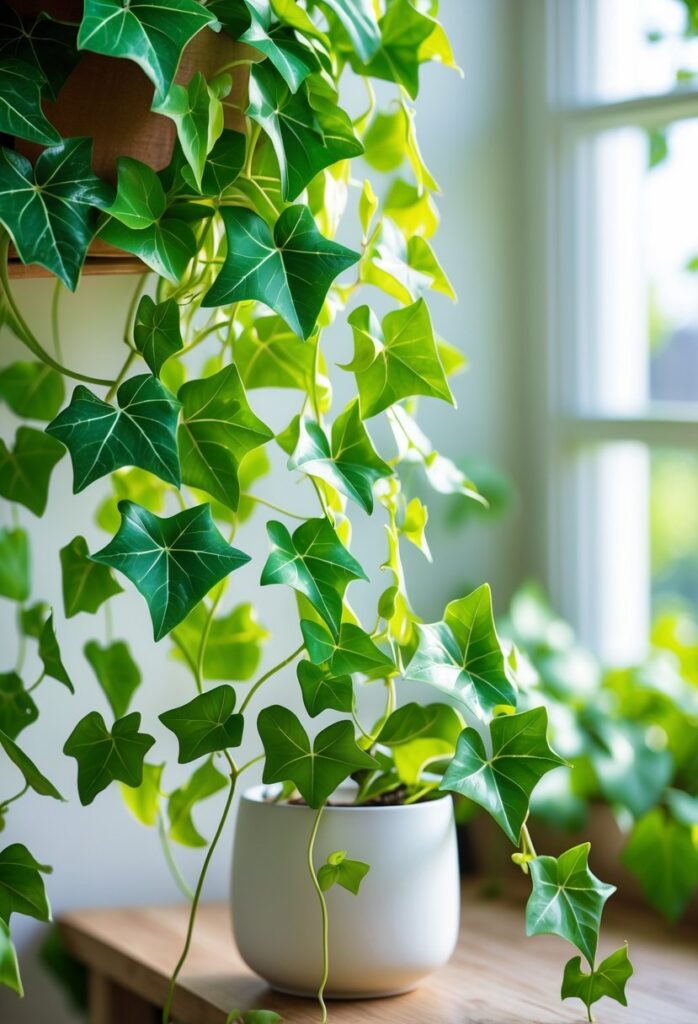
English Ivy is a classic indoor vine known for its trailing, evergreen leaves. It grows well in bright, indirect light but can tolerate low light conditions.
It prefers moderately moist soil and benefits from regular watering without letting the roots sit in water. This plant also helps improve indoor air quality and is fairly low maintenance.
English Ivy spreads quickly, so it needs occasional pruning to keep its shape and size under control.
5) Heartleaf Philodendron
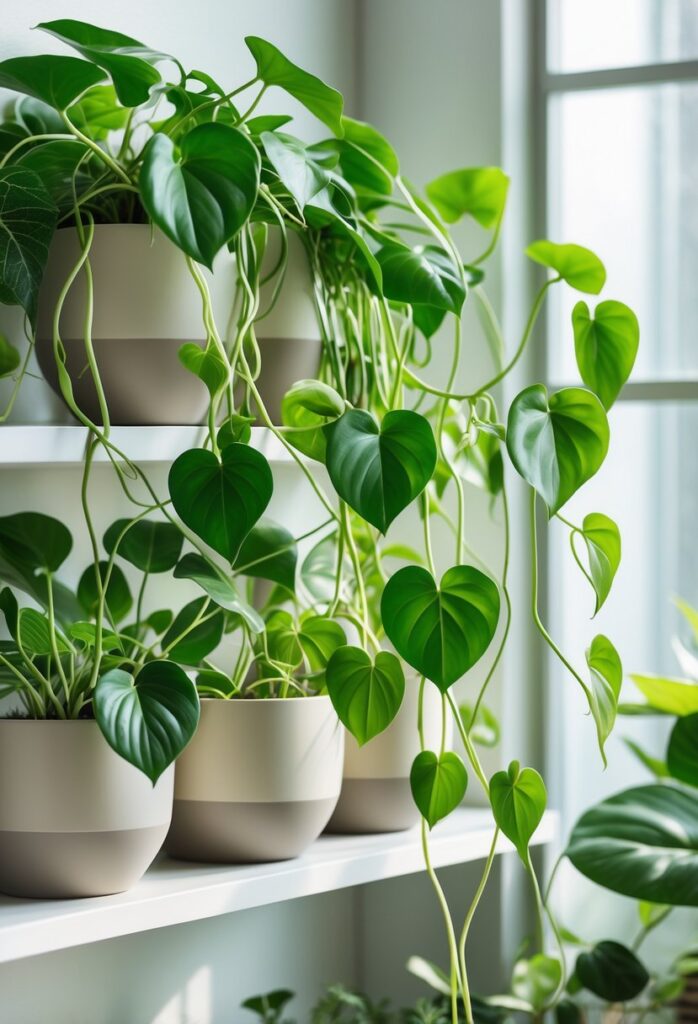
The Heartleaf Philodendron is a popular indoor vine known for its heart-shaped leaves and easy care. It grows well in low to medium light and adapts to many indoor conditions.
It prefers temperatures between 65 to 80°F. This plant thrives in hanging baskets or trained along shelves and trellises. Its fast-growing vines add green softness to any room.
6) Lipstick Plant (Aeschynanthus radicans)
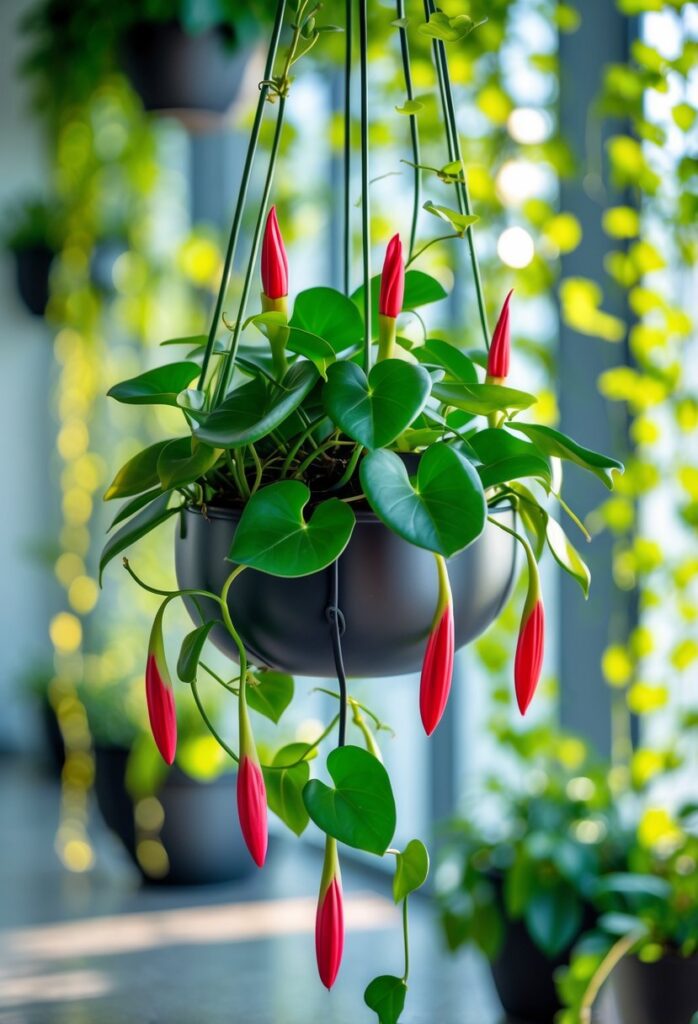
The lipstick plant has bright red, tube-shaped flowers that look like lipstick tubes. It grows well indoors in bright, indirect light and warm, humid conditions.
This plant prefers well-draining, airy soil and should be kept evenly moist. It’s often grown in hanging baskets where its vines can trail down.
The lipstick plant is easy to propagate with soft stem cuttings. It adds color and interest without needing complex care.
7) Spider Plant (Chlorophytum comosum)
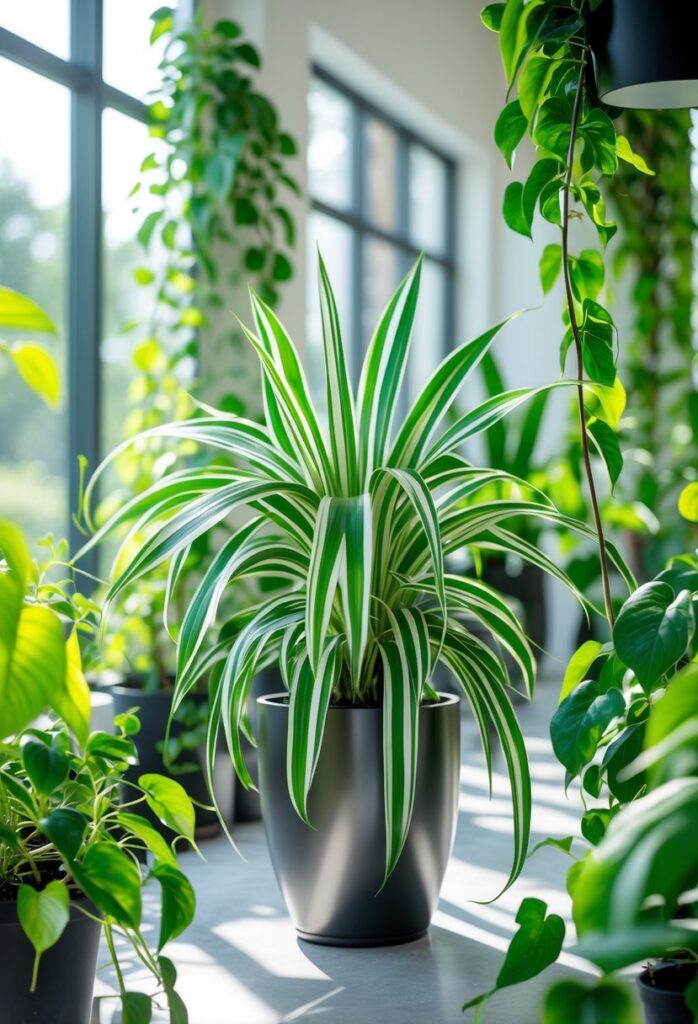
The spider plant is a popular indoor vine known for its long, arching leaves and small offshoots called spiderettes. It grows well in bright, indirect light and prefers evenly moist soil. This plant is easy to care for and adapts to many indoor conditions.
It also helps improve air quality, making it a practical choice for homes. Spider plants are fast growers and can produce many new plants, which makes propagation simple.
How to Care for Indoor Vine Plants
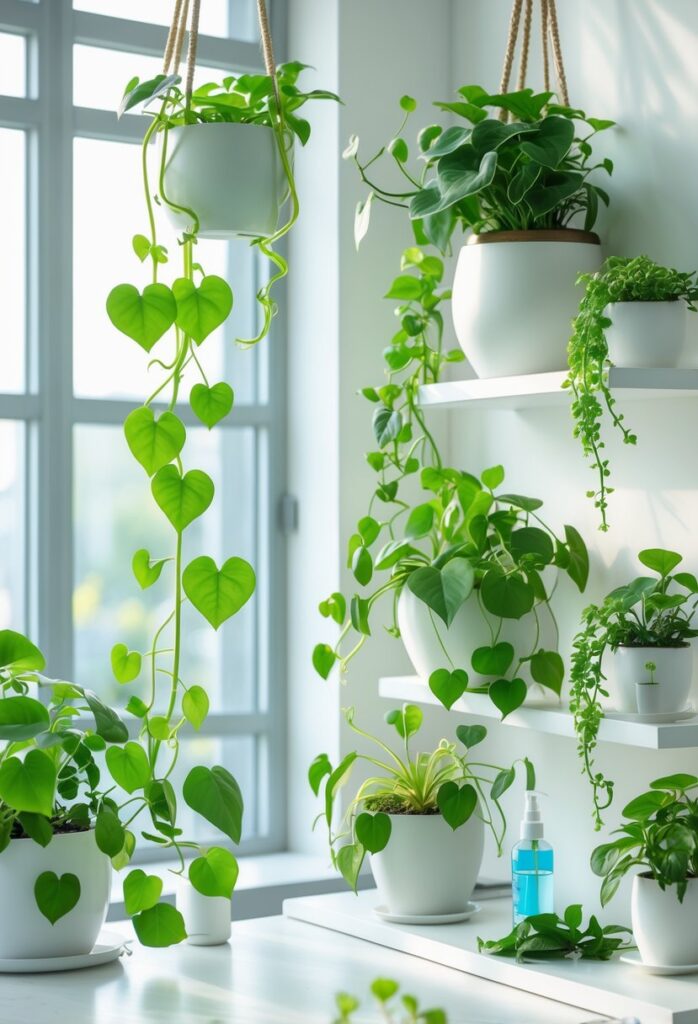
Indoor vine plants need the right mix of light, water, soil, and nutrients to grow well. Paying attention to these details ensures healthy leaves and strong vines. Understanding common problems can help prevent and treat issues before they worsen.
Light and Water Requirements
Most indoor vines prefer bright, indirect light but can tolerate lower light levels. Plants like pothos and philodendrons do well in shaded rooms, while others such as English ivy need more light to thrive. Direct sunlight can burn leaves, so placing vines near east or north-facing windows is often best.
Water needs vary but generally, the soil should stay lightly moist. Overwatering can cause root rot, so it’s important to let the top inch of soil dry out between watering sessions. Many vines do better with less frequent watering in winter when growth slows.
Best Soil Types
Indoor vines grow best in soil that drains well but still holds some moisture. A good choice is a peat-based potting mix combined with perlite or sand to improve drainage. This mix prevents water from pooling around roots, which reduces the risk of root rot.
Some vines, like ivy, also benefit from soil that is slightly acidic to neutral (pH 6.0–7.0). Repotting every 1-2 years refreshes the soil and gives roots space to grow. Adding organic matter like compost can improve soil texture and provide nutrients.
Fertilizing Tips
Indoor vines need feeding during the active growing season, typically spring through early fall. A balanced liquid fertilizer diluted to half strength works well every 4-6 weeks. Too much fertilizer can cause leaf burn or weak growth, so it’s better to underfeed than overfeed.
Slow-release granular fertilizers can also supply nutrients steadily. They are easy to apply but should not be used in winter when vines grow slowly. Always follow package instructions, and flush the soil with water occasionally to avoid salt buildup.
Common Problems and Solutions
Yellowing leaves often signal overwatering or poor drainage. Cutting back watering and checking pot drainage usually helps. Brown leaf tips might result from low humidity or inconsistent watering. Increasing humidity with a pebble tray or misting can improve leaf health.
Pests like spider mites and aphids are common but controllable with insecticidal soap or neem oil. Yellow spots or wilting might indicate fungal disease; removing infected parts and improving air circulation helps limit spread. Regularly inspecting vines prevents minor problems from becoming serious.
Creative Ways to Display Indoor Vines
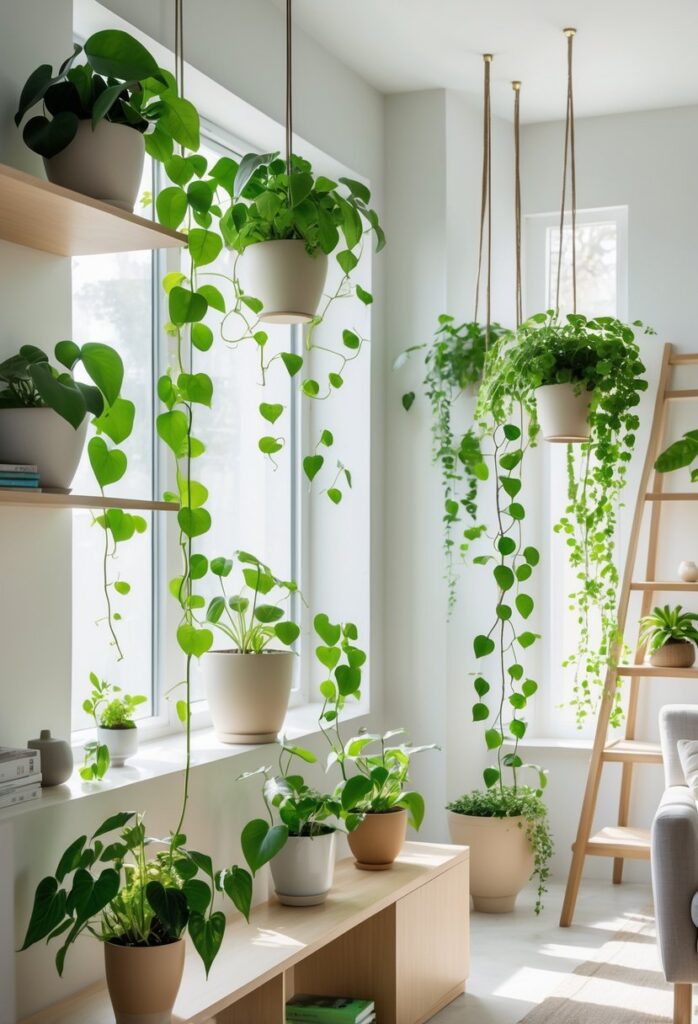
Indoor vines can be shown off in ways that make the most of their trailing and climbing habits. Using vertical and hanging spaces helps keep them healthy and adds a natural look to a room. Practical setups focus on both plant care and style.
Hanging Planters and Baskets
Hanging planters and baskets let vines drape downward naturally. Suspended from hooks in ceilings or walls, they turn any corner into a green focal point. Popular choices for hanging include pothos, ivy, and string of hearts because they trail well.
Using macrame holders or simple metal baskets can add style. It’s important to ensure the planter has proper drainage to avoid soggy roots. Hanging planters also save floor space and brighten darker spots where climbing isn’t possible.
Adjusting the height allows vines to cascade freely without touching furniture. This method is ideal for small rooms or apartments needing vertical greenery.
Wall-Mounted Supports
Wall-mounted supports like hooks, wire grids, and trellises guide vines up walls neatly. This keeps plants off surfaces and creates living green artwork. Vines such as philodendrons or devil’s ivy attach well and can cover blank walls with lush foliage.
Supports should be sturdy and spaced according to the vine’s growth pattern. Some prefer using clear fishing line or thin wire to keep the look clean. Adding decorative planters on the wall can enhance the effect.
This setup improves air circulation around the plant, reducing mold risk. It also makes pruning and maintenance easier since the vine stays organized and visible.
Shelving and Trellises
Placing vines on open shelves allows the plants to trail off edges while showing their stems and leaves. Combining shelves with small trellises encourages upward growth while maintaining a tidy look.
Wood or metal shelves work well, but they must hold the weight of the plants and pots. Mixing varied pot shapes and sizes adds visual interest. This display style suits living rooms or offices where vines can soften hard surfaces.
A trellis on a shelf gives vines climbing support without occupying wall space. This method balances accessibility for watering and maximum light exposure, benefiting the plant’s health.