
How to Style a Coffee Table That Stops Guests in Their Tracks
Your coffee table is basically the stage of your living room. It’s where your candles, remotes, snacks, and personality all collide. The good news? Styling it doesn’t require a design degree—just a few smart moves and a little editing. Let’s make yours look intentional, not accidental.
1. Start With A Strong Base (Then Build Up)
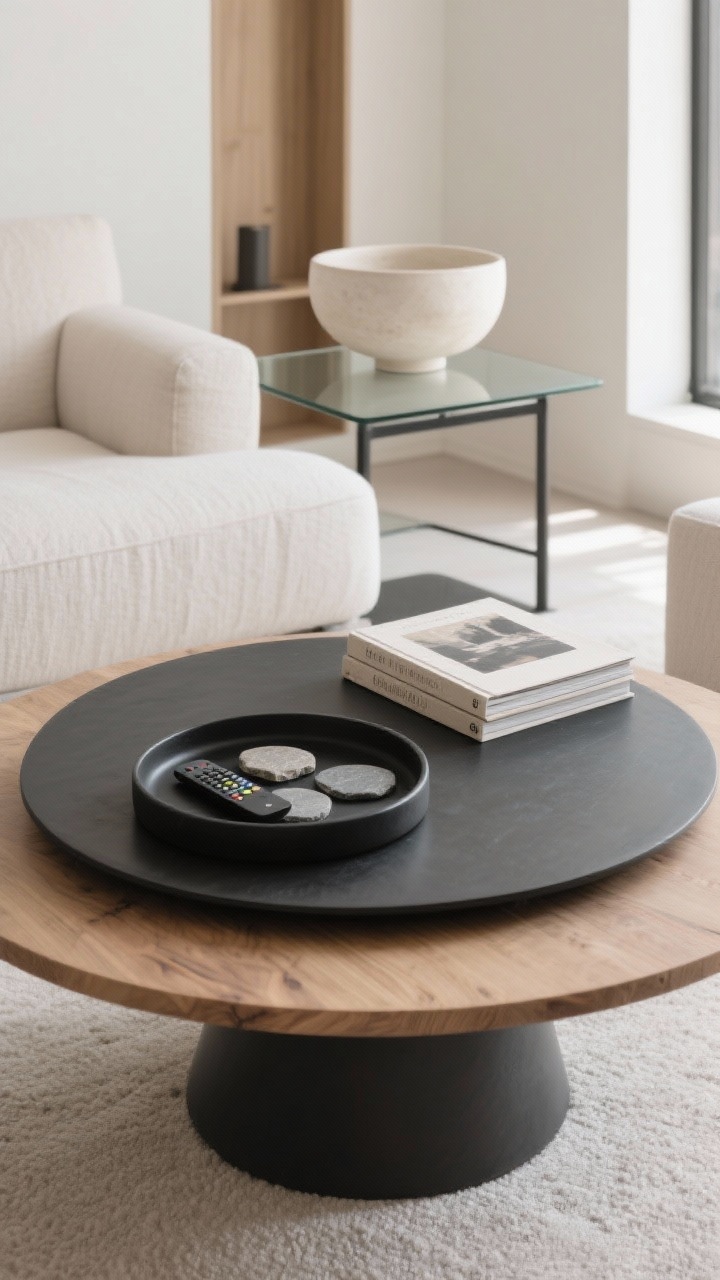
Think of your coffee table like an outfit: you need a base layer before accessories. Start with one solid anchor piece—a chunky book, a tray, or a low bowl—to ground the look.
- Trays = instant order. They corral the chaos and give you defined zones for candles, remotes, and coasters.
- Oversized books add weight and height. Bonus: they’re perfect for layering smaller objects.
- Large bowls keep things practical for keys or matches while adding a sculptural moment.
Quick Tip
If your table is glass or minimal, go slightly larger with the base piece so it feels substantial—not floaty.
2. Play With Height (But Keep It Cohesive)
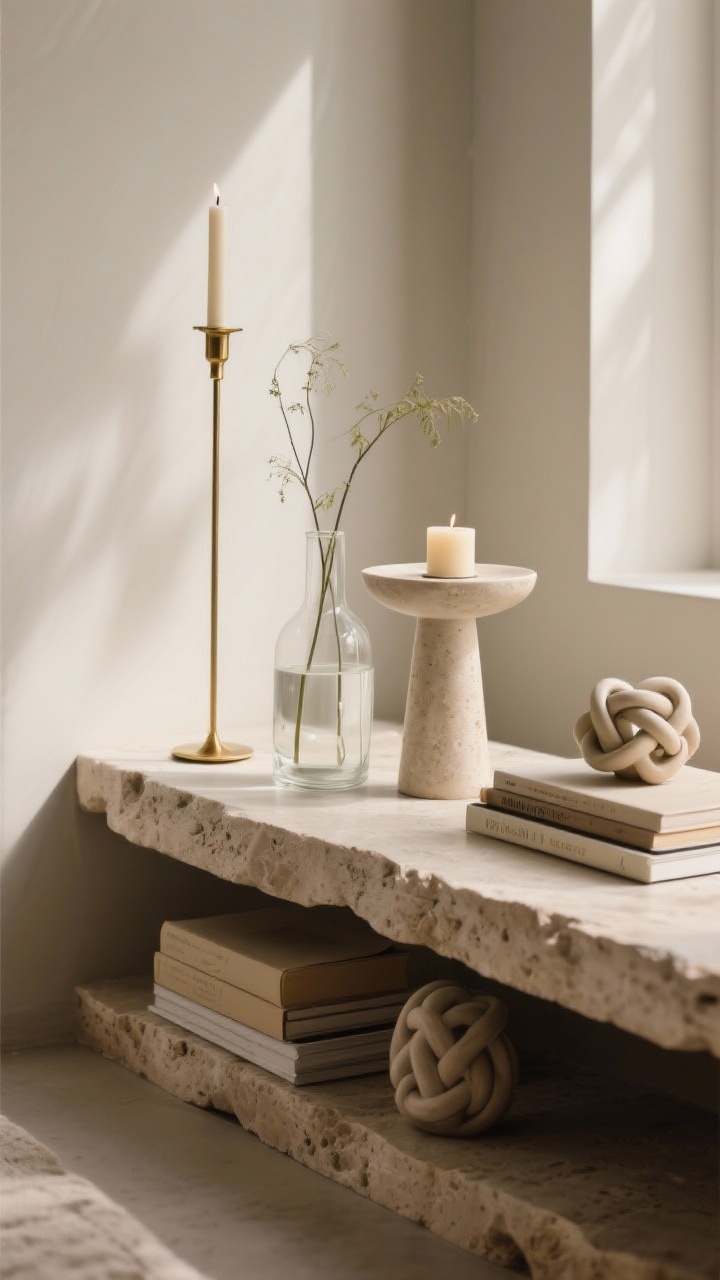
A flat lineup of objects looks, well, flat. You want a mix of low, medium, and tall elements so the eye moves around naturally.
- Tall: a slender vase with stems, a candlestick, or a small lamp (yes, a lamp on a coffee table is chic).
- Medium: stacked books, a pedestal bowl, or a lidded box.
- Low: a sleek candle, a ceramic knot, or a small dish.
Balance, Don’t Mirror
Place taller pieces off-center and counterweight them with wider, lower items on the opposite side. Symmetry can feel stiff—aim for harmony instead.
3. Layer Textures Like A Pro
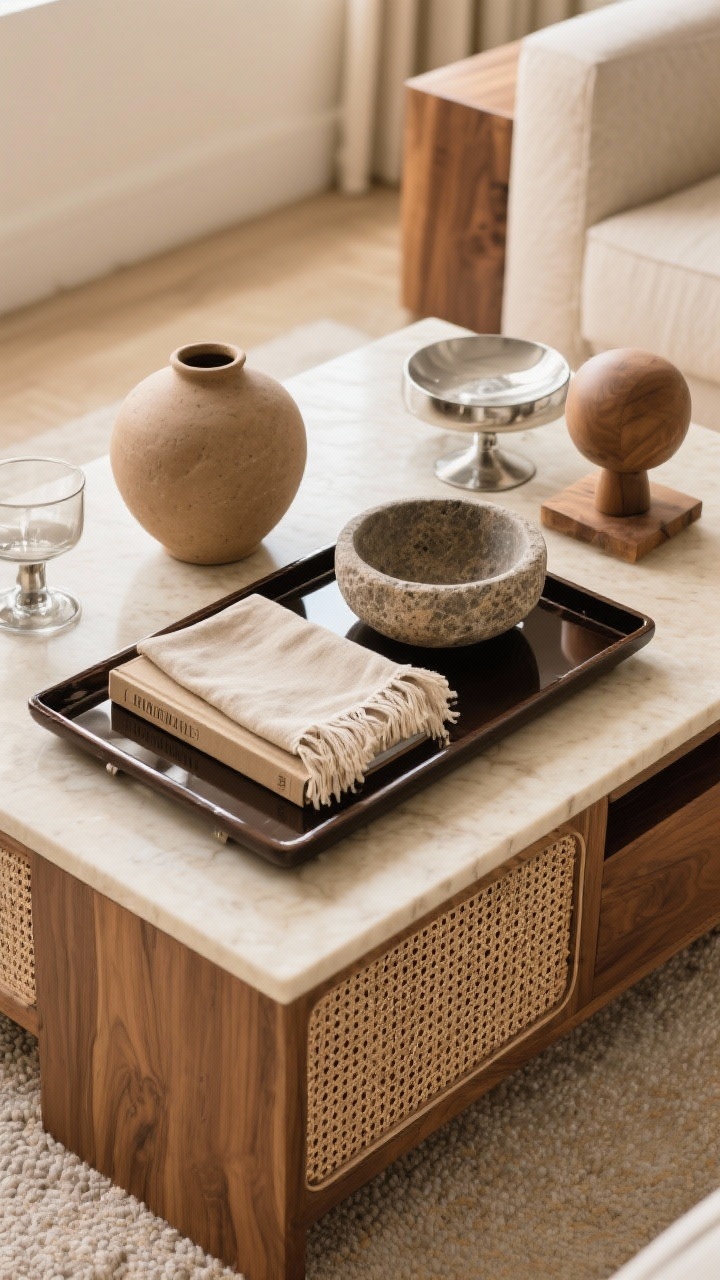
Texture is the secret sauce. When everything is shiny or everything is matte, the setup falls flat. Mix materials so the table feels tactile and lived-in.
- Combine: wood + glass + metal + stone + woven fiber.
- Add softness: a linen-bound book, a small fabric coaster stack, or a fringed napkin under a bowl.
- Contrast finishes: pair a glossy tray with a raw clay vase for that “I have taste” energy.
Pro Move
On round tables, lean into curved shapes and soft edges. On square or rectangular tables, bring in a few rounded items to soften the lines.
4. Use The Rule Of Thirds (And The Power Of Odd Numbers)
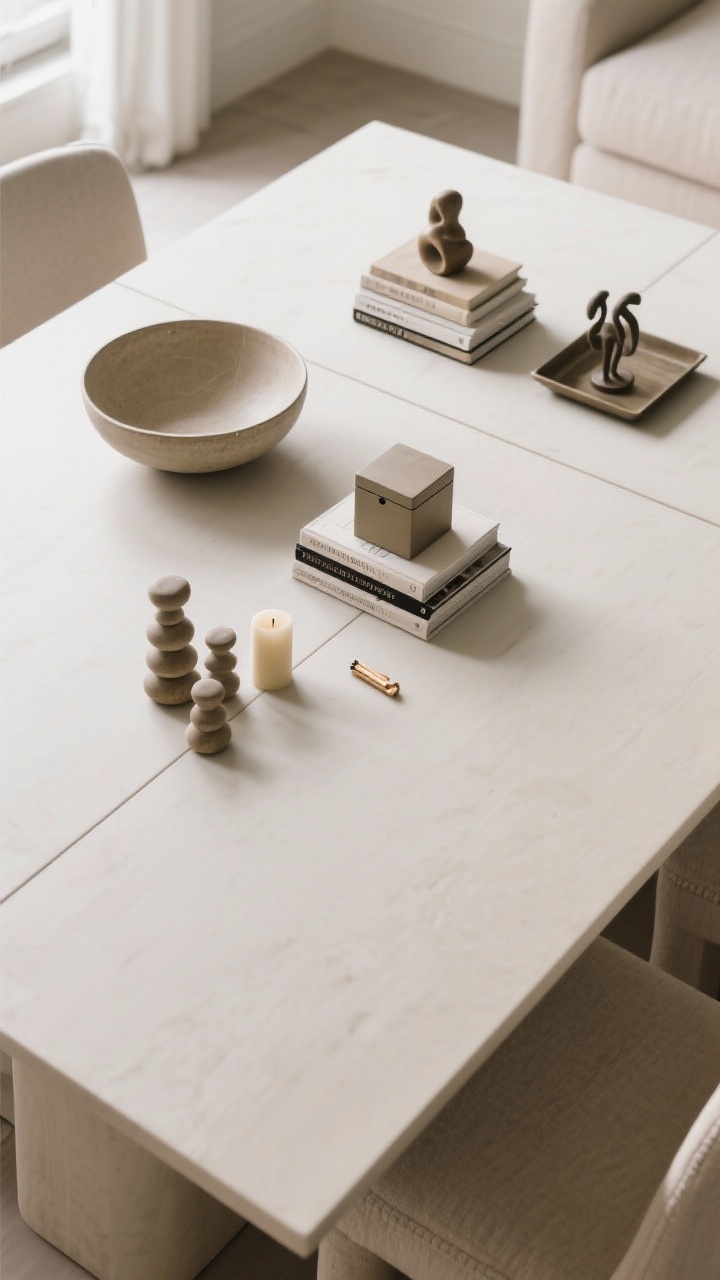
Designers love rules for a reason—they work. Divide the table visually into thirds and create three mini-vignettes. It’s like giving each zone a job.
- Odd numbers look more natural. Group items in threes or fives.
- Mix sizes within each group: one substantial piece, one medium, one small accent.
- Leave breathing room. Negative space is part of the composition, not wasted space.
For Large Tables
Use two trays or a tray plus a stack of books to define zones. FYI, your remotes can live in a chic box—out of sight, out of mind.
5. Bring Life: Greenery, Florals, Or Branches
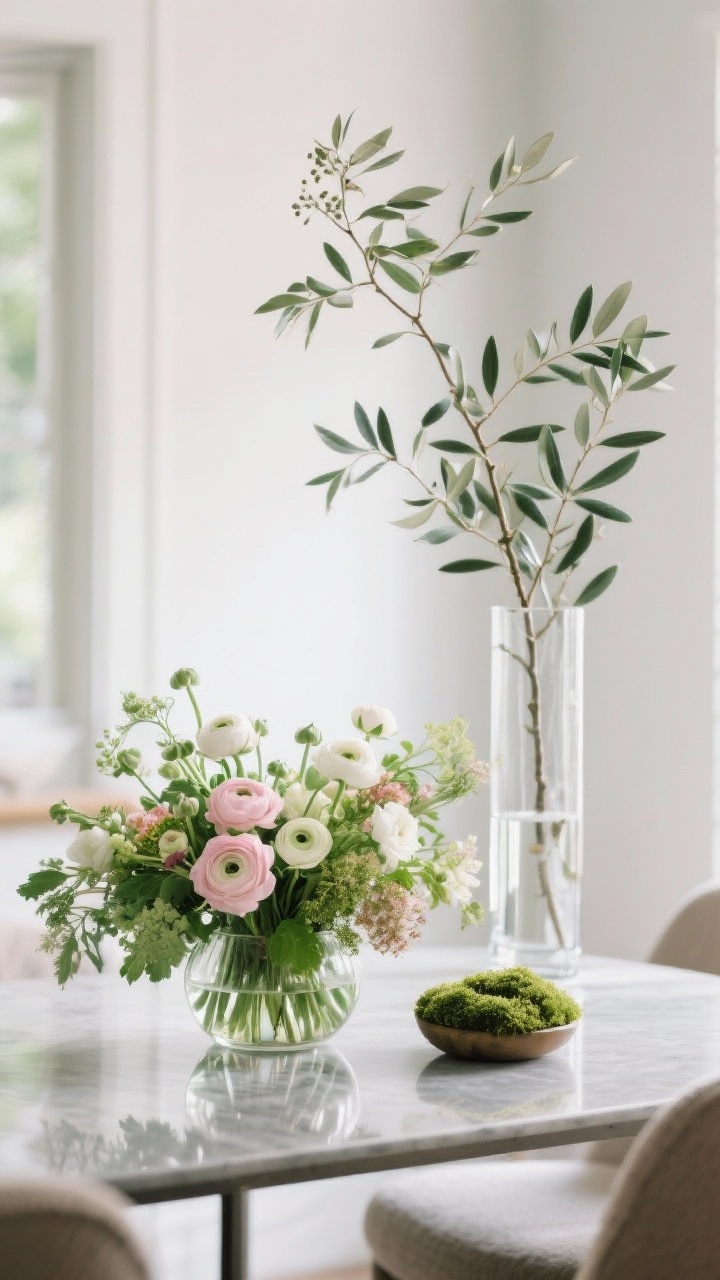
Nothing warms up a coffee table like something alive (or convincingly faux—no judgment). A little greenery keeps the setup from feeling too styled.
- Low arrangement: perfect for conversation; think peonies, ranunculus, or seasonal blooms.
- Airy branches: olive, eucalyptus, or foraged greenery in a tall, narrow vase for drama.
- Low-maintenance: a trailing pothos, small succulent, or a preserved moss bowl.
Vase Shape Matters
Round vases soften sharp tables; angular vases add structure to soft, curved tables. IMO, a clear glass vase is the easiest starter piece—it goes with everything.
6. Make It Personal (But Edit Like A Stylist)
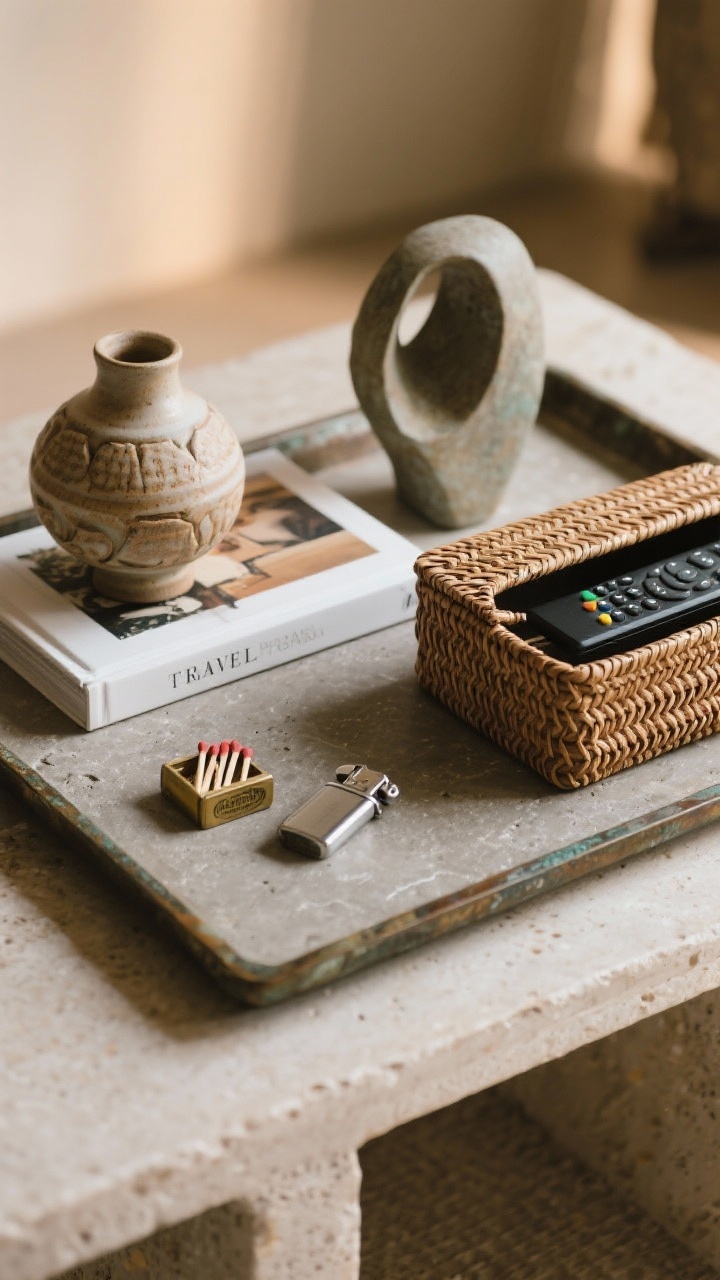
Your table should tell your story—just not your entire life story. Choose a few meaningful pieces and let them shine.
- Objects with character: travel finds, a vintage match striker, a handmade ceramic, a small sculpture.
- Functional pretties: a beautiful lighter, stone coasters, or a woven box for cards and remotes.
- One conversation piece: something a bit quirky so guests ask, “Where’d you get that?”
Edit, Edit, Edit
Do a final sweep and remove one item. Then slide what’s left closer together—tight groupings look intentional. And yes, dust the tray. Your candles deserve a clean stage.
7. Style For Your Lifestyle (Kids, Pets, Small Spaces, And More)
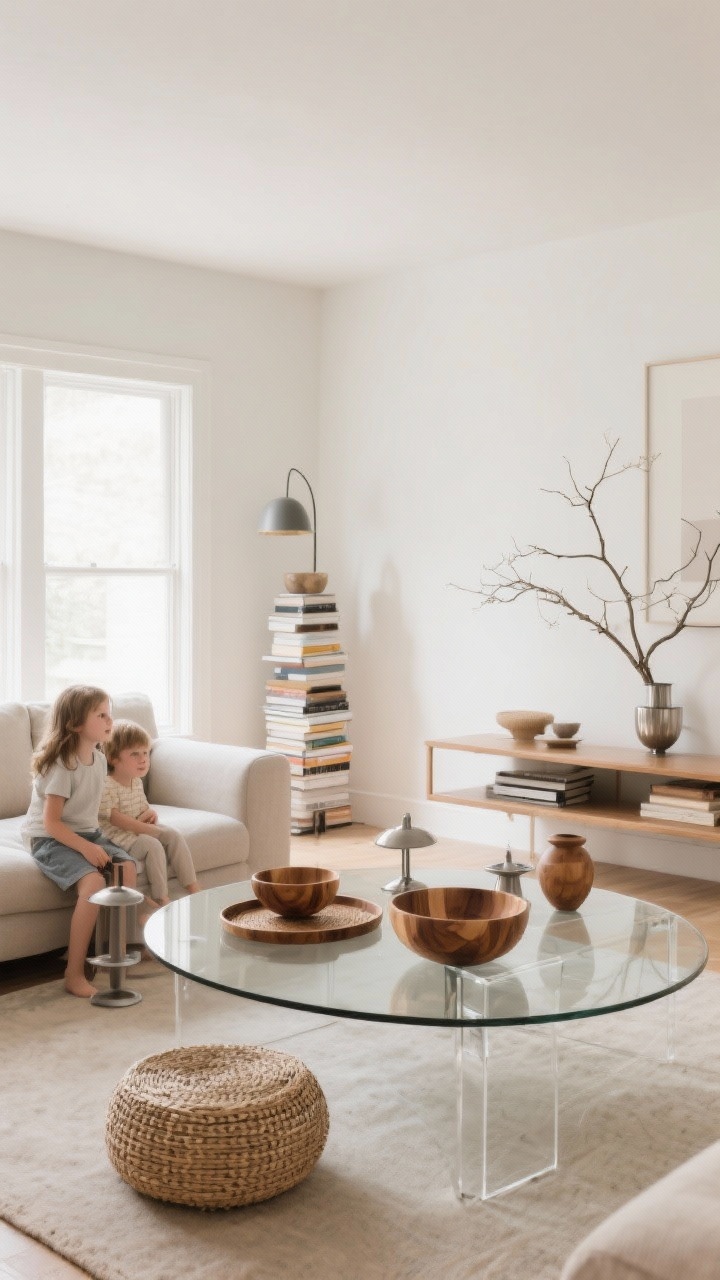
Gorgeous is great, but it has to work for your life. Tweak the formula so your table stays both pretty and practical.
If You Have Kids Or Pets
- Go unbreakable: wooden bowls, woven trays, and metal accents.
- Rounded edges on both table and objects help avoid oops moments.
- Low-profile pieces reduce the “cat knocked over my peonies again” situation.
Small Living Rooms
- Scale down: fewer, larger items look cleaner than lots of tiny knickknacks.
- Double-duty: choose a lidded box for remotes and a tray that can be lifted off for board games.
- Glass or acrylic tables visually lighten the room—pair with textural items for contrast.
Oversized Coffee Tables
- Think in quadrants: style two corners, leave one open for function, and float a stack of books on the last.
- Scale up greenery: larger branches or a substantial bowl keep the table from feeling underdressed.
Round Or Oval Tables
- Use a round tray to echo the shape, then add a tall element slightly off-center.
- Curate curves: spherical objects, rounded candles, and soft florals keep the flow.
Quick Styling Formulas To Steal
- Classic: Tray + Stack of 2-3 books + Small vase with flowers + Candle.
- Minimal: Sculptural bowl + Tall branch vase. Done.
- Cozy: Woven tray + Candle cluster + Match striker + Low greenery.
- Collected: Big art book + Vintage box + Small sculpture + Taper candle.
Common Mistakes (And Easy Fixes)
- Too many tiny items: Swap for fewer, larger pieces to reduce visual clutter.
- No height variation: Add a tall vase or candle to break the flat line.
- Ignoring function: Always leave open space for mugs, laptops, or snacks. You live here.
- Color chaos: Limit your palette to 2-3 tones with one accent. FYI, repetition = cohesion.
Final Touches That Make It Look Expensive
- High-quality candle with a subtle scent. Hide the jar label if it’s loud.
- Matches in a pretty vessel or a sleek electric lighter—small detail, big vibe.
- Cohesive coasters that match your metal or stone accents.
Here’s the best part: coffee table styling is flexible. Swap stems next week. Rotate a new book. Light a different candle. With a strong base, varied heights, layered textures, and a dash of personality, your coffee table will look curated—without feeling precious. Now go fluff those stems and claim your living room throne.