
7 Backyard String Lights Ideas to Transform Your Outdoor Space
String lights can change how a backyard looks and feels. They add warmth and make outdoor spaces more inviting for both quiet evenings and gatherings with friends and family.
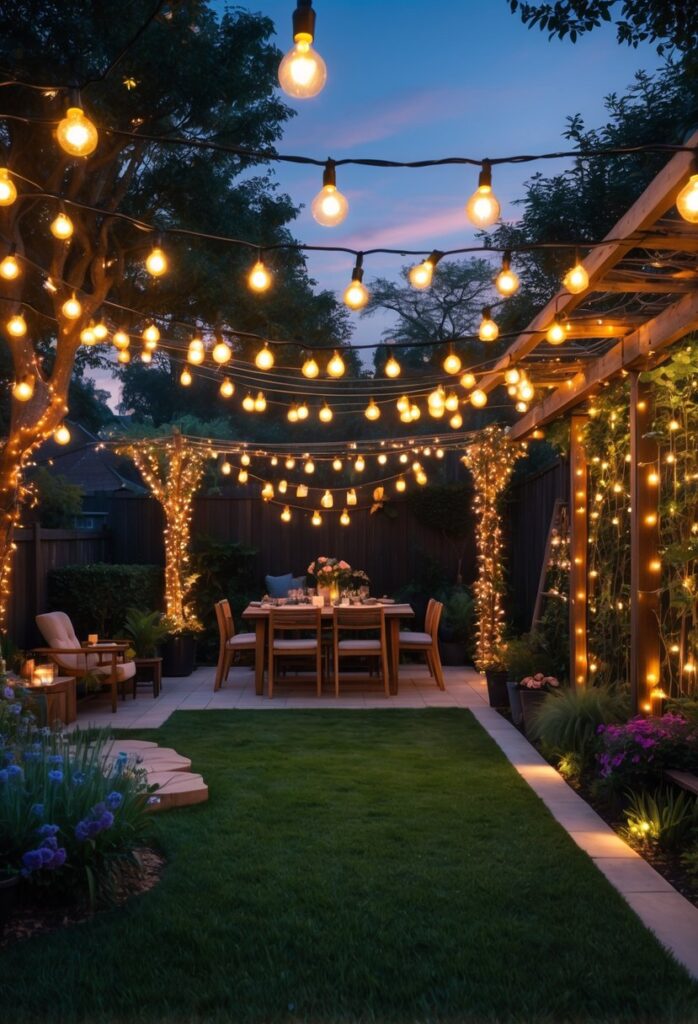
The right string light setup can turn an ordinary yard into a comfortable retreat without major renovations or high costs. From pergolas to garden paths, there are many ways to use these lights. Simple installation methods work well for patios, trees, and dining areas.
This guide covers different string light ideas that fit various backyard layouts and styles. It also includes tips on planning the installation and creating the right mood for any outdoor space.
1) String lights draped across a wooden pergola to create a cozy canopy
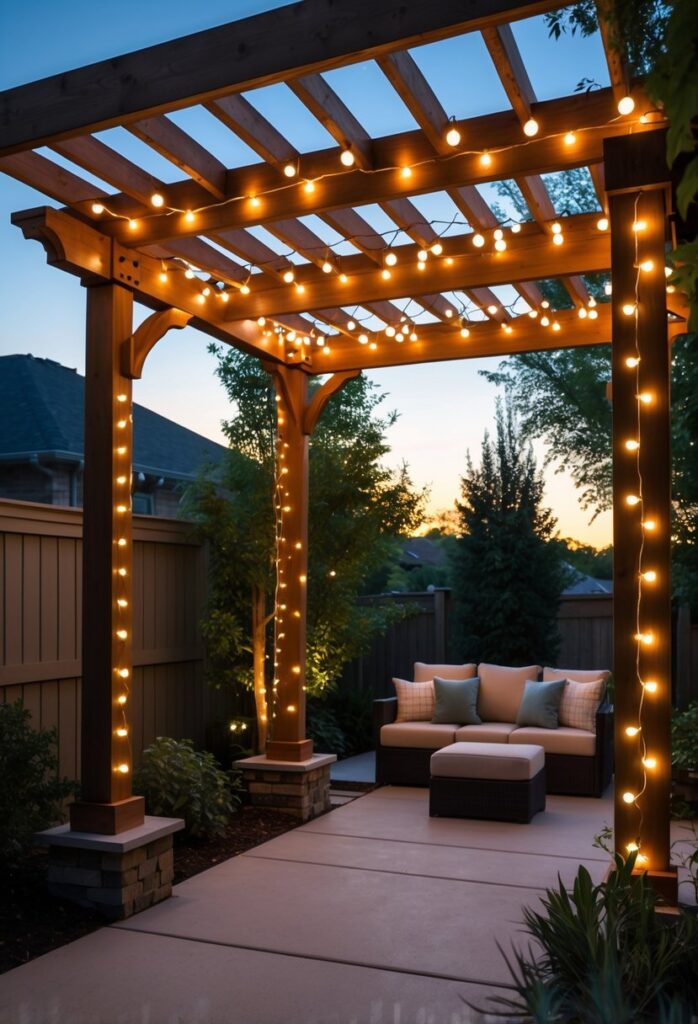
Draping string lights across a wooden pergola transforms any backyard into a warm gathering space. The lights create a soft overhead glow that works well for evening dinners or quiet nights outside.
A simple crisscross pattern spreads light evenly across the area. Running lights in parallel lines 12 to 18 inches apart offers a cleaner look. Both methods attach easily to pergola beams and provide good coverage.
2) Solar-powered LED string lights along garden fences
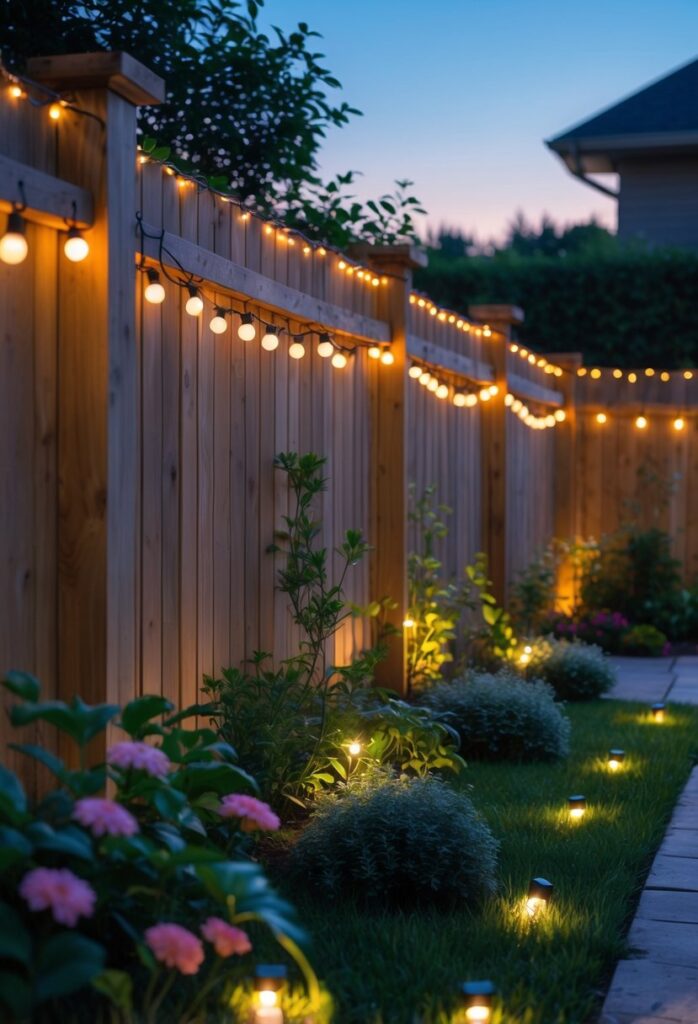
Solar-powered LED string lights work well along garden fences. They charge during the day using sunlight and turn on automatically at night. No electrical outlets are needed, which makes installation simple.
These lights can be draped along the top of fences or woven through fence slats. They add light to yards while highlighting the garden’s edges. Most solar string lights include multiple lighting modes for different effects.
3) Battery-operated fairy lights woven through shrubbery
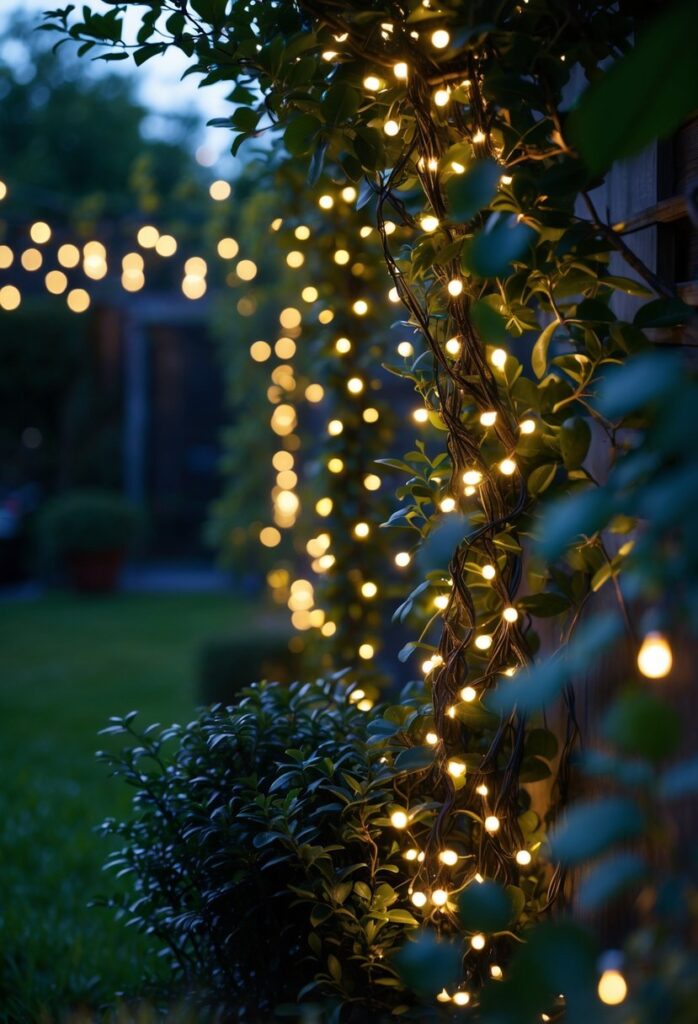
Battery-operated fairy lights work well in shrubs because they don’t need outlets. Homeowners can wrap the thin copper wires around branches and tuck them into the foliage. The small LED bulbs create a soft glow that highlights the natural shape of plants.
These lights come in different lengths, typically ranging from 3 feet to 20 feet per strand. Most models use AA batteries and include timers for automatic operation. They resist weather conditions, making them suitable for year-round outdoor use.
4) Overhead crisscrossed string lights with dimmable bulbs above a patio
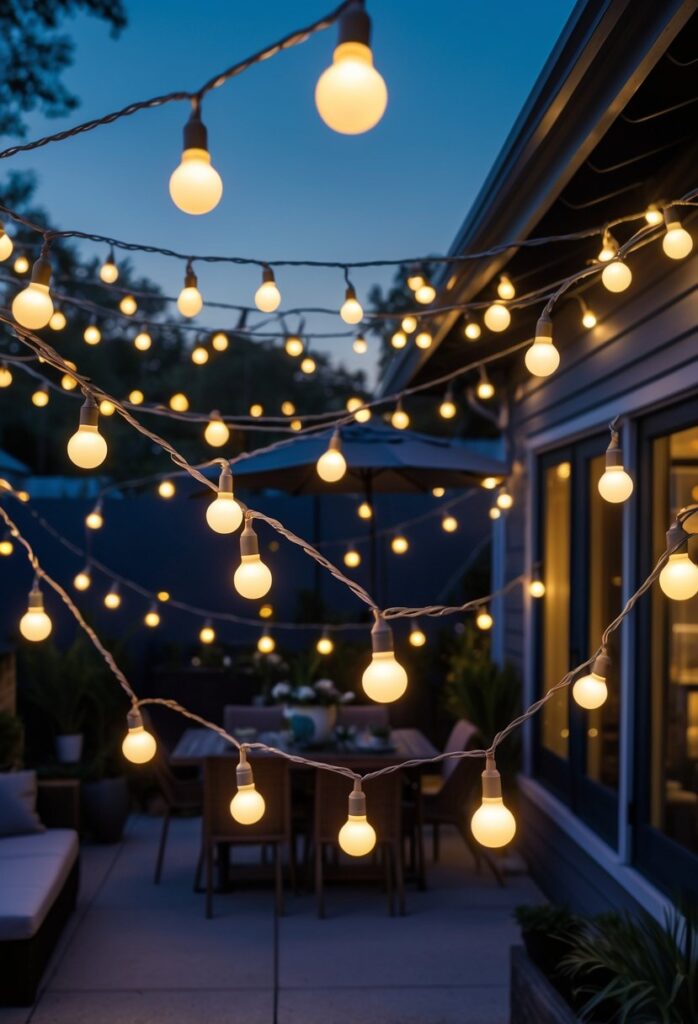
Crisscrossing string lights overhead creates a canopy effect that adds warmth to any patio space. This pattern works well because it provides even lighting across the entire area.
Dimmable bulbs give homeowners control over brightness levels. They can set bright light for dinner parties or dim the lights for relaxed evenings. LED dimmable options use less electricity and last over 25,000 hours.
The installation requires securing lights at multiple anchor points across the patio to form an X or zigzag pattern.
5) String lights wrapped around tree trunks and branches
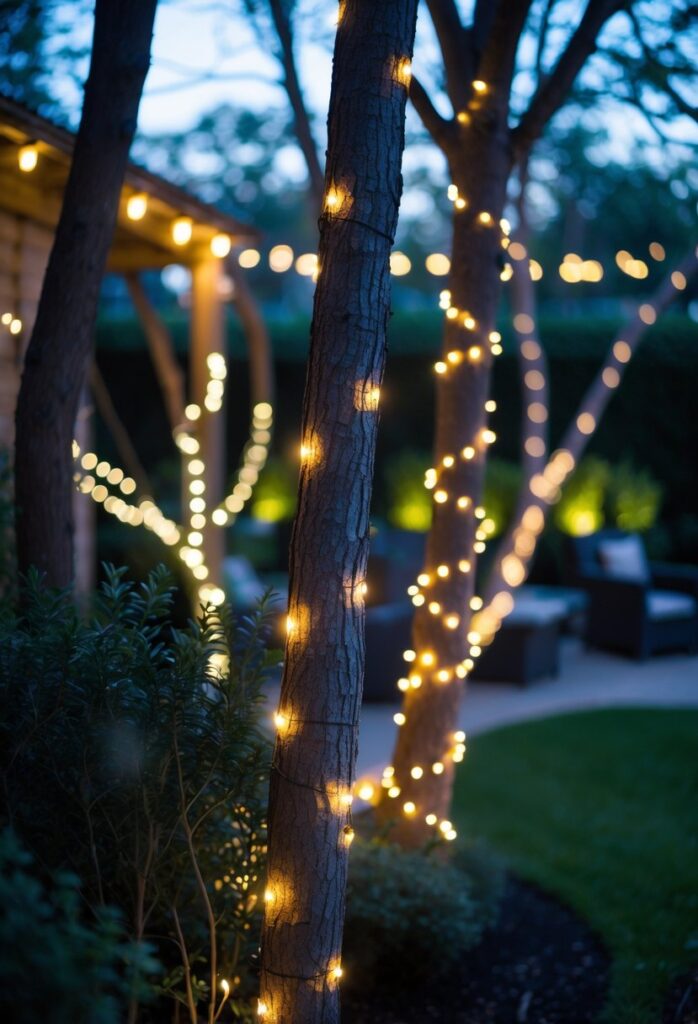
Wrapping string lights around trees creates a magical glow in any backyard. Start at the base of the trunk and work upward, spacing lights 6-8 inches apart for even coverage.
Most people wrap the full trunk and extend 3-4 feet into the branches. Not every branch needs lights. Select a few branches to create balanced lighting across the tree.
Use waterproof LED lights designed for outdoor use to ensure they last through different weather conditions.
6) Warm white Edison bulb string lights hanging from posts
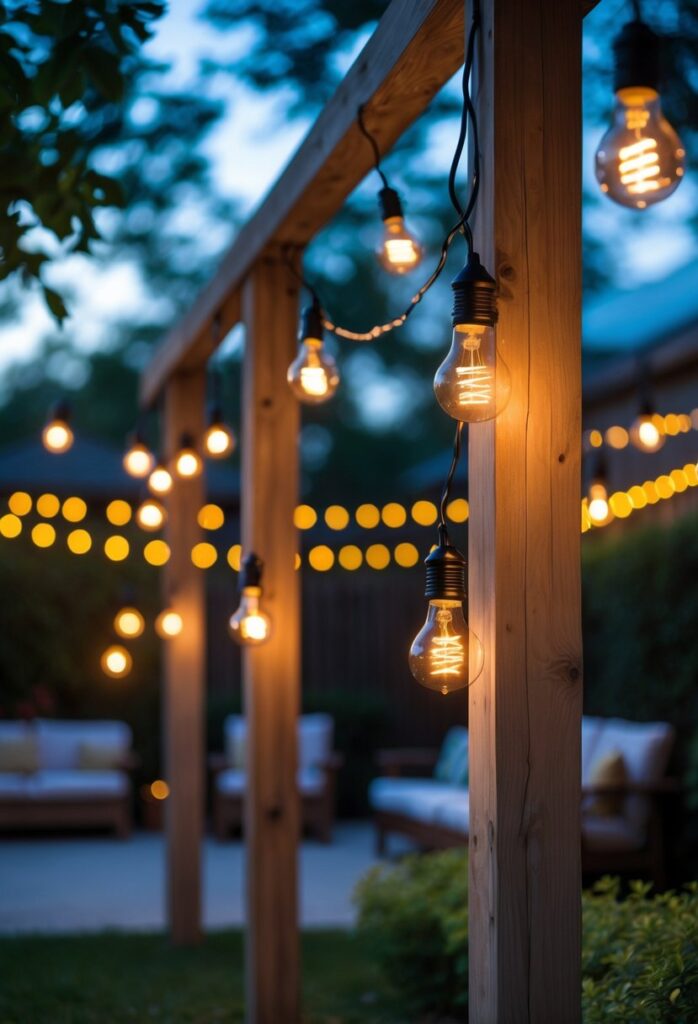
Warm white Edison bulbs create a vintage bistro atmosphere in any backyard space. These lights work well when hung between weatherproof poles positioned around a patio or deck area.
The bulbs give off a soft glow that makes outdoor gatherings feel cozy without being too bright. String-to-string designs allow homeowners to connect multiple sets together to cover larger areas.
Most Edison string light sets feature durable, weatherproof construction that can stay up year-round.
7) String lights arranged in a zigzag pattern over an outdoor dining area
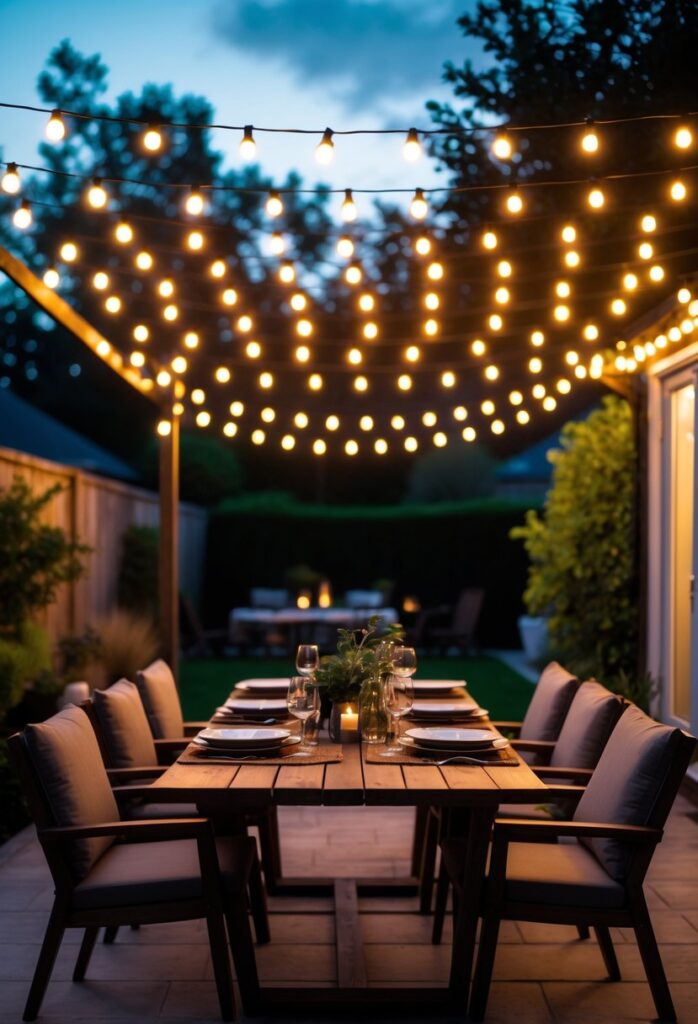
A zigzag pattern creates even light distribution across the entire dining space rather than just the edges. The crisscross design forms a canopy effect that defines the area and adds visual interest.
This arrangement works well for large patios where standard straight lines might leave dark spots. The pattern creates playful shadows and light effects that make the space more engaging for guests during evening meals.
Planning Your Backyard String Light Installation
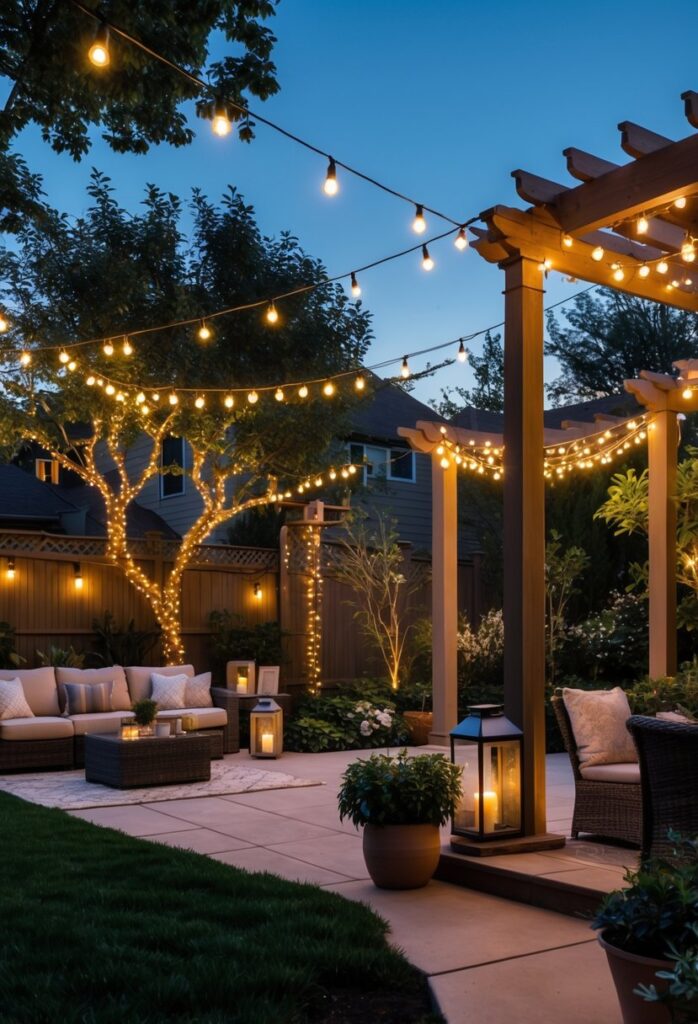
A successful string light setup requires careful planning before installation begins. Taking measurements, selecting appropriate light types, and addressing safety concerns will save time and prevent costly mistakes.
Measuring Your Outdoor Space
Accurate measurements form the foundation of any string light project. Start by measuring the total distance between mounting points where the lights will hang. Add an extra 2-3 feet to account for draping and connections.
Map out the installation area on paper or using a digital tool. Mark all attachment points including posts, trees, walls, or poles. This visual guide helps determine how many strands are needed.
Consider the height at which lights will hang. Most installations work best at 8-10 feet above ground to provide adequate clearance while maintaining ambiance. Measure vertical distances from ground to mounting points to ensure sufficient slack in the cables.
Count the number of electrical outlets available and measure their distance from the planned installation area. Extension cords may be necessary for areas far from power sources.
Choosing the Right String Light Types
LED bulbs offer the best energy efficiency and longest lifespan, typically lasting 25,000-50,000 hours. They stay cool to the touch and reduce electricity costs by up to 75% compared to incandescent options.
Incandescent bulbs provide warm, traditional lighting but use more energy and need frequent replacement. They work well for occasional use or special events.
Solar-powered strings eliminate electrical requirements entirely. They charge during daylight hours and automatically illuminate at dusk, though brightness depends on sun exposure.
Bulb spacing matters for the desired effect. Lights spaced 12-24 inches apart create bright, functional lighting. Wider spacing of 24-36 inches produces softer ambient illumination.
Weather resistance ratings are critical for outdoor use. Look for lights rated IP65 or higher to withstand rain, snow, and humidity without damage.
Essential Safety Considerations
All outdoor string lights must carry a UL rating for exterior use. Indoor-rated lights lack proper insulation and weatherproofing, creating fire and shock hazards outdoors.
Use Ground Fault Circuit Interrupter (GFCI) outlets for all outdoor electrical connections. These devices cut power within milliseconds if they detect electrical current leaks.
Never overload circuits by connecting too many light strands together. Most manufacturers recommend connecting no more than 3-5 strands end-to-end, depending on wattage.
Install lights away from flammable materials like dry leaves, fabric awnings, or wooden structures with gaps. Maintain at least 6 inches of clearance from combustible surfaces.
Inspect all cords and bulbs before installation. Replace any lights with frayed wires, cracked sockets, or damaged insulation. Check connections periodically throughout the season for wear or weather damage.
Design Tips for Enhancing Ambience
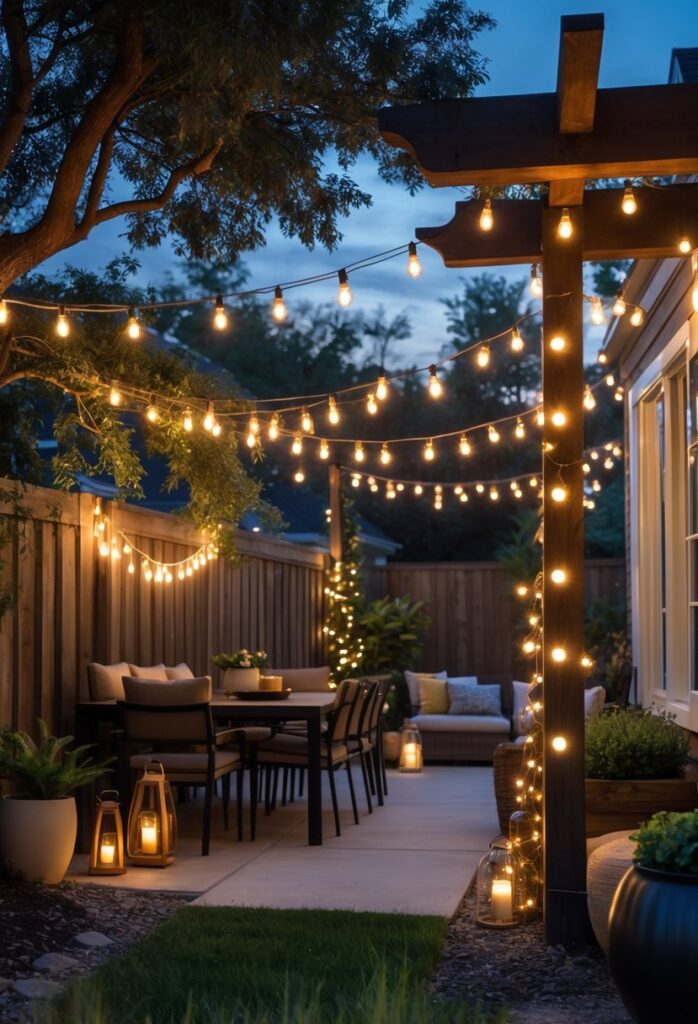
The right design approach turns basic string lights into a thoughtful lighting system that changes how people experience outdoor spaces. Strategic placement, natural integration, and proper color selection work together to create the desired atmosphere.
Placement Strategies for Maximum Impact
Overhead installations create the most dramatic effect by forming a canopy of light above seating and dining areas. String lights should hang 8 to 10 feet above the ground to allow clearance while keeping the glow close enough to illuminate faces and tables effectively.
Zigzag patterns across a patio create visual interest and distribute light evenly. This approach works well for rectangular spaces where lights can run from opposite corners or sides. The pattern prevents dark spots while adding dimension to flat outdoor areas.
Perimeter lighting along fence lines or property edges defines space boundaries and makes yards feel larger at night. This technique highlights the full scope of the outdoor area without requiring central support structures. Placing lights around the edges also keeps pathways and seating areas clear.
Layering multiple height levels adds depth to lighting designs. Combining high overhead strings with lower accent lights near ground features creates a more complete lighting scheme that feels professional and intentional.
Complementing Landscaping Elements
String lights wrapped around tree trunks and through branches bring attention to existing natural features. Mature trees serve as sturdy anchor points while the lights emphasize their shape and texture after dark.
Garden beds and plantings benefit from lights positioned to graze across foliage without shining directly into eyes. The soft illumination reveals colors and textures that disappear in darkness. Strategic placement near flowering plants or ornamental grasses highlights these features as focal points.
Architectural elements like pergolas, arbors, and gazebos provide natural frameworks for string lights. Draping lights along beams and posts enhances these structures while creating defined gathering zones. The combination of solid architecture and delicate lighting balances visual weight.
Water features gain new dimension when lit from nearby string lights. The bulbs reflect off pond surfaces or fountain spray to multiply the lighting effect without additional fixtures.
Color Temperature and Mood Setting
Warm white bulbs (2700K-3000K) create a cozy, intimate feeling similar to candlelight. This temperature range works best for dinner parties, quiet evenings, and romantic settings. The amber-toned light flatters skin tones and makes food look appetizing.
Cool white bulbs (4000K-5000K) produce a brighter, more energetic atmosphere. These work well for active entertaining, game nights, and areas where tasks require better visibility. The crisp light feels modern and clean but can seem harsh in relaxation zones.
Dimmable options provide flexibility to adjust brightness based on the occasion and time of evening. Starting brighter during dinner and dimming later creates a natural progression through the night. Some systems allow separate control of different light strings for customized zones.
Mixing bulb shapes rather than colors adds variety without creating visual chaos. Globe bulbs combined with Edison-style filament bulbs on the same patio create texture while maintaining a cohesive warm glow throughout the space.
Frequently Asked Questions
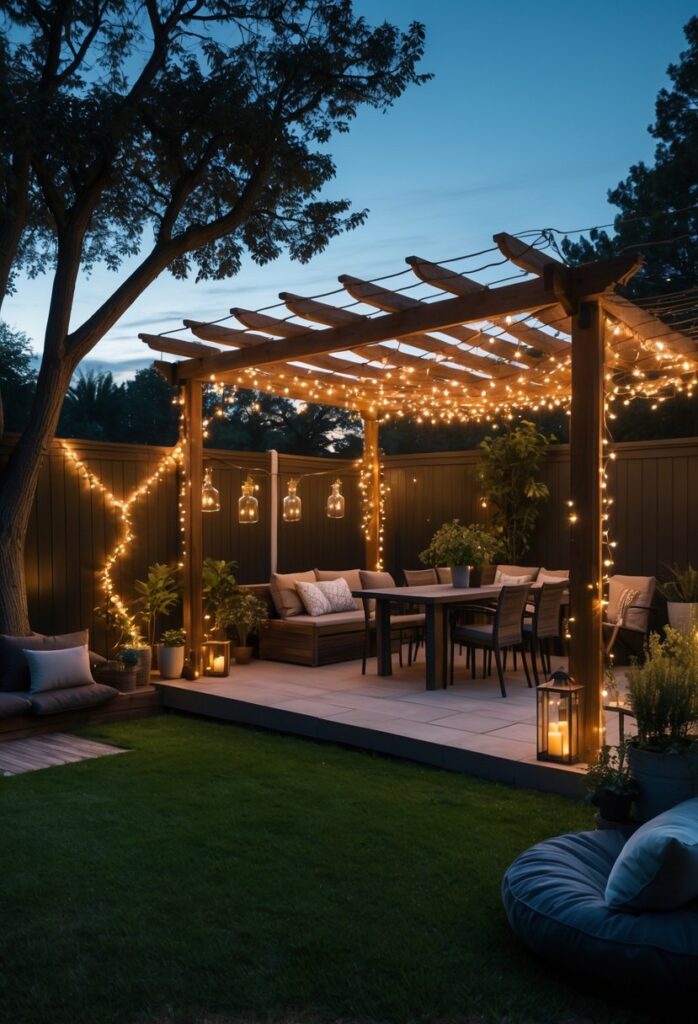
String lights offer flexible installation options for various outdoor spaces, from concrete patios to wooden porches. Understanding proper hanging techniques, budget considerations, and design strategies helps create a polished lighting display.
What are some creative ways to hang string lights in my backyard?
Draping string lights across a pergola creates an overhead canopy effect that defines the space below. The wooden beams provide natural anchor points for securing the lights at regular intervals.
Wrapping lights around tree trunks and branches adds vertical interest while highlighting natural features. This method works well for yards with mature trees that can support the weight.
Crisscrossing lights overhead in a zigzag pattern adds dimension to flat spaces. This technique requires poles or posts at multiple points to create the intersecting lines. Weaving battery-operated fairy lights through shrubbery creates subtle ground-level illumination that doesn’t require electrical outlets.
Can I install string lights on a concrete outdoor area, and if yes, how?
Freestanding poles or shepherd’s hooks set in weighted bases provide anchor points on concrete surfaces. These stands don’t require drilling and can be moved as needed.
Adhesive hooks designed for outdoor use attach directly to concrete walls or posts. The hooks need clean, dry surfaces for proper adhesion. Command strips rated for outdoor conditions offer a temporary solution that removes without damage.
Guide wires strung between existing structures like house walls and fences create support for lights over concrete areas. Eye bolts installed in surrounding wooden elements provide secure attachment points for the guide wire system.
What are some budget-friendly options for illuminating my backyard with string lights?
Solar-powered LED string lights eliminate electricity costs and installation expenses related to wiring. These lights charge during daylight hours and turn on automatically at dusk. Battery-operated options cost less upfront than solar models and work well in shaded areas where solar panels can’t charge effectively.
Basic globe string lights with plastic bulbs cost significantly less than specialty designs like Edison bulbs. A single strand of 25 feet provides adequate coverage for small patios and seating areas.
Purchasing lights during off-season sales in fall and winter reduces costs by up to 50 percent. Hardware stores and online retailers regularly discount outdoor lighting after summer ends.
How do I secure outdoor string lights in a bedroom setting?
Outdoor-rated string lights should only be used in bedrooms with proper ventilation and safety considerations. Indoor string lights designed for bedroom use are safer and more appropriate for enclosed spaces.
Adhesive clips attach to walls without causing damage to paint or drywall. These clips hold individual bulbs in place along the desired path. Curtain rods or tension rods mounted above windows provide a horizontal surface for draping lights.
Command hooks placed at regular intervals create anchor points around the room’s perimeter. The lights can follow the wall line near the ceiling or create patterns like zigzags or swoops.
What strategies exist for making my outdoor string lights look elegant and well-designed?
Installing dimmable bulbs allows adjustment of brightness levels for different occasions. Lower light levels create intimate settings while brighter settings work for active gatherings.
Keeping the line heights consistent maintains a clean, intentional appearance. Measuring and marking anchor points before installation ensures even spacing and straight lines.
Choosing one bulb style throughout the space creates visual unity. Mixing Edison bulbs with globe lights or different colors can appear cluttered. Installing lights along existing architectural lines like fence tops or pergola beams emphasizes the structure’s design.
Are there any innovative methods for hanging string lights on a porch without causing damage?
Tension rods wedged between porch posts hold lightweight string lights without requiring screws or nails. The rods rely on pressure to stay in place.
Gutter hooks clip onto existing gutters and downspouts to provide anchor points. These hooks slide into place and support the weight of standard string lights.
Zip ties secure lights to porch railings, balusters, and other existing features. The ties remain hidden behind the light strand and can be cut away when removing the lights. Outdoor-rated Velcro straps wrap around posts and beams for a removable attachment method that works on various surfaces.