
Monstera Plant: Essential Guide to Growing a Stunning Houseplant
Monstera plants are popular indoor vines known for their large, glossy leaves with natural splits and holes, giving them a unique and tropical look. They thrive best in bright, indirect light with warm temperatures and moderate humidity, making them a great choice for many homes. These plants grow quickly and can reach impressive sizes, adding a bold touch of greenery to any space.
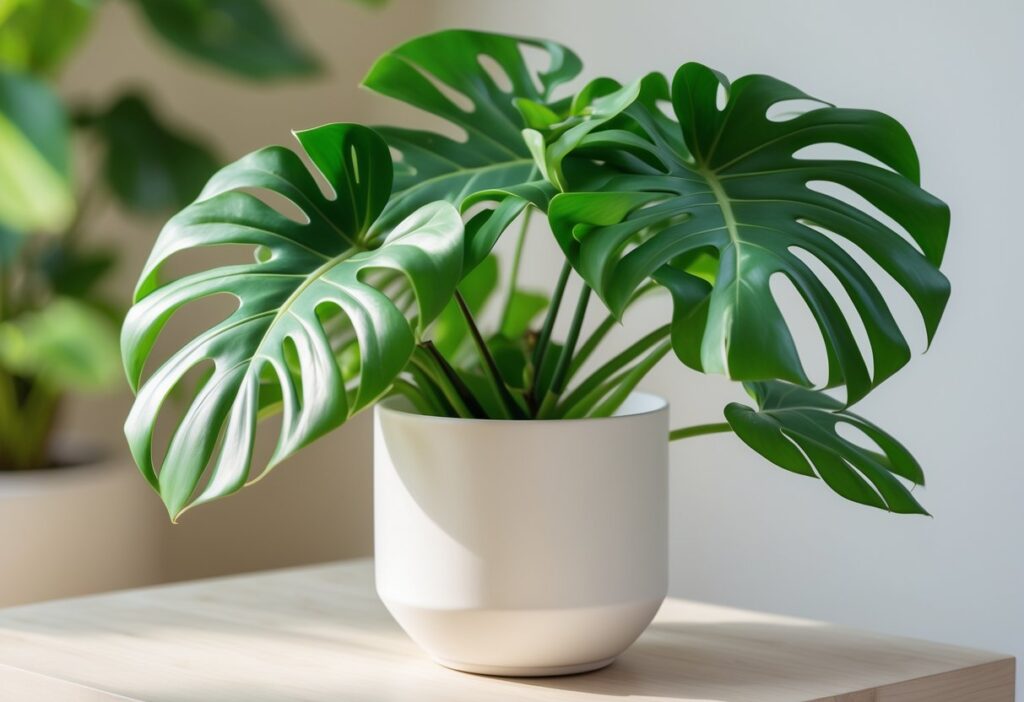
Caring for a Monstera involves regular watering when the soil feels dry to the touch, using well-draining soil, and occasional feeding with balanced fertilizer during the growing season. Propagation is straightforward through stem cuttings or air layering, allowing plant lovers to easily grow new Monstera plants. It is important to note that Monstera is toxic to pets and humans if ingested, so care should be taken to keep it out of reach.
Key Takeaways
- Monstera needs bright, indirect light and warm, humid conditions.
- Water only when the top soil is dry and fertilize regularly during growth.
- Propagation can be done by cuttings, but the plant is toxic if eaten.
Understanding the Monstera Plant
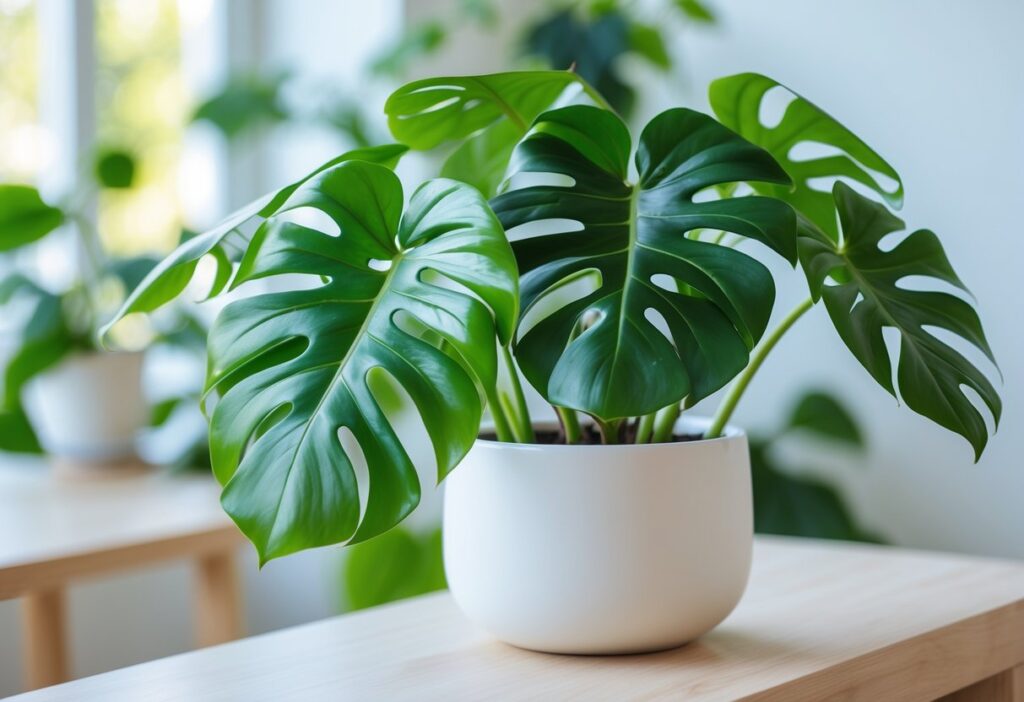
The Monstera plant is known for its unique leaf shapes, climbing growth habits, and popularity as a tropical indoor plant. It thrives by attaching to supports and shows distinct leaf patterns as it matures. Different types of Monstera have specific features that help with identification and care.
Key Features and Identification
Monsteras are tropical vining plants famous for their large, glossy leaves with natural holes or splits, known as fenestrations. The most recognized is Monstera deliciosa, often called the Swiss cheese plant because of these leaf holes. Young plants start with solid, heart-shaped leaves, while mature leaves develop the characteristic splits.
The petioles (leaf stems) are thick and hold the leaves upright. Aerial roots grow from the stem and help the plant climb by attaching to surfaces. These roots can also absorb moisture from the air.
Identifying other varieties requires a closer look:
- Monstera adansonii has smaller leaves with many round holes.
- Monstera obliqua is rare with very delicate leaves and extensive fenestrations.
- Monstera dubia climbs using leaf shingling, with young leaves that lie flat before maturing.
Natural Habitat and Growth Habit
Monsteras grow naturally in the shaded understory of Central and South American tropical rainforests. They are epiphytes, meaning they climb trees rather than growing directly in the ground. This allows them to reach higher light levels while avoiding harsh direct sun.
As a climbing plant, Monstera produces aerial roots that attach to bark or other textured surfaces. This helps the stem grow upward and produce larger, fenestrated leaves. The fenestrations serve several functions: they let filtered light reach lower leaves, reduce wind and rain damage, and channel water toward the roots.
Indoors, Monsteras thrive with bright, indirect light and support to climb, such as a moss pole. Without climbing support, they may grow leggy or produce smaller leaves.
Common Types and Varieties
Several Monstera species are popular as houseplants due to their attractive foliage and growth habits. The most common include:
| Species | Features | Growth Pattern | Popularity |
|---|---|---|---|
| Monstera deliciosa | Large leaves with deep splits | Fast-growing climber | Most common indoor plant |
| Monstera adansonii | Smaller leaves with many holes | Vining, moderate growth | Popular for hanging baskets |
| Monstera obliqua | Extremely fenestrated, rare | Slow-growing climber | Collector’s item |
| Monstera dubia | Juvenile shingling leaves, heart-shaped | Creeper, then climber | Known for unique leaf pattern |
Each type needs similar care but may vary in growth speed and leaf shape. Knowing the differences helps in providing the right light, humidity, and support for healthy growth.
Monstera Plant Care Essentials
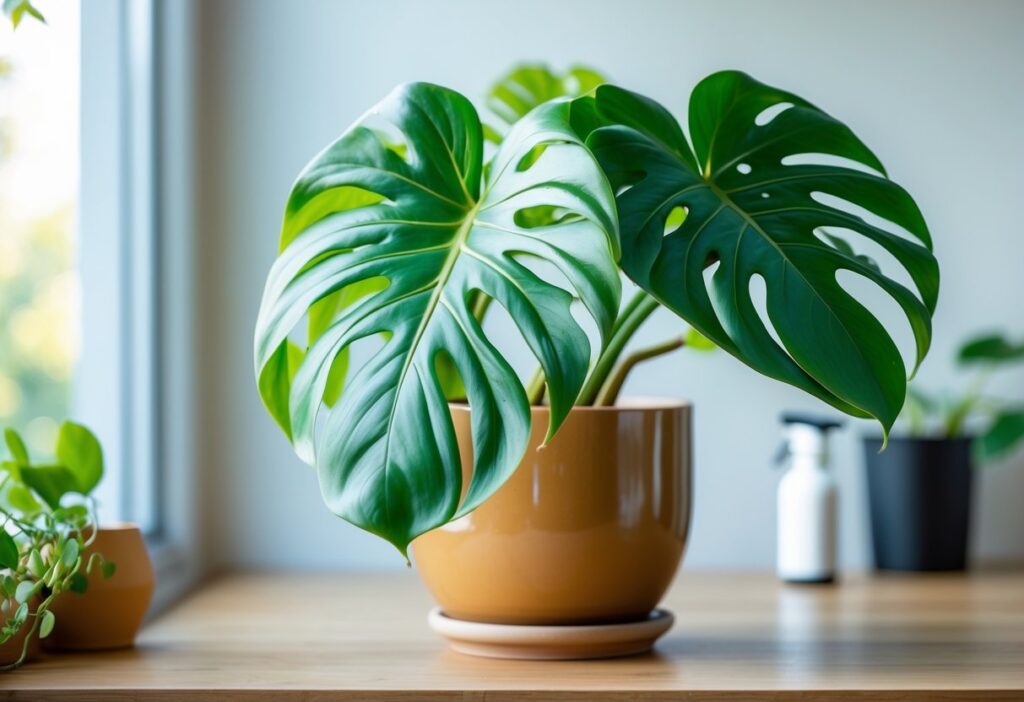
Monstera plants need specific conditions to thrive indoors. Proper light, suitable soil, consistent watering, and regular feeding all play key roles in keeping the plant healthy. Attention to these details helps maintain the iconic split leaves and encourage strong aerial roots.
Light and Sunlight Requirements
Monstera thrives in bright, indirect light. Direct sunlight can scorch its large leaves, leading to brown spots or burned edges. Placing the plant near an east or north-facing window offers the best light without harsh rays.
Low to moderate shade is tolerated but slows growth and reduces the size and number of fenestrations (the natural holes in its leaves). It benefits from about 6 hours of indirect light daily. In rooms with south or west-facing windows, sheer curtains help soften sunlight.
Too little light causes leggy stems and fewer leaf splits, making it less vibrant. Proper lighting supports strong growth and the development of its classic split leaves.
Soil and Potting Mix
Monstera prefers well-draining, aerated soil that mimics its tropical rainforest floor habitat. A chunky, loose mix that holds some moisture but doesn’t stay soggy works best.
A good soil blend might include:
- 40% potting soil for nutrients
- 30% orchid bark or chunky perlite to improve drainage and airflow
- 20% peat moss or coco coir to retain moisture
- 10% charcoal or worm castings for health and odor control
Using a pot with drainage holes is essential to prevent water from sitting around the roots, which can cause rot. Terracotta pots are ideal since they allow air exchange and help soil dry between watering. Repotting every 1-2 years supports healthy root growth.
Watering and Humidity Needs
Water when the top 1-2 inches of soil feel dry. Overwatering leads to root rot, seen in yellow leaves and mushy stems. Underwatering causes dry, crispy edges and drooping leaves. Usually, watering every 1-2 weeks is enough but adjust based on season, pot size, and indoor humidity.
Monstera is a tropical plant that enjoys high humidity—ideally above 60%. In dry homes, using a humidifier or placing a water tray nearby helps keep humidity levels up. Good air circulation is important but avoid cold drafts, as they stress the plant.
Consistent moisture supports lush foliage and healthy fenestrations.
Fertilizing Routines
During spring and summer, feeding every 4-6 weeks encourages new growth. A balanced liquid fertilizer (like 20-20-20) diluted to half strength is recommended to avoid fertilizer burn. Slow-release pellets offer a steady nutrient supply as an alternative.
Avoid fertilizing in fall and winter when Monstera’s growth slows. Apply fertilizer only when the soil is moist, never on dry soil, to protect roots. Organic options like compost tea or worm castings can improve soil health and benefit the plant over time.
Feeding supports strong stems, large leaves, and vibrant green color.
Growth, Maintenance, and Propagation
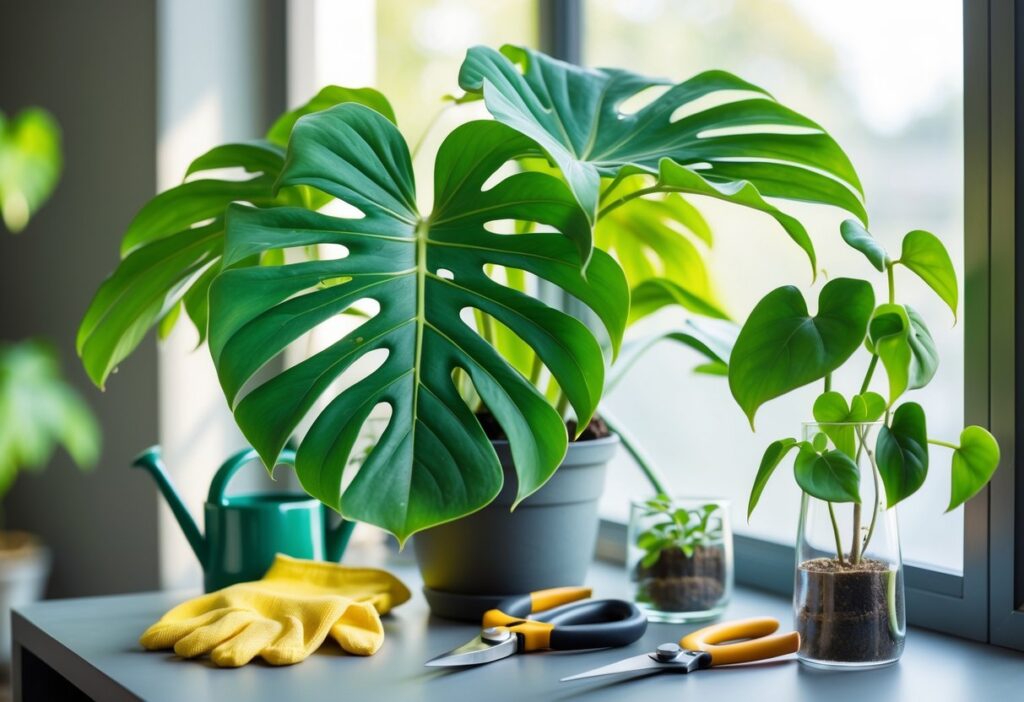
Monstera plants need steady care to grow well, produce their iconic split leaves, and stay healthy. Proper support, pruning, and the right environment help these vining plants develop large, fenestrated leaves. Propagation lets growers multiply their plants with cuttings, offering a way to manage size or create new growth.
Pruning and Supporting Growth
Pruning helps control a Monstera’s size and shape. Cutting above a node encourages new stems to grow from the axillary buds found there. This keeps the plant bushy and prevents it from becoming too leggy.
Since Monstera is a climbing plant, it usually needs a support like a moss pole. Aerial roots will grab onto the pole, giving the plant stability and access to moisture. Supporting the plant mimics its natural growth on trees and encourages bigger leaves and healthier stems.
Regular pruning also removes dead or damaged leaves, which can improve air flow and light exposure.
Encouraging Leaf Splitting
The famous split leaves, or fenestrations, develop as the plant matures. Young Monstera leaves are smaller and heart-shaped without splits. To promote fenestrations, they need bright, indirect light and a consistent watering schedule.
Providing a moss pole or similar support encourages natural climbing behavior, which triggers the plant to produce larger, split leaves. Proper humidity and nutrients also help the plant focus energy on developing these characteristic leaves.
If fenestrations are slow to form, it usually means the plant needs more light or time to mature.
Propagation Methods
Monstera is easy to propagate, especially from stem cuttings taken below nodes. The node contains essential cells and hormones to grow roots and new shoots. Cuttings should have at least one node and can root in water, soil, or sphagnum moss.
Aerial roots on cuttings can speed up rooting when they are present. New roots begin as white hairs and develop into a robust system capable of absorbing nutrients.
Propagation stages include unrooted, rooted, established, and new plant. Bright, indirect light is best for starting cuttings, and patience is key, as root growth happens before new leaves appear.
For detailed guidance, see how propagation works at this step-by-step Monstera propagation guide.
Common Problems and Safety Considerations
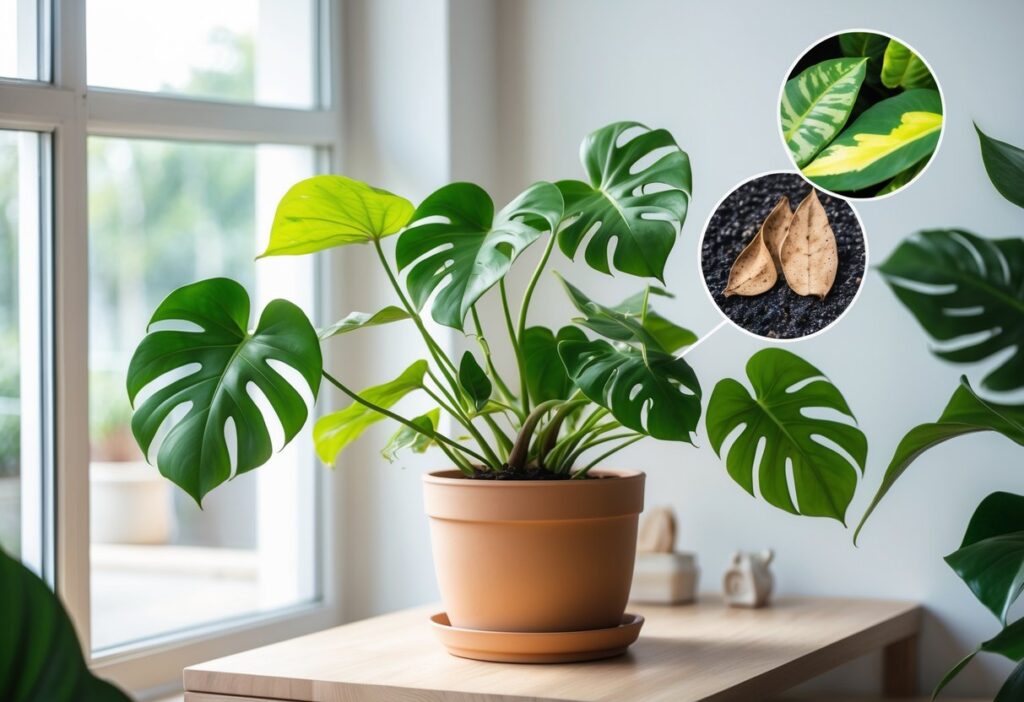
Monstera plants often face issues related to watering and leaf health, and their safety around pets is an important factor to consider. Proper care can prevent many problems, but knowledge of symptoms and risks helps keep the plant healthy and homes safe.
Preventing Root Rot
Root rot is a common and serious problem for Monstera plants. It happens when the soil stays too wet for too long, causing roots to become mushy and unable to absorb water. This often results from overwatering or poor drainage.
To prevent root rot:
- Use pots with drainage holes to allow excess water to escape.
- Choose a soil mix that drains well, such as a mix of potting soil, perlite, and peat moss.
- Water only when the top 1-2 inches of soil feel dry.
- Avoid watering on a strict schedule; instead, check soil moisture regularly.
If root rot is suspected, the plant may have yellowing leaves, brown or black spots on leaves, or a foul smell from the soil. Early treatment involves removing the plant from its pot, trimming damaged roots, and repotting in fresh, dry soil to stop the spread.
Dealing with Black Spots on Leaves
Black spots are often signs of plant stress or disease in Monstera leaves. They can appear due to several causes, mainly improper watering or too much direct sunlight.
- Overwatering or underwatering can both cause leaf spots. Balancing watering routines is key.
- Exposure to direct sunlight may burn the leaves, leading to black spots. Monstera prefers bright, indirect light.
- Sometimes, spots suggest fungal or bacterial infections related to high moisture and poor airflow.
To treat black spots:
- Move the plant to a spot with filtered light, such as behind a sheer curtain.
- Remove affected leaves to prevent disease from spreading.
- Ensure proper watering habits and good air circulation around the plant.
Toxicity to Pets
Monsteras are toxic to cats, dogs, and other pets. They contain insoluble calcium oxalates, which cause irritation if chewed or swallowed.
Symptoms in pets include:
- Drooling
- Pawing at the mouth
- Vomiting
- Difficulty swallowing
To keep pets safe, place the Monstera out of reach in a high or closed space. If ingestion occurs, immediate contact with a veterinarian is advised. While the plant is a popular houseplant for its impressive leaves, its toxicity means pet owners should be cautious about placement and supervision.
Frequently Asked Questions
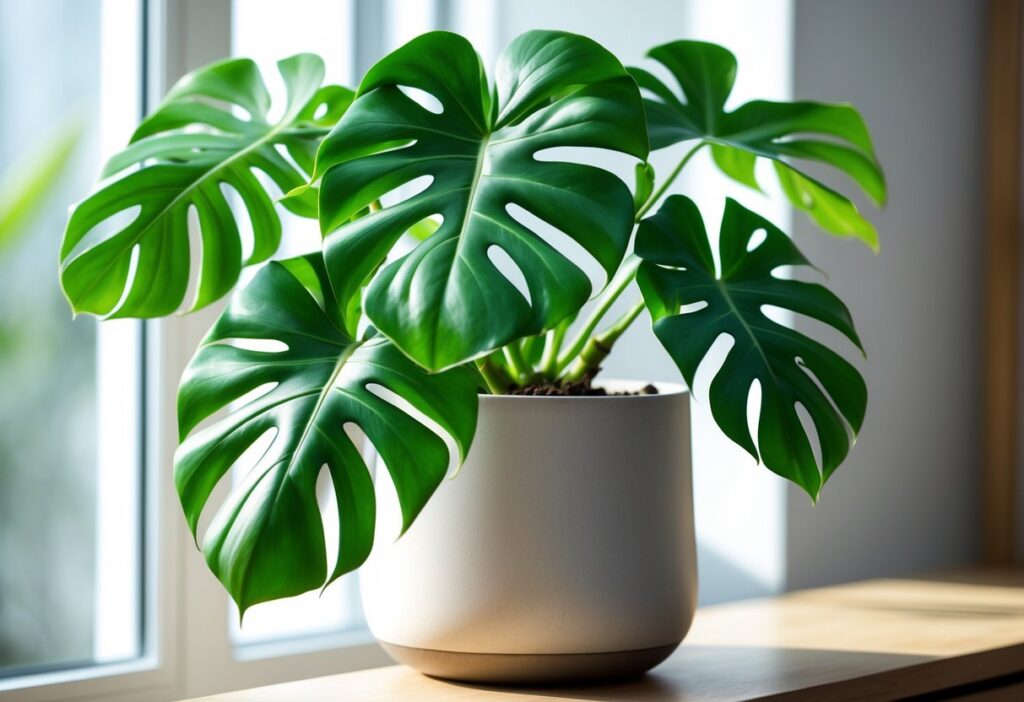
Monstera plants need bright, indirect light, well-draining soil, and moderate watering to thrive indoors. They are valued for their air-purifying abilities and unique, split leaves. Caring for Monsteras involves understanding their water preferences and ideal environment.
How do I care for a Monstera indoors?
Monsteras grow best in bright, indirect light. Direct sunlight can burn their leaves, while too little light slows growth and reduces leaf splits.
Water the plant thoroughly only when the top 2-3 inches of soil are dry. Overwatering leads to root rot. Maintain humidity around the plant by misting or using a pebble tray.
A pot with good drainage and airy soil helps the roots breathe. Fertilize during spring and summer every 4-6 weeks with a diluted, balanced fertilizer.
What are the benefits of having a Monstera plant in my home?
Monsteras help purify indoor air by filtering out pollutants. Their large, unique leaves add a tropical, decorative touch to any space.
They grow relatively fast and communicate needs through leaf changes, making them good plants for beginners to understand basic care.
Can Monstera plants grow in water, and if so, how?
Yes, Monstera cuttings can root in water. Select a healthy stem with at least one node and place it in clean water, changing the water regularly.
Once roots develop a few inches long, transplant the cutting into soil for better growth.
What is the average price range for a Monstera plant?
Prices vary based on size and variety. Small starter plants often range from $20 to $50. Larger, mature Monsteras or rare varieties can cost $100 or more.
How often do Monstera plants flower, and what do the flowers look like?
Flowering indoors is rare. When they do flower, Monsteras produce a white or cream-colored spathe that wraps around a spadix, similar to peace lilies.
Indoor plants often focus growth energy on leaves rather than flowers.
What’s the symbolism or meaning behind the Monstera plant?
Monsteras symbolize long life, respect, and honor in some cultures due to their hardy nature and tropical origins. They also represent growth and renewal because of their fast growth and evolving leaf patterns.