11 Small Trees Perfect for Limited Spaces and Urban Gardens
Small trees are an excellent way to add beauty and structure to gardens with limited space. They fit well in smaller yards or compact areas where large trees would be overwhelming or impractical.
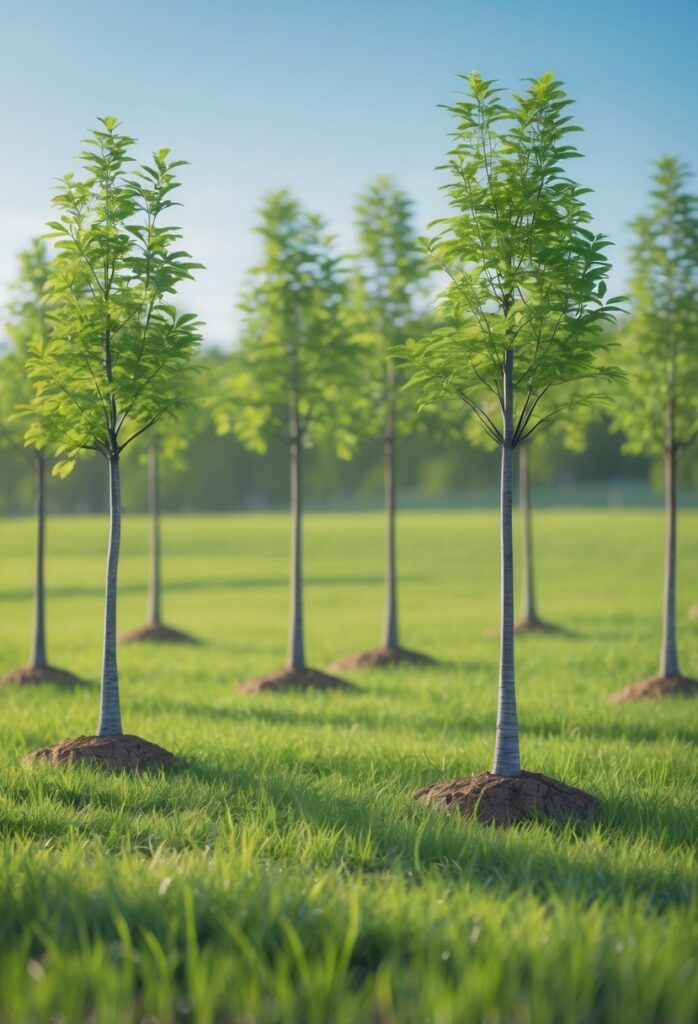
They provide color, privacy, and shade without the risk of damaging driveways or interfering with power lines. These trees offer versatility for many garden styles and climates, making them a popular choice for homeowners looking to enhance their outdoor space.
1) Japanese Maple
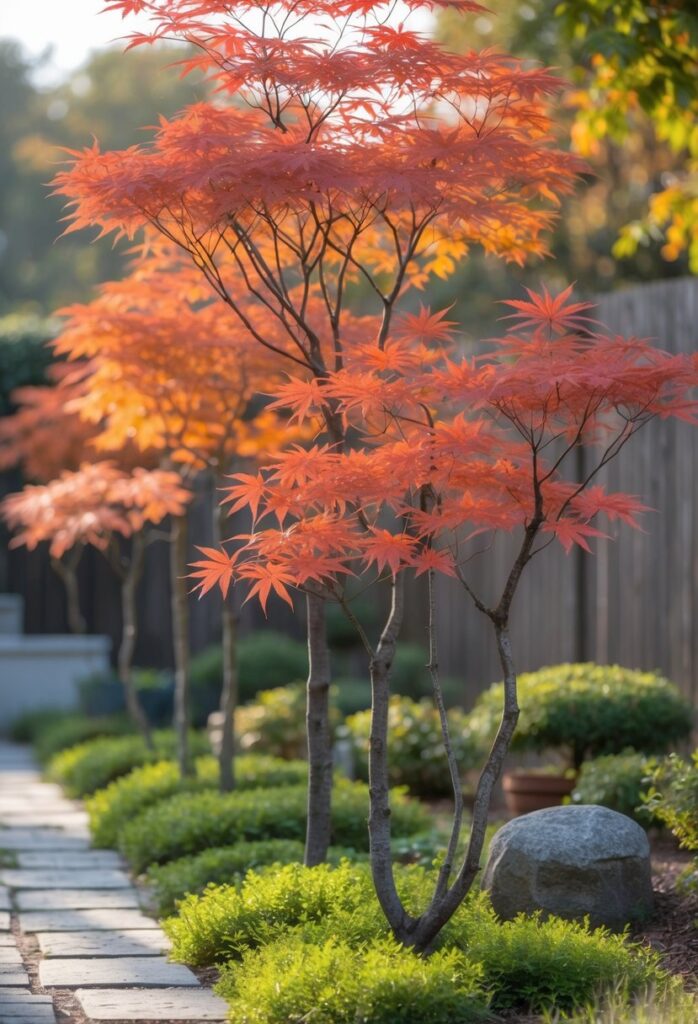
Japanese maples are small, ornamental trees known for their beautiful, colorful leaves. Many types stay compact, growing only 3 to 8 feet tall, making them ideal for small gardens or containers.
They grow slowly and come in various shapes, like weeping or upright forms. These trees add elegance without taking up much space. Some varieties are even suited for bonsai or patio gardens.
Their vibrant foliage changes with the seasons, giving year-round interest. For more details on dwarf Japanese maples, see this guide on dwarf Japanese maple varieties.
2) Crape Myrtle
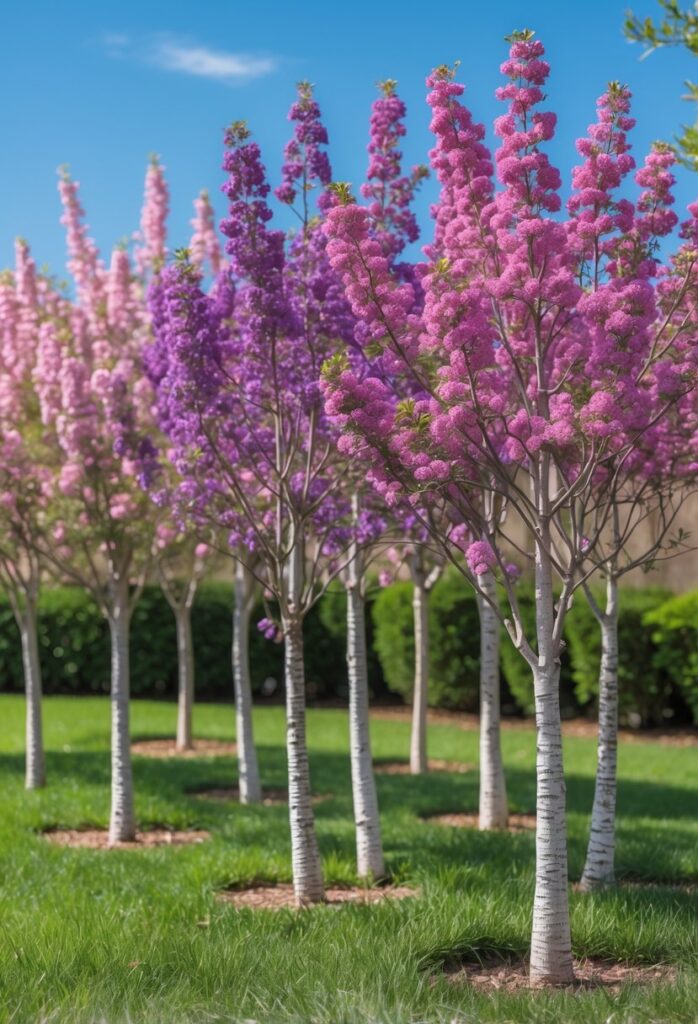
Crape Myrtle is a popular small tree known for its bright summer flowers. It typically grows between 5 and 12 feet tall, making it suitable for small gardens. The tree offers a variety of colors, including pink, red, and white.
It has attractive bark that peels in the winter, adding year-round interest. Crape Myrtle thrives in warm climates and is low maintenance. It adapts well to different garden spaces and can also grow in containers.
More details about this tree can be found at Wilson Bros Gardens.
3) Dogwood
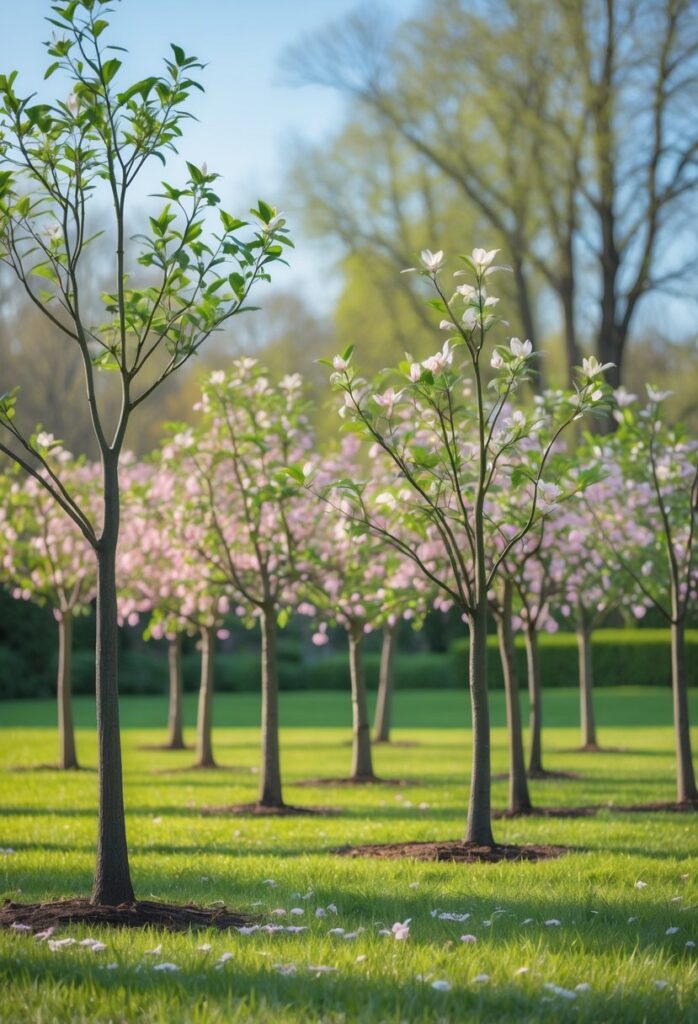
Dogwood trees are popular small trees known for their beautiful spring flowers and attractive shape. Some dwarf varieties stay under 10 feet tall, making them ideal for compact gardens. They also offer year-round interest with colorful berries and vibrant fall leaves. Dogwoods provide food and shelter to birds, adding ecological value to the landscape. Proper care involves well-drained soil and partial shade. Learn more about different types and care tips at this guide to dwarf dogwood trees.
4) Redbud
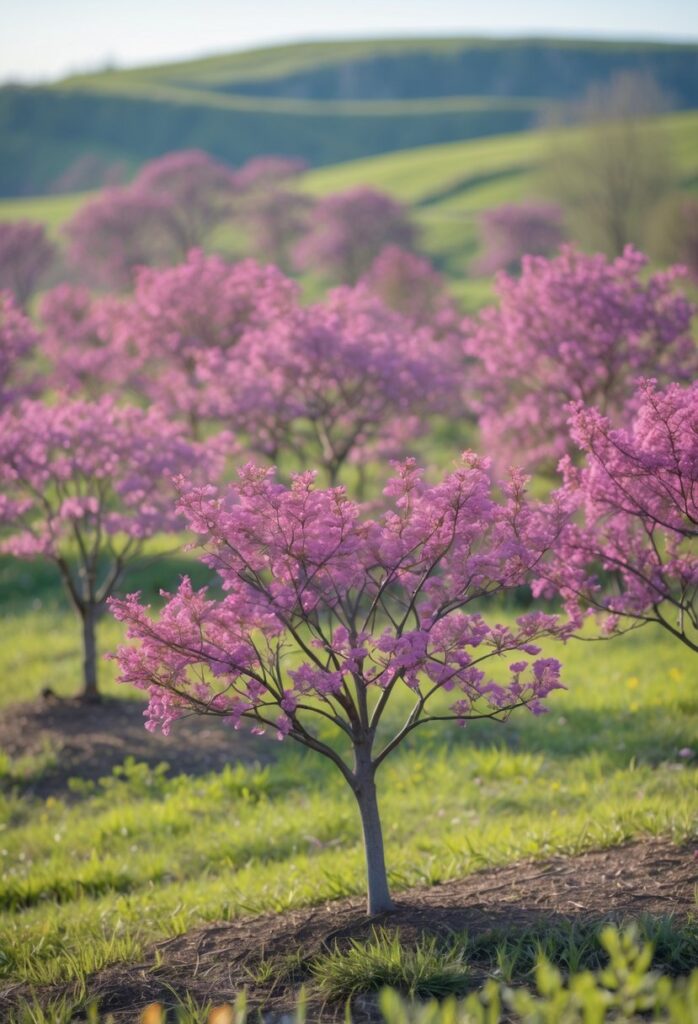
The redbud is a small deciduous tree known for its early spring blooms. It produces bright pink or purple flowers that grow directly on its branches and trunk.
Many varieties, including dwarf types, fit well in small gardens or yards. Redbuds have heart-shaped leaves that turn yellow in fall.
They thrive in well-drained soil and prefer full sun to partial shade. Redbuds add color and interest in any landscape setting. For more details, see popular dwarf redbud tree varieties.
5) Dwarf Alberta Spruce
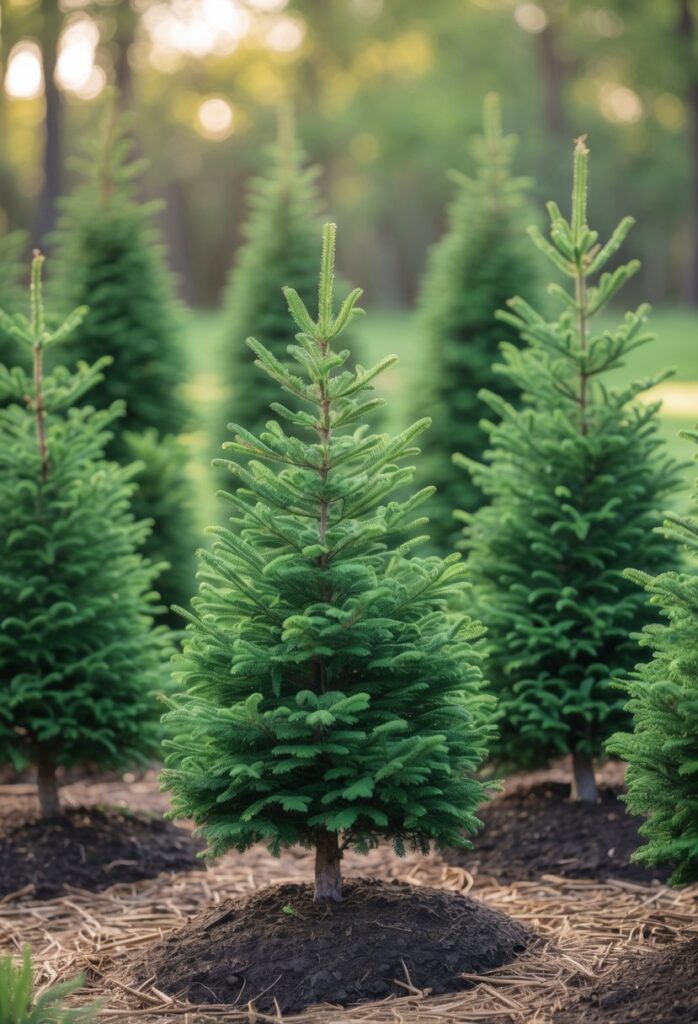
The Dwarf Alberta Spruce is a small evergreen tree with a classic pyramid shape. It grows slowly, reaching 10 to 12 feet tall over many years. Its bright green needles remain dense and vibrant year-round.
This tree works well in small gardens, containers, or as a natural fence. It prefers well-drained, acidic soil and may need protection from winter burn in exposed locations. The Dwarf Alberta Spruce is low maintenance and deer resistant, making it a practical choice for many landscapes. Learn more about this tree and how to care for it from this guide on growing Dwarf Alberta Spruce trees.
6) Mountain Laurel
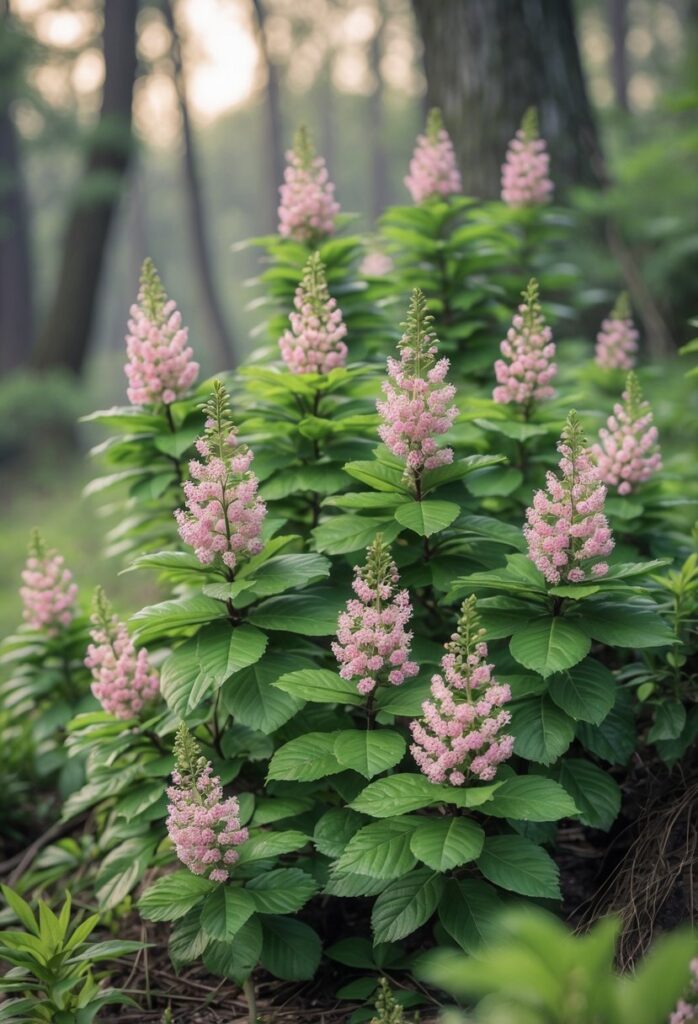
Mountain laurel is a slow-growing evergreen shrub or small tree native to Eastern North America. It has dense, rounded foliage and produces showy spring flowers in clusters. This plant prefers cool, moist soil and can do well in shaded or partially shaded areas.
It adds year-round greenery and bright flowers to gardens. Some varieties, like dwarf types, work well in smaller spaces. Mountain laurel is valued for both its beauty and its ability to fit different garden styles. Learn more about mountain laurel care and types at GardenLoversClub.
7) Serviceberry
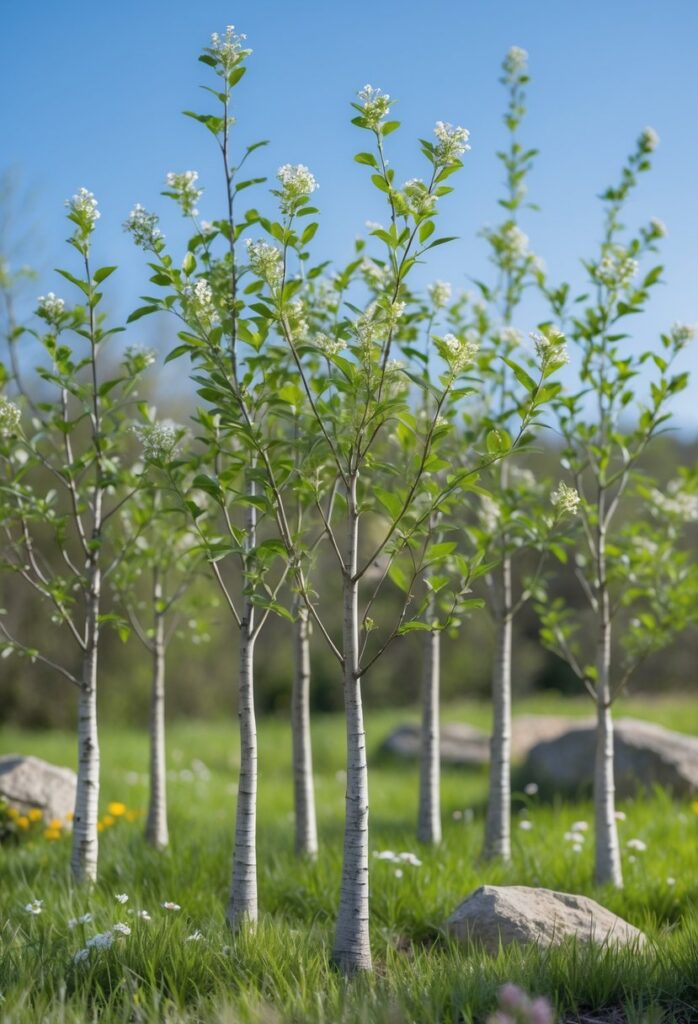
Serviceberry is a small tree or large shrub known for its white spring flowers and edible purple fruit. It has attractive leaves that change color in the fall.
It grows well in many climates and adds year-round interest to gardens. The fruit can be used in cooking or eaten fresh.
This tree is easy to care for and fits well in yards of various sizes. Learn more about planting and care from a detailed guide on serviceberry trees.
8) Eastern Red Cedar
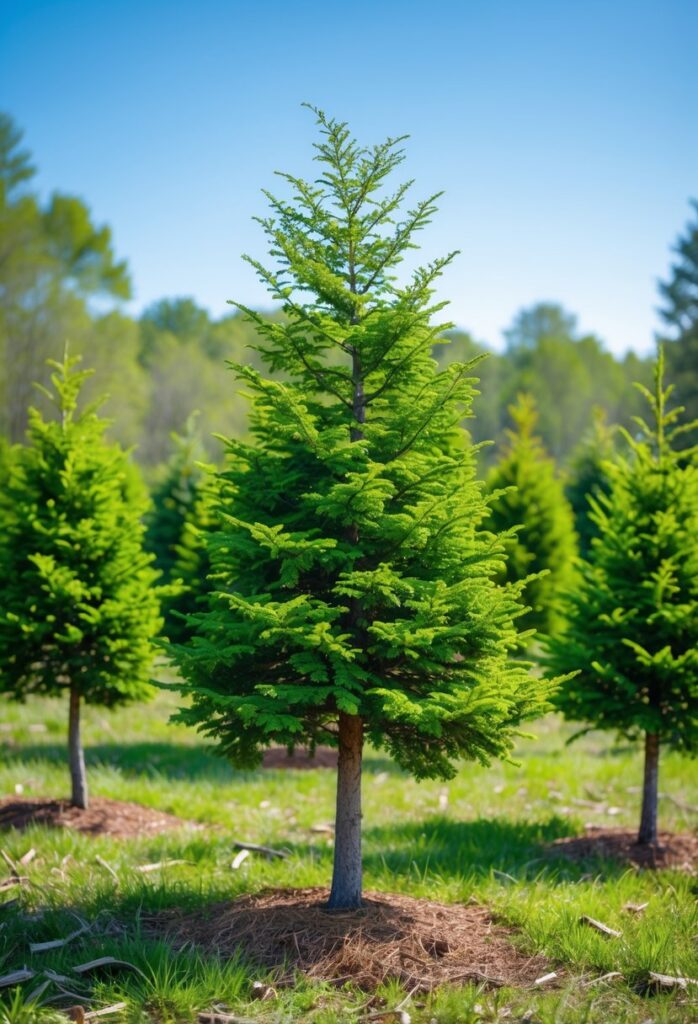
The Eastern Red Cedar is a slow-growing evergreen tree native to eastern North America. It can reach heights of 40-50 feet but often stays smaller in gardens.
This tree is very hardy and adapts well to different soils, even dry or rocky areas. Its dark green leaves may turn bluish-green in winter, and it produces small blue-gray berries in late fall.
It is useful for windbreaks, privacy screens, and adds year-round color to landscapes. Learn more from this Eastern Red Cedar guide.
9) Magnolia St. Mary’s
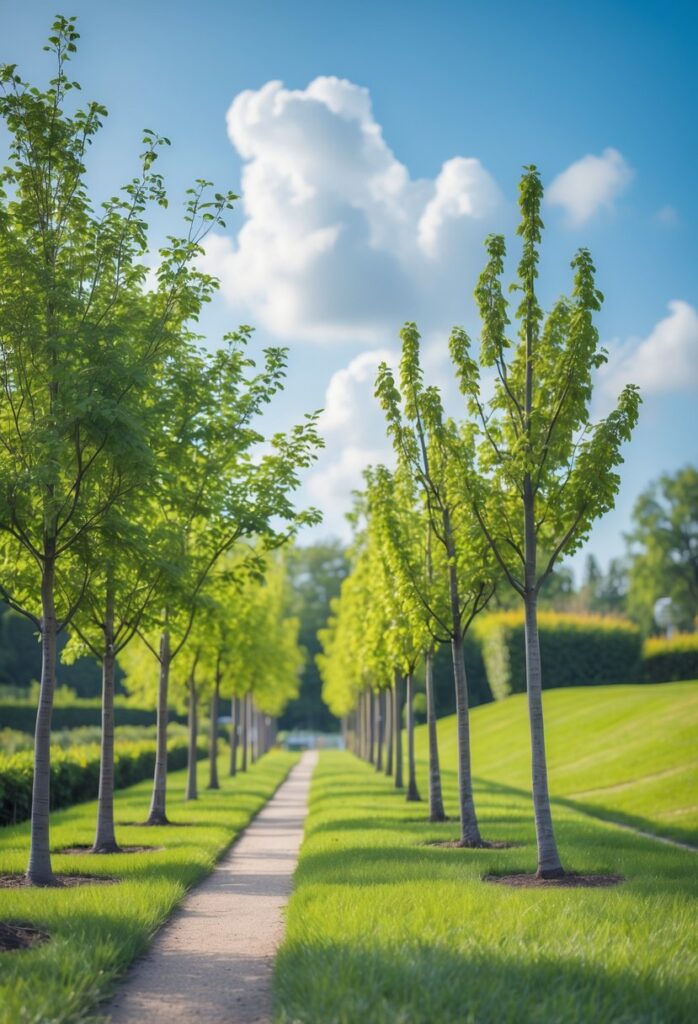
Magnolia St. Mary’s is a dwarf southern magnolia that grows up to 20 feet tall and wide. It has dense, glossy green leaves with bronze-colored undersides, giving it a striking look year-round.
This evergreen tree produces large, fragrant white flowers in late spring and summer. It works well as a small specimen tree or shrub for gardens with limited space. St. Mary’s can also be grown in containers.
It prefers well-drained soil and can handle partial shade. More details are available at Monrovia’s Saint Mary Southern Magnolia page.
10) Hawthorn
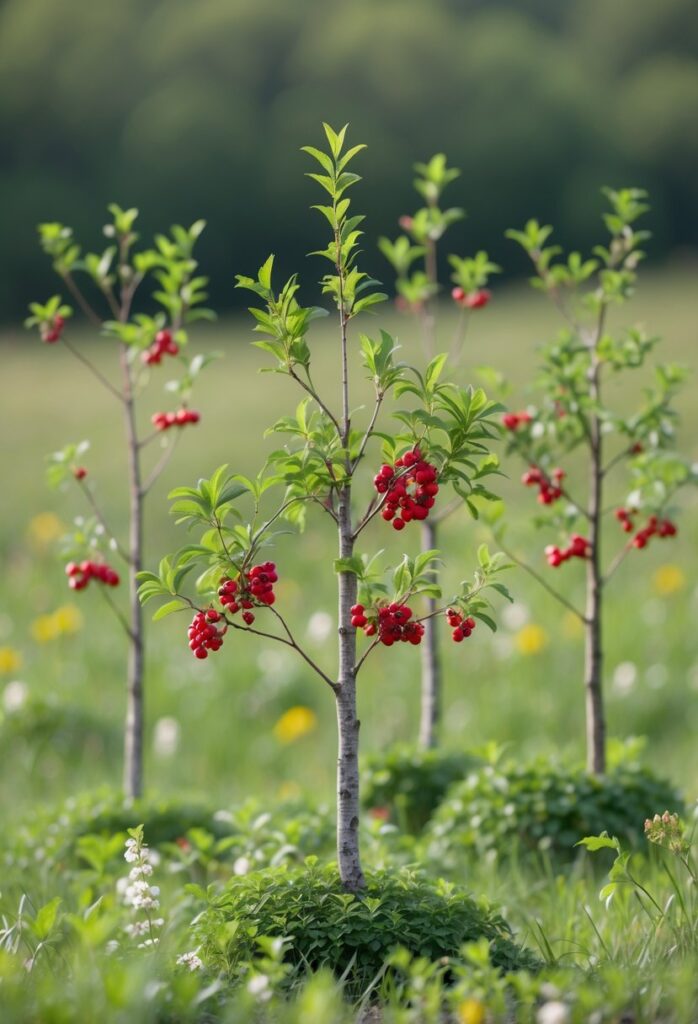
Hawthorn is a small deciduous tree known for its thorny branches and clusters of white or pink flowers in spring. It produces small, red berry-like fruits in the fall that often attract birds.
This tree is hardy and adapts well to different soil types. It is commonly used for hedges and adds year-round interest with its dense foliage and seasonal colors. Learn more about hawthorn’s features and care at How to Grow and Care for Hawthorn Trees.
11) Flowering Cherry
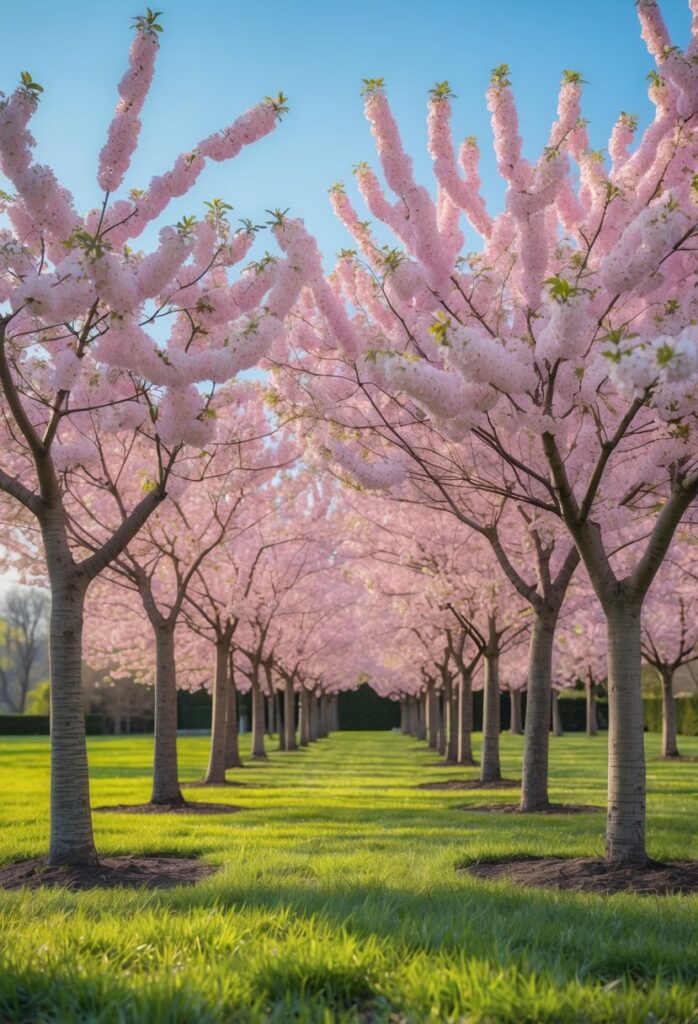
Flowering cherry trees offer beautiful blooms in spring, adding color and charm to small gardens. They usually stay compact, making them suitable for limited spaces.
These trees provide light shade and vibrant fall colors. Some varieties also attract birds with small, tart cherries.
They are low maintenance and bring visual interest through multiple seasons. More details on these trees can be found at the site about flowering cherry trees for small gardens.
12) Small Trees With Non-Invasive Roots For Front Yard Or Backyard
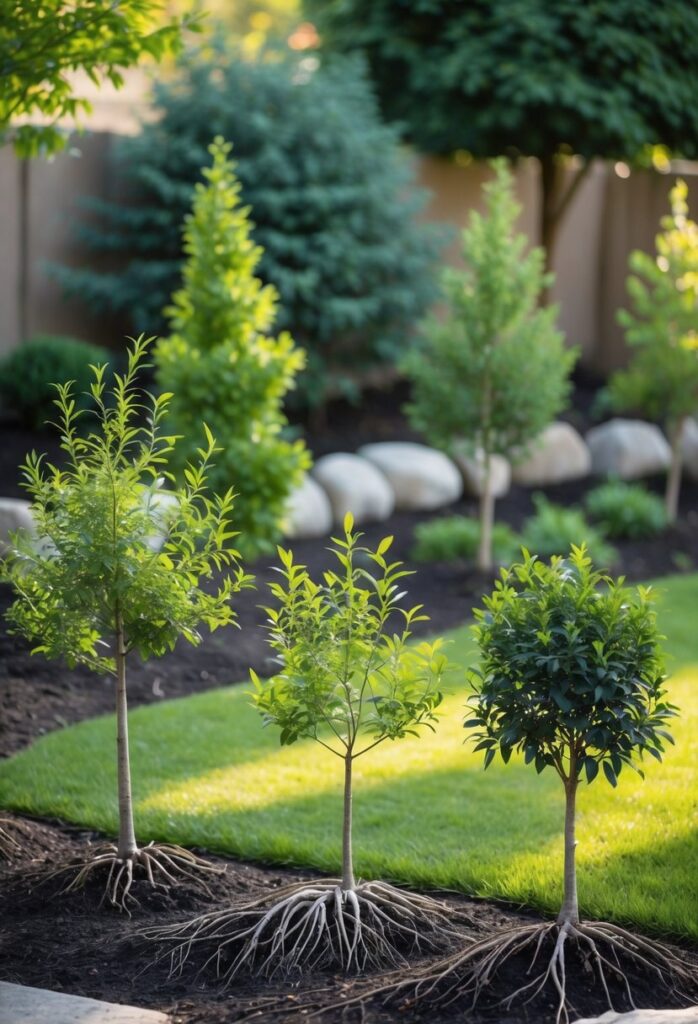
Small trees with non-invasive roots work well in both front and backyards. They add beauty without harming foundations, sidewalks, or pipes. These trees stay compact and prevent root damage.
They are ideal for smaller spaces and keep landscaping manageable. Choosing the right species helps protect property while enhancing curb appeal. More options on small trees with non-invasive roots can be found in this guide for your front or backyard.
Benefits of Planting Small Trees
Small trees offer unique advantages that fit well with modern living spaces. They support the environment, beautify properties, and work well in limited spaces. Their size makes them practical without sacrificing the key benefits of larger trees.
Environmental Impact
Small trees contribute to cleaner air by absorbing carbon dioxide and releasing oxygen. Though smaller, they still capture pollutants and help reduce urban heat, lowering city temperatures naturally. Their root systems stabilize soil, preventing erosion and improving water absorption.
Planting young, smaller trees also promotes longer life spans and better growth patterns. They help create connected habitats for wildlife, supporting local ecosystems and biodiversity. These features make small trees crucial in promoting a greener, healthier environment without needing large spaces or long wait times for maturity.
Enhancing Curb Appeal
Small trees add structure, color, and texture to yards and streetscapes. Their size allows them to fit near homes, walkways, or patios without overpowering the area. This improves the overall look without blocking views or sunlight.
Many small trees produce attractive flowers, fruits, or leaves that change with seasons, boosting visual interest year-round. They also increase property value by making spaces more inviting. Homeowners often find that a well-chosen small tree complements landscaping and creates a welcoming atmosphere.
Space-Saving Solutions for Urban Gardens
In urban settings, space is limited. Small trees fit perfectly into compact gardens, balconies, and narrow yards. They provide shade and privacy without crowding the area or damaging nearby structures.
Their manageable size means less root interference with pipes or foundations. They also require less maintenance than large trees, making them ideal for busy city dwellers. Choosing small trees lets people enjoy natural benefits where large trees wouldn’t be practical or possible.
For more details, see the benefits highlighted in planting younger, smaller trees and their role in urban environments at Small Beginnings, Big Impact: Three Benefits of Planting Young Trees.
Caring for Small Trees
Small trees need careful attention to thrive. Proper watering and soil conditions are essential for healthy growth. Regular pruning keeps them strong and looking neat.
Watering and Soil Requirements
Small trees usually need consistent watering, especially during their first year. The soil should be moist but not soggy. Water deeply once or twice a week, depending on rainfall and temperature.
Well-drained soil is important to avoid root rot. Adding organic mulch around the base helps retain moisture and controls weeds. However, mulch should be kept a few inches away from the trunk to prevent rot.
Different tree species have varying soil preferences. For best results, test the soil pH and adjust it to match what the tree needs. For example, Japanese Maples prefer slightly acidic soil, while dwarf conifers often tolerate more alkaline conditions.
Pruning and Maintenance Tips
Pruning small trees helps maintain shape, removes dead or damaged branches, and encourages healthy growth. It is best done during the dormant season to avoid stressing the tree.
Use clean, sharp tools to make cuts just outside the branch collar. Avoid leaving stubs that can invite disease. Thin out the canopy when needed to improve airflow and sunlight penetration.
Regularly check for pests or signs of disease. Remove any affected branches promptly. Supporting young trees with stakes may be necessary until roots establish, but stakes should be removed after the tree is stable to encourage natural strength.
Following these steps will help small trees grow strong and healthy over time.