7 Pantry Organization Ideas for a Clutter-Free, Efficient Kitchen
A well-organized pantry can make everyday cooking and meal planning easier. It helps save time by making items easy to find and reduces food waste by keeping everything visible and within reach.
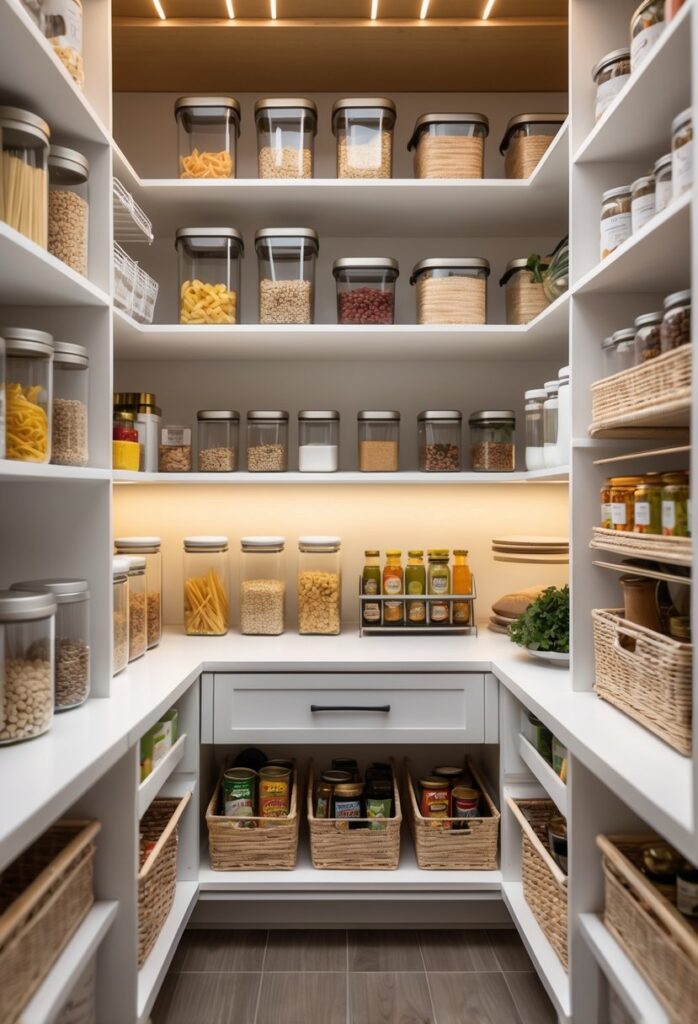
Effective pantry organization improves kitchen efficiency and creates a more pleasant cooking environment. This article offers practical ideas to help anyone create a tidy and functional pantry space.
1) Use clear glass jars with labels for pantry staples
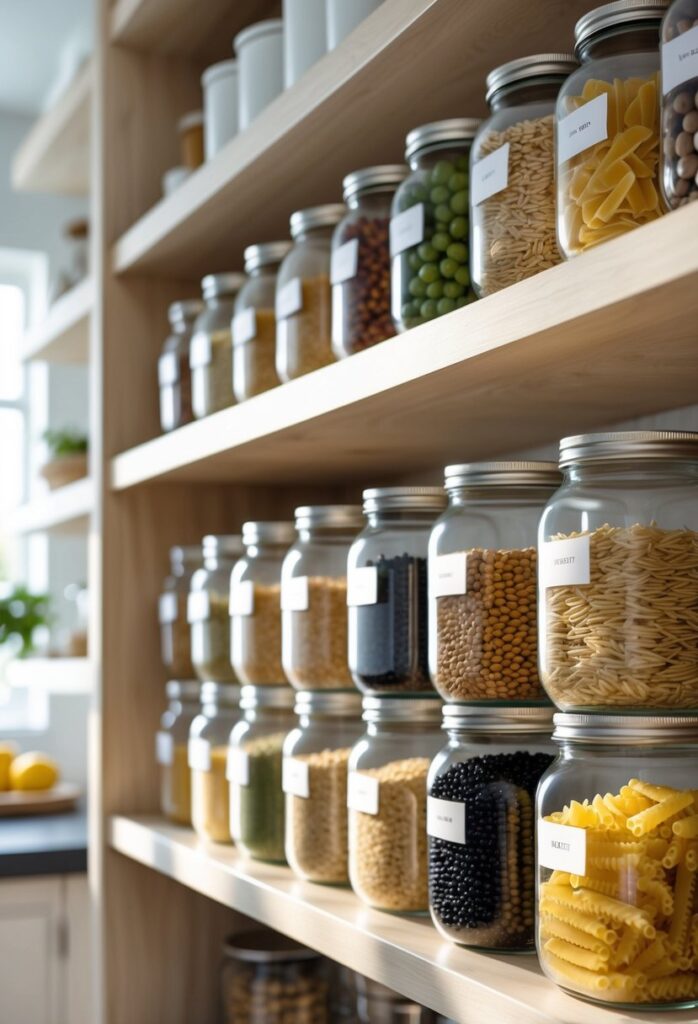
Using clear glass jars helps store pantry staples like rice, pasta, and flour neatly. It makes it easy to see what is inside without opening containers.
Adding labels to jars increases efficiency. Clear, simple labels allow quick identification, saving time when cooking or baking.
Glass jars keep food fresh longer and look uniform on shelves. This reduces clutter and makes the pantry more functional and attractive.
2) Install adjustable shelving for customizable storage
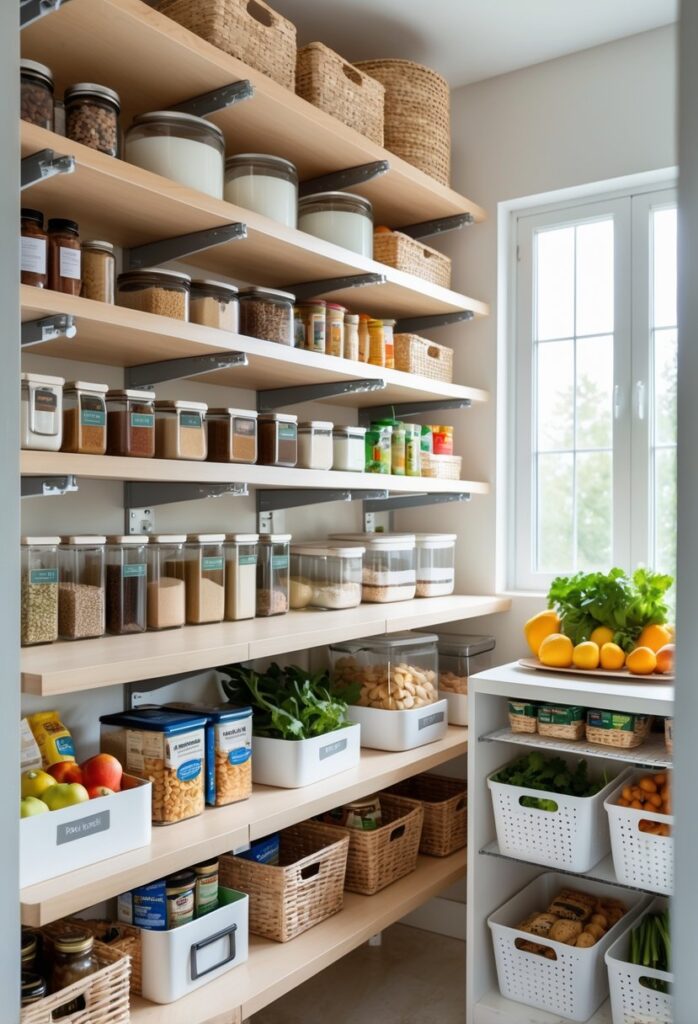
Adjustable shelving lets homeowners change shelf height anytime. This flexibility fits different items like tall cereal boxes or small jars.
It helps make better use of vertical pantry space. Users can move shelves to fit their needs as storage changes.
Installing these shelves involves setting brackets and supports that hold shelves securely. The setup is simple and works for many pantry sizes.
Adjustable shelving supports organization and keeps items easy to access. It adapts well to evolving kitchen storage demands.
3) Add over-the-door racks to maximize unused space
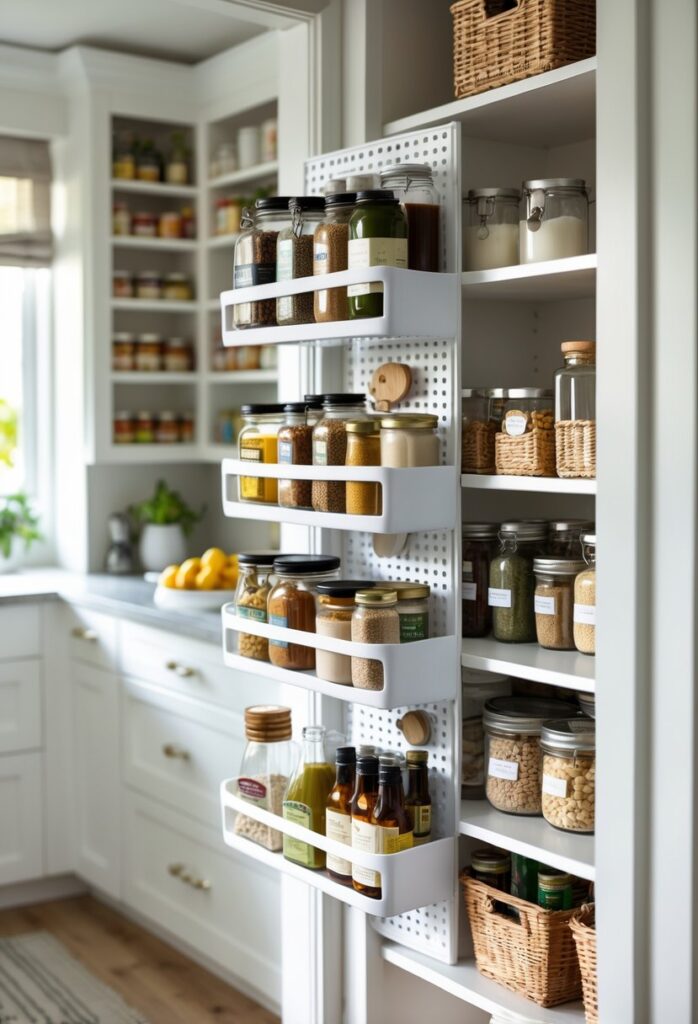
Over-the-door racks use space many people overlook. They fit on the inside of pantry doors, turning empty areas into storage spots.
These racks can hold spices, snacks, cans, or cleaning supplies. This helps clear shelf space and keeps items easy to find.
They work well in pantries of all sizes. Adjustable racks allow users to change the height between shelves to fit different items.
Using the door for storage helps reduce clutter. It makes the pantry look more organized without taking up floor space.
4) Group items by zones: baking, snacks, canned goods
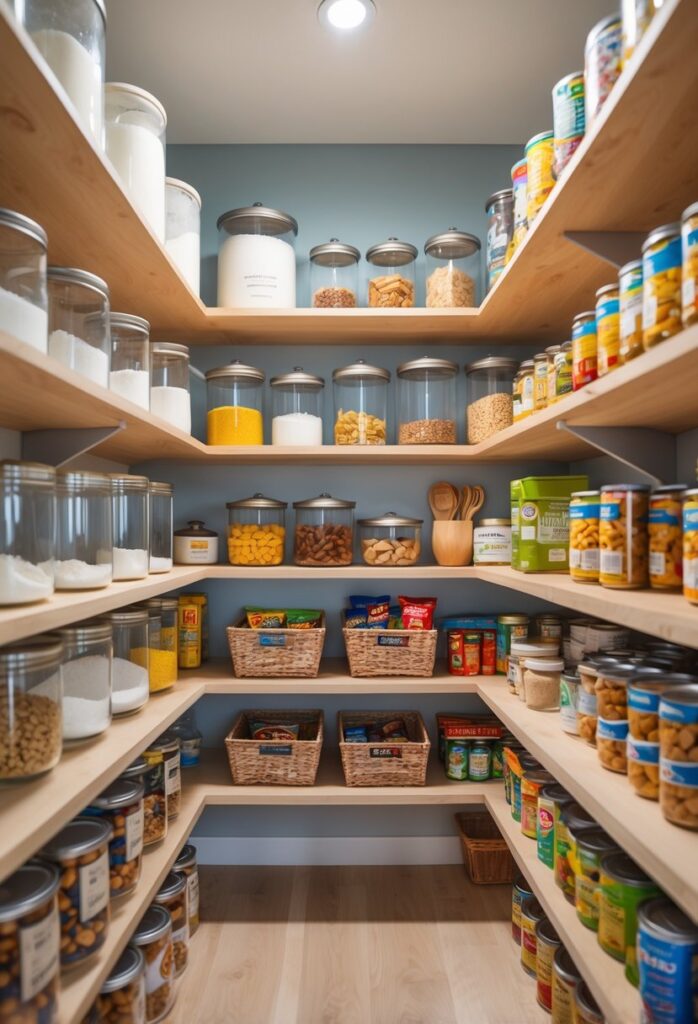
Organizing a pantry into zones helps make finding items faster. Baking supplies like flour, sugar, and baking powder go together in one section. This keeps everything ready for recipes in one spot.
Snacks form another useful zone. Placing chips, nuts, and crackers together allows easy access when hunger strikes. It also helps keep the pantry tidy by avoiding random piles.
Canned goods belong in their own zone too. Grouping soups, vegetables, and beans together makes meal planning simpler. It also helps keep track of stock and expiration dates.
5) Utilize air-tight containers to keep food fresh
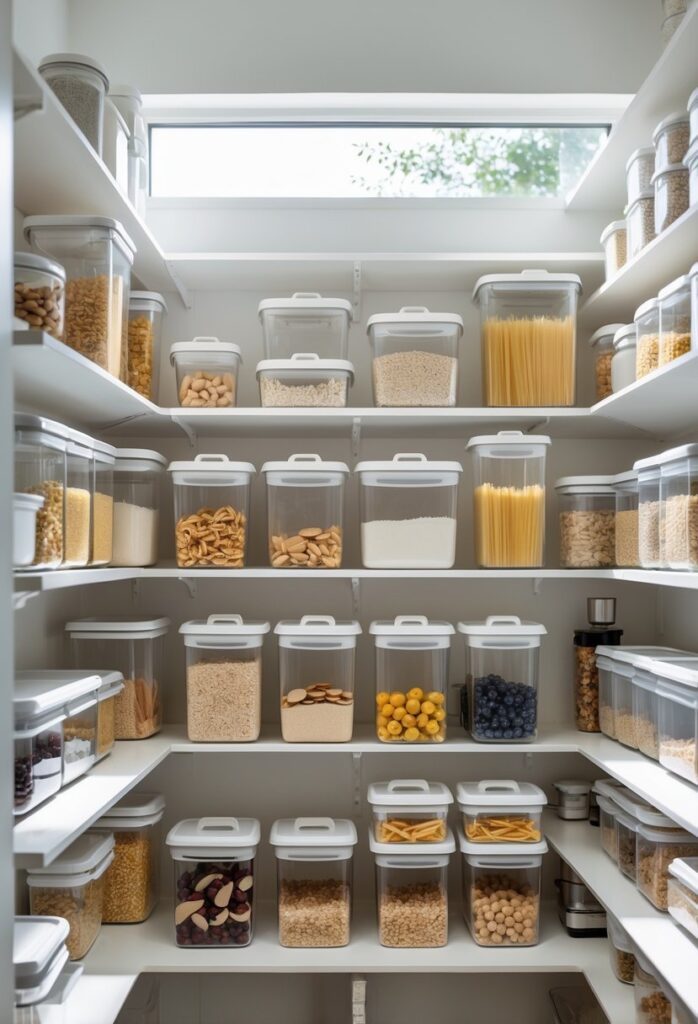
Using air-tight containers helps keep dry foods fresh longer by blocking moisture and pests. It also reduces spills and messes in the pantry.
Clear containers allow easy viewing of contents and help spot when supplies run low. Stackable designs save space and create a tidy look.
Choosing BPA-free plastic or glass containers adds safety. Labeling containers improves organization and speeds up meal prep or baking tasks.
6) Incorporate pull-out baskets for easy access
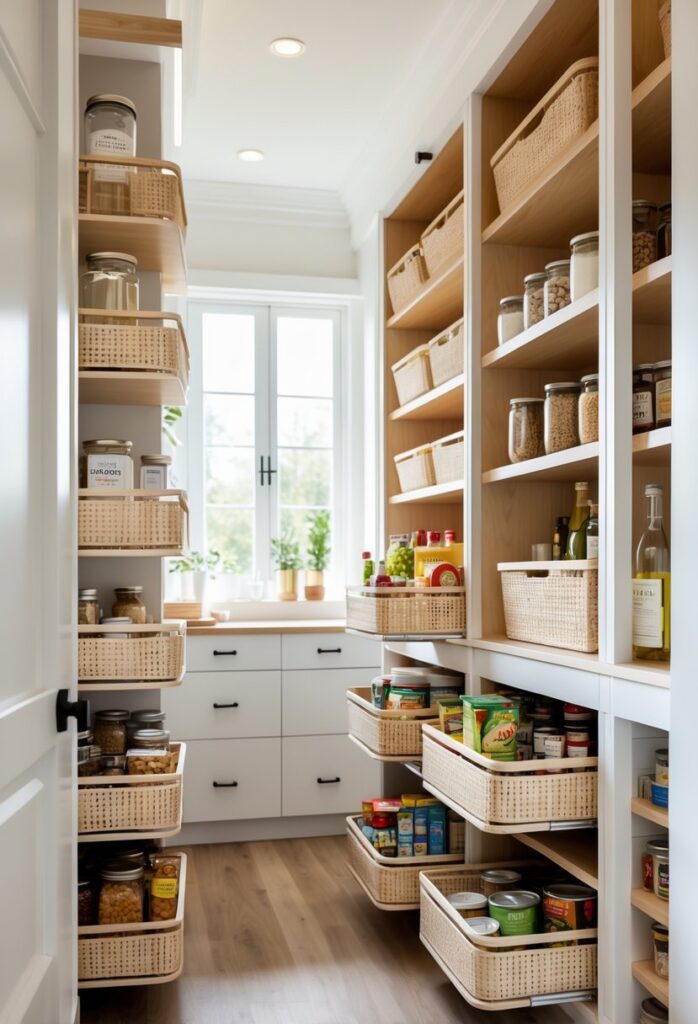
Pull-out baskets make it simple to reach items stored deep in the pantry. They slide out smoothly, letting users see everything at a glance.
These baskets help group similar items together, keeping things neat and easy to find. Baskets also make it faster to grab what is needed without moving other things.
Using pull-out baskets can improve pantry order, especially in tight spaces. They allow better use of vertical space and reduce clutter by keeping items contained.
7) Place frequently used items at eye level
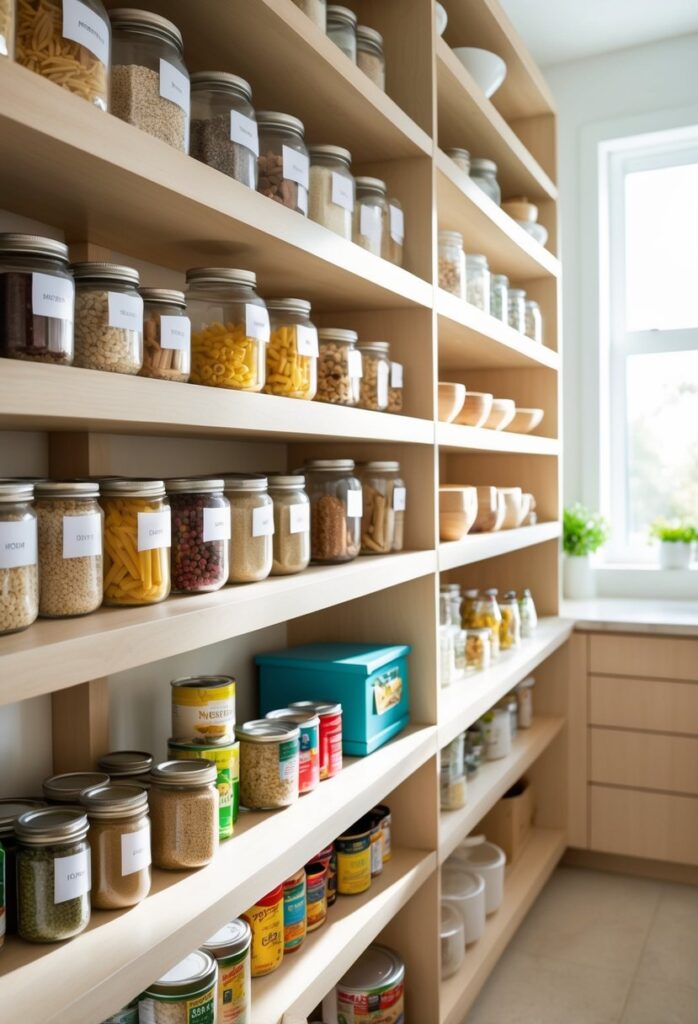
Placing commonly used items at eye level makes them easy to find quickly. This avoids the need to search or move other products.
Items like cooking oil, flour, rice, and pasta belong here. It saves time during meal prep and keeps the pantry organized.
Less-used items can go on higher or lower shelves. This keeps the main space clutter-free and focused on daily essentials.
Maintaining an Organized Pantry
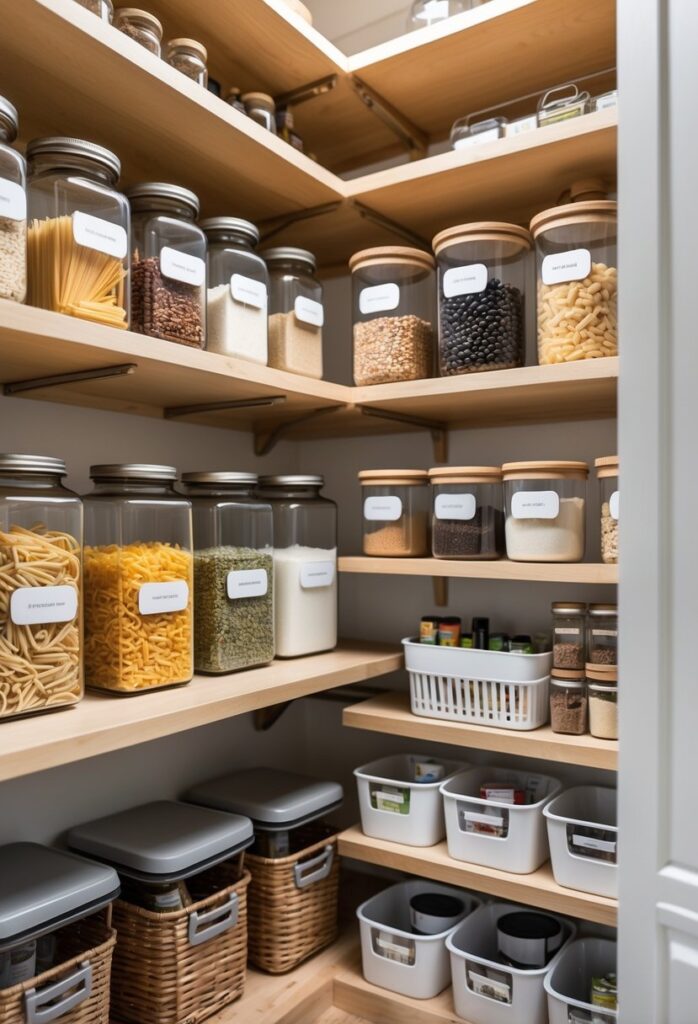
Keeping a pantry orderly requires routine care and smart management. Regular cleaning, tracking expiration dates, and thoughtful restocking help ensure the space stays functional and clutter-free over time.
Establishing a Cleaning Schedule
Setting a cleaning routine helps prevent buildup of dust, spills, and expired items. A good approach is to designate a day every month or two to clean shelves, wipe containers, and sweep the floor.
During this time, items can be pulled out, checked, and rearranged. Using reusable cloths or gentle cleaning sprays keeps surfaces sanitary without damage. Removing crumbs and residue also reduces pest risks.
It’s important to check for broken containers or packaging and replace anything that could lead to spills or contamination. Maintaining a clean space supports easier access and better visibility of all pantry contents.
Managing Expiration Dates
Tracking expiration dates avoids waste and unsafe food storage. Items should be checked regularly, either on the established cleaning day or once a week.
A useful method is to place foods with the soonest expiration toward the front of shelves. This “first in, first out” system helps remind users to use items before older ones expire.
Labels or a simple list can assist in monitoring dates, especially for bulk or rarely used goods. Removing expired items immediately keeps the pantry safe and uncluttered, improving overall food rotation.
Restocking Strategies
Restocking a pantry efficiently means buying what is needed without overcrowding shelves. Keeping an inventory list helps avoid duplicates and forgotten ingredients.
When restocking, it is wise to check storage zones (for example, snacks, canned goods, or baking supplies) and add items only to their designated spots. This keeps everything easy to find.
Bulk purchases should be stored carefully to avoid crowding. Using clear containers or stackable bins can maximize space and maintain visibility while preventing clutter from building up again.
Pantry Organization Mistakes to Avoid
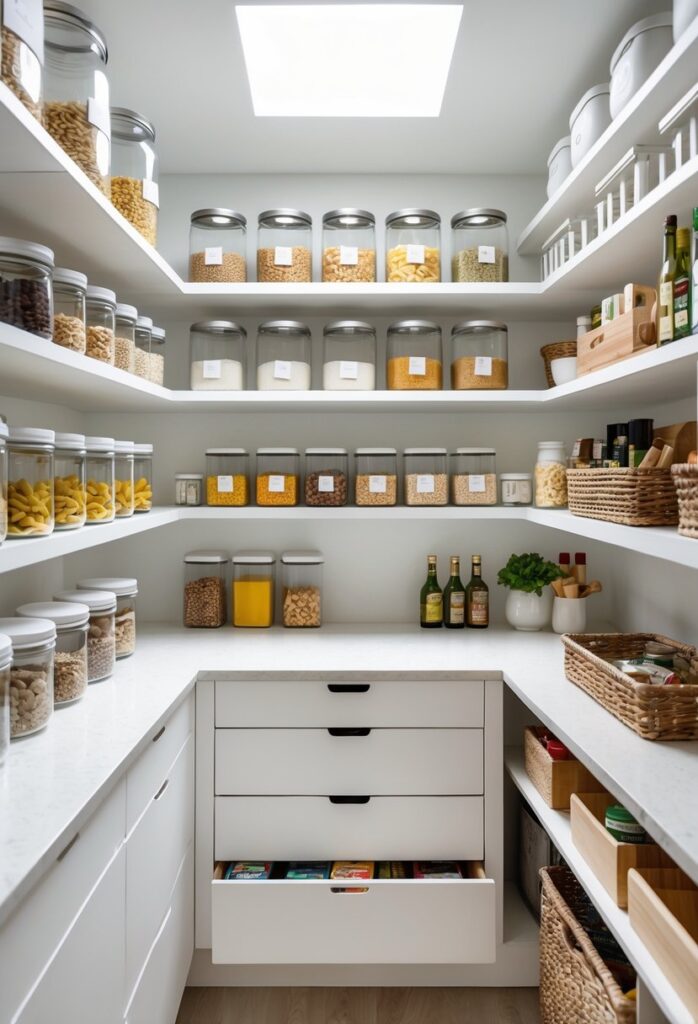
A well-organized pantry depends on smart use of space and clear order. Avoid clutter by not stuffing containers, missing chances to use vertical areas, and skipping labels, which can lead to wasted food and confusion.
Overfilling Storage Containers
Overfilling containers makes it hard to see what’s inside and can cause spills or damage. When containers are stuffed full, items become difficult to access or reuse. This often results in wasted food because things get lost or forgotten at the back.
Containers should have some extra space to allow easy scooping or pouring. Choosing the right size for different foods helps keep everything neat. Also, leaving room at the top prevents crushing delicate items like chips or crackers. This approach keeps the pantry safer and items more visible, allowing for quicker meal prep and restocking.
Neglecting Vertical Space
Many pantries waste vertical space by stacking only a few items or leaving tall shelves empty. Shelves that are too tall without adjustment create gaps where items get hidden or unreachable.
Using shelf risers, stackable bins, or tiered organizers can double or triple storage. This allows smaller items like spice jars or snack packs to fit neatly above others. Vertical storage keeps the pantry orderly and maximizes every inch, reducing crowded shelves and clutter.
Ignoring Labeling
Without labels, items get misplaced, and it’s harder to maintain order. People might grab the wrong spice or forget what’s inside opaque containers. This can cause food expiration or repeated purchases.
Clear, easy-to-read labels help identify contents quickly and maintain consistent organization. Labels can include the name and expiration date for better inventory control. This simple step reduces search time and prevents waste by making everything easy to track and refill.