
8 Tropical Garden Design Ideas for Creating Lush, Vibrant Outdoor Spaces
Tropical garden design brings a fresh and vibrant look to any outdoor space. It focuses on creating a lush, green environment with colorful plants that evoke a relaxing, natural feeling. Many people choose tropical gardens to add beauty and calmness to their yards.
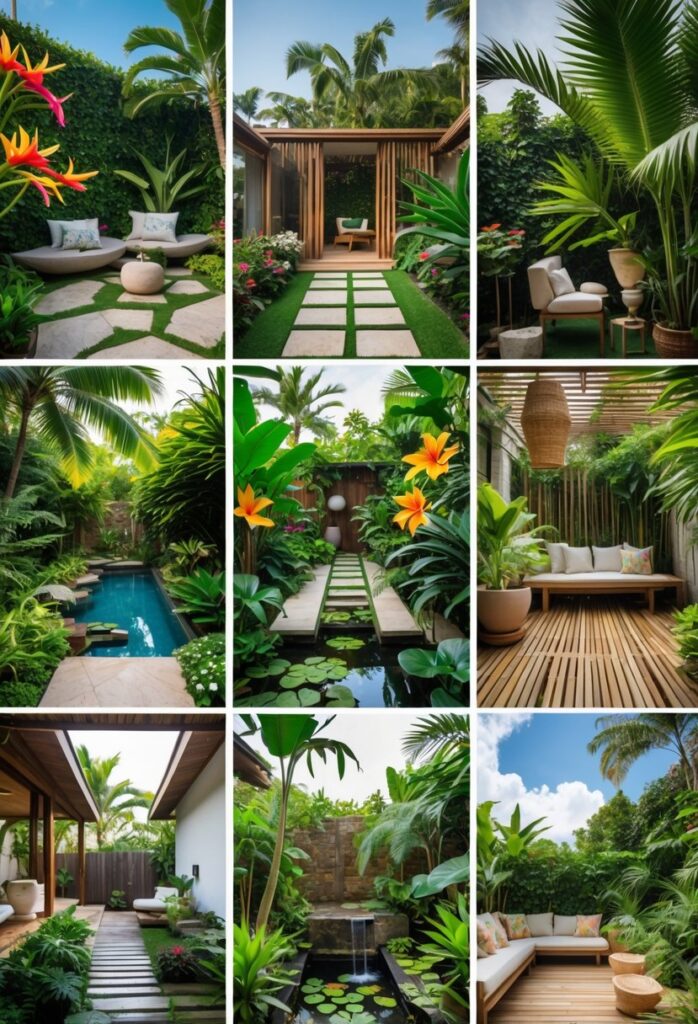
The key to a successful tropical garden is blending bold foliage, textures, and colors to create an inviting atmosphere. This style can be adapted for different spaces, making it possible to bring a touch of the tropics to small gardens, balconies, or larger yards.
1) Create a lush seating area with vibrant tropical foliage to invite relaxation.
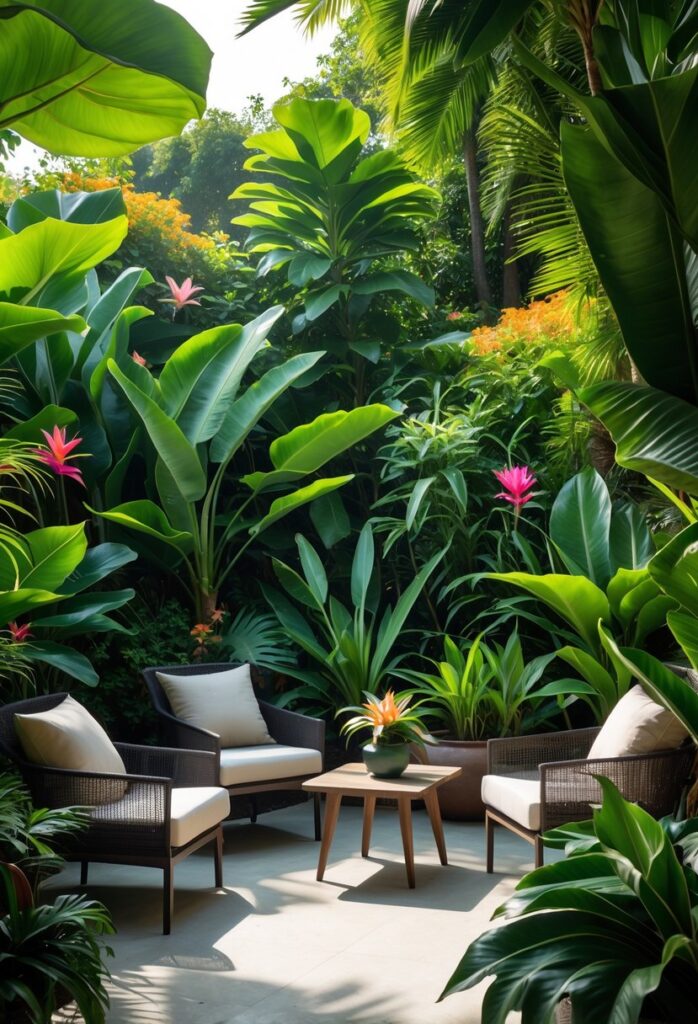
A tropical garden feels welcoming when it has a cozy seating spot surrounded by rich, green plants. Using colorful foliage like crotons, ferns, and bromeliads adds texture and life to the space. This mix of plants helps create a peaceful place to rest.
Adding a wooden bench or swing seat can make the area more inviting. Bright flowers such as hibiscus or passionflower vines bring color without overwhelming the space. These natural elements work together to form a calm, fresh environment.
Layering plants of different heights gives depth and keeps the area interesting. It also makes the seating spot feel private and sheltered. This setup helps people relax by connecting closely with nature.
A well-designed patio or garden corner with these features can turn any yard into a small tropical retreat. For more ideas on how to use vibrant tropical foliage and comfortable seating, see tropical garden design tips at mygardeninspo.com.
2) Incorporate large-leafed plants like banana or elephant ear for architectural impact.
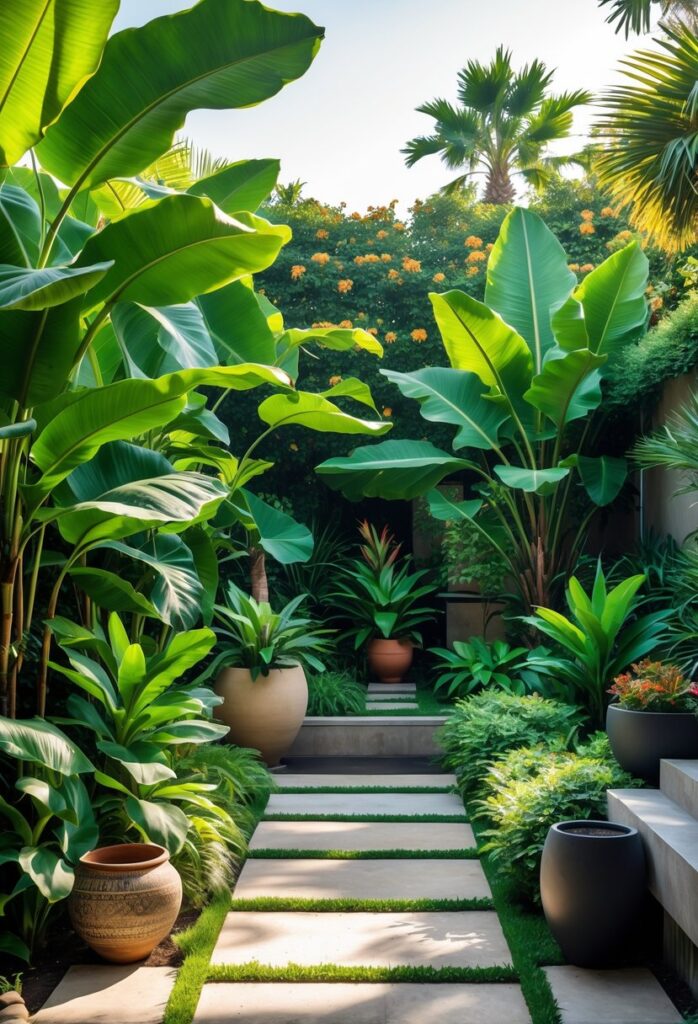
Large-leafed plants such as banana and elephant ear create strong visual interest in a tropical garden. Their big, bold leaves add shape and structure, making the space feel more dynamic and layered.
These plants work well when placed strategically. For example, taller bananas often go in the back, while shorter elephant ears fit in the front. This arrangement builds depth and a sense of natural flow.
Elephant ears are known for their dramatic foliage. They bring texture and a lush, tropical style that helps set the garden’s tone. Likewise, banana plants add height and a direct tropical vibe.
Both plants prefer sheltered spots to protect their leaves from wind damage. Combining them with other tropical species like cannas or hibiscus can add color and variety while keeping a cohesive theme.
Using large leaves creates a natural frame for outdoor spaces. It can guide movement and mark pathways, enhancing both function and beauty in a garden designed for tropical feel. Learn more about creating a tropical paradise with banana and elephant ear plants.
3) Use colorful flowers such as hibiscus or bird of paradise to add exotic vibrancy.
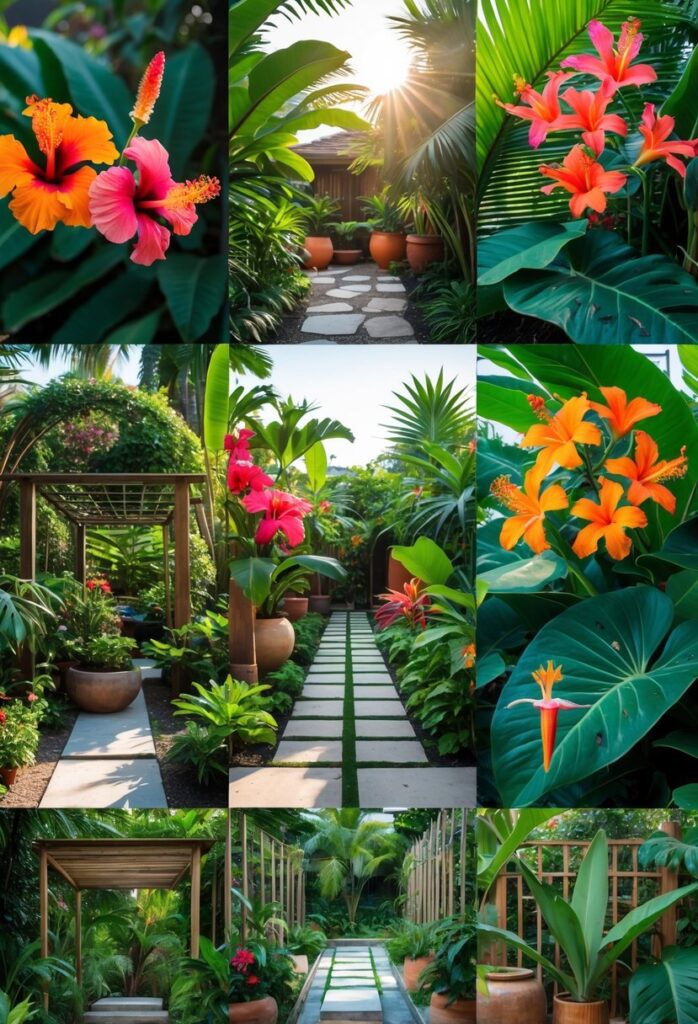
Colorful flowers like hibiscus and bird of paradise bring a bright, tropical look to any garden. Their bold colors create eye-catching focal points. These flowers stand out against green foliage, helping to make the space feel lively and fresh.
Hibiscus flowers come in many shades, including red, pink, and orange. They bloom for long periods, providing continuous color. Bird of paradise plants have striking orange and blue flowers that add a unique shape and texture to the garden.
Using these flowers in clusters or mixed with other tropical plants can create a rich, layered effect. Different heights and leaf shapes add depth and interest. Vibrant flowers also attract birds and pollinators, supporting local wildlife.
For ideas on creating vibrant tropical gardens with plants like hibiscus and bird of paradise, see more tropical landscaping ideas.
4) Add resort-style accessories like bamboo furniture and water features
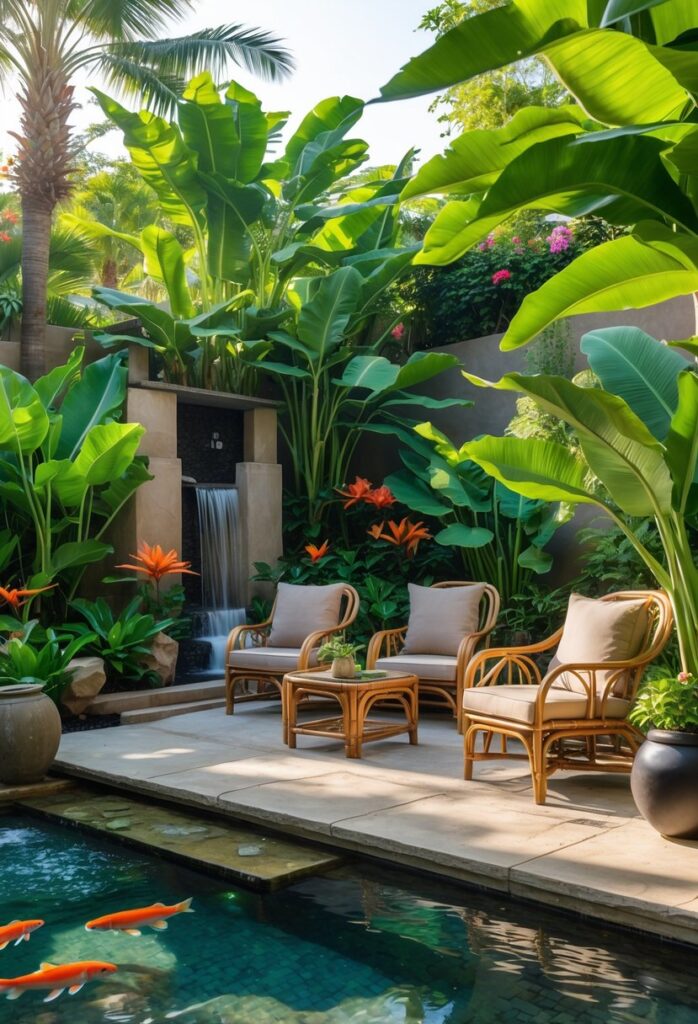
Adding bamboo furniture brings a natural, tropical look to the garden. It fits well with lush plants and creates a relaxed, resort-like vibe. Bamboo is durable and blends smoothly with the greenery and other natural materials.
Water features such as small ponds, fountains, or waterfalls add sound and movement to the space. The gentle trickle or rustling water creates a calming atmosphere that many tropical gardens aim for.
Combining bamboo furniture with water features completes the resort feel. Accessories like wind chimes and tiki torches also enhance the space by adding subtle sounds and soft lighting.
These details help turn a backyard into a peaceful retreat. They reflect elements often found in tropical resorts and can make any outdoor area feel more inviting and serene. For more ideas on using natural materials and water features, see this guide on tropical landscaping ideas.
5) Plant layered greenery with palms, ferns, and shrubs for depth and texture
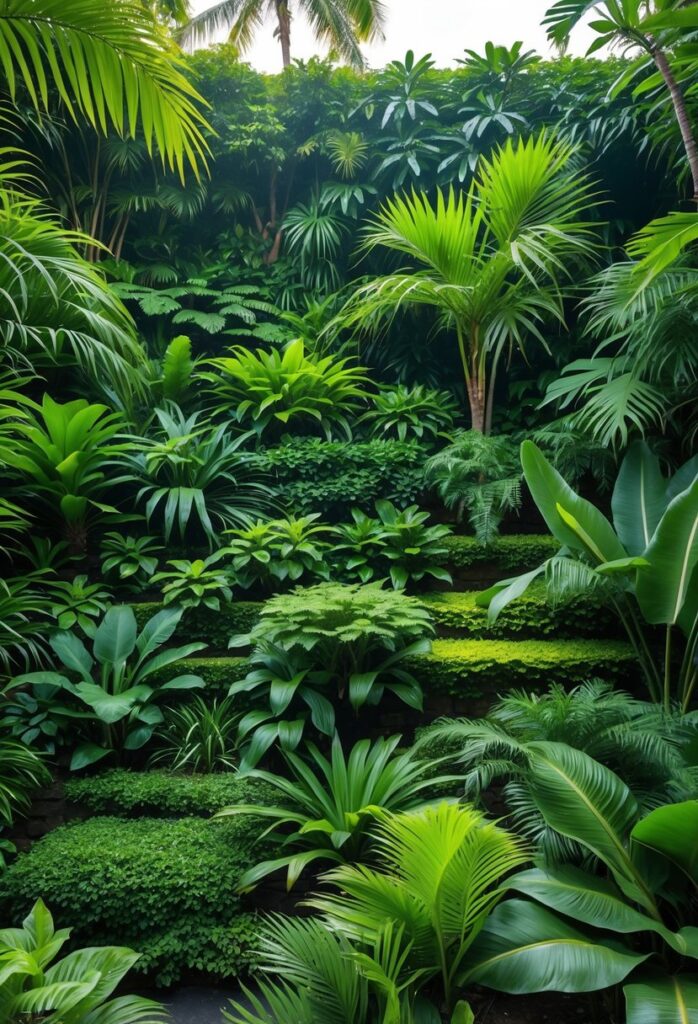
Layering plants creates a natural look by arranging them in different heights. Tall palms form the top layer and add vertical structure to the garden. They also provide shade, which helps smaller plants grow below.
Medium-sized shrubs fill in the middle layer. They add fullness and help create a sense of enclosure. Ferns and low-growing plants make up the bottom layer. These plants cover the ground and soften the edges.
This layering mimics how plants grow in tropical forests. It adds depth and makes the garden feel more dynamic and lush. Using a mix of palms, ferns, and shrubs helps bring texture and variety to outdoor spaces.
For a more detailed guide on layering plants for a tropical look, see tropical garden design tips that include palms and ferns as key layers. This strategy works well to create a balanced and inviting garden setting.
6) Combine hot, contrasting colors in flowers and foliage to enhance the tropical feel.
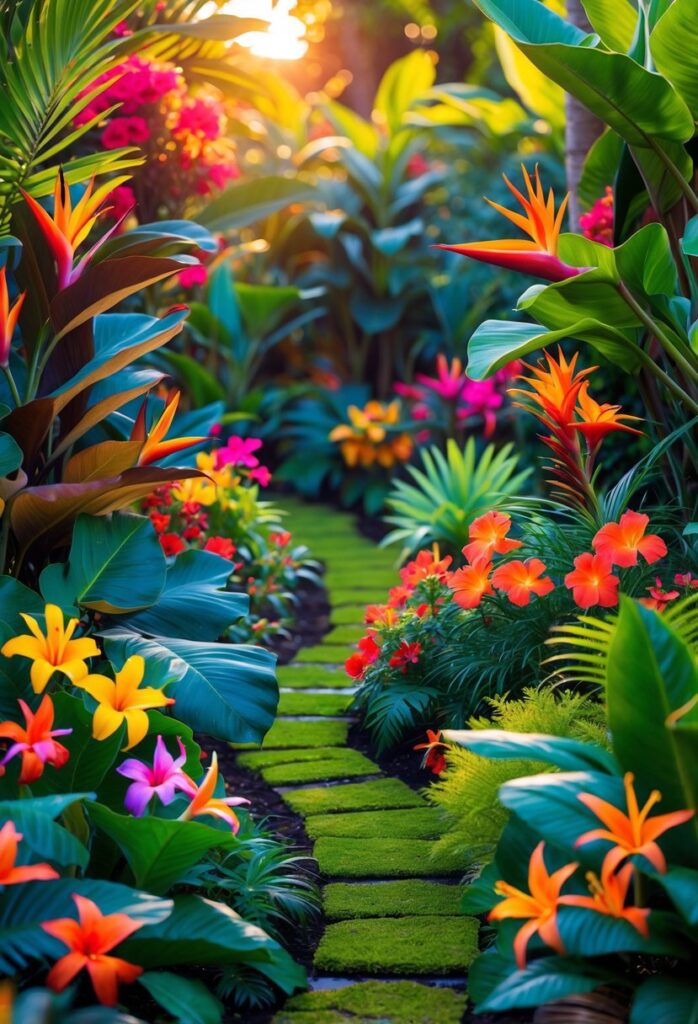
Using bright, warm colors like red, orange, and yellow in flowers creates a strong tropical impression. These colors stand out well against green leaves, making the garden look lively and rich.
Mixing plants with different leaf colors adds depth. For example, pairing dark green leaves with plants that have bright red or purple foliage creates a striking contrast.
Contrasting colors draw the eye and make the space feel more dynamic. This technique often uses plants with bold foliage shapes and vibrant flowers to increase visual interest.
Incorporating these color contrasts helps mimic the bold look of tropical environments. It also grants a layered texture, enhancing the garden’s natural feel.
For ideas on using bold plants and colors, see this guide on tropical garden designs.
7) Include bold textured plants like crotons to create dramatic visual interest.
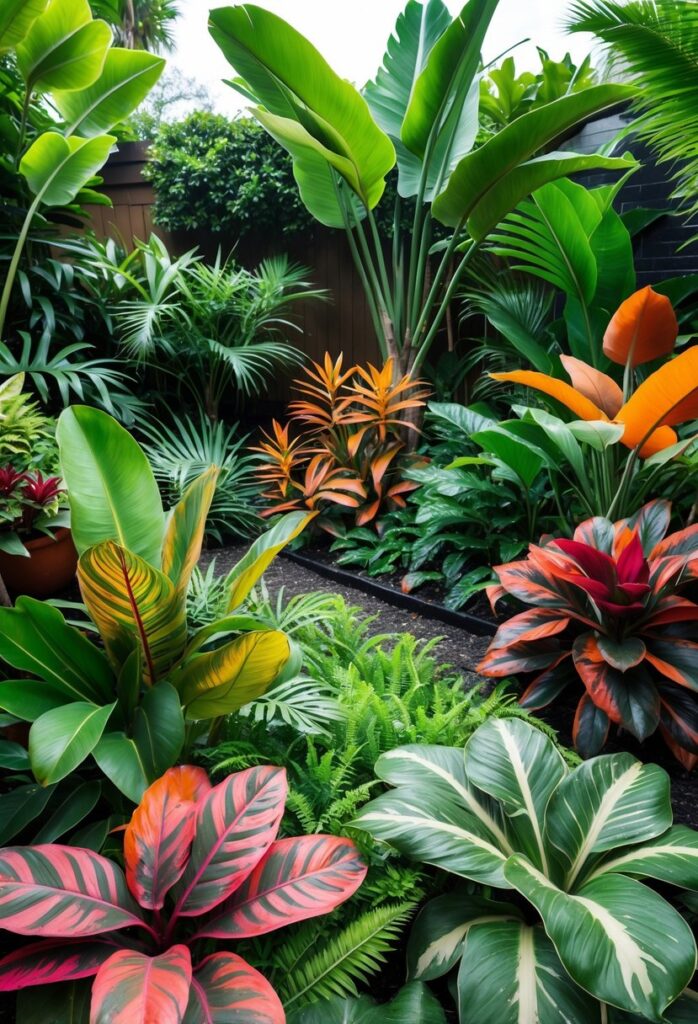
Crotons add strong color and texture to tropical garden designs. Their leaves come in bright oranges, reds, yellows, and greens. This variety of colors helps create eye-catching contrasts.
These plants work well in garden beds and containers. They stand out next to plants with simpler shapes and colors. Pairing crotons with structural plants like agave can create powerful visual effects.
Crotons need plenty of sunlight to keep their colors bright. They also prefer well-draining soil to stay healthy. When placed in the right spot, crotons add energy and depth to outdoor spaces.
Using crotons in borders or as focal points gives a garden clear definition. Gardeners can arrange them to balance other plants and create a harmonious look. For more ideas on using crotons, see landscaping ideas with croton plants.
8) Design pathways with natural stone surrounded by tropical plants for a jungle effect.
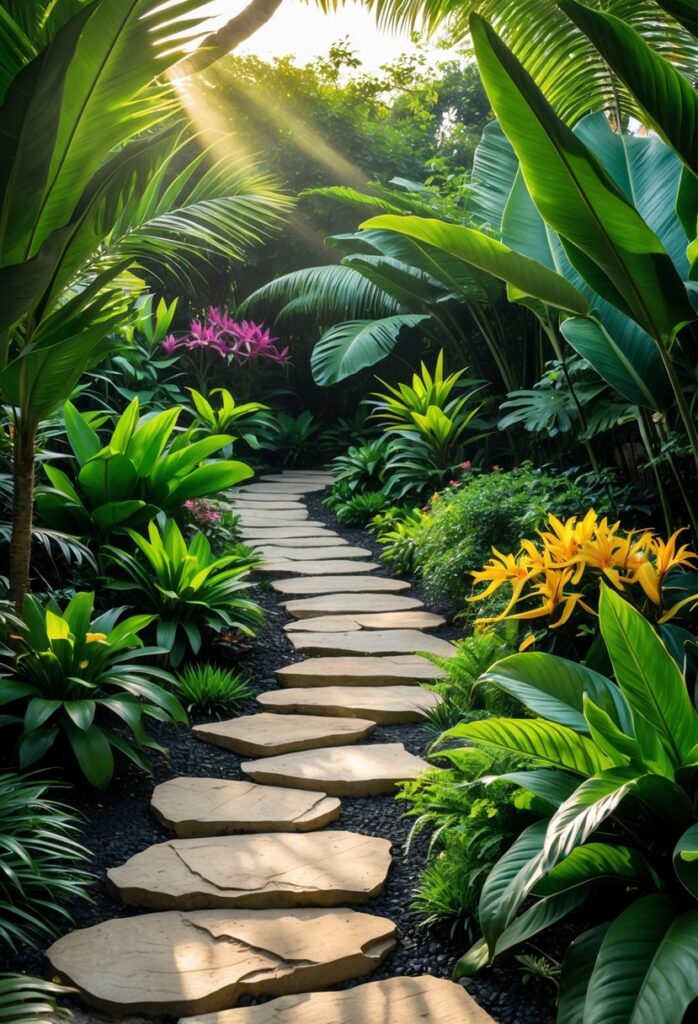
Using natural stone for pathways adds texture and a strong visual presence in a tropical garden. Stones create an organic feel that blends smoothly with lush plants.
Tropical plants like palms, ferns, and broad-leafed greenery framing the stone path enhance the jungle look. The mix of vibrant leaves and varying heights makes the space feel dense and natural.
Winding or curved stone paths work best to mimic nature’s flow. This design encourages exploration and leads visitors through the garden, making each step feel part of a larger journey.
Adding vivid flowers or potted tropical plants along the edges can boost the exotic vibe. This combination turns a simple walkway into an immersive garden feature.
Stone pathways surrounded by tropical plants are both practical and beautiful. They guide movement while maintaining the garden’s rich, jungle-like atmosphere. For examples and ideas, explore tropical garden paths using natural materials.
Key Elements of a Tropical Garden
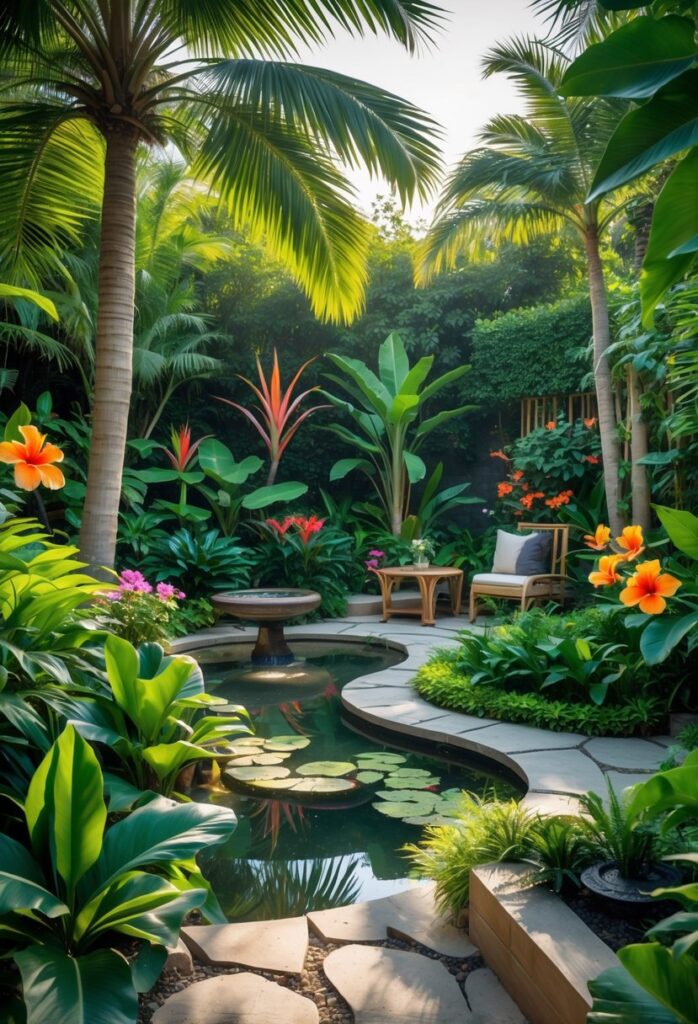
A tropical garden relies on careful choices in plants and design features to create a vibrant, natural feel. Important factors include selecting the right greenery, combining plants with vivid colors, and adding water elements that enhance both beauty and tranquility.
Lush Foliage Selection
Tropical gardens focus heavily on dense, green foliage to create a rich, layered look. Plants with large, broad leaves such as palms, banana plants, and elephant ears give the garden height and texture. Varying leaf shapes and sizes adds depth.
Choosing low-maintenance plants that thrive in warm, humid conditions is key. Popular options include bamboo, ferns, and philodendrons. These plants provide a natural canopy and ground cover, helping to build a cool, shaded environment.
Healthy, lush foliage brings life to the garden. Consistent watering and rich soil help maintain plant growth. Using different heights also creates a sense of fullness and privacy, essential in tropical garden design.
Colorful Plant Combinations
Bright colors add energy and interest in a tropical garden. Flowers such as hibiscus, canna lilies, and bird of paradise offer bold reds, oranges, and yellows. These stand out strikingly against green leaves.
Grouping plants with contrasting colors and textures enhances the overall visual effect. For example, pairing dark green palms with vibrant flowering shrubs can create eye-catching arrangements.
Arranging plants in layers—from tall to short—helps blend colors naturally. Choosing flowering plants that bloom at different times ensures continuous color throughout the year. Low-maintenance flowering plants also keep care simple.
Effective Water Features
Water adds calmness and a tropical ambiance. Small ponds, fountains, or waterfalls improve the garden’s atmosphere by providing soothing sounds and humidity.
Water features also attract wildlife like birds and butterflies, increasing the garden’s liveliness. Positioning them in shaded areas helps keep water cooler and reduces algae growth.
Natural stone or bamboo edging often complements water elements, giving a rustic, organic look. Proper placement and maintenance prevent water stagnation and keep the space clean and inviting.
For tips on blending water features into your layout, explore the guide on tropical garden design ideas.
Maintenance Tips for Tropical Landscapes
Tropical gardens need specific care to stay healthy year-round. Proper watering, pruning, and feeding help plants thrive. Regular monitoring prevents problems before they start.
Seasonal Care Guidance
Tropical plants often need more water during hot months. Irrigation should be adjusted to keep soil moist but not soaked. Mulching helps retain moisture and regulate soil temperature.
Pruning should be done in late winter or early spring to remove dead or damaged leaves. Fertilizing every 6-8 weeks with a balanced, slow-release fertilizer supports steady growth.
In cooler seasons, reduce watering as plants slow down. Protect sensitive palms and flowers from frost by covering or moving pots indoors when temperatures drop below 50°F.
Pest and Disease Management
Tropical landscapes can attract pests like aphids, spider mites, and scale insects. Inspect plants weekly and remove pests by hand or use insecticidal soap if needed.
Fungal diseases often develop in humid conditions. Good air circulation is critical. Prune dense growth to prevent moisture buildup. Apply fungicides only when problems appear.
Regularly clear fallen leaves and debris to reduce pest hiding spots. Healthy plants are less vulnerable, so maintain proper watering and nutrition routines to reduce pest and disease risks.
For expert tips on tropical garden upkeep, visit tropical garden maintenance advice.
Frequently Asked Questions
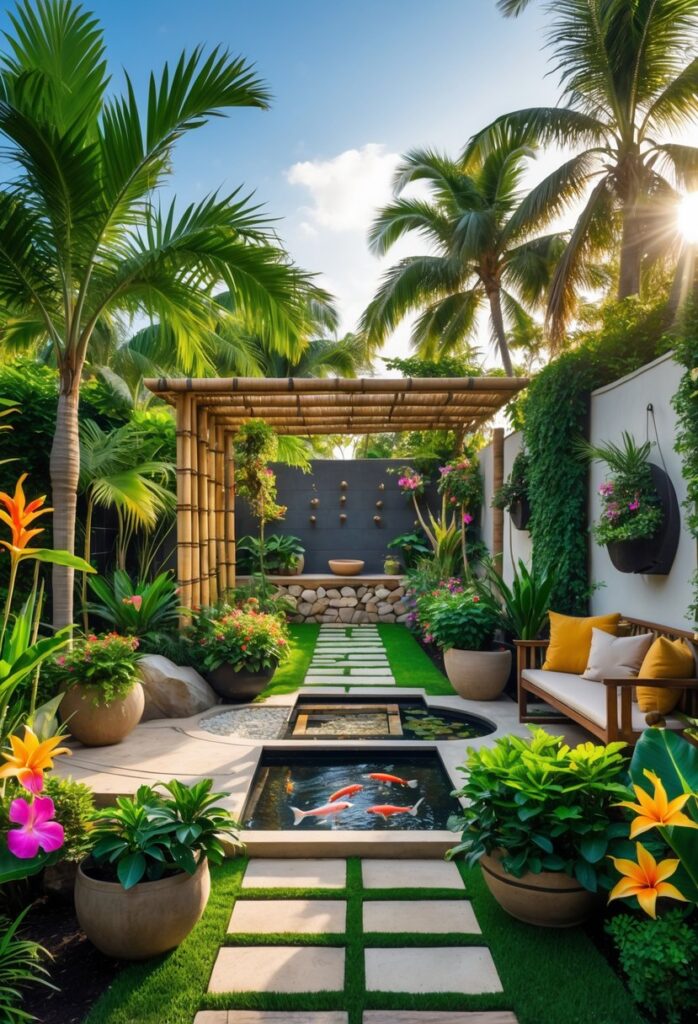
Tropical garden design includes using bold plants with large leaves, bright flowers, and layered greenery. It blends natural textures with elements like bamboo furniture and water features for a relaxing, resort-style vibe.
How can I create a tropical garden in a small space?
He or she can focus on a compact seating area surrounded by vibrant plants like hibiscus or bird of paradise. Using vertical space with climbing vines or hanging plants helps maximize the garden without crowding.
What are the best low-maintenance plants for a tropical garden?
Palms, ferns, and elephant ear plants are sturdy choices. These plants tolerate shade and humid conditions, reducing the need for frequent care or watering.
Which design strategies can help me create a tropical garden on a budget?
Using local tropical plants or fast-growing palms can save money. Reusing items like stone sculptures or bamboo furniture adds style without high costs.
What are some simple landscaping ideas for achieving a tropical look?
Layering plants by height, mixing textures, and adding a water feature or small fountain can create a tropical feel. Large-leafed plants like banana or elephant ear bring architectural interest.
Can you suggest any tropical garden design ideas suitable for Florida’s climate?
Choosing heat- and humidity-tolerant plants like hibiscus and palms works well. Adding shade with umbrellas or pergolas helps protect delicate plants from strong sun.
What key elements should I include in my tropical garden to make it look authentic?
Include lush, layered greenery combining palms, ferns, and shrubs. Add colorful flowers and use bamboo or wooden furniture. Water features complete the resort-style atmosphere.
Learn more about small tropical garden designs at 20 Small Tropical Garden Ideas.