7 Balcony Garden Ideas to Transform Small Outdoor Spaces Efficiently
Many people want to create green spaces in small outdoor areas like balconies. In this article, I have discussed beautiful and useful balcony garden ideas. A balcony garden can bring nature closer and make a home feel more inviting without needing a large yard.
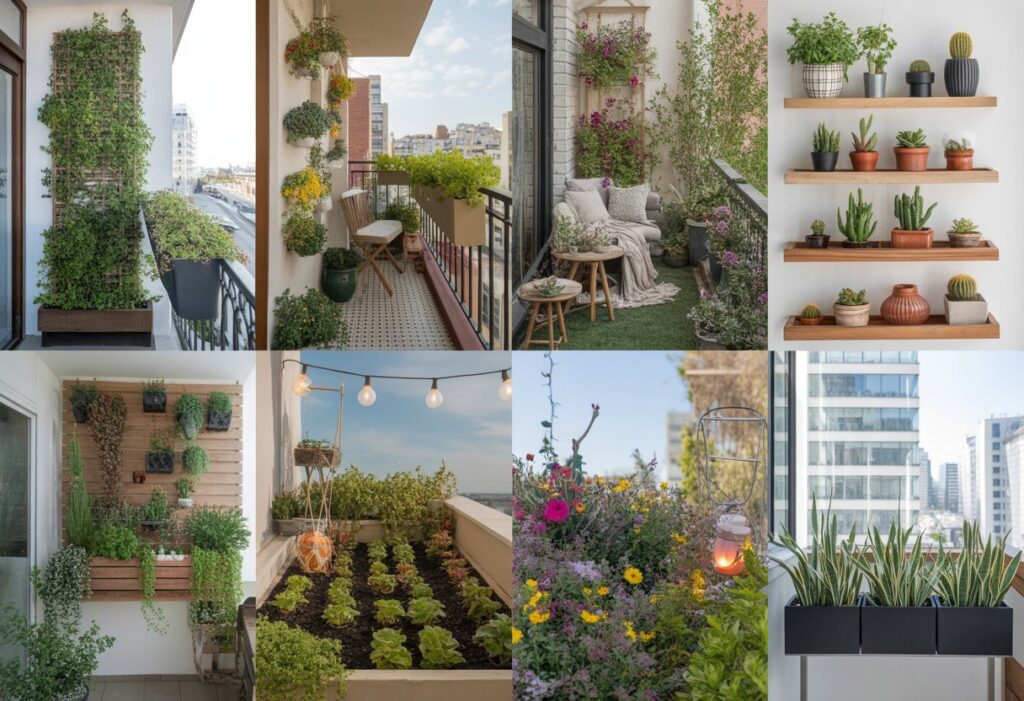
Balcony gardening ideas help make the most of limited space while adding beauty and function to any outdoor spot. These ideas can suit different skill levels and preferences, making it easier to start a garden even in tight spaces.
1) Vertical garden with hanging planters
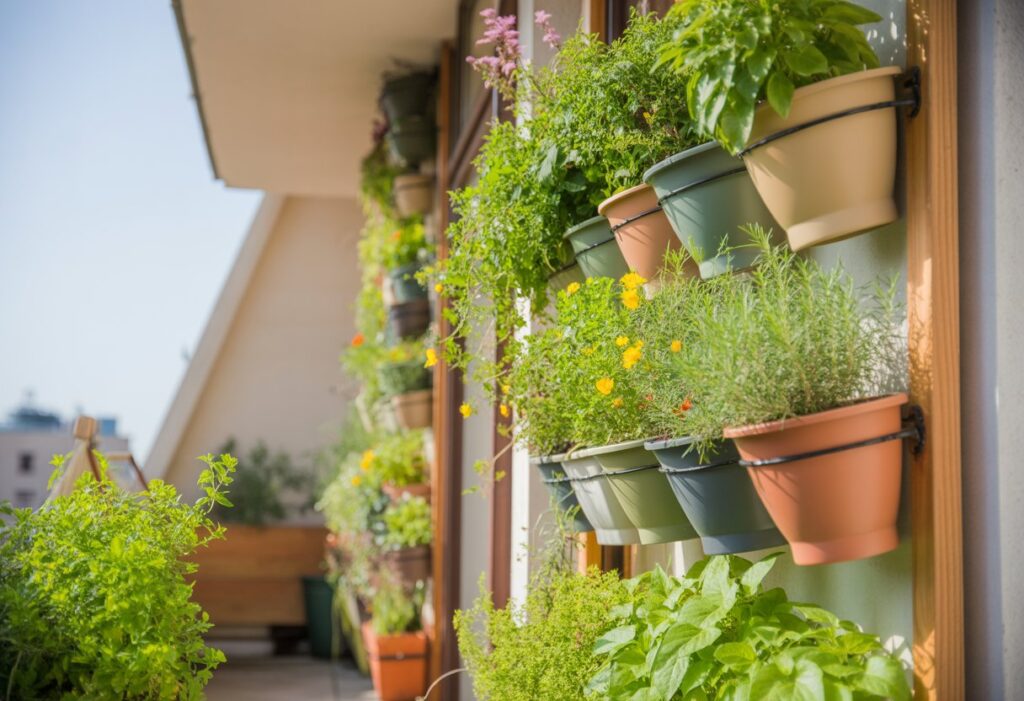
Hanging planters are a smart way to use vertical space on a balcony. They free up the floor while adding greenery at eye level.
These planters work well for trailing plants like ivy or colorful flowers. People often hang them from balcony railings or ceiling hooks.
This setup is ideal for small balconies. It creates multiple layers of plants, making the garden feel fuller without crowding the space.
2) Herb garden using small pots
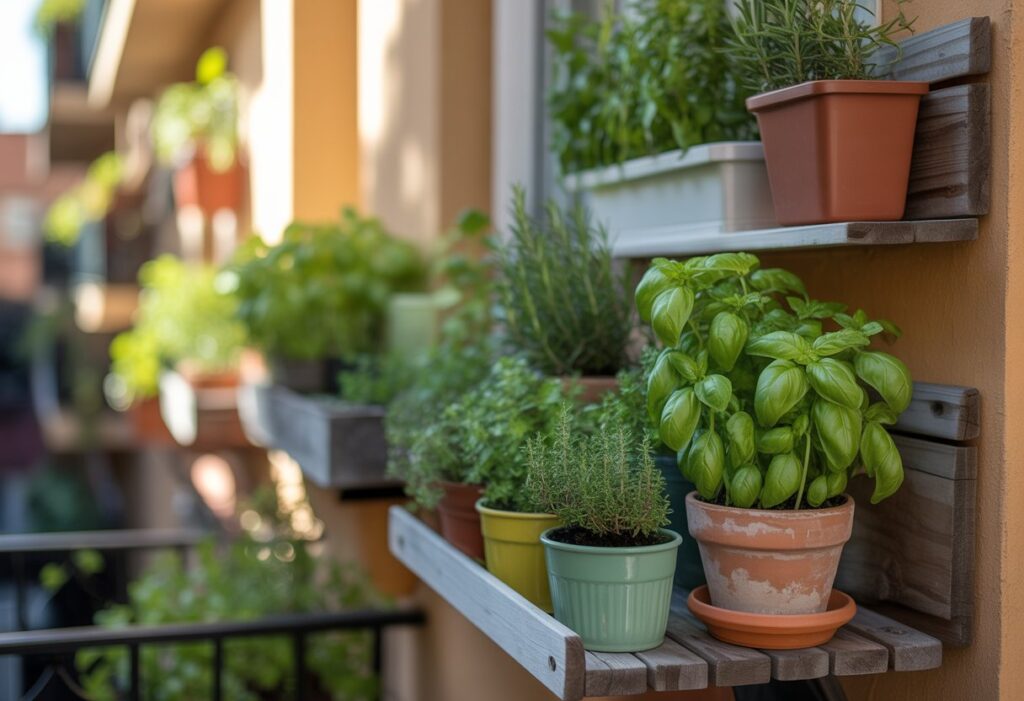
They can use small pots to grow a variety of herbs like basil, mint, and rosemary. Small pots fit well on balconies with limited space, making it easy to arrange and move the plants as needed.
Using pots also helps to control soil quality and water drainage. Grouping the pots closely creates a neat, organized look while providing fresh herbs within reach.
3) Succulent and cactus rock garden
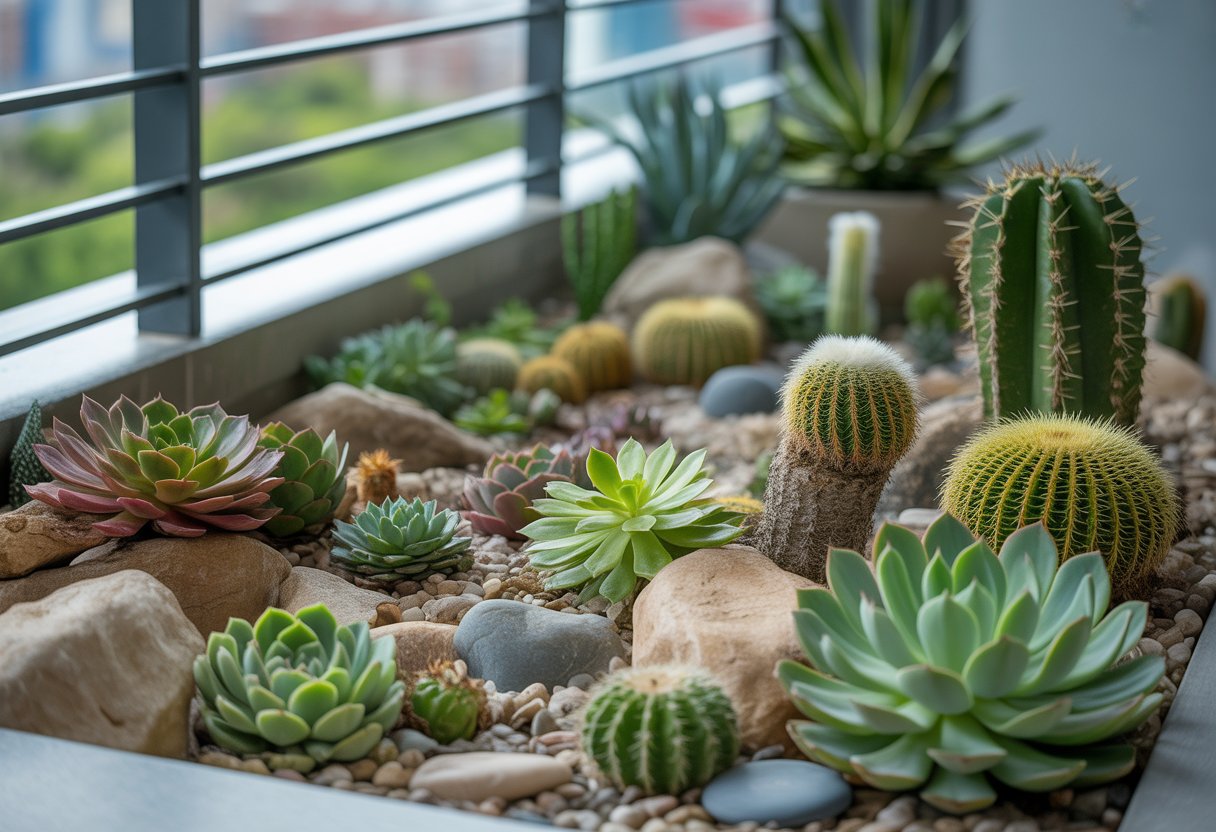
This garden style uses rocks to create a natural, structured look. Succulents and cacti are placed among stones to mimic a desert environment.
The rocks help with drainage and add texture. It suits small balconies well because it needs little water and care.
Using different shapes and sizes of rocks, along with various succulent types, adds visual interest. This setup brings a simple, lasting appeal to any outdoor space.
4) Edible plants like tomatoes and peppers
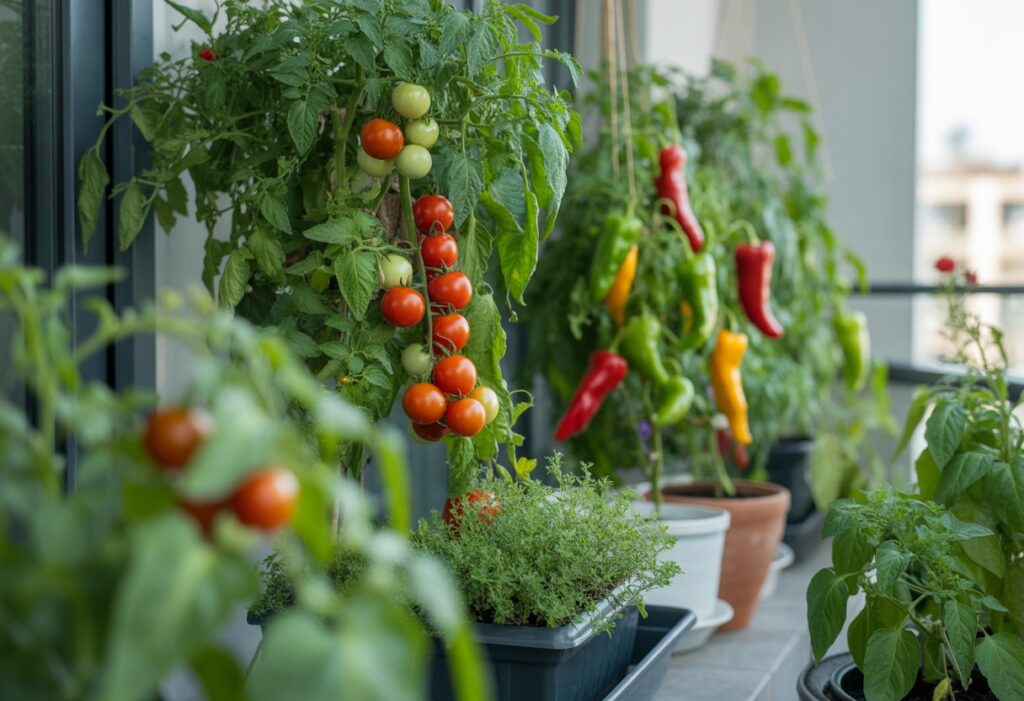
Tomatoes and peppers are great choices for balcony gardens. They grow well in containers and don’t need much space. Compact varieties work best to avoid large vines or tall plants.
These plants need plenty of sunlight and regular watering. Peppers add color as they ripen, while tomatoes provide fresh fruit for cooking. With good care, they offer a practical and attractive addition to small garden spaces.
5) Compact container plants with flowers
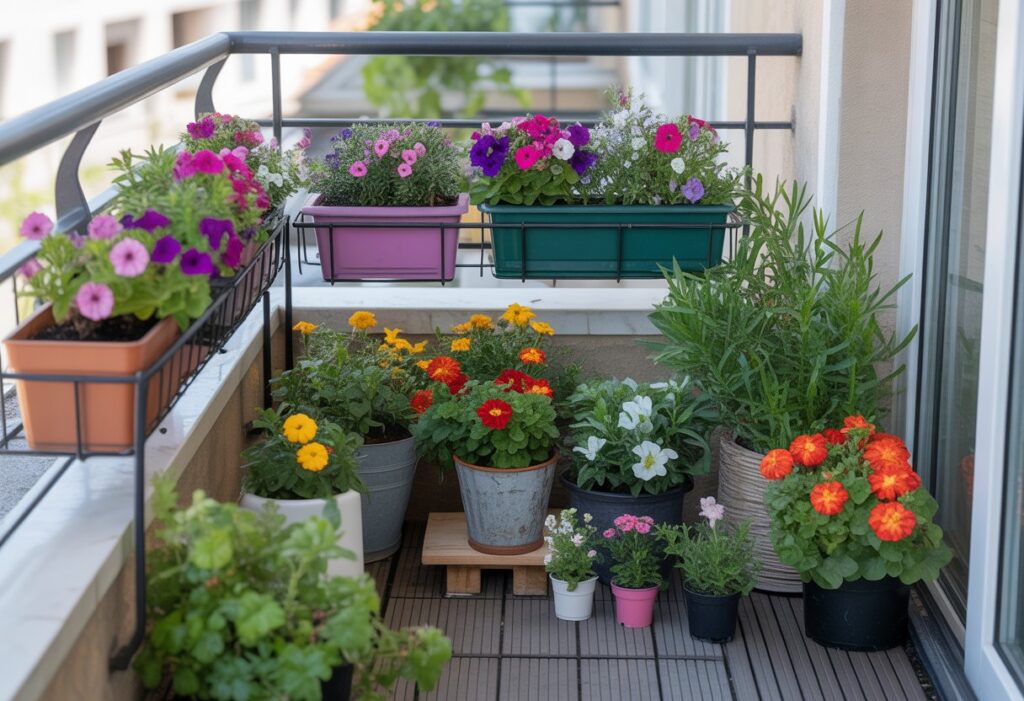
Compact flowering plants work well for small balconies because they fit limited space. They bring color and life without crowding the area.
Plants like petunias, pansies, and marigolds are good choices. They stay small and bloom often.
Using containers with good drainage helps these plants thrive. Regular watering and feeding keep flowers healthy and vibrant.
6) Climbing vines on trellis
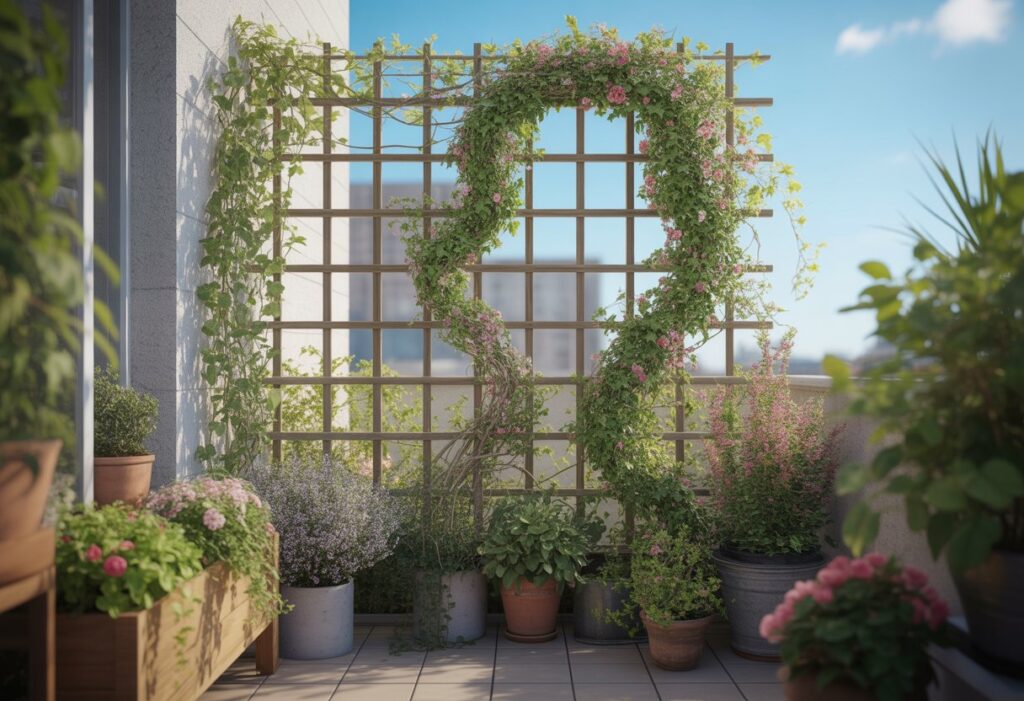
Climbing vines add height and greenery to small balcony spaces. Using a trellis lets plants grow upward, saving floor space.
A trellis also supports the vines, helping them stay healthy and strong. It can be made from wood, metal, or even recycled materials, fitting many styles.
Besides being practical, trellises improve privacy by creating a natural screen. This makes balconies feel more cozy and shielded from neighbors.
7) Balcony railing planters
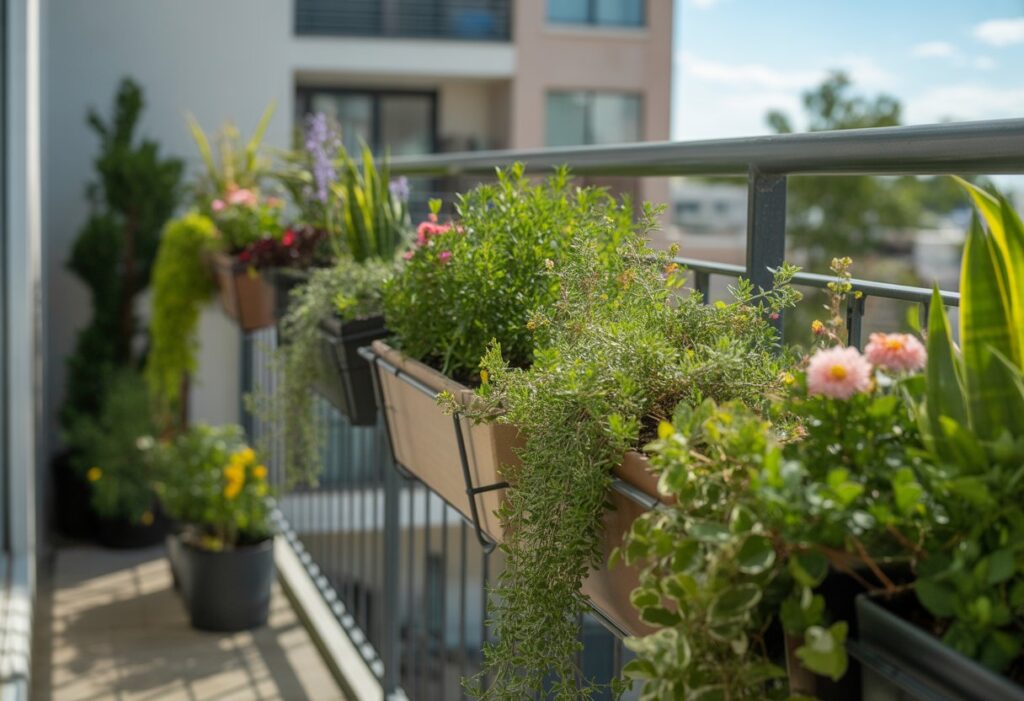
Balcony railing planters offer a smart way to add plants without taking up floor space. They can hold flowers, herbs, or small vegetables securely along the railing. Many railing planters are easy to install and remove.
These planters also help use vertical space, which is important in small balconies. Some designs allow for adjustable sizes to fit different railing widths. They brighten the space while keeping it functional for daily use.
Balcony Garden Planning Essentials
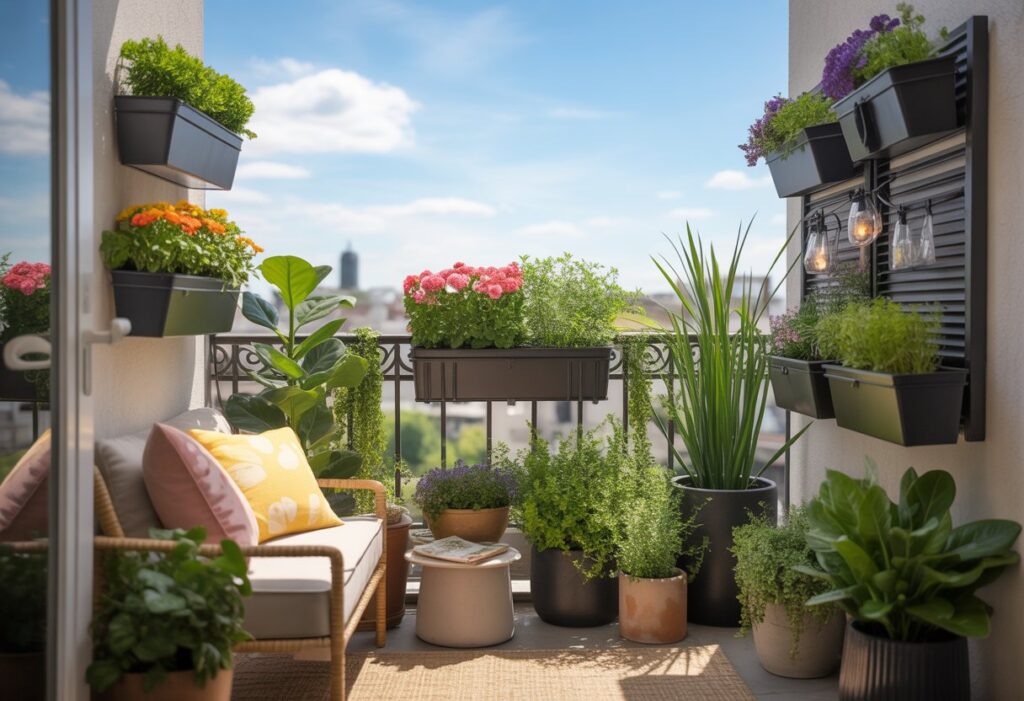
To start a successful balcony garden, it is crucial to evaluate the location carefully, pick containers that fit the space and plants, and select plants suited to the specific conditions. Planning these elements well can help create a functional and attractive garden.
Assessing Sunlight and Space
Understanding how much sunlight the balcony receives is key. Most plants need at least 4 to 6 hours of direct sun, but some thrive in shade or partial sun. The direction the balcony faces impacts light levels; south-facing spots get the most sun, while north-facing ones are shadier.
Measure the available floor area and railing space. This helps in choosing containers and arranging plants without overcrowding. Consider vertical space too—walls and railings can hold hanging or vertical planters to save floor room.
Knowing these factors upfront avoids placing plants where they cannot thrive and ensures the garden fits the available space comfortably.
Choosing Suitable Containers
Containers must fit the sized space while providing enough room for roots to grow. Lightweight materials like plastic or fabric pots are easier to move and won’t overload the balcony.
Drainage is essential. Containers should have holes to prevent waterlogging, which can harm plants. Using trays underneath can protect floors from moisture damage.
Shapes and styles can enhance the garden’s look. Square or rectangular pots fit well along edges, while round pots work for floor corners. Vertical planters or stackable pots maximize space by adding height.
Selecting the Right Plants
Choosing plants depends on light conditions, space, and maintenance level. Herbs like basil and mint do well in sun, while ferns or ivy prefer shade.
Low-maintenance plants such as succulents suit busy gardeners. For edible options, tomatoes, peppers, and strawberries grow well in containers with enough sunlight.
Mixing flowering plants with greenery adds color and texture. Look for compact or trailing varieties to make the most of small spaces.
Selecting plants suited to the environment ensures healthy growth and a pleasant garden atmosphere.
Maintaining a Thriving Balcony Garden
A healthy balcony garden depends on steady care and smart routines. Regular watering and feeding help plants grow strong, while controlling pests keeps them safe from damage. Attention to these basics ensures a lively and flourishing garden.
Watering and Fertilization Tips
Consistent watering is crucial. Most balcony plants prefer moist soil but not soggy. Checking soil with a finger can help decide when to water—if the top inch feels dry, it’s time to water. Early morning or late afternoon watering reduces evaporation and lets plants absorb moisture effectively.
Using the right fertilizer boosts plant health. Balanced, slow-release fertilizers are ideal for most herbs, flowers, and vegetables. Liquid fertilizers can be applied every two weeks during the growing season to provide quick nutrients. Avoid over-fertilizing, which can harm roots and lead to weak growth.
Proper pot drainage is essential to prevent root rot. Containers should have holes and allow excess water to escape freely.
Pest Prevention Strategies
Pests can quickly harm small balcony gardens if not controlled. Regularly inspecting plants for pests like aphids, spider mites, or whiteflies helps catch problems early. Removing affected leaves can limit spread.
Natural methods work best for pest control. Introducing beneficial insects like ladybugs or using mild soap sprays can reduce pests without chemicals. Spraying plants early in the day avoids leaf burn.
Keeping plants healthy through proper watering and feeding strengthens their natural defenses. Avoid overcrowding pots to improve air flow, making it harder for pests to settle.
Insect traps and sticky tape can also catch flying insects before they damage plants.
Frequently Asked Questions
Creating a productive balcony garden depends on smart use of space, choosing the right plants, and protecting them from weather and pests. Budget-friendly tools and simple care routines also help maintain a thriving garden all year.
How can I maximize the space on my balcony for gardening?
Using vertical gardens and hanging planters allows more plants in less floor space. Compact containers fit well in corners or on railings, making the most of limited space.
Grouping plants by their sunlight needs and using stackable pots also helps increase the number of plants without crowding.
What budget-friendly items can I use to enhance my balcony garden?
Repurposed containers like old jars, buckets, or wooden crates can hold plants cheaply. Twine or wire can create trellises for climbing plants.
DIY shelves or stands made from wood or metal are affordable and add layers for more planting space.
Which plants are most suitable for growing in a small balcony environment?
Small herbs like basil, mint, and thyme grow well in pots and require little space. Succulents and cacti are good for sunny areas due to low water needs.
Flowering plants with compact growth and vegetables like cherry tomatoes and peppers also fit well into balcony gardens.
What are the key considerations for starting a balcony vegetable garden?
Choosing containers with good drainage is vital. Plants need enough sunlight, so placing them where they get 6-8 hours daily is best.
Using quality soil and regular feeding with fertilizers ensures healthy growth. Starting with easy-to-grow veggies helps build confidence.
How do I protect my balcony garden from pests and harsh weather conditions?
Using natural pest repellents like neem oil or garlic spray keeps bugs away without chemicals. Netting can protect plants from insects and birds.
For harsh weather, movable containers allow sheltering plants during storms or extreme heat. Windbreaks with screens or outdoor fabric reduce damage from strong winds.
What are the best practices for ensuring a healthy balcony garden throughout the seasons?
Regular watering and checking soil moisture prevent drooping or root problems. Adjust watering frequency based on temperature changes.
Seasonal pruning and removing dead leaves keep plants healthy. Switching out plants seasonally, such as growing cool-weather herbs in fall, helps maintain garden growth all year.