8 Driveway Landscaping Ideas to Enhance Curb Appeal and Functionality
Driveway landscaping can greatly improve the look and feel of a home’s exterior. It offers a way to create a welcoming entrance while adding value and curb appeal. Many simple ideas can help transform this often overlooked space into something attractive and functional.
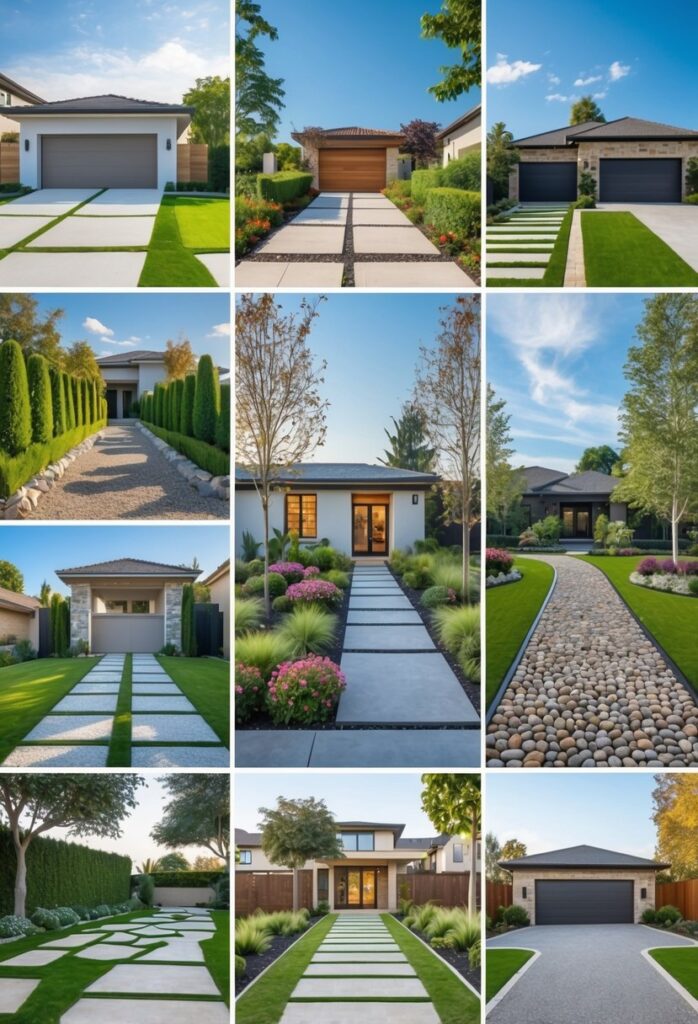
The right driveway landscaping ideas can make a noticeable difference without requiring a full renovation. These ideas can blend style and practicality to fit different tastes and budgets. With a few thoughtful touches, any driveway can become a more inviting part of the property. For more inspiration, see 8 driveway landscaping ideas that can enhance your home’s appearance.
1) Border planting with low-maintenance evergreens
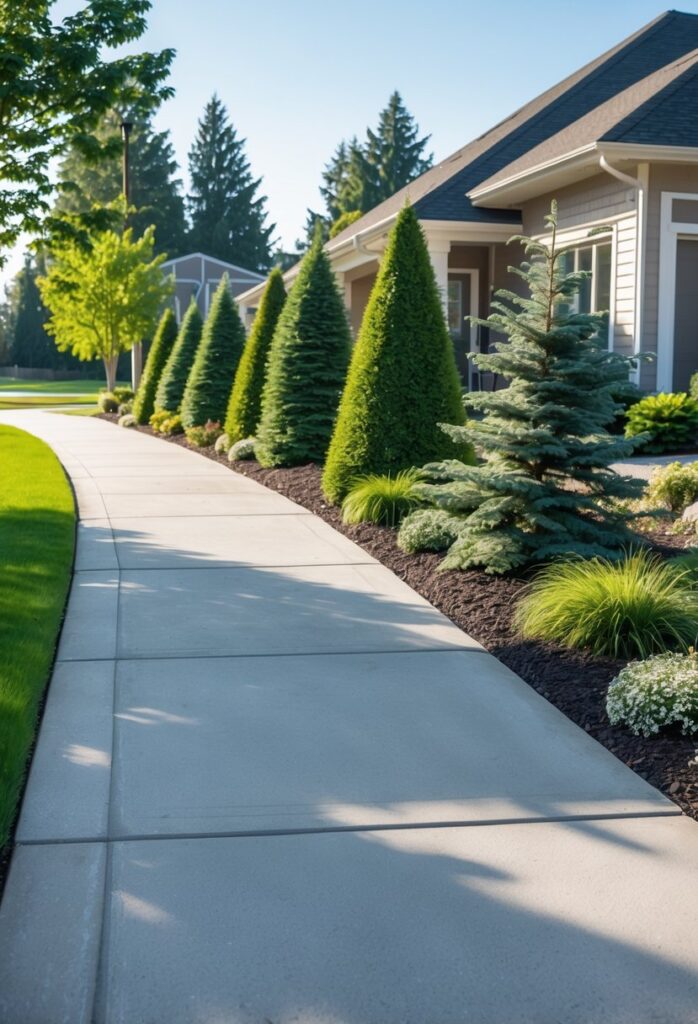
Using low-maintenance evergreens along a driveway border adds year-round greenery with little care. These plants stay green through all seasons, providing consistent structure and color.
Evergreens like boxwood, juniper, or yew require minimal pruning and can handle different weather conditions. They also help define the driveway edges, making the area look neat.
Choosing drought-tolerant species can reduce watering needs. This approach improves curb appeal without adding extra work. For more ideas on easy-care plants for driveway edges, see low-maintenance landscaping options for driveways.
2) Incorporate permeable pavers for better drainage
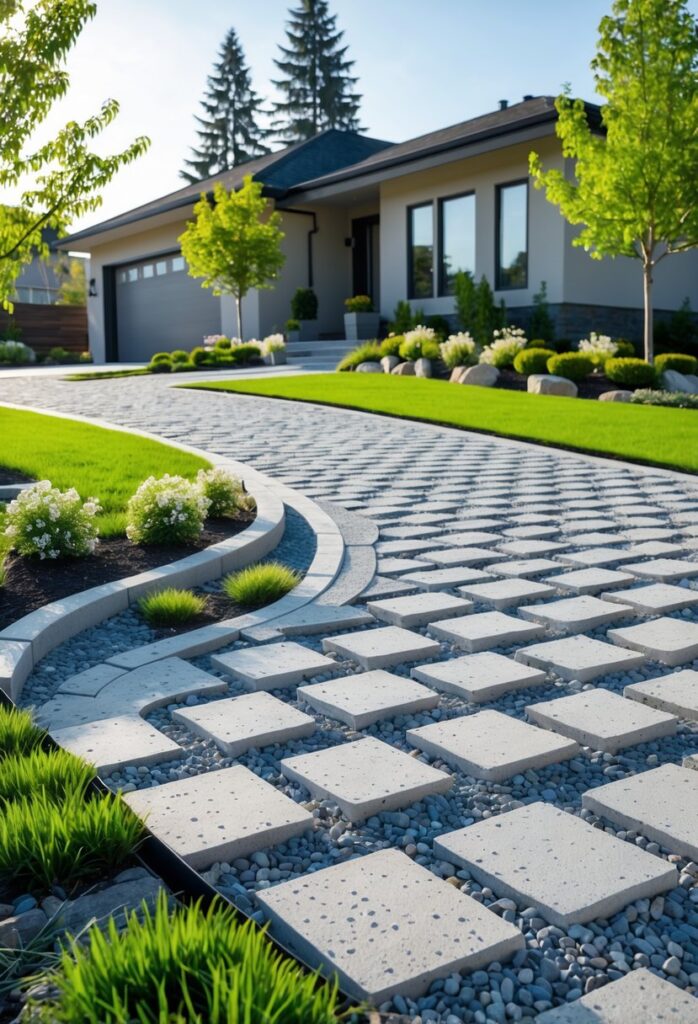
Permeable pavers allow water to pass through, reducing puddles and runoff on the driveway. They help prevent flooding and keep the ground beneath dry.
These pavers come in various materials like concrete or brick and often have small gaps or openings to let water flow through. This design supports better drainage and protects the landscape.
Using permeable pavers improves stormwater management while adding a clean, modern look. Homeowners can find a range of styles to match their outdoor space and needs. For more details, see this guide on how to install permeable pavers.
3) Use LED pathway lighting along edges
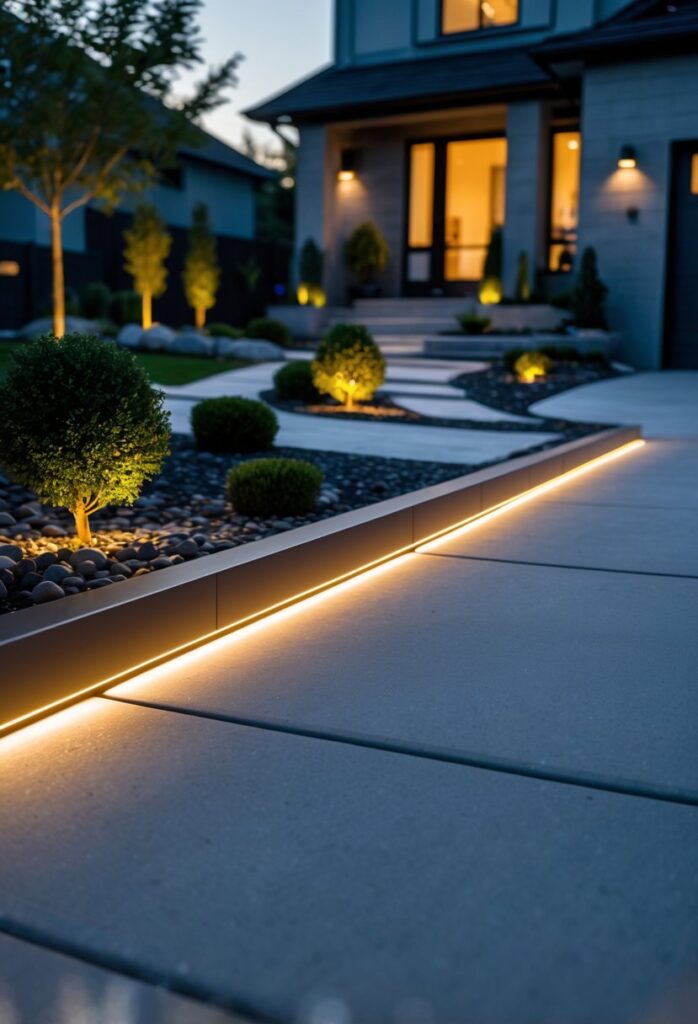
LED pathway lighting is a smart way to improve both safety and style. These lights can be placed along driveway edges to guide vehicles and pedestrians clearly at night.
They provide a steady, warm glow while using less energy than traditional bulbs. LED strips can also be embedded along stone or concrete edges to highlight texture and create a modern look.
Using LED lights helps reduce electricity costs. They also last longer, meaning less maintenance. This makes them a practical choice for anyone seeking durable and efficient driveway lighting. For more ideas, check out LED pathway lighting options.
4) Add decorative gravel strips between concrete slabs
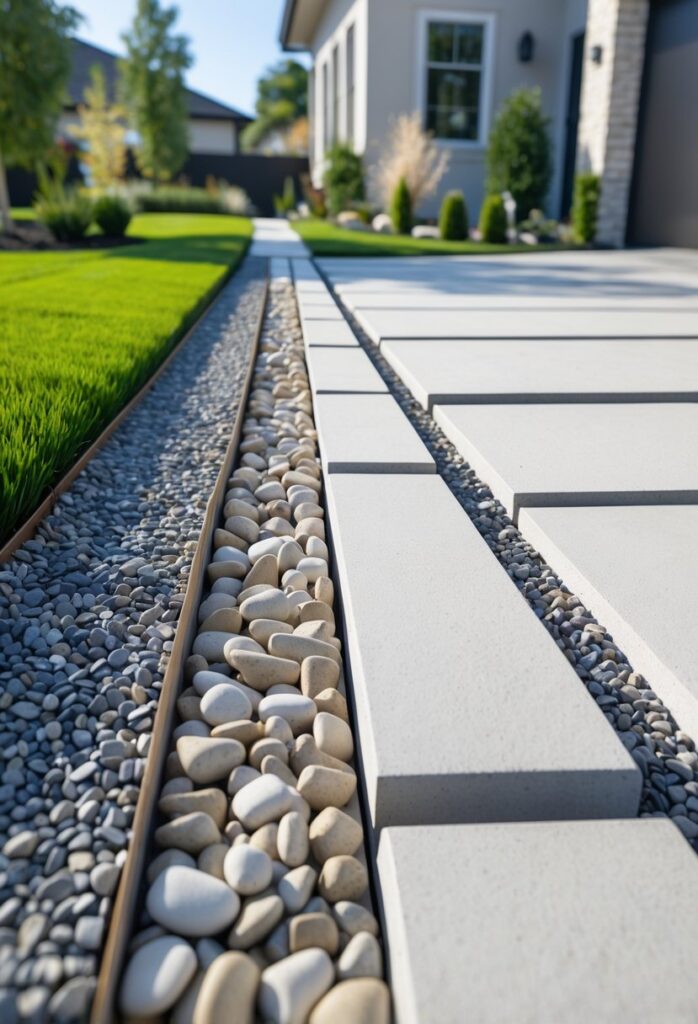
Adding gravel strips between concrete slabs creates a clean, modern look. Gravel offers texture and contrast that breaks up large concrete areas.
This design also helps with drainage by allowing water to flow between the slabs. It reduces puddling on the driveway surface.
Gravel comes in many colors and sizes, so it can match the surrounding landscape. Proper installation includes setting the slabs on a stable base and filling gaps with well-draining gravel for durability and low maintenance. See more about combining gravel and concrete for driveways at Concrete Captain.
5) Plant boxwood hedges for a structured look
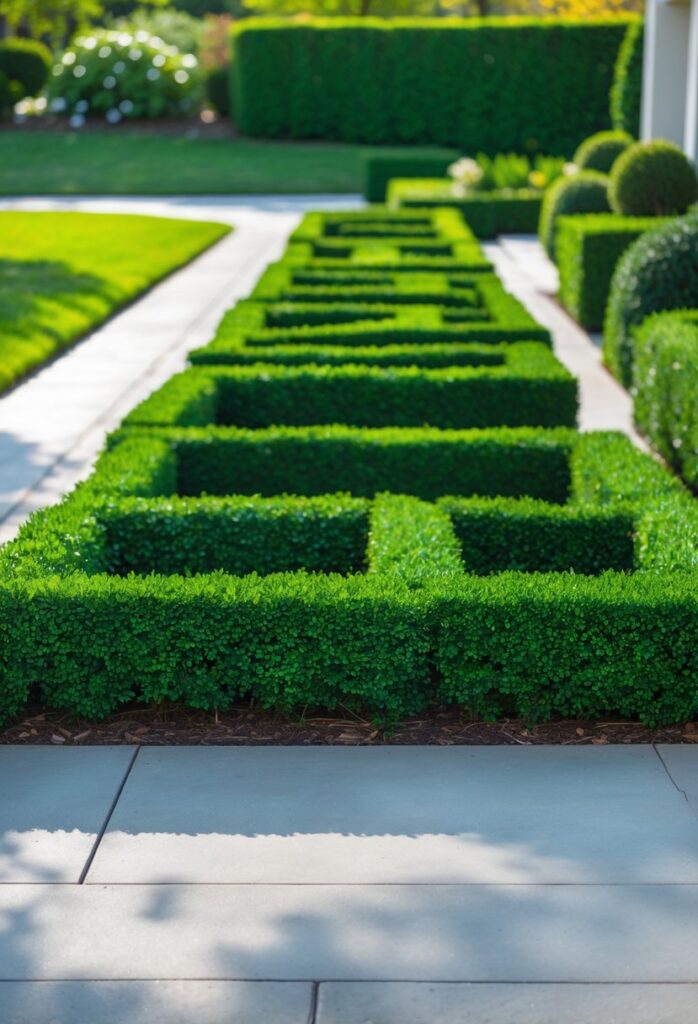
Boxwood hedges create clean, defined lines that give the driveway a polished appearance. These evergreen shrubs hold their shape well when pruned, making them ideal for a neat border.
They can be grown in low rows or taller hedges to provide privacy and frame the driveway. Boxwoods also stay green year-round, offering consistent color and structure through all seasons.
Planting boxwood hedges along the driveway adds order and balance to the landscape. This approach suits both traditional and modern home styles, enhancing curb appeal with simple elegance. For ideas, see boxwood landscaping options here.
6) Install brick accents to frame the driveway

Brick accents add a clean and classic border that clearly defines the edges of the driveway. They help separate the driveway from grass or garden areas, giving the space a neat appearance.
These brick edges also protect the driveway from damage caused by lawn mowers or weed trimmers. Installing them is a straightforward project that can be done with basic tools and some guidance.
In addition to practicality, brick framing increases the visual appeal of the driveway. Homeowners looking for easy yet effective improvements find brick accents a popular choice. More details on installation can be found at brick driveway edging guides.
7) Include native drought-resistant plants
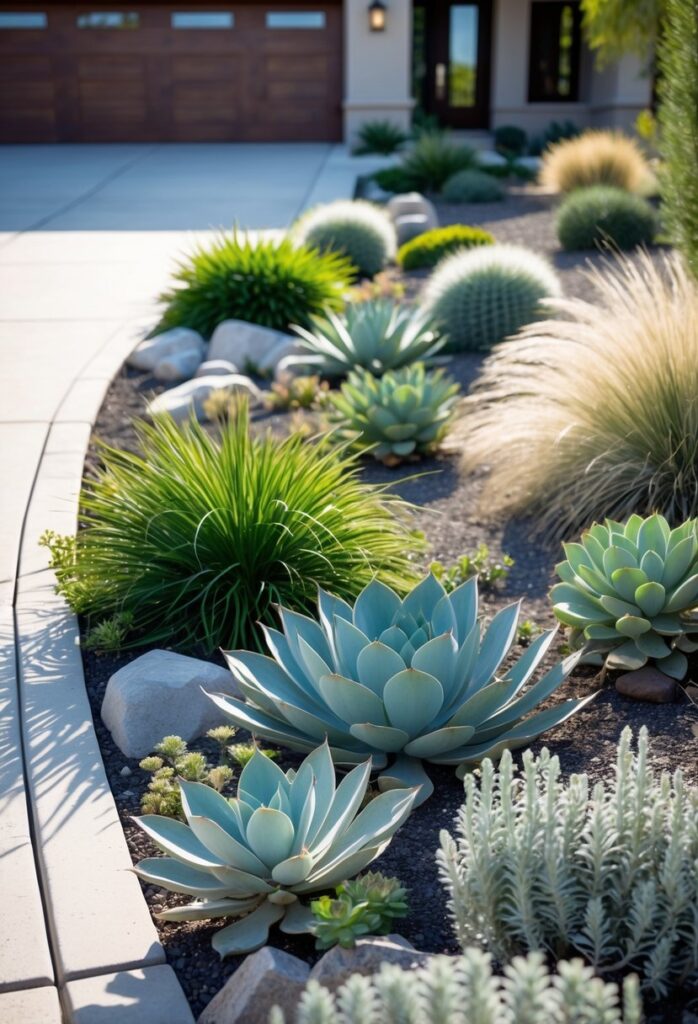
Using native drought-resistant plants is a smart choice for driveway landscaping. These plants are adapted to local climate and soil, so they need less water and care. They help create a natural, attractive look that fits the environment well.
Native plants also support local wildlife like bees and butterflies. Some good options include coneflowers, black-eyed Susans, and blazing stars. These plants thrive in dry conditions but still add color and texture to the space.
Incorporating native species can reduce maintenance while keeping the driveway area healthy and vibrant. For ideas on native drought-resistant plants, see this guide on drought-resistant native plants for driveways.
8) Create a curved driveway layout for visual interest
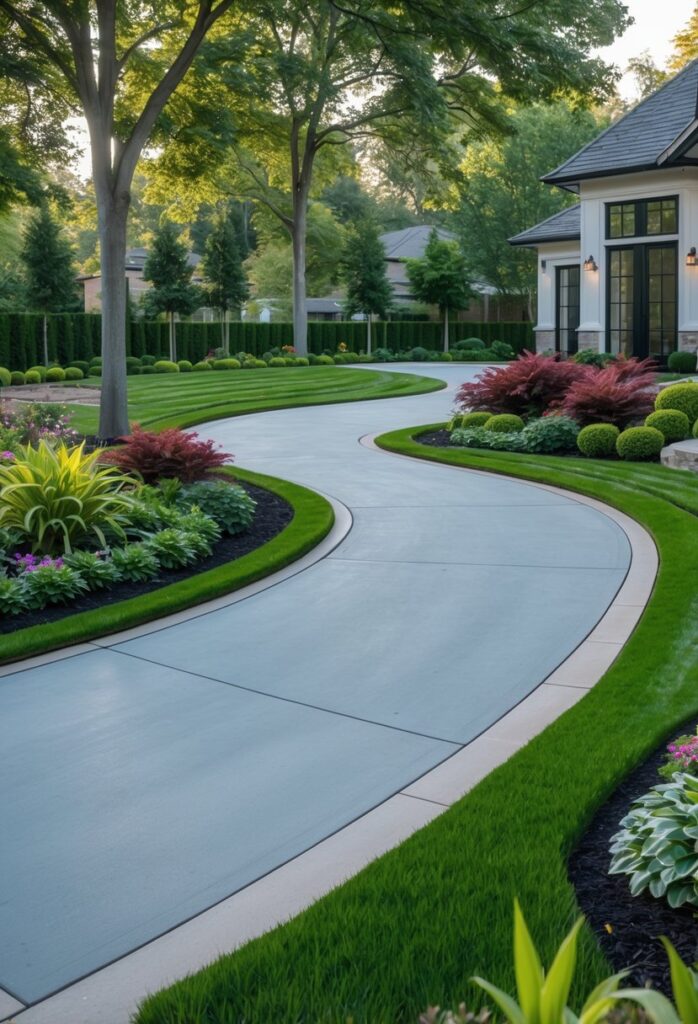
A curved driveway adds a smooth, elegant shape to any property. It breaks up the usual straight lines and creates a sense of movement. This design softly guides visitors toward the home, making the entrance feel more inviting.
Curved driveways also offer practical benefits. They allow for landscaping along the edges, where plants and flowers can thrive. This adds color and life to the space, boosting curb appeal.
For those wanting a unique look, a curved layout stands out. It combines function and style well, enhancing both flow and beauty. More ideas can be found in these curved driveway ideas.
Fundamental Driveway Landscaping Principles
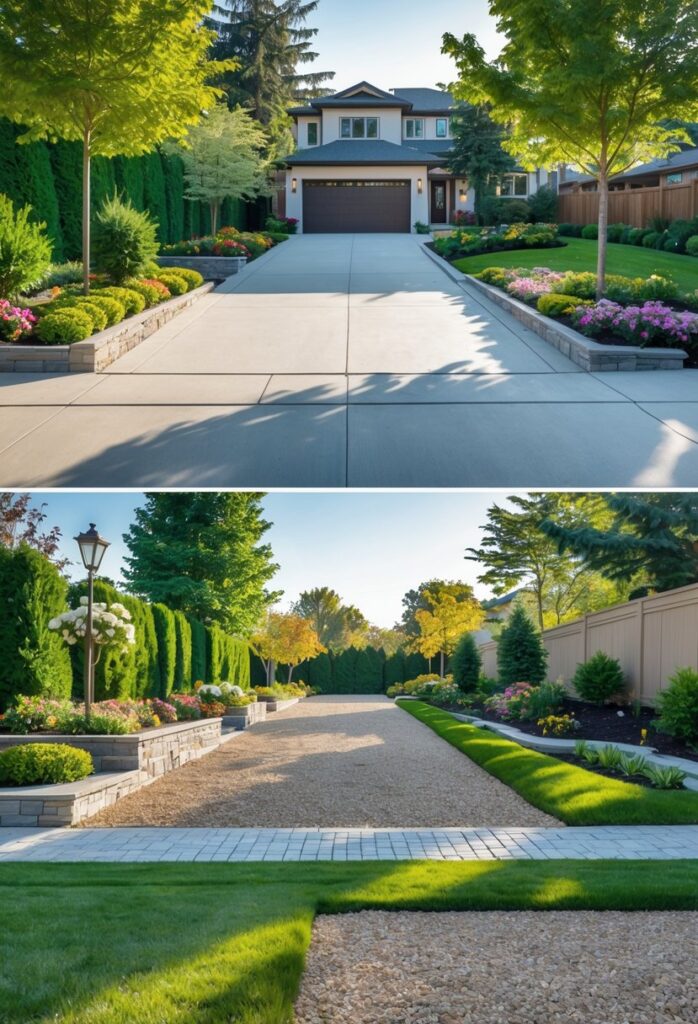
A well-designed driveway balances practicality with style. It should support daily use while creating a welcoming entrance. Choosing the right layout, materials, and plants makes the difference between a driveway that feels like an extension of the home and one that looks out of place.
Planning for Functionality and Curb Appeal
Effective driveway landscaping starts with careful planning. The driveway must be wide enough for vehicles to pass comfortably and have clear sight lines for safety.
Consider factors such as drainage and durability. Materials should handle heavy loads and resist wear. Adding curves or borders can soften the space and create visual interest.
Lighting is important. Well-placed lights improve visibility at night and highlight landscaping features. A balance between open space and green areas enhances curb appeal without sacrificing usability.
Choosing Suitable Plants and Materials
Plants should be selected for low maintenance and hardiness in the local climate. Shrubs, groundcovers, and grasses with deep roots help prevent erosion along edges.
Using durable materials like gravel, concrete, or pavers ensures longevity. Mixing textures–such as smooth stones with rough bark mulch–creates contrast and depth.
Plants with different heights and colors add layers without overwhelming narrow spaces. Avoid large trees near driveways to prevent root damage and excessive leaf drop.
For ideas on practical and stylish combinations, explore a range of driveway landscaping concepts that focus on blending nature with functionality. Driveway landscaping ideas for every home offers solid examples.
Common Challenges and Maintenance Tips
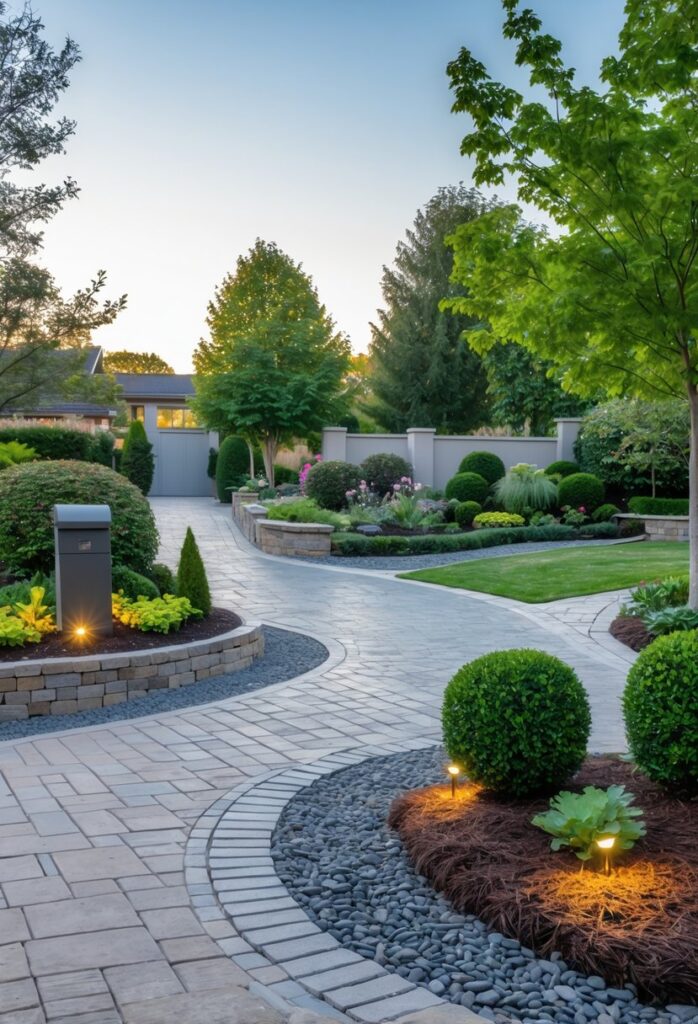
Driveway landscaping requires attention to both water management and ongoing care for plants and hardscape elements. Proper planning and regular upkeep help prevent common problems like erosion, plant overgrowth, and damage to materials.
Dealing With Drainage
Poor drainage can cause water to pool on or near the driveway, leading to erosion, cracks, or damage to plants. It is important to ensure that water flows away from the driveway surface toward designated drainage areas. Installing permeable pavers or gravel allows water to seep through, reducing runoff.
Using slopes and swales gently directs water away from critical areas. Surface drains or French drains can be added in spots where water tends to collect. Regularly checking for blocked drains or soil erosion helps avoid bigger problems later.
Planting drought-tolerant, deep-rooted plants nearby can also assist with water absorption and stabilize soil. This combination of design and maintenance keeps the driveway functional and the landscaping healthy.
Long-Term Care for Plants and Hardscapes
Plants near a driveway need periodic pruning to prevent overgrowth onto the path and to maintain visibility. Choosing low-maintenance, drought-resistant plants reduces the need for frequent watering and trimming.
Hardscape features like stones, pavers, or edging may shift over time. It is important to inspect these regularly and reposition or replace elements as needed to keep the surface smooth and safe.
Applying weed barriers under gravel or mulch areas limits unwanted growth. Seasonal tasks like clearing debris, removing fallen leaves, and checking for pests keep the area clean and prolong the life of landscaping materials.
Regular cleaning of driveway lighting, if installed, preserves both appearance and safety. Consistent attention to these tasks ensures the driveway landscaping remains attractive and functional for years.
For more ideas on this topic, see examples of low-maintenance driveway landscaping ideas.