
11 Strawberry Planter Ideas for Maximizing Space and Yield in Your Garden
Growing strawberries at home can be rewarding, even with limited space. Many people look for ways to plant strawberries efficiently to enjoy fresh fruit throughout the season.
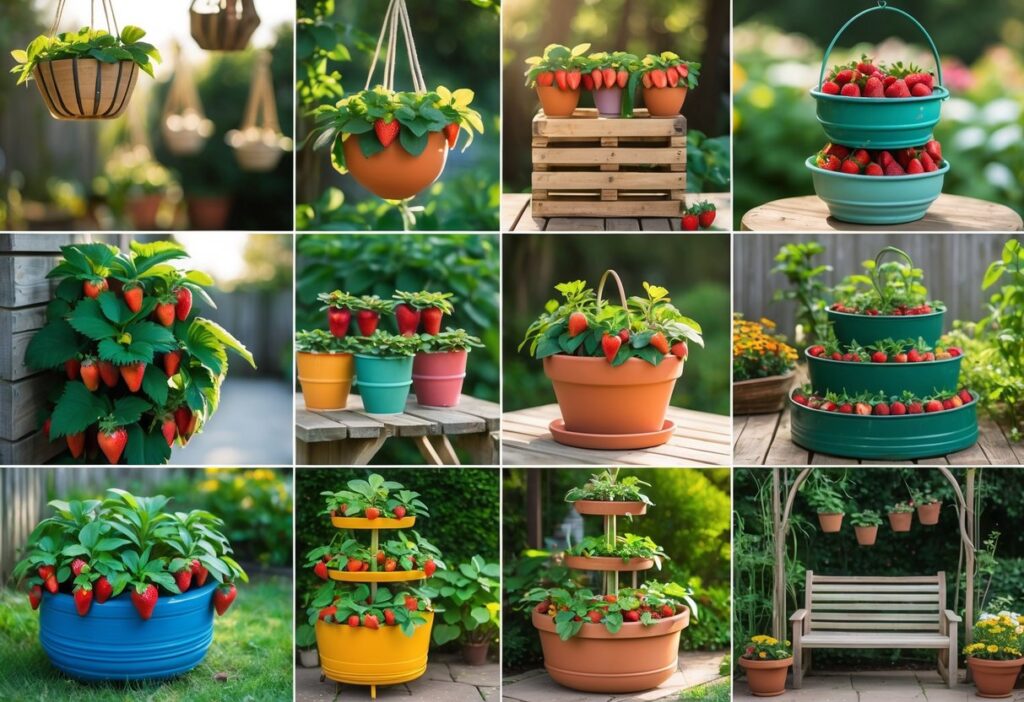
The key to successful strawberry growing is choosing the right planter that fits your space and care routine. There are many practical ideas for containers and setups that make growing strawberries possible almost anywhere.
1) Hanging basket strawberry planters
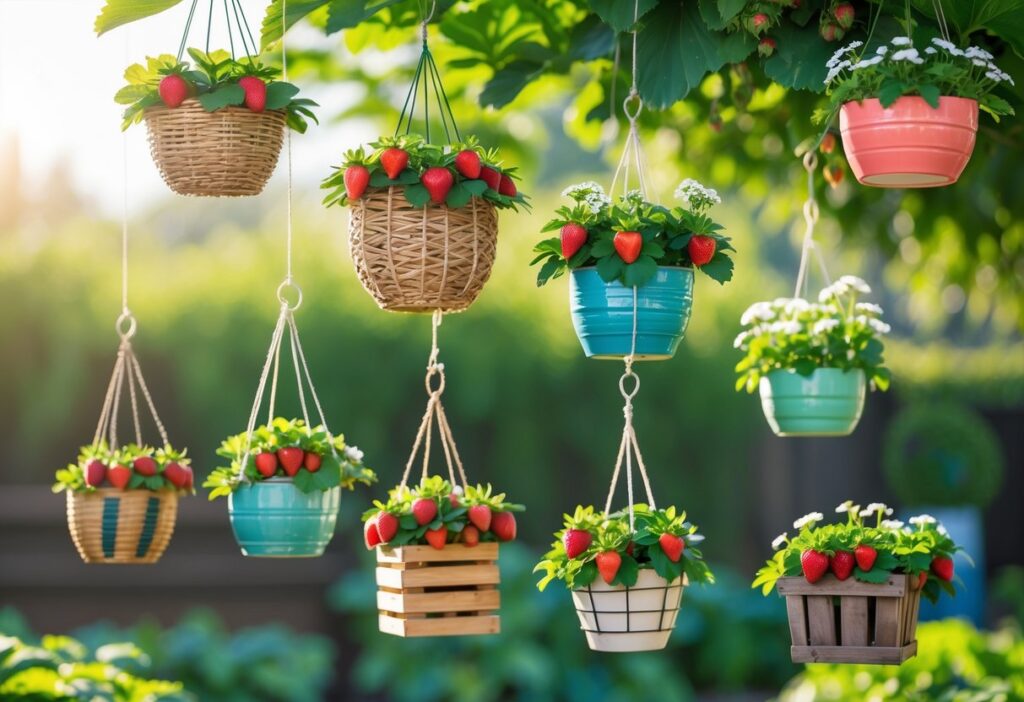
Hanging basket strawberry planters are a popular choice for growing strawberries in small spaces. They keep the plants off the ground, which helps protect berries from pests and improves air circulation.
Baskets should have good drainage to prevent water from pooling and damaging the roots. Materials like wicker, metal, or plastic work well because they are durable.
A large basket allows space for several strawberry plants, increasing the yield. Hanging baskets also add visual interest to patios, balconies, or garden areas by suspending greenery at eye level. For more ideas, see 11 hanging strawberry planter ideas.
2) Vertical tower planters for strawberries

Vertical tower planters are a smart way to grow many strawberry plants in a small space. They use a tiered design, stacking pots or containers on top of each other. This setup allows better air circulation and easier access to the fruit.
These towers help maximize yield without taking up much ground area. Some designs also reduce pest problems by keeping berries off the soil. Gardeners can use ready-made kits or build DIY versions using materials like tires or pipes.
Vertical towers work well for balconies, patios, or small gardens. They make harvesting simple, as berries hang down and are easy to pick. For more options, see ideas for vertical strawberry tower gardens.
3) Upcycled pallet strawberry planter
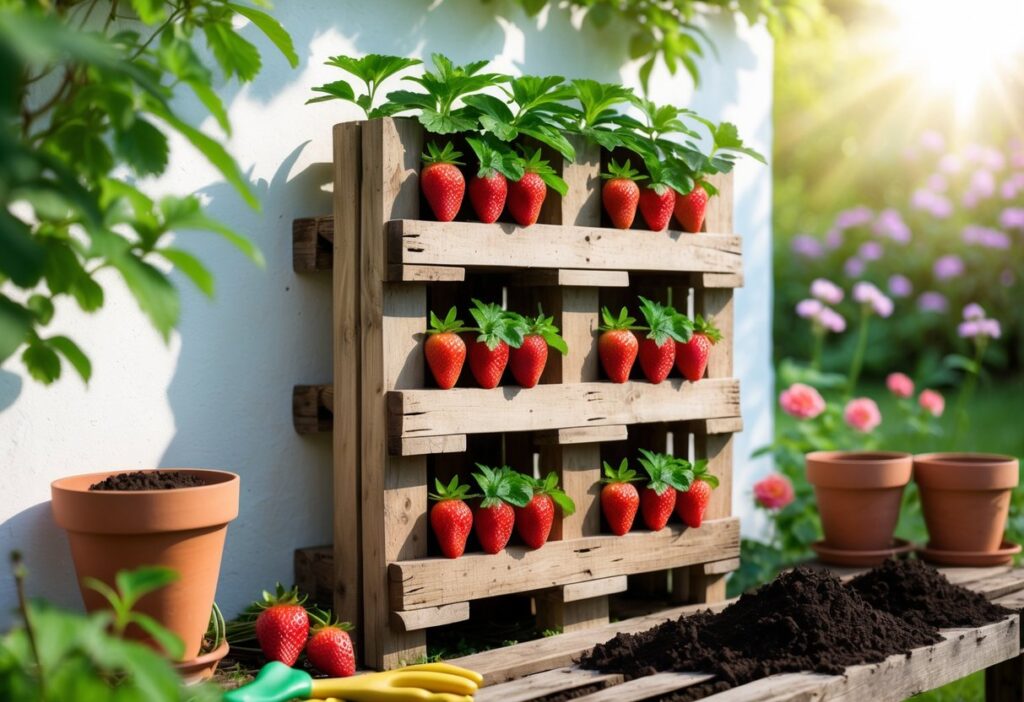
An upcycled pallet strawberry planter is a practical way to reuse old wood. It saves space by allowing vertical planting, which is great for small gardens or patios.
Care should be taken to choose pallets that are not chemically treated, as some may contain harmful pesticides. The pallet is cleaned and sanded before adding soil and strawberry plants.
This type of planter offers good drainage and air circulation for the strawberries. It can be customized with layers or shelves to increase planting space. For guidance, see this detailed guide on how to upcycle pallets into strawberry planters.
4) PVC pipe strawberry planter
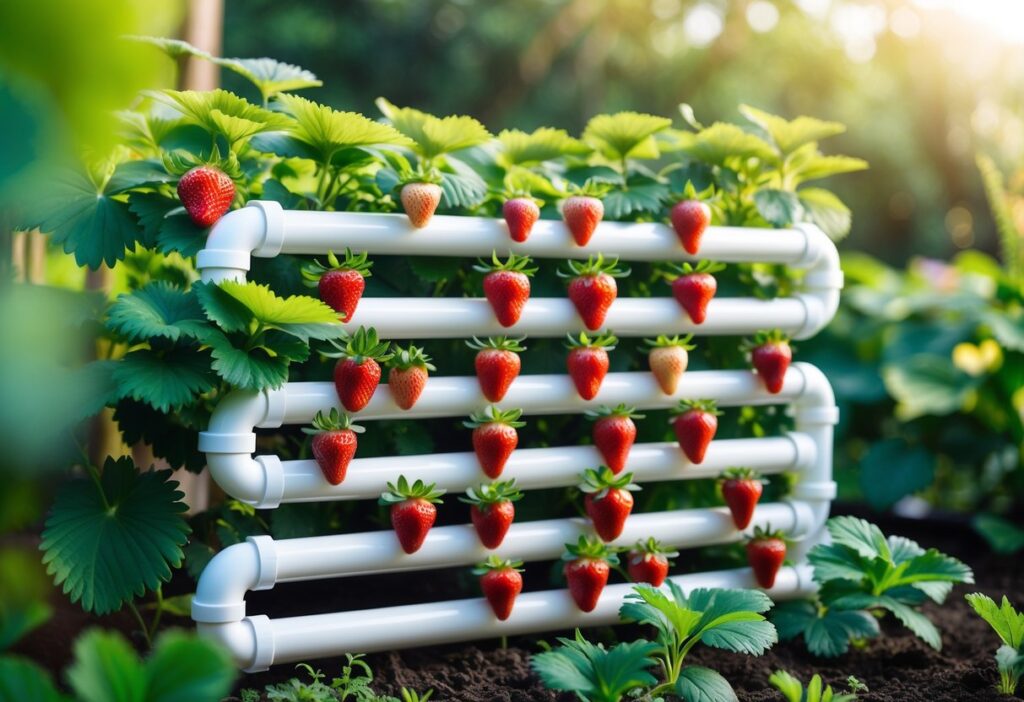
A PVC pipe strawberry planter uses a long pipe with holes cut into it to hold soil and plants. It can be mounted vertically or horizontally, saving space in small gardens. This setup makes harvesting easier because the strawberries grow at eye level.
The pipe needs end caps and support posts to keep it stable. Filling it with fertile soil allows strawberries to grow in multiple spots along the pipe.
This method works well for gardeners with limited space who want an organized and efficient way to grow strawberries. Instructions for building one can be found in a detailed step-by-step guide to constructing a PVC pipe strawberry garden.
5) Strawberry planter with integrated watering system
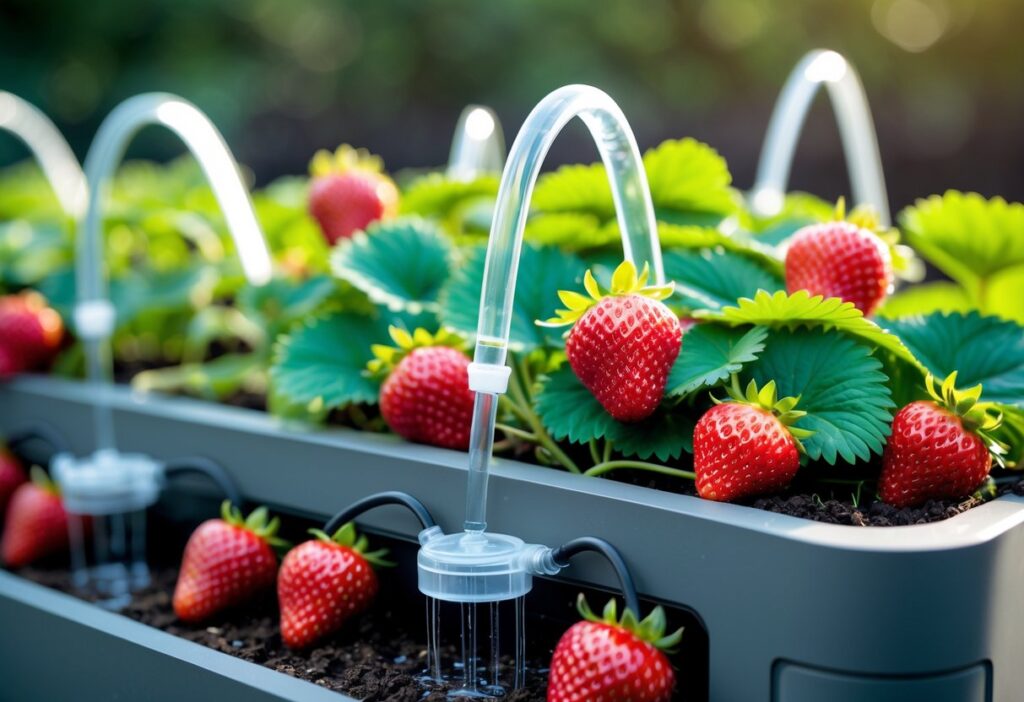
A strawberry planter with an integrated watering system helps keep plants consistently hydrated. This feature reduces the time spent on daily watering chores.
The built-in water reservoir allows water to reach the roots slowly, preventing overwatering or drying out. It works well for small spaces and containers designed specifically for strawberries.
This system can make growing strawberries easier, especially for beginners. It also saves water by delivering only what the plants need. These planters are practical for patios or balconies where manual watering may be less convenient.
For more ideas on self-watering designs, see strawberry planter options with watering features.
6) Window box strawberry planter
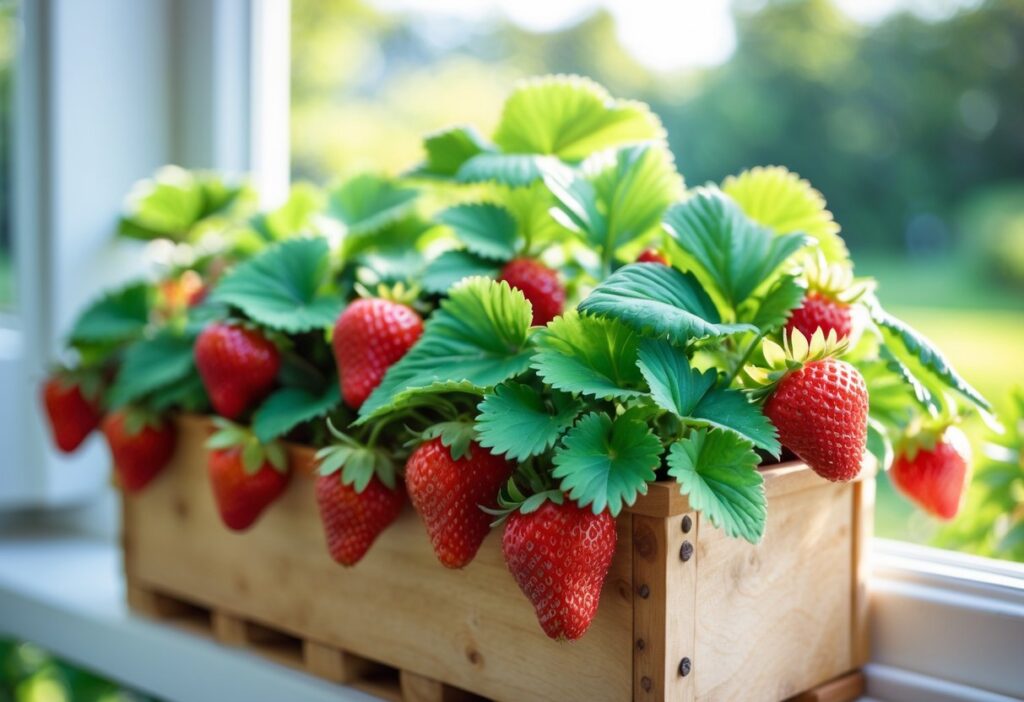
A window box strawberry planter is a great choice for small spaces. It allows strawberries to grow close to the house, making harvesting easy.
It is important to use a container with good drainage to prevent water buildup. Filling the box with quality potting soil helps keep the plants healthy.
Choosing strawberry varieties that do well in containers, like ‘Albion’ or ‘Seascape,’ can improve the harvest. Window boxes also keep berries off the ground, reducing pests and dirt.
This type of planter fits well on balconies or windowsills, adding greenery without taking up yard space. It provides fresh, ripe berries just steps from the door.
Learn more about these planters at 15 ideas for strawberry planters.
7) Stacked terra cotta pot planter
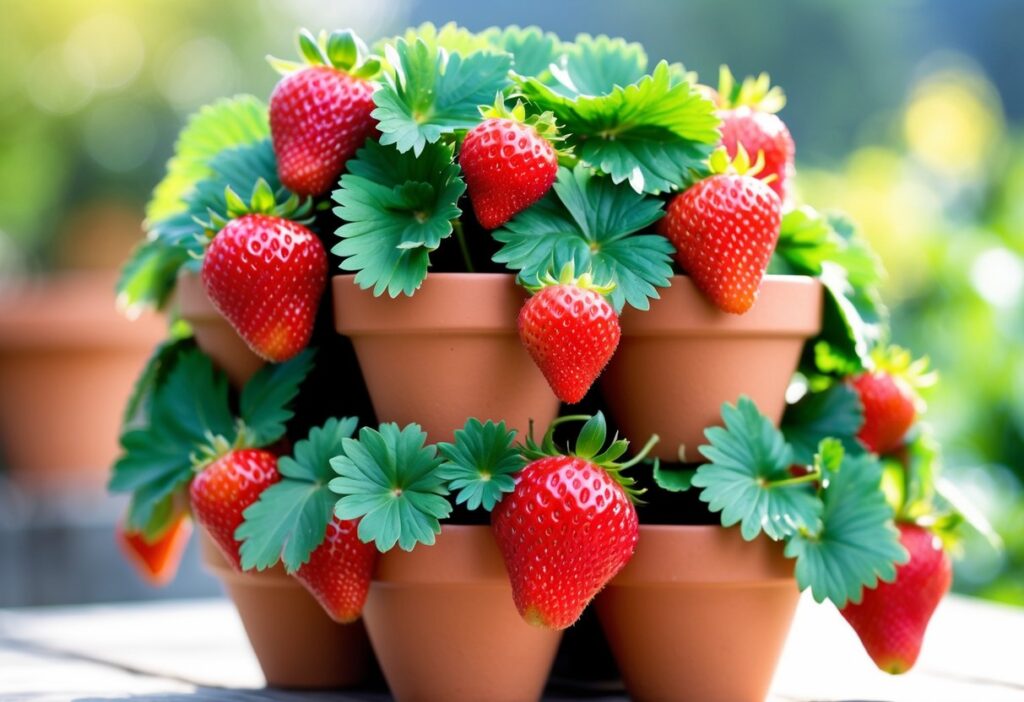
The stacked terra cotta pot planter is a space-saving way to grow strawberries vertically. It uses several pots stacked on top of each other with holes cut into the sides. This allows strawberries to grow out of the sides as well as the top.
This method improves air circulation around the plants, which helps reduce mold and rot. The natural porousness of terra cotta also helps keep soil moisture balanced. Before planting, soaking the pots in water can prevent them from drying out the soil too quickly.
Stacked pots create a charming display and are easy to maintain on small patios or balconies. For design ideas, see creative examples of stacked planters at Balcony Garden Web.
8) Recycled tire strawberry planter
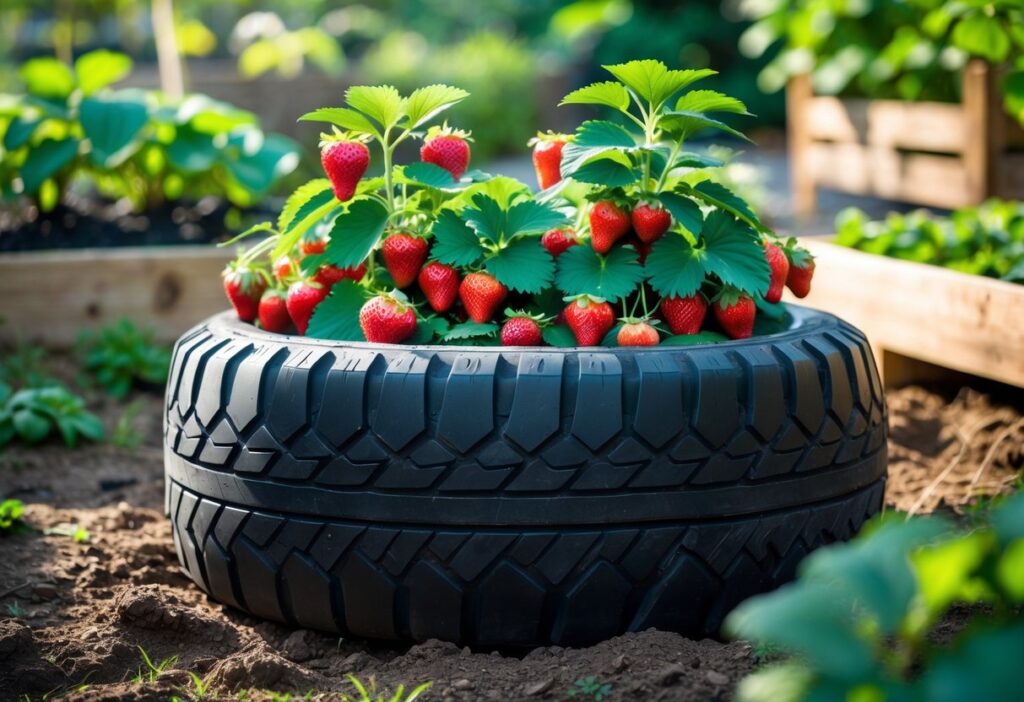
Using old tires as strawberry planters is an eco-friendly way to grow berries. Tires provide good drainage and retain heat, which helps strawberries grow well.
They can be stacked to create vertical towers, saving space in small gardens. This method also makes harvesting easier because the plants are raised off the ground.
Recycling tires reduces waste and adds a unique look to the garden. Hanging tire planters can brighten patios and balconies while giving berries plenty of sun. This idea combines sustainability with practical gardening. See more about this at recycled tire strawberry planters.
9) Rain gutter strawberry planter
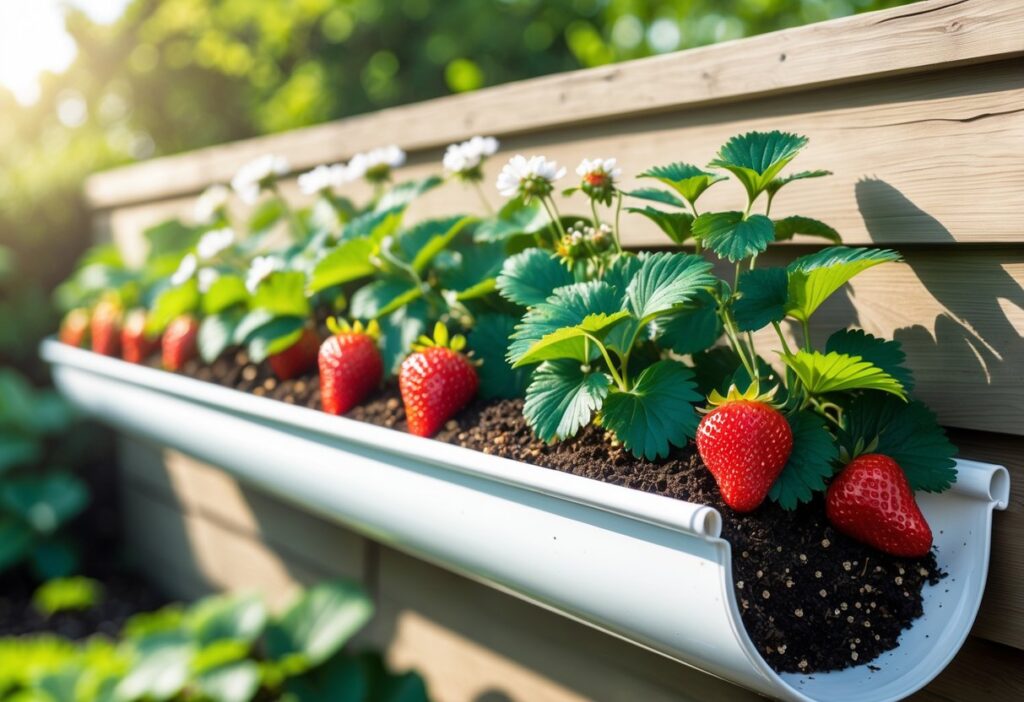
Rain gutters offer a practical way to grow strawberries in limited spaces. They can be mounted horizontally on fences or walls, creating multiple planting rows without taking up ground area.
The gutters provide good drainage, which helps prevent root rot. Their narrow shape is ideal for shallow-rooted plants like strawberries. This method also keeps plants off the ground, reducing pest problems.
Using rain gutters allows gardeners to build vertical gardens by stacking several gutters. This maximizes space and can create an attractive display of ripe strawberries. More details on this technique are available in the guide on using rain gutters as strawberry planters.
10) Strawberry planter using old cans

Using old cans as strawberry planters is a simple and eco-friendly option. The cans can be cleaned and painted to brighten any garden space.
They offer a small but practical container for strawberries, perfect for balconies or limited outdoor areas. Holes for drainage should be added to keep roots healthy.
Hanging cans create vertical gardens, saving ground space. This method also helps protect berries from pests.
Upcycling cans into strawberry planters combines sustainability with functionality and adds a personal touch to gardening. For more ideas on using old cans, see this creative strawberry planter guide.
11) DIY wooden strawberry planter box
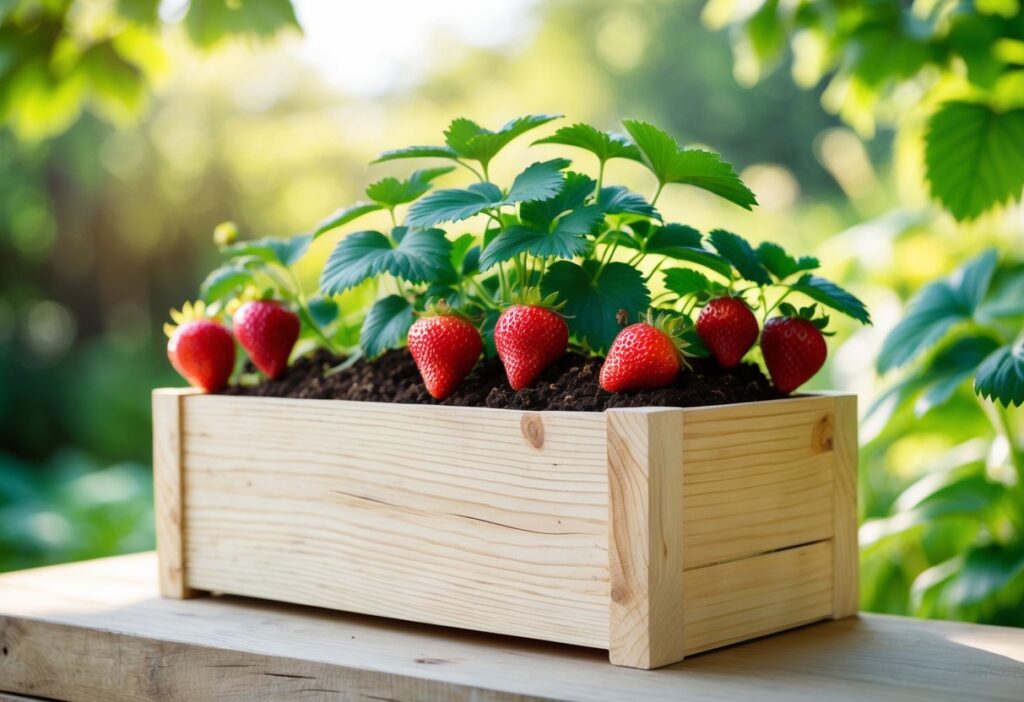
A wooden strawberry planter box is a simple and effective way to grow strawberries. It provides good drainage and enough space for roots to spread. The natural wood also blends well into gardens or patios.
To build one, sturdy wood like cedar or pine is best. The planter should be about 8-12 inches deep to support healthy growth. Adding a liner helps protect the wood and retain moisture.
This type of planter can be placed on the ground or raised to a comfortable height. It is easy to customize in size and shape to fit different spaces. More ideas for wooden planters are available in these DIY strawberry planter ideas.
How to Choose the Right Strawberry Planter
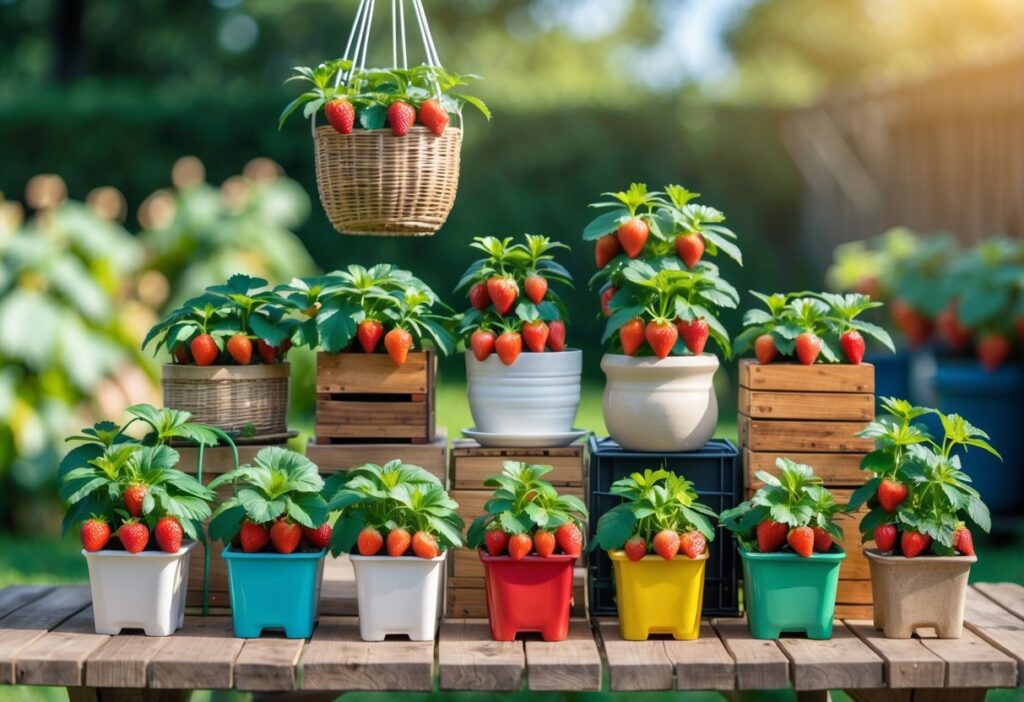
Choosing a strawberry planter means balancing durability, watering needs, and the amount of space available. The right planter keeps plants healthy by supporting good root growth and proper moisture while fitting the gardener’s space.
Materials and Durability
The material of a strawberry planter affects how long it lasts and how well it protects plants. Common materials include plastic, wood, ceramic, and fabric. Plastic planters are lightweight and weather-resistant but can degrade under strong sunlight over time. Wood offers good insulation for roots but needs to be treated to resist rot and insects.
Ceramic and terracotta planters look attractive and allow air flow but are heavier and may crack in cold weather. Fabric grow bags help with drainage and root health but require frequent watering as they dry out quickly. Choosing a planter durable enough for outdoor conditions ensures fewer replacements and healthier plants.
Drainage and Watering Needs
Good drainage is essential to prevent root rot and keep strawberries healthy. Planters should have enough holes or an open design to let excess water escape. Without this, water can pool, causing roots to drown.
Some designs, like fabric grow bags or stacked tiered planters, offer better drainage than deep pots. It’s important to match watering frequency to the planter type. Planters that dry out fast, like wood or fabric, need more regular watering. Adding a simple drip irrigation system or self-watering feature can reduce maintenance.
Size and Space Considerations
The size of the strawberry planter affects how many plants it can hold and how big they can grow. Strawberries need about 6 to 8 inches of space between plants for good air circulation. Planters that are too small crowd roots and limit growth.
Vertical planters or tower designs maximize limited spaces like balconies or small patios. Wide, shallow containers work well for sprawling strawberry varieties. Before choosing a planter, measure the available space and consider the number of plants desired. Mobility is another factor; light containers can be moved to get more sun or shelter from harsh weather.
For more ideas on planter styles and space-saving solutions, see 11 strawberry planter ideas.
Caring for Strawberries in Planters
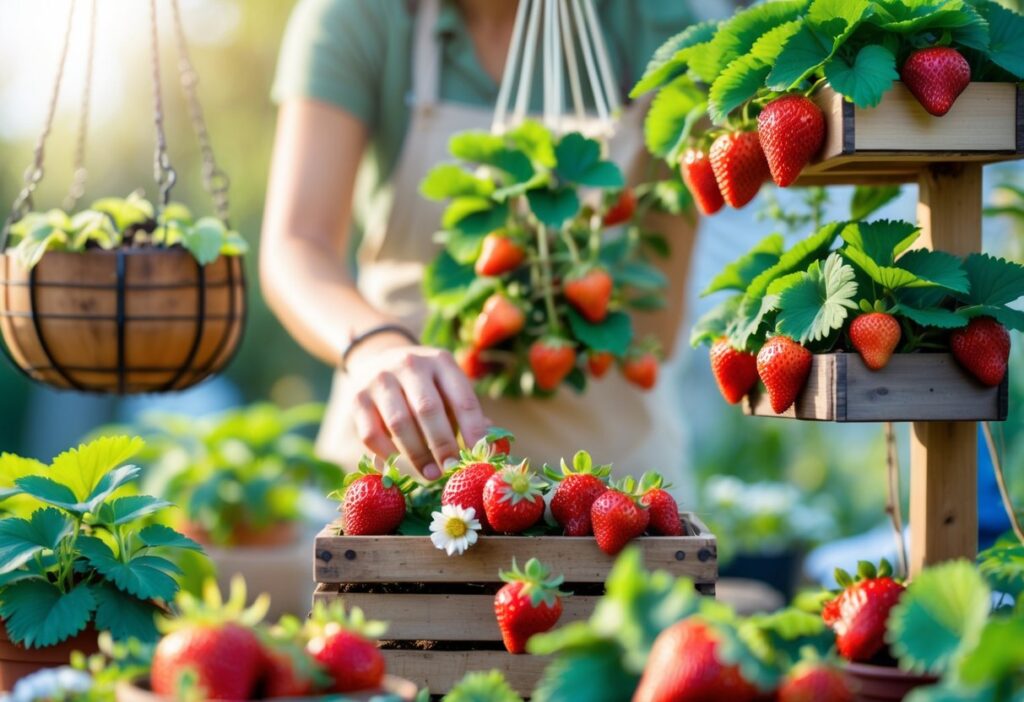
Growing strawberries in containers requires attention to soil quality, sunlight, and pest control. Proper care ensures strong plants and a good harvest. Each of these factors plays a critical role in helping strawberries thrive outside of traditional garden beds.
Soil and Fertilizer Tips
Strawberries need well-draining soil rich in organic matter. A mix of potting soil and compost works well to provide nutrients and maintain moisture without waterlogging the roots. The soil pH should be slightly acidic, between 5.5 and 6.5, for optimal nutrient absorption.
Fertilize strawberries with a balanced, slow-release fertilizer or use liquid fertilizer every few weeks during the growing season. Avoid over-fertilizing, as too much nitrogen can lead to excessive leaf growth but fewer fruits. Adding mulch on top of the soil helps retain moisture and keeps the roots cool.
Regularly replace or refresh the soil each year to prevent nutrient depletion and soil compaction. This is especially important for container-grown plants to maintain a healthy root system.
Sunlight and Placement
Strawberries require at least 6 to 8 hours of direct sunlight daily to produce sweet, ripe berries. Containers should be placed where they receive full sun. South-facing balconies, windowsills, or patios often work well.
If sunlight is limited, choose strawberry varieties that tolerate partial shade but expect a smaller harvest. Good air circulation around the planter prevents fungal diseases.
Avoid placing containers where water collects or where the plants will be shaded by larger plants or structures later in the day. Using lightweight containers makes it easier to move them to sunny spots as needed throughout the season.
Pest and Disease Prevention
Containers reduce many common pests but do not eliminate them. Aphids, spider mites, and slugs can still affect strawberries. Regularly inspect plants for damaged leaves or signs of pests.
To deter pests, use physical barriers like mesh or netting and remove any plant debris promptly to reduce hiding places. Natural pest control options, such as insecticidal soap, are safe to use on edible plants and reduce harmful insects.
Keep an eye out for fungal diseases like powdery mildew or botrytis, especially if humidity is high. Avoid overwatering and water early in the day to allow leaves to dry. Proper spacing improves air flow and helps limit disease spread.