
8 Microcement Bathroom Design Ideas for Modern and Durable Spaces
Microcement is becoming a popular choice for bathroom design due to its smooth, seamless finish and modern look. It works well with many styles, offering flexibility in color and texture that can enhance any bathroom space.
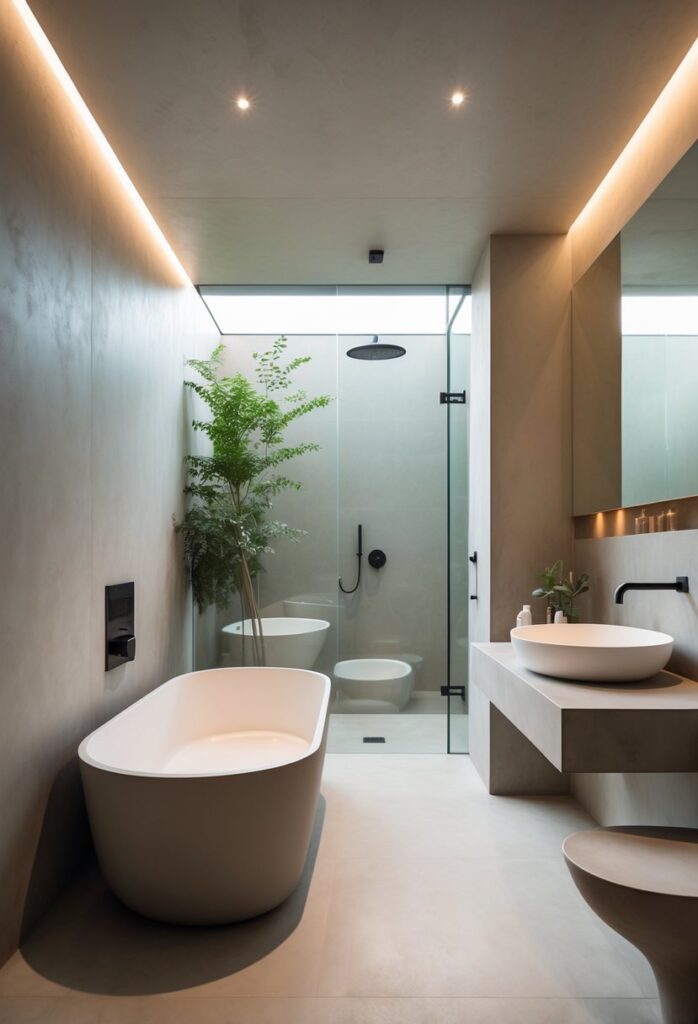
The main benefit of microcement is its ability to create a stylish, durable, and easy-to-maintain surface that fits various design needs. Homeowners and designers appreciate how it can transform bathrooms into elegant, functional areas without the need for heavy renovations.
1) Seamless microcement walls for a modern, minimalist look
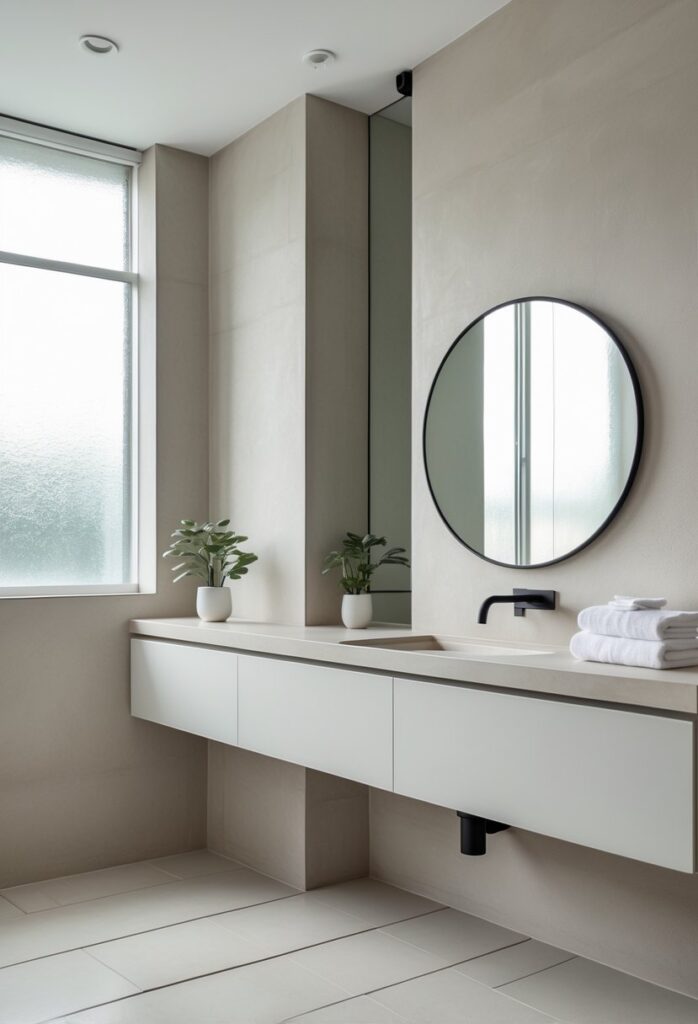
Seamless microcement walls create a smooth, clean surface without visible joints. This makes bathroom walls appear larger and less cluttered.
The finish is perfect for minimalist designs because it offers a simple, sleek look. Its neutral tones provide a calm backdrop for any decor.
Microcement is also waterproof, making it practical for wet areas. It combines style and function in a modern bathroom setting.
2) Monochromatic color schemes using soft gray or beige microcement
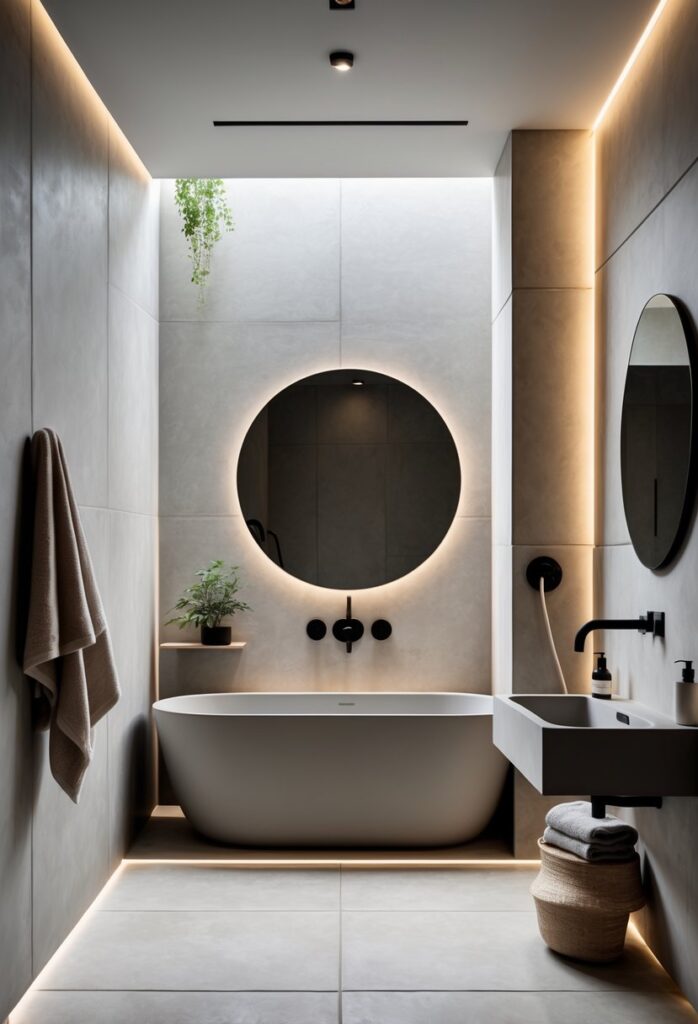
Using soft gray or beige microcement creates a calm and unified look in bathrooms. These shades offer a subtle backdrop that highlights textures and shapes without overwhelming the space.
Gray tones bring a modern and sleek feel. They work well with dark fixtures or metal accents to create contrast. Beige adds warmth and comfort, making the bathroom feel inviting and relaxing.
Different finishes on microcement, like matte or polished, add depth within the same color. This keeps the design interesting while maintaining a consistent palette.
Soft gray or beige also pairs easily with natural materials such as wood or stone. The result is a balanced space that feels both elegant and simple.
3) Sleek white microcement bathtubs paired with minimalist fixtures
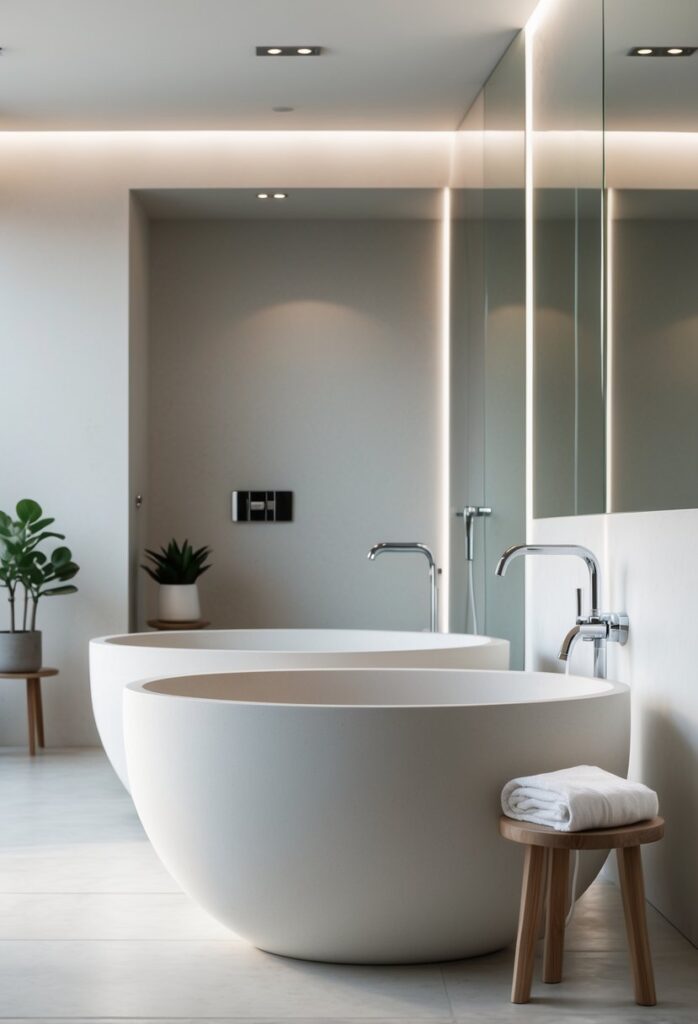
White microcement bathtubs create a clean and modern look. Their smooth surface blends well with minimalist design.
Minimalist fixtures, like simple faucets and handles, enhance the bathtub’s sleek style. They keep the focus on the tub.
This combination fits well in small or large bathrooms. It offers a fresh and uncluttered aesthetic that feels spacious.
4) Textured microcement finishes to add subtle depth and interest
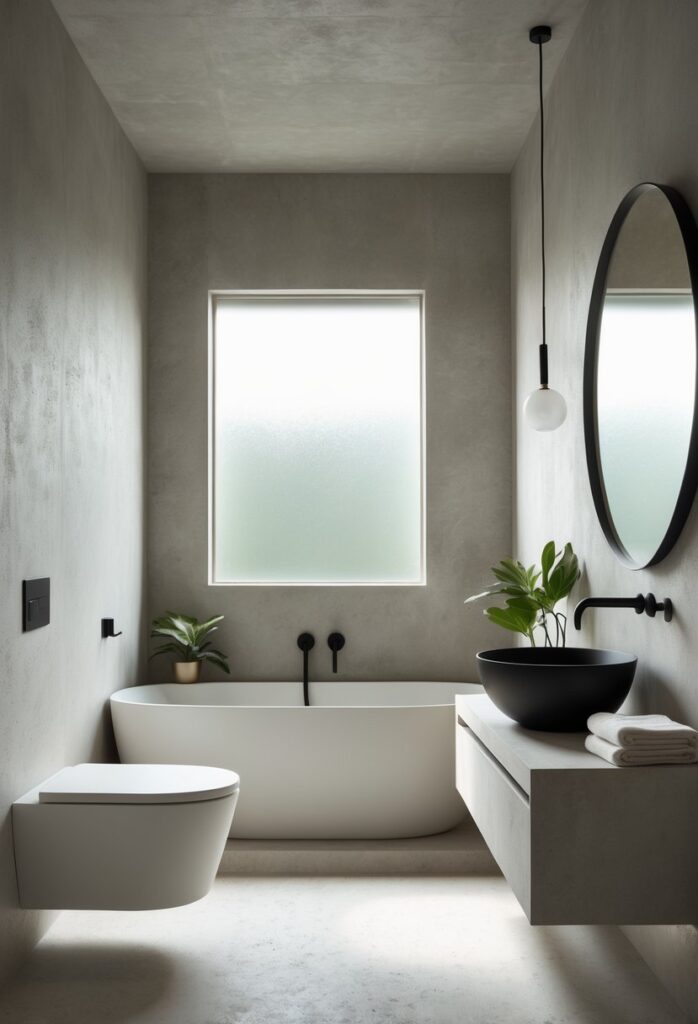
Textured microcement offers a simple way to bring depth to bathroom surfaces. Using techniques like troweling or layering creates gentle patterns that catch the eye without overwhelming the space.
This finish can add a tactile quality to walls or feature areas, making a bathroom feel more inviting. It contrasts well with smooth, flat surfaces, highlighting different parts of the design.
Designers often use textured microcement on one wall or around fixtures to create subtle focal points. The effect is understated but adds a layer of visual interest through natural variation in the finish.
5) Bold colored microcement walls as a statement design element
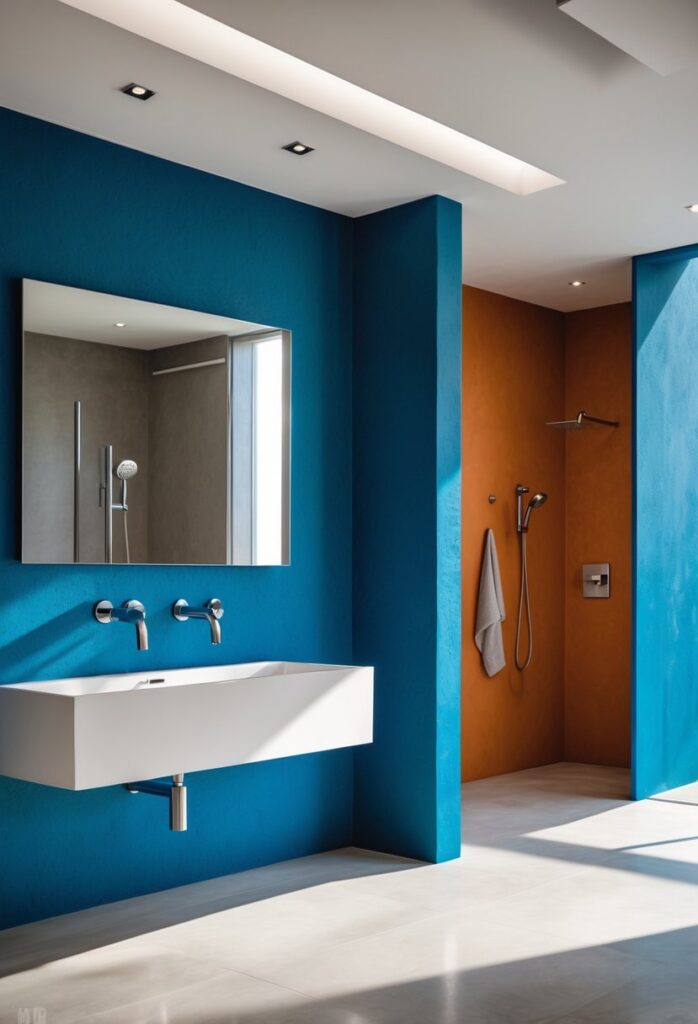
Bold colors in microcement walls can add strong personality to a bathroom. Shades like deep blue, emerald green, or burnt orange create a clear focal point.
These colors work well on feature walls, drawing attention without needing extra decoration. They contrast nicely with neutral tones, balancing vibrancy and calmness.
Using bold colors requires thought about other finishes. Metallic accents in gold or chrome help keep the look stylish and polished.
The smooth surface of microcement enhances color depth, making walls look rich and modern. This choice suits those who want a unique, sleek bathroom design.
6) Microcement flooring with integrated underfloor heating for comfort
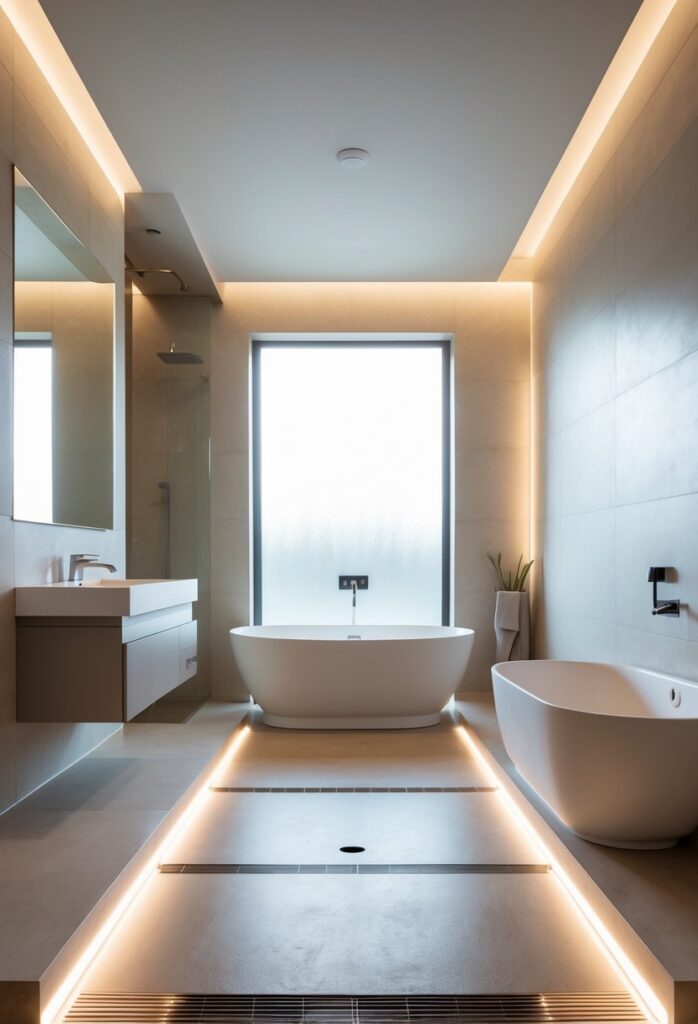
Microcement works well with underfloor heating systems. It allows heat to spread evenly across the floor surface.
This combination provides warmth underfoot, making bathrooms more comfortable, especially in colder months. The smooth, seamless finish of microcement adds a modern look.
Proper installation is important. The subfloor must be prepared carefully to avoid cracks and ensure heat passes through efficiently.
Microcement’s thin layers conduct heat effectively, helping underfloor heating use energy wisely. This can improve the overall feel and function of the bathroom.
7) Microcement vanity tops for a cohesive, smooth surface design
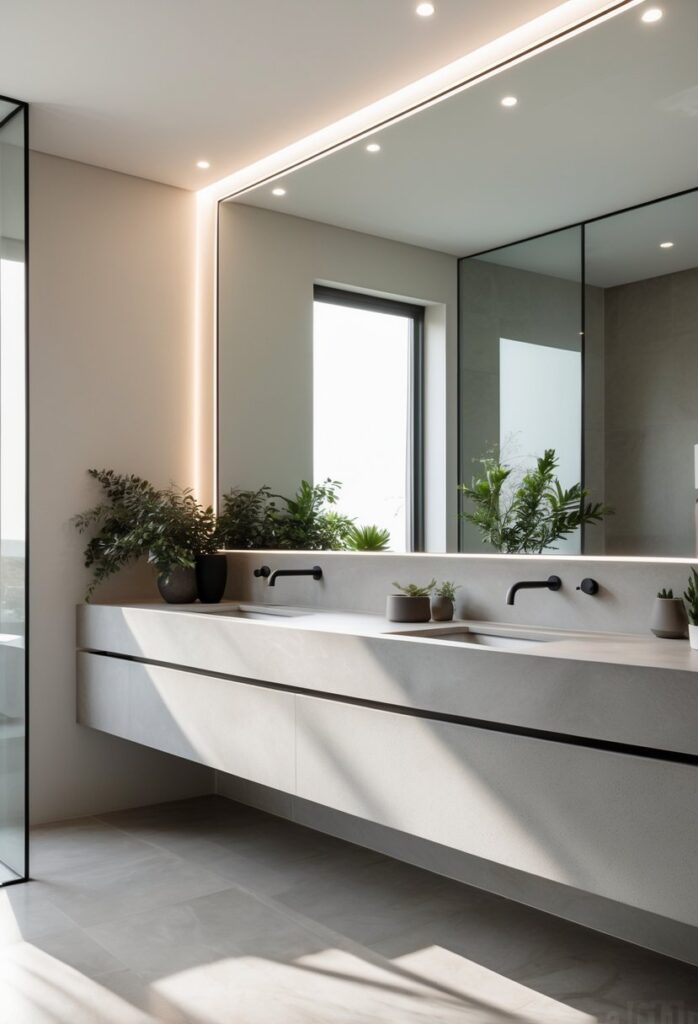
Microcement vanity tops offer a seamless look that blends well with bathroom walls and floors. This material allows for a smooth finish without joints or grout lines.
They are waterproof and resistant to stains, making them practical for daily use. The surface feels uniform and can be custom-colored to match the bathroom style.
Using microcement on vanity tops helps create a continuous design. This approach ties different bathroom elements together, giving the space a clean and modern feel.
8) Using microcement to create spa-like, seamless shower enclosures
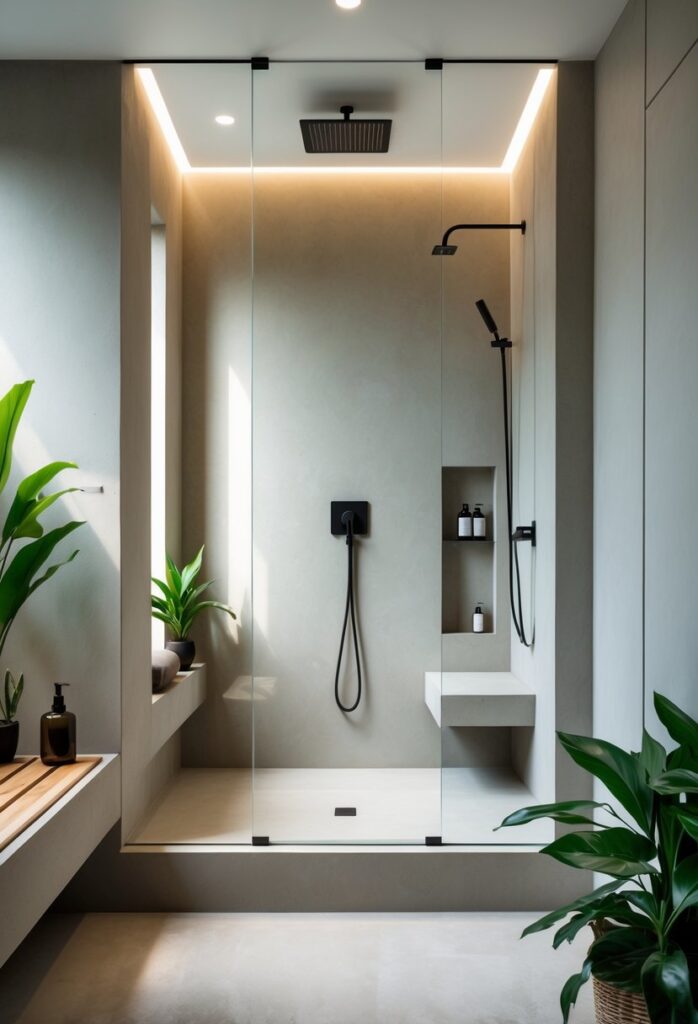
Microcement offers a smooth, continuous surface ideal for shower enclosures. It creates a seamless look without grout lines, which reduces places for mold and mildew to grow.
The material is waterproof and resistant to moisture. This makes it practical for wet areas like showers, where durability is important.
Microcement can be applied over existing tiles, saving time during renovation. Its range of colors and textures lets designers create a calming, spa-like atmosphere.
The slip-resistant finish adds safety while maintaining a sleek style. Overall, microcement combines function and modern design effectively in shower spaces.
Key Benefits of Microcement in Bathroom Design
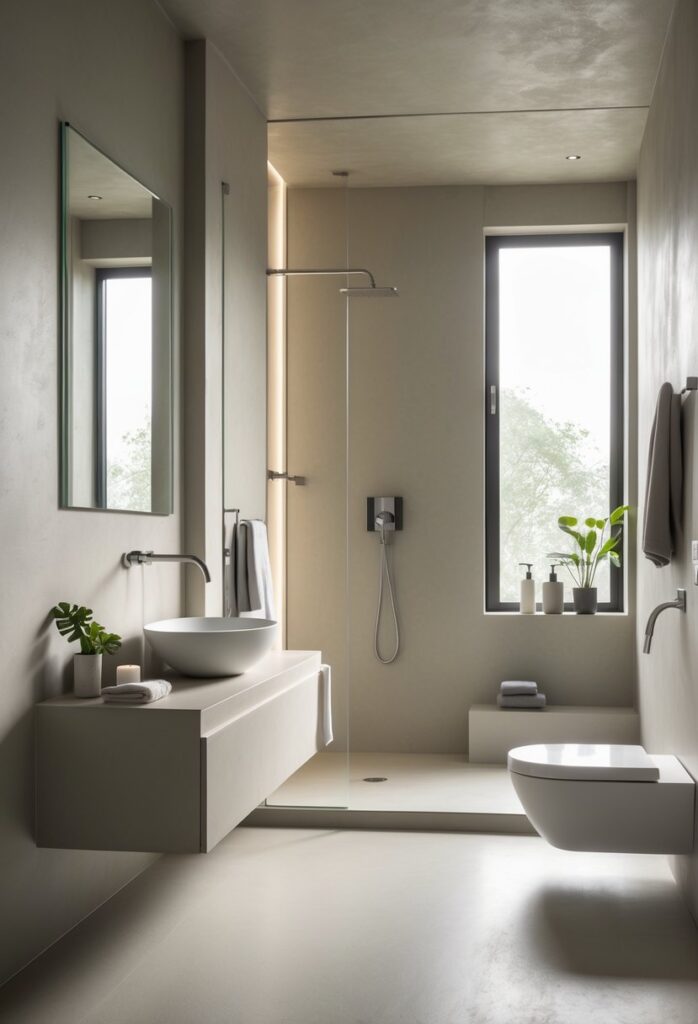
Microcement offers several practical advantages for bathrooms, balancing strength, style, and ease of care. Its unique properties make it suitable for wet environments and create modern, clean surfaces with minimal upkeep.
Waterproofing and Durability
Microcement is highly resistant to water, making it an ideal choice for bathrooms. Once applied correctly, it forms a continuous, seamless layer that prevents water from penetrating the surface. This waterproof quality helps protect underlying structures from moisture damage and mold growth.
The material is also very durable. It withstands everyday wear and tear, including scrapes and minor impacts, without easily cracking or chipping. Microcement adheres well to various surfaces such as tiles, concrete, and plaster, making it versatile for renovation projects. Its durability contributes to long-term bathroom performance, reducing the need for frequent repairs.
Seamless Aesthetic Appeal
One of microcement’s main draws is its smooth, joint-free finish. Unlike traditional tiles, which have grout lines, microcement covers large areas without visible seams. This creates a sleek, uniform look that enhances the modern feel of any bathroom.
The seamless quality also allows for more flexible design options. It can be applied on walls, floors, sink surrounds, or even bathtubs, resulting in a cohesive appearance throughout the space. Microcement can be customized in different colors and textures, giving designers and homeowners freedom to achieve minimalist or more dramatic styles.
Low Maintenance Advantages
Microcement surfaces require little maintenance compared to other bathroom finishes. Cleaning typically involves just wiping with a damp cloth and mild detergent, avoiding harsh chemicals that can damage the surface. Its resistance to stains and water spotting keeps the bathroom looking fresh over time.
Unlike tile grout, microcement does not harbor mold or mildew, which reduces the need for deep cleaning or resealing. This makes it especially beneficial in humid bathroom environments. Also, minor scratches or wear can be repaired easily without replacing large sections. This low-maintenance nature means it stays attractive and functional with minimal effort.
Design Considerations for Microcement Bathrooms
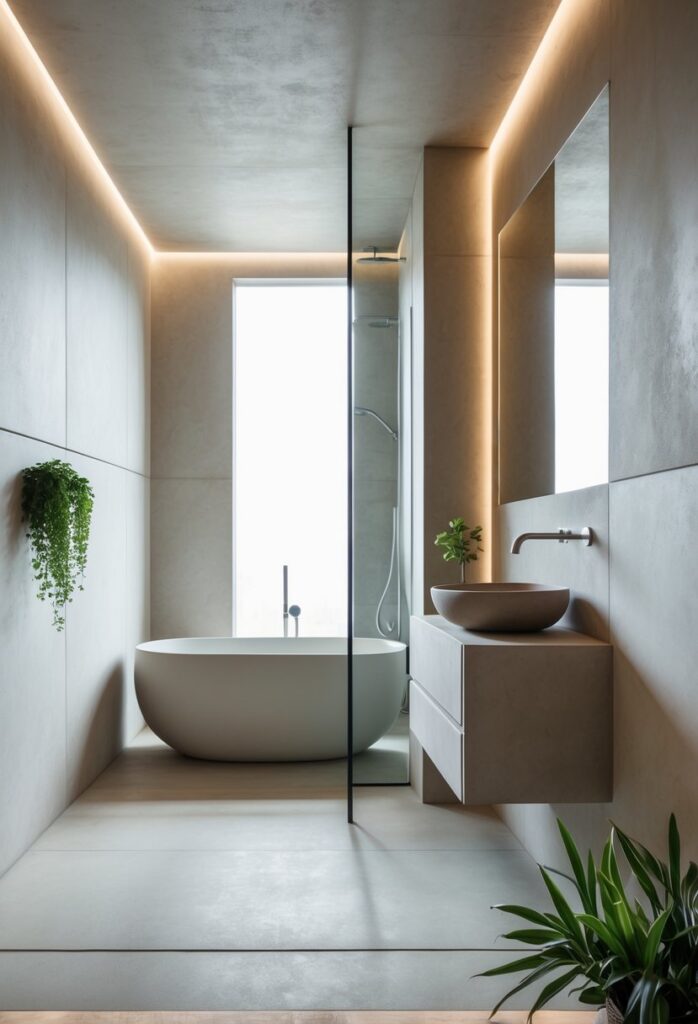
Microcement bathrooms require careful planning in color choice, lighting, and fixtures to create a cohesive and functional space. These elements work together to highlight the material’s smooth finish and modern look while ensuring durability and style.
Selecting the Right Color Palette
The color palette affects the room’s mood and how the microcement surface appears. Neutral tones like greys, beiges, and whites are popular because they emphasize microcement’s seamless texture and create a calm atmosphere. These shades also pair well with various bathroom styles, from minimalist to industrial.
Darker colors add depth but may show water spots or stains more easily, requiring more upkeep. Using different shades on walls, floors, and countertops can add subtle contrast without breaking the smooth flow. Matte finishes often work better than glossy ones to maintain microcement’s natural look.
Incorporating Lighting for Ambience
Good lighting enhances microcement’s smooth finish and can change the bathroom’s feel. Layered lighting is key—combining overhead, task, and accent lights helps avoid harsh shadows and highlights textures.
Warm LED lighting makes the space inviting and soft, while cool white lights provide clarity for tasks like shaving or makeup. Positioning lights near mirrors and under cabinets improves functionality without detracting from the clean lines.
Dimmer controls give flexibility, allowing users to switch from bright task lighting to gentle ambient light easily.
Choosing Fixtures and Accessories
Fixtures and accessories must complement the sleek, modern look of microcement. Simple, streamlined designs in stainless steel, matte black, or chrome work well. Avoid overly ornate pieces that clash with the smooth surfaces.
Wall-mounted faucets and floating vanities enhance the seamless feeling by reducing visual clutter. Accessories should be functional but minimalistic—towel bars, soap dispensers, and shelves should not interrupt the clean lines.
Using water-resistant materials for fixtures and accessories helps protect the microcement and maintain overall durability.