
How to Organize Kitchen Cabinets Without Losing Your Mind
Let’s be honest: opening chaotic kitchen cabinets is a jump scare. You just want a mug, and suddenly you’re dodging a landslide of plastic lids. The good news? You don’t need a celebrity pantry or a label maker army to fix it. With a few smart moves and a little ruthlessness, your cabinets can be calm, cute, and ridiculously efficient.
1. Audit Like A Chef, Not A Hoarder
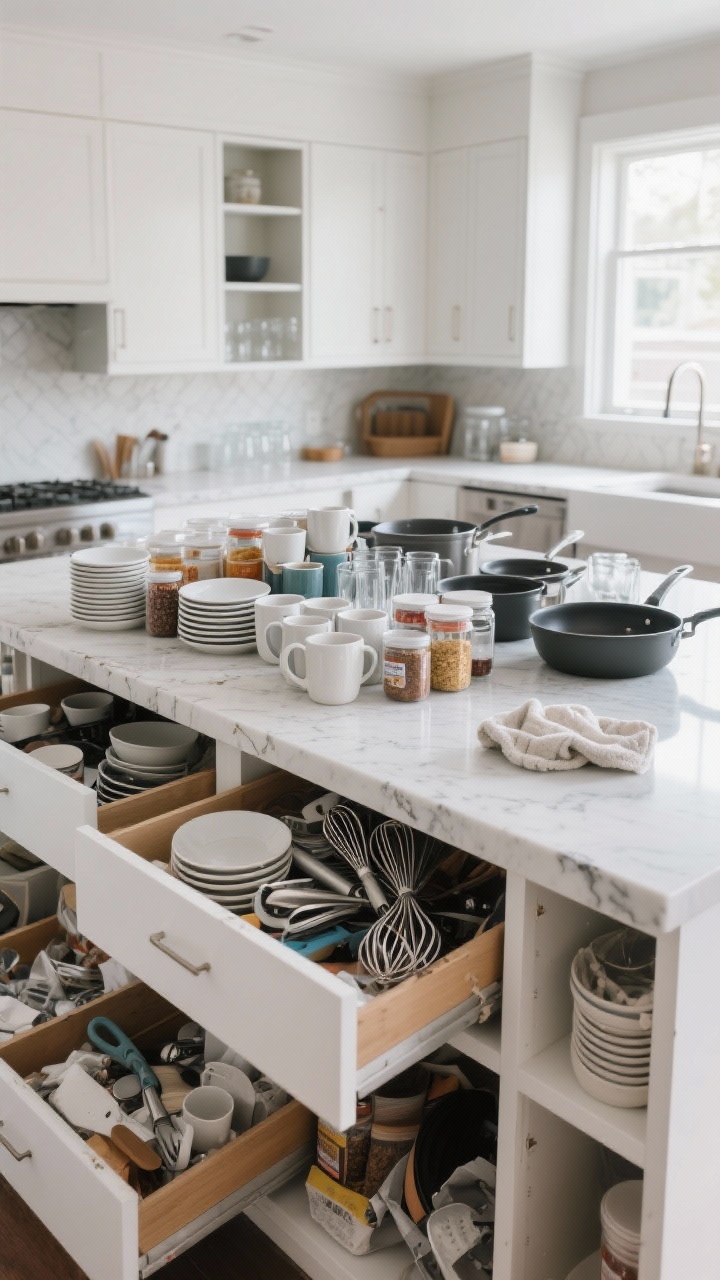
First rule of cabinet makeover: take it ALL out. Yes, even the mystery lid from 2011. Wipe everything down and prep for a clean slate.
The Ruthless Edit
- Group by type: mugs, glasses, plates, bowls, pots, pans, baking gear, food storage, spices.
- Keep what you actually use: daily heroes go in; duplicates and chipped pieces get the boot.
- Edit gadgets: Do you need three whisks? Probably not. Keep one great version of each.
FYI: If you haven’t used it in a year, it’s a “maybe” at best. Specialty stuff can live elsewhere (pantry, garage shelf, or a bin). Your cabinets are prime real estate—treat them like it.
2. Assign “Zones” So Everything Has A Home
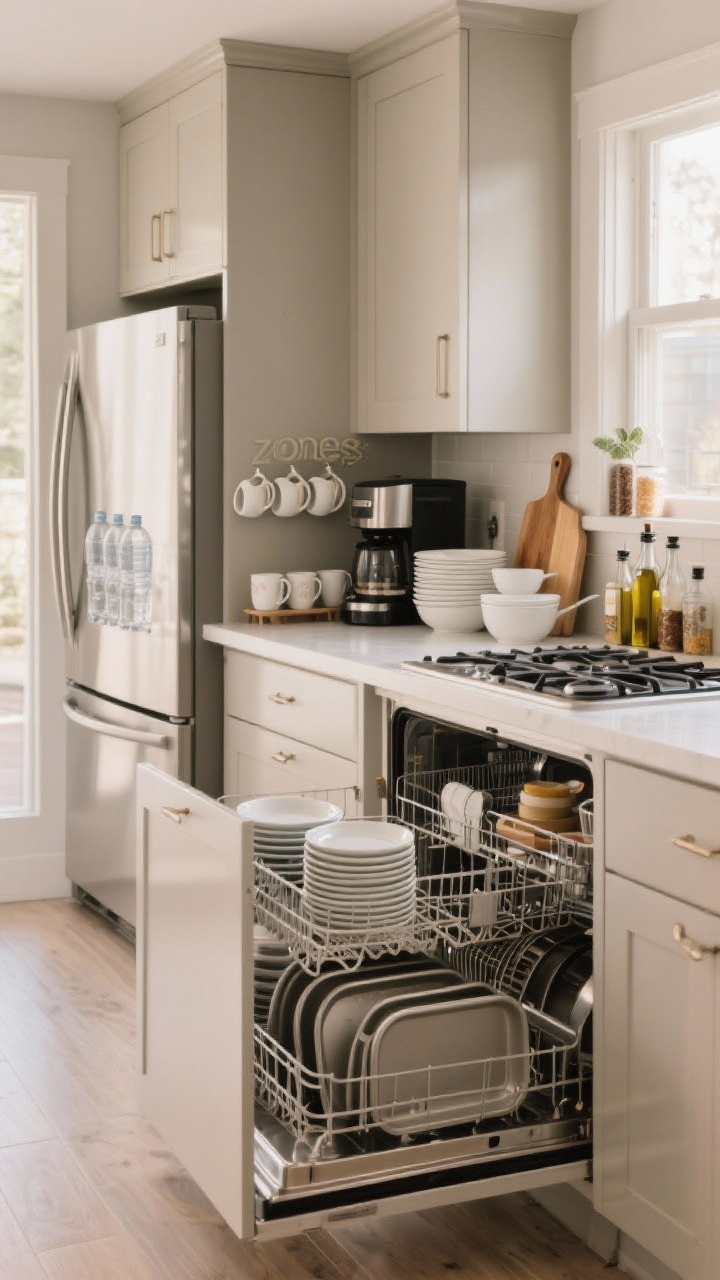
This is where the magic happens. Create zones by task so you’re not sprinting across the kitchen mid-pancake flip.
Smart Zones To Copy
- Daily Dish Zone: plates, bowls, and mugs near the dishwasher or sink for quick unloading.
- Drink Station: mugs above the coffee maker, glasses near the fridge or water filter.
- Cooking Zone: pots, pans, oils, and spices near the stove (but not directly above it to avoid heat damage).
- Prep Zone: mixing bowls, measuring cups, cutting boards near your main counter space.
- Bake Zone: sheet pans, cake tins, cooling racks stacked vertically in a lower cabinet.
Think of your kitchen as a little city. Less commuting = less chaos. Map your zones to how you actually move through the space.
3. Max Out Vertical Space (Your Cabinets Are Taller Than You Think)
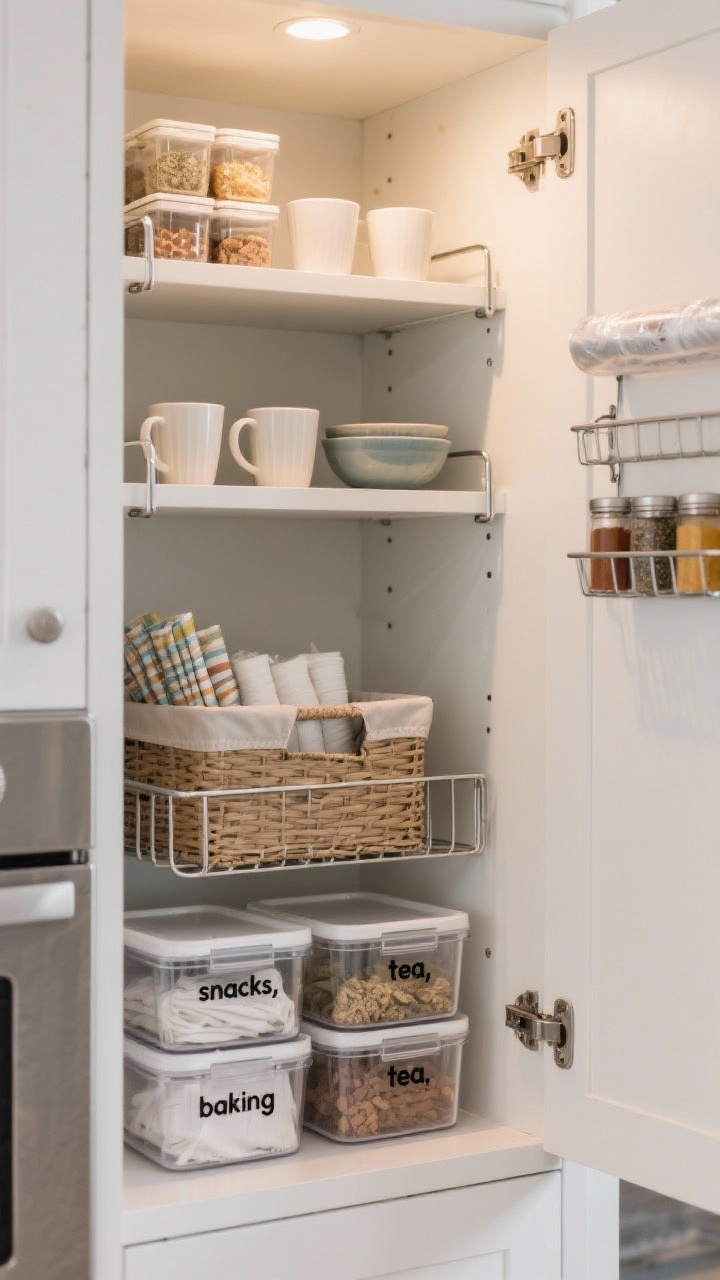
Most cabinets waste the top half like it’s an attic. Add layers and watch capacity double—no renovation required.
Small Upgrades, Big Wins
- Shelf risers: Perfect for canned goods, bowls, or short mugs. You’ll see everything at a glance.
- Under-shelf baskets: Slide these onto existing shelves for napkins, wraps, or flat items.
- Stackable bins: Clear or labeled bins keep categories together (snacks, tea, baking). Bonus: easy pull-out access.
- Door space: Slim racks on the inside of doors hold spices, wraps, or lids.
Pro tip: Put rarely used items up high and daily drivers at eye level. Your back will thank you.
4. Go Pro With Plate, Pan, And Lid Storage
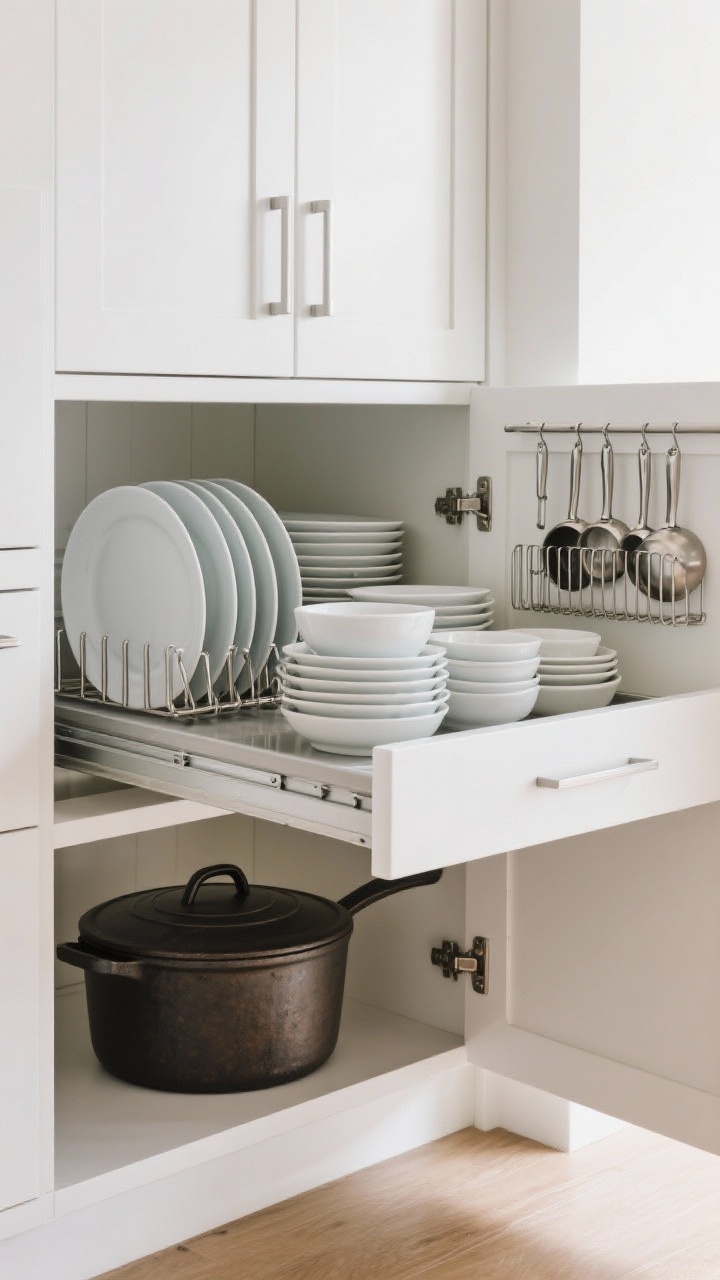
Nothing makes you feel more organized than tidy stacks that don’t avalanche. Let’s tackle the usual culprits.
Plates & Bowls
- Sort by size: big plates together, then small plates, then bowls. Keep sets stacked neatly.
- Plate holders or pegs: In deep drawers, use peg systems to keep stacks steady and accessible.
Pots & Pans
- File, don’t stack: Use a vertical rack or tension dividers. Pull out the pan you need without a Jenga moment.
- Heaviest low: Store cast iron and Dutch ovens in lower cabinets for safety (and easier lifting).
Lids (The Chaos Gremlins)
- Lid racks: A simple rack turns chaos into a neat lineup.
- Door-mounted rails: Use the cabinet door for slim lid storage—major space saver.
- Nestable sets: Consider cookware that nests with universal lids. Future you will cheer.
IMO, lid racks are the single best $15 upgrade you can make. Instant sanity.
5. Tame Food Storage And Spices Like A Minimalist
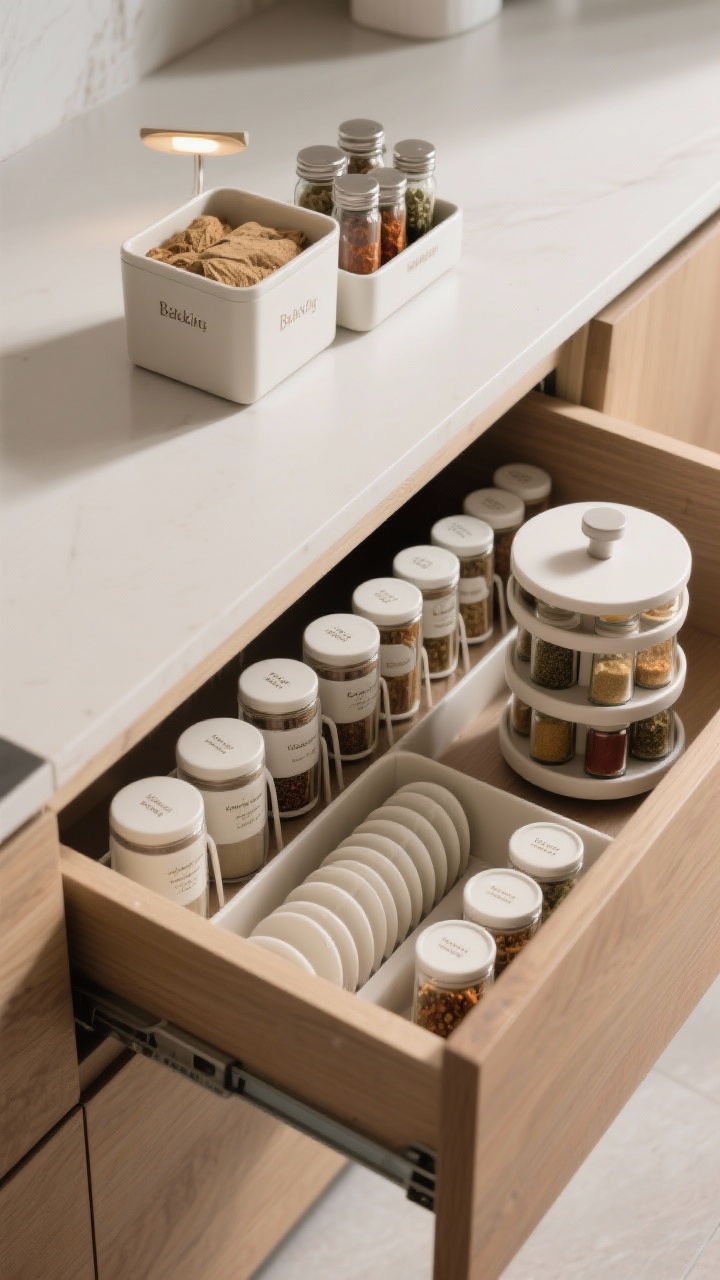
Let’s talk containers, because that drawer of shapeshifting plastic is testing everyone’s patience.
Food Containers
- Nest containers: Stack bases by size and store lids upright in a file rack or shallow bin.
- Pick one system: Matching sets stack better and look cleaner. Mix-and-match = chaos.
- Edit lids: If it doesn’t have a partner, it’s out. No lonely lids allowed.
Spice Strategy
- Keep near the stove, but not above it: Heat kills flavor.
- Tiers or turntables: Use tiered racks in cabinets or a lazy Susan so nothing hides in the back.
- Uniform jars (optional but cute): Refill as needed and label the tops. It’s Pinterest-y and practical.
Bonus: Store baking spices (cinnamon, nutmeg) with baking gear and savory spices (cumin, chili) near the stove. It’s a tiny tweak with big convenience.
6. Use Drawer Logic For Lower Cabinets
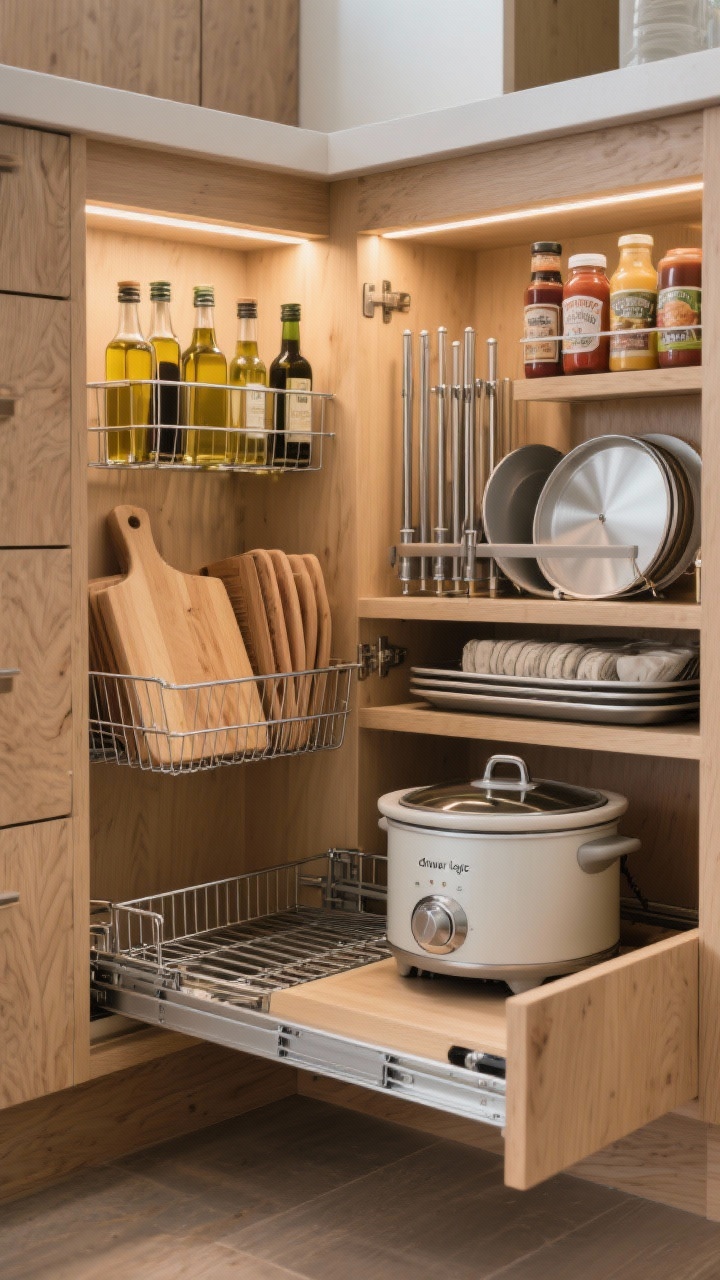
Lower cabinets are awkward. If you can’t swing full pull-out drawers, fake it with organizers that let you reach the back without crawling in.
Organizer All-Stars
- Pull-out baskets: Wire or wood bins on tracks turn deep cabinets into accessible storage.
- Vertical dividers: Store cutting boards, sheet pans, and trays like files—no more clattering stacks.
- Lazy Susans: Perfect for oils, vinegars, and sauces. Spin to win.
- Tension rods: Create custom dividers for lids, trays, or even wraps. Cheap and effective.
Place anything heavy or bulky down low: mixers, slow cookers, or stacks of meal-prep containers. Light stuff can party up top.
7. Label Lightly And Maintain With Two Tiny Habits
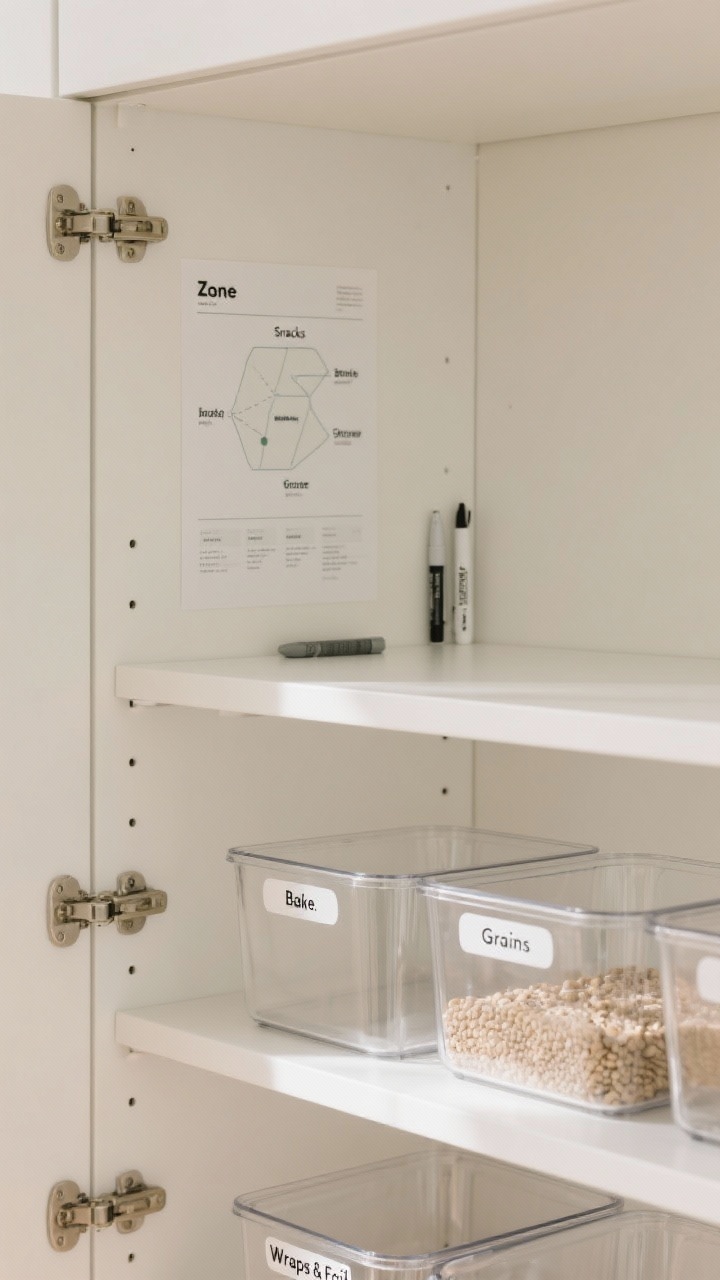
Labels aren’t just for Instagram. They’re guardrails that stop your kitchen from sliding back into chaos, and they help other people put things away correctly (a dream).
Label What Matters
- Categories, not item names: “Snacks,” “Bake,” “Grains,” “Wraps & Foil.” Keep it flexible.
- Inside-door cheat sheet: Tape a simple map of zones on the inside of a door. Invisible but handy.
- Clear bins = built-in labels: If you can see it, you don’t need to label every single thing.
Two Habits That Keep It Tidy
- One-minute reset: When the dishwasher runs, put things back in their zones immediately. No “temporary” homes.
- Monthly mini-audit: Quick scan for duplicates, orphans, and expired items. Five minutes. Trash the guilt and the crusty spice jars.
FYI: Your system should flex with your life. Hosting season? Move serving platters down a shelf. New baby? Bottles get prime real estate. Adapt and keep moving.
Fast Wins Checklist
- Add two shelf risers and one under-shelf basket.
- File lids and sheet pans vertically.
- Create a drink station near the coffee maker or fridge.
- Use one bin for snack packs and one for baking tools.
- Label three categories and call it a day.
You don’t need perfection—just a system that makes everyday cooking easier and faster. Start with one cabinet, ride the momentum, and enjoy opening doors without flinching. Your future self (and your mugs) will be thrilled.