
How to Decorate a Small Living Room Without Losing Your Mind
Small living room? Same. But here’s the good news: tiny spaces can look insanely stylish with a few smart moves. We’re talking cozy, functional, and photogenic—without cramming in 47 baskets or pretending your coffee table is a dining table. Let’s make your small space feel intentional, not accidental.
1. Edit Ruthlessly, Then Zone Like A Designer
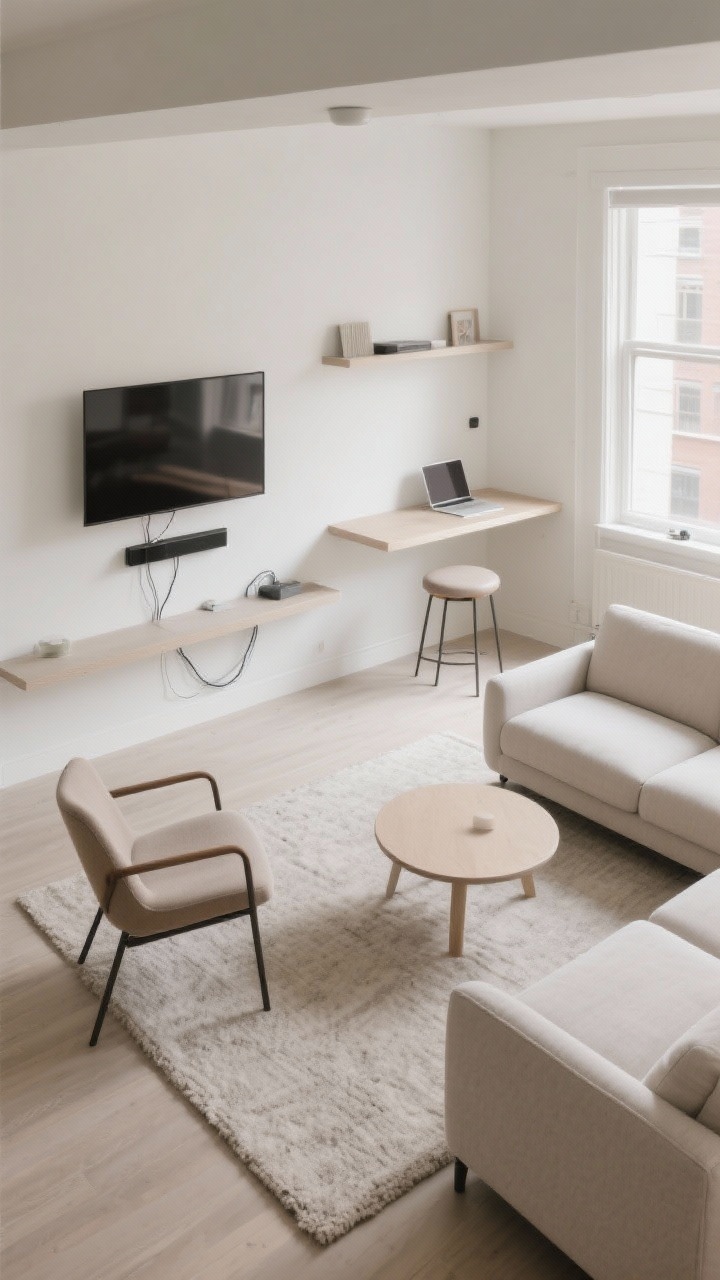
First things first: you can’t style clutter. Do a ruthless edit and keep only what you love or actually use. Then create “zones” so the room feels purposeful, not chaotic.
Create Micro-Zones
- Conversation zone: Sofa + accent chair + slim coffee table.
- Media zone: Low-profile console or a wall-mounted shelf under the TV.
- Work nook: Floating desk, fold-down table, or a console behind the sofa.
Use furniture placement (not walls) to define spaces. A small rug can anchor a seating area. FYI: Zones help your eye read the room as “organized” instead of “oops.”
2. Choose Scaled Furniture (And Float It!)
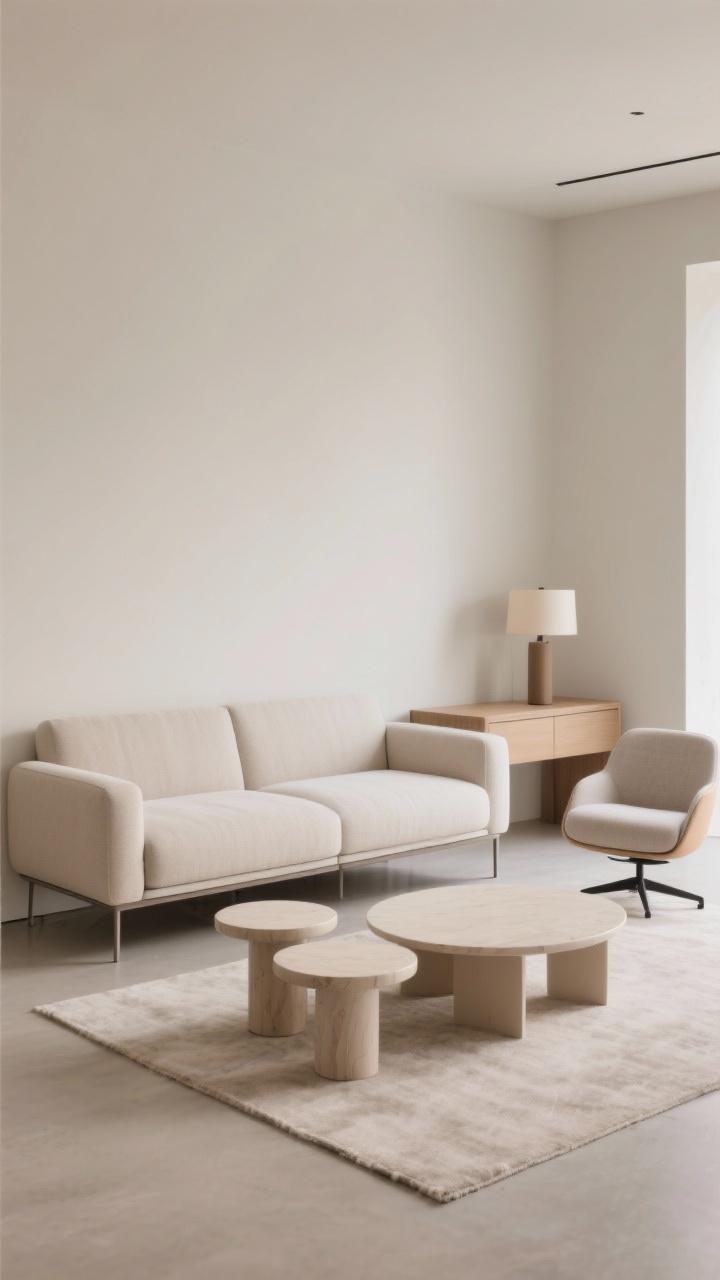
Big, bulky sofas are the enemy. You want pieces with slim arms, open legs, and airy lines. Bonus points if the sofa sits on legs—you’ll get a peek of floor, which tricks the eye into seeing more space.
Smart Furniture Picks
- Sofa: 72–80 inches wide with slim arms.
- Chairs: Armless accent chairs or low-profile swivel chairs.
- Coffee table: Oval or round to keep traffic flowing.
- Side tables: Nesting tables or C-tables you can slide over the sofa.
And yes, you can float the sofa away from the wall. Leave a few inches behind it and tuck a narrow console there for storage and lamps. It looks intentional, not cramped.
3. Think Vertical: Walls, Windows, And Ceilings
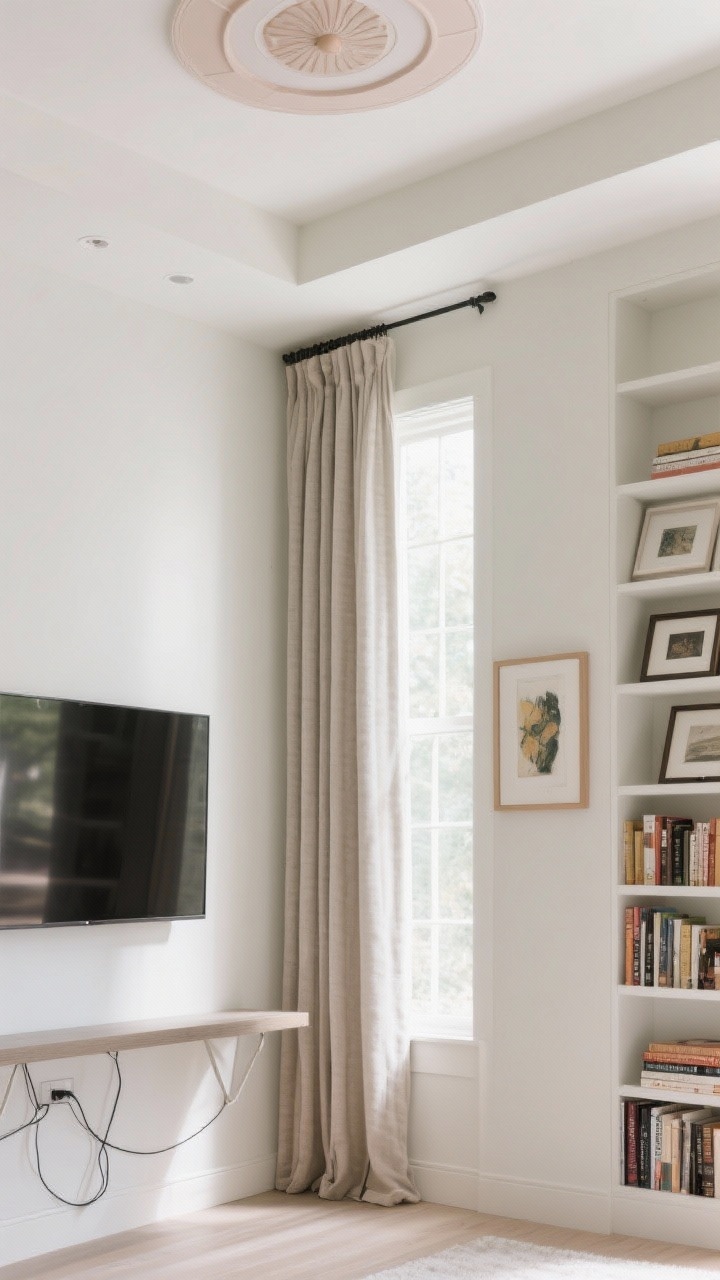
If the floor is crowded, go up. Vertical styling adds height and drama—like heels for your room.
Wall Tricks That Work
- Mount the TV: Free up surface space and keep cords tidy.
- Use shelves: Floating shelves or a tall bookcase draw the eye up.
- Hang curtains high: Install rods 6–12 inches above the window and extend wider to fake bigger windows.
- Statement ceiling: A subtle texture, soft color, or even a modern ceiling medallion adds lift.
Pro move: Lean large art instead of a zillion tiny frames. It feels calmer and more elevated, IMO.
4. Embrace Light, Then Layer Contrast
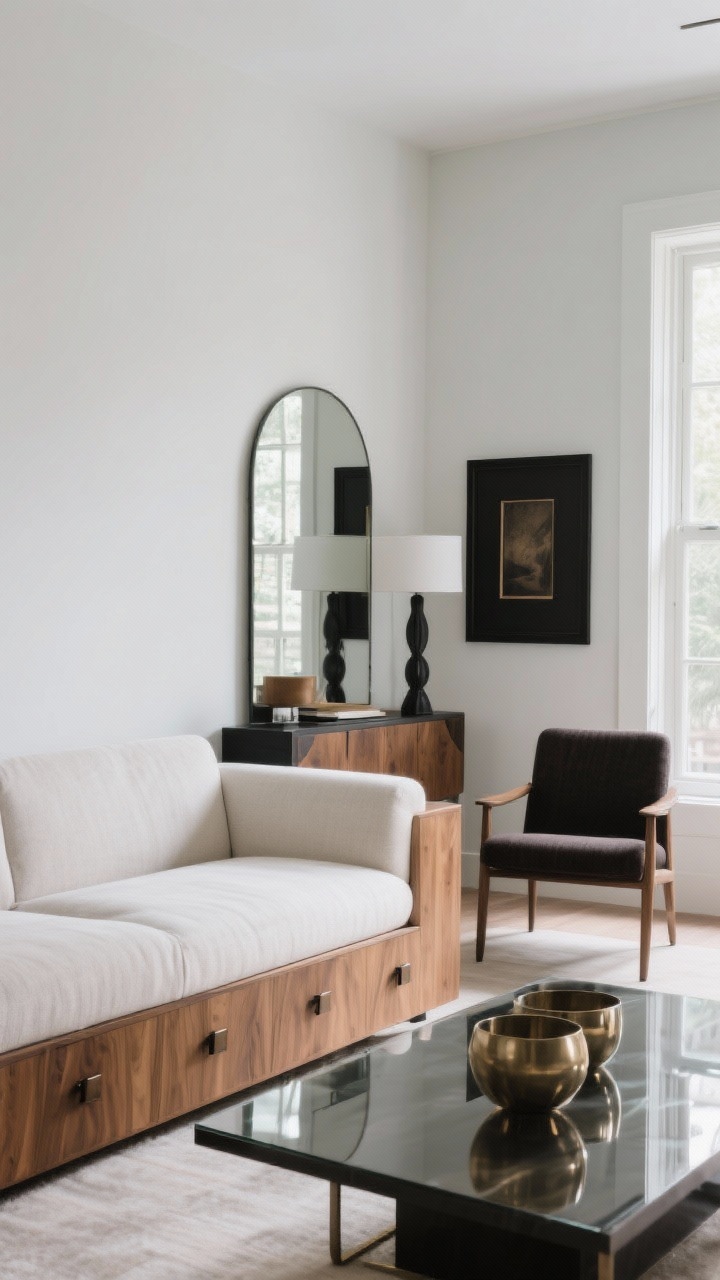
Light colors bounce light around, but an all-white room can feel flat. The secret is light base + contrast accents for depth without heaviness.
Your Color Blueprint
- Walls: Soft white, creamy greige, or pale taupe.
- Big pieces: Light sofa or wood tones with visible grain.
- Contrast: Black or dark bronze hardware, a deep side chair, or a bold art frame.
Reflective surfaces are your friends: mirrors opposite windows, glass or lacquer tables, and metallic accents. Just don’t go full disco ball—balance shiny with matte textures for warmth.
5. Double-Duty Everything (Storage That Doesn’t Scream “Storage”)
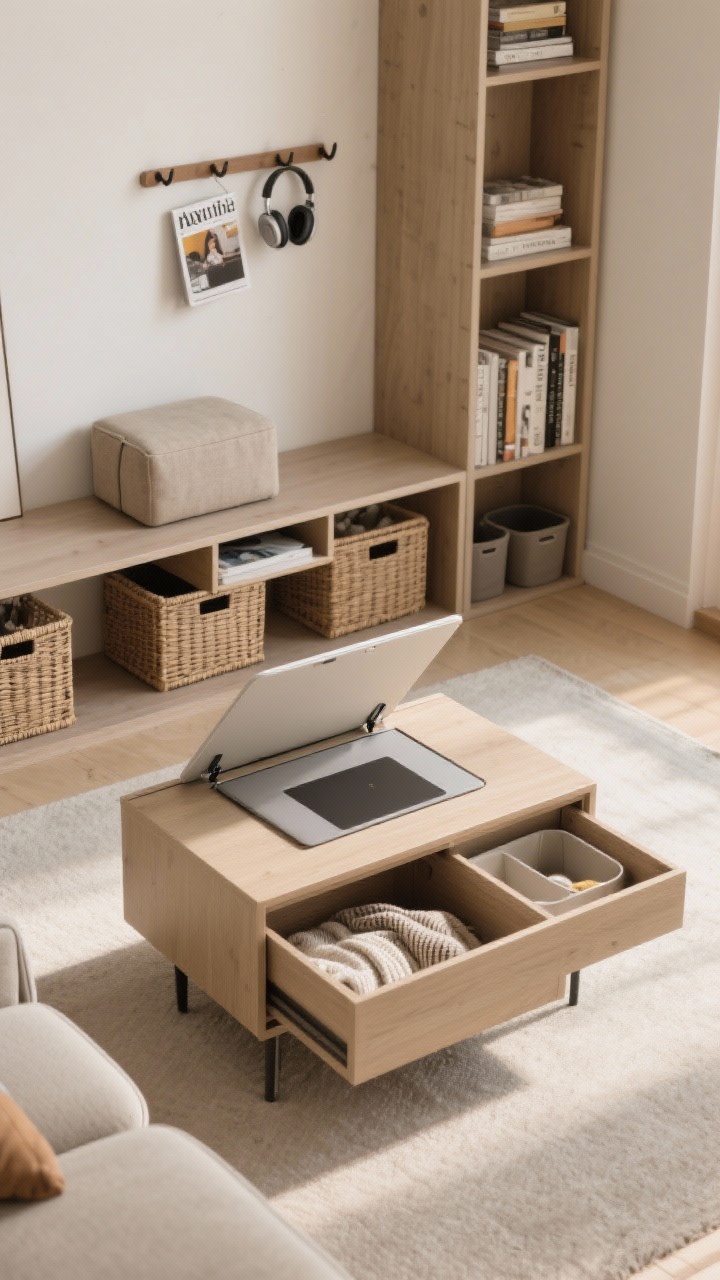
Your furniture should earn its keep. Hidden storage keeps the visual noise down, and every piece can do at least two jobs. Maybe three if it has wheels.
Stealth Storage Ideas
- Ottomans with storage: Stash throws, games, or gear inside.
- Lift-top coffee table: Laptop by day, snacks by night.
- Wall hooks + rails: For bags, headphones, and magazines.
- Built-ins or faux built-ins: Tall bookcases with baskets on the bottom shelf.
- Under-sofa bins: For seasonal pillows or extra cords. Out of sight, out of mind.
Choose pieces with a clean silhouette. The less visual clutter, the bigger your room feels—even if you own an alarming number of remote controls.
6. Layer Textures Like A Pro (And Edit Your Patterns)
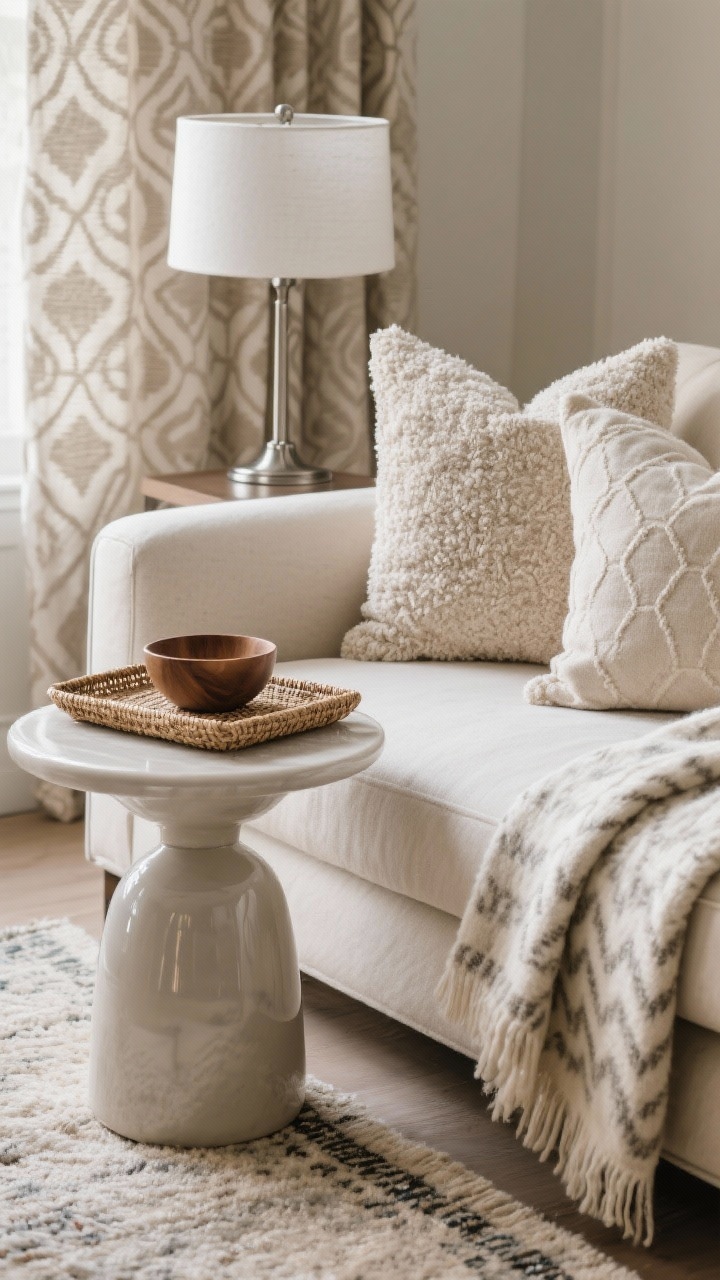
Texture adds richness without bulk. In small spaces, it’s how you get that “designer” feel without adding more stuff.
Texture Mix That Always Works
- Soft + nubby: Bouclé or linen pillows.
- Smooth + shiny: Metal lamp bases or a ceramic side table.
- Organic: Woven baskets, jute trays, wood bowls.
- Cozy textiles: Layer a wool throw over a cotton one for depth.
As for patterns, keep it tight: one hero pattern (rug or curtains), one supporting pattern (pillows), and one subtle pattern (throw). That’s it. More than three and your room starts yelling.
7. Light It Right: Three Layers, Zero Shadows

Overhead lighting alone is a mood killer. You want a mix of lighting types to make the room feel warm, flexible, and larger than it is.
Layer Your Lighting
- Ambient: A ceiling fixture or flush mount with a soft, diffused shade.
- Task: Swing-arm wall lamps or a slim floor lamp by the sofa.
- Accent: Picture lights, LED strip under shelves, or a small table lamp.
Choose warm bulbs (2700K–3000K) and keep shades light to bounce light further. Dimmer switches are tiny-space magic—change the vibe without moving a single thing. FYI: symmetry with lamps can visually organize a small room in seconds.
Quick Styling Wins
- Rug size matters: Front legs of sofa and chairs on the rug to unify the seating area.
- Tray it: Use a tray on the coffee table to contain remotes, candles, and coasters.
- Greenery: One larger plant beats five tiny ones—cleaner lines, bigger impact.
- Edit surfaces: Leave negative space. Your eyes need room to breathe.
Final tip: Measure twice, buy once. Tape out furniture footprints on the floor before purchasing. Your future self (and your budget) will be thrilled.
You don’t need a giant living room to have great style—you just need a plan. Keep what you love, scale your furniture, go vertical, and let textures and lighting do the heavy lifting. You’ve got this. And when your friends ask how your small living room suddenly looks huge? Just smile and say, “Design magic.”