
8 Open Shelving Kitchen Design Ideas That Look Chic And Actually Work
Open shelves can make your kitchen feel bigger, brighter, and way more personal. They’re also the perfect excuse to show off your pretty dishes instead of hiding them behind mystery cabinet doors. The trick? Design them with intention so they look curated, not chaotic. Let’s get you inspired and organized—without the stress.
1. Style By Color For Instant Calm
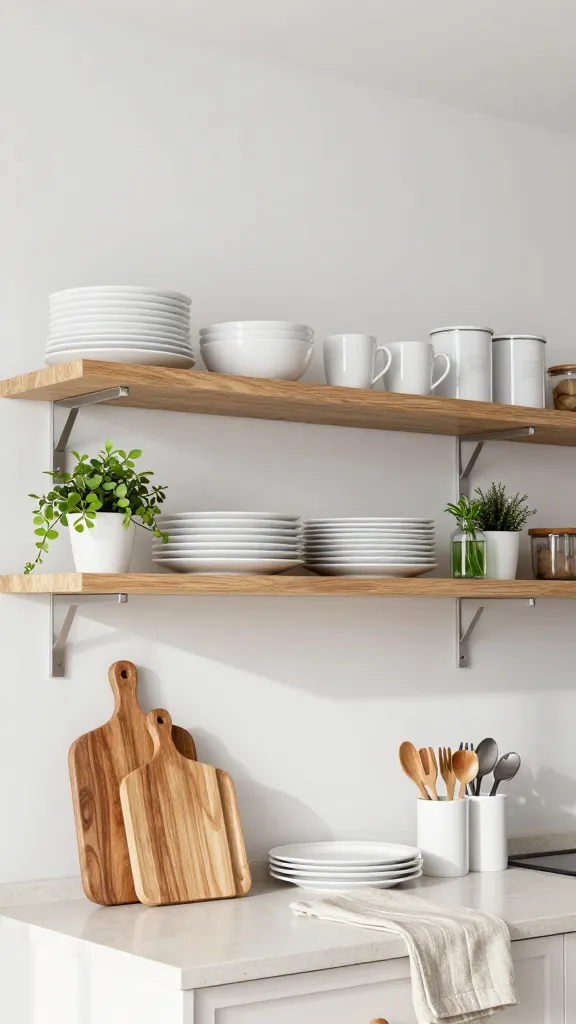
Want your shelves to look pulled together in five minutes flat? Group items by color. A simple palette—think whites, wood tones, and a pop of green—creates a clean, airy vibe that never feels cluttered.
Tips
- Stick to 2–3 dominant colors and repeat them across shelves.
- Use white dishes as your base, then add wood boards and a few green plants.
- Corral small items in matching containers to keep the look seamless.
Color-coordination keeps your brain (and kitchen) chill, especially in tighter spaces or busy households.
2. Mix Materials For Depth (Without Visual Noise)
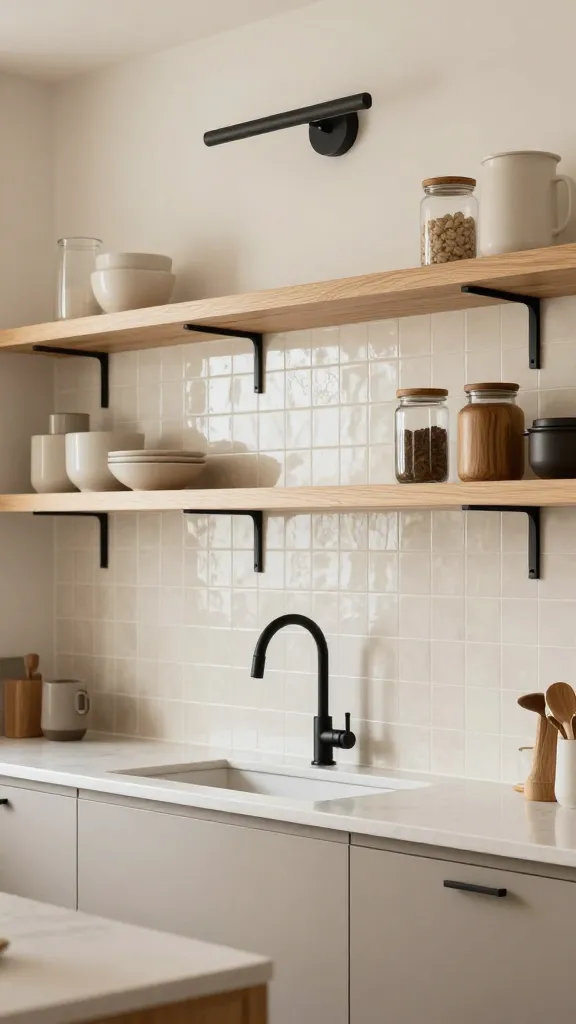
All-wood or all-metal shelves can feel flat. Mix materials—like warm oak shelves with matte black brackets and a glossy tile backsplash—to add texture and dimension. The combo reads custom and cool, not big-box basic.
Key Materials
- Wood shelves: white oak, walnut, or ash
- Brackets: matte black, brass, or powder-coated white
- Backdrops: zellige tile, beadboard, or limewash paint
Keep finishes consistent—match metals across brackets, lighting, and hardware—to make your whole kitchen feel intentionally designed.
3. Use The “Everyday On Display” Rule
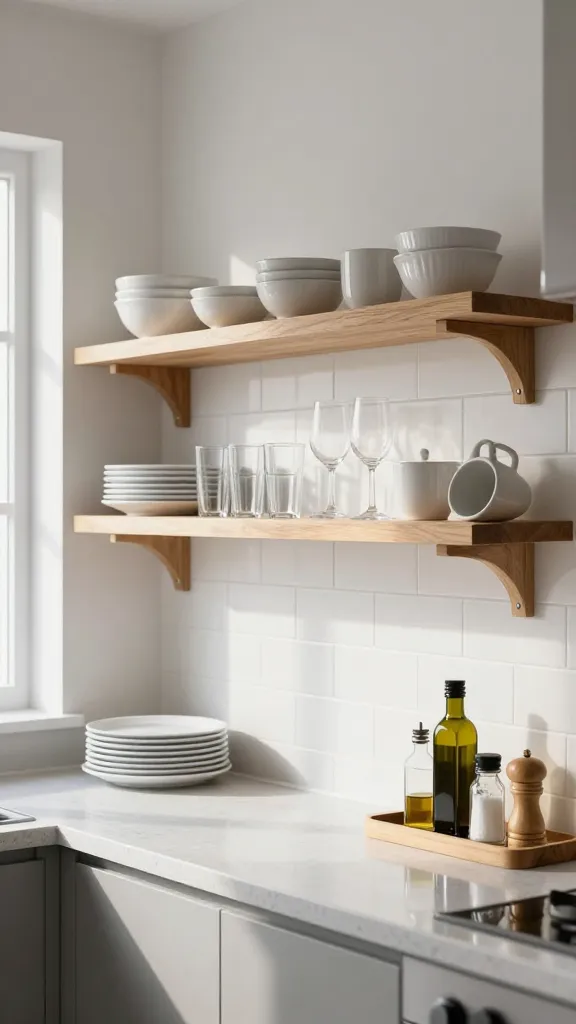
Open shelving shines when it holds the things you reach for daily. Plates, glasses, bowls, and mugs rise to the top. Reserve drawers or closed cabinets for the random gadgets and “why do we own this?” items.
What To Store Up Top
- Stacks of plates and bowls (match or coordinate)
- Everyday glassware: tumblers, wine glasses, mugs
- Frequently used oils, salts, pepper mills in a tray
When you store everyday items up top, shelves stay tidy because they get used and put back often. Less dust, more function—seriously.
4. Create Mini Vignettes, Not Clutter Piles
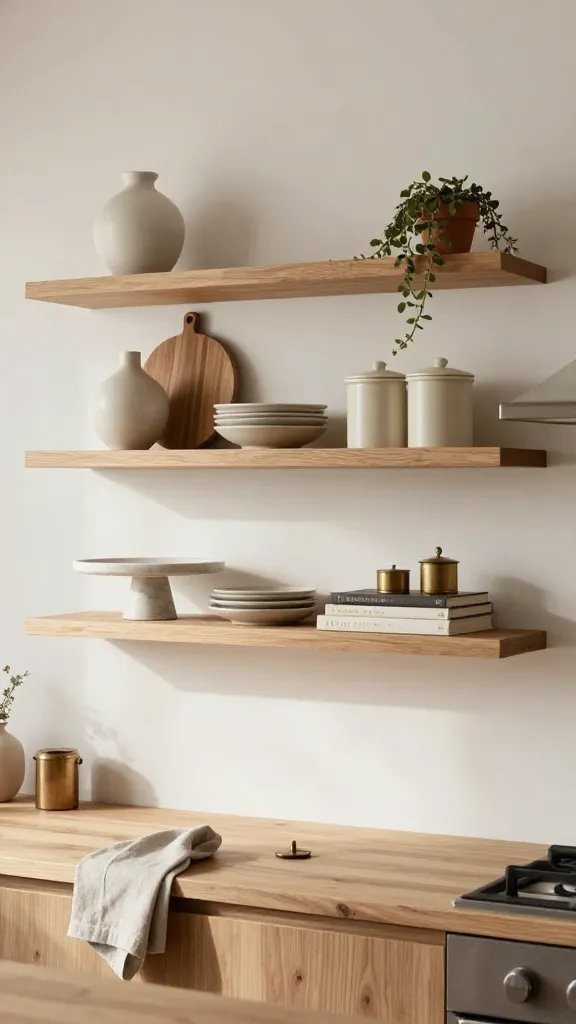
Curate small moments across the shelf instead of lining everything like little soldiers. Think sets of three, varied heights, and a few sculptural pieces to break up the lines. It feels styled—but still practical.
How To Build A Vignette
- Anchor with a larger item: a cutting board, cake stand, or tall vase.
- Layer in medium pieces: stacked bowls, canisters, or cookbooks.
- Add a small accent: a plant, salt cellar, or candle snuffer.
Use negative space on purpose. A little breathing room makes everything look more expensive and easier to access, FYI.
5. Go Big With Statement Brackets Or Go Invisible
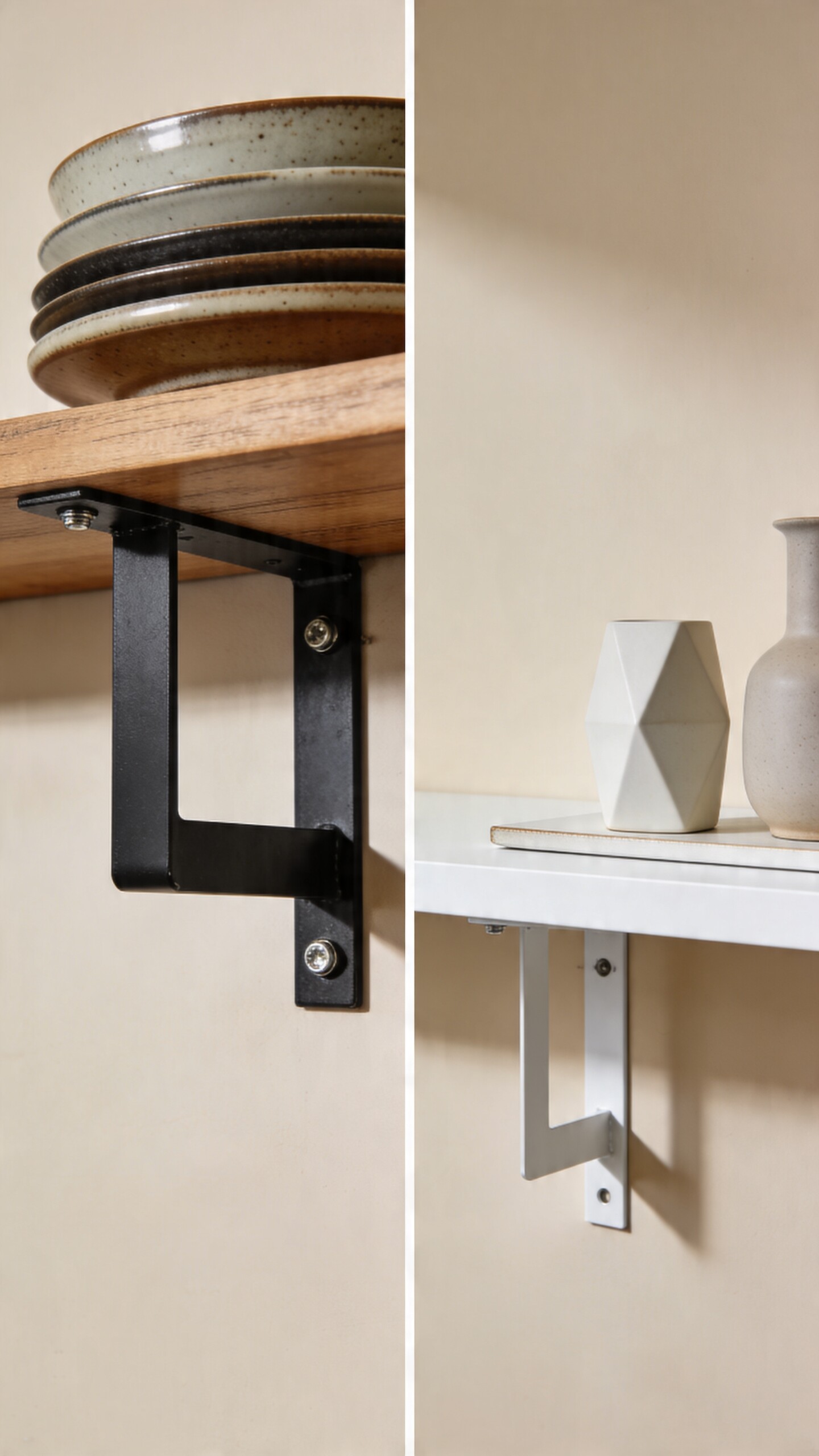
Hardware sets the tone. Bold brackets bring industrial charm, while floating shelves go sleek and minimal. Pick one lane and commit so the shelves don’t look like a last-minute add-on.
Bracket Styles
- Industrial: Black steel L-brackets or pipe brackets
- Modern: Hidden floating mounts for a clean edge
- Classic: Decorative corbels in painted wood
Choose hardware that supports both your style and the shelf weight. Heavy platters? Use serious brackets. Minimal ceramics? Float away.
6. Make It Functional With Zones
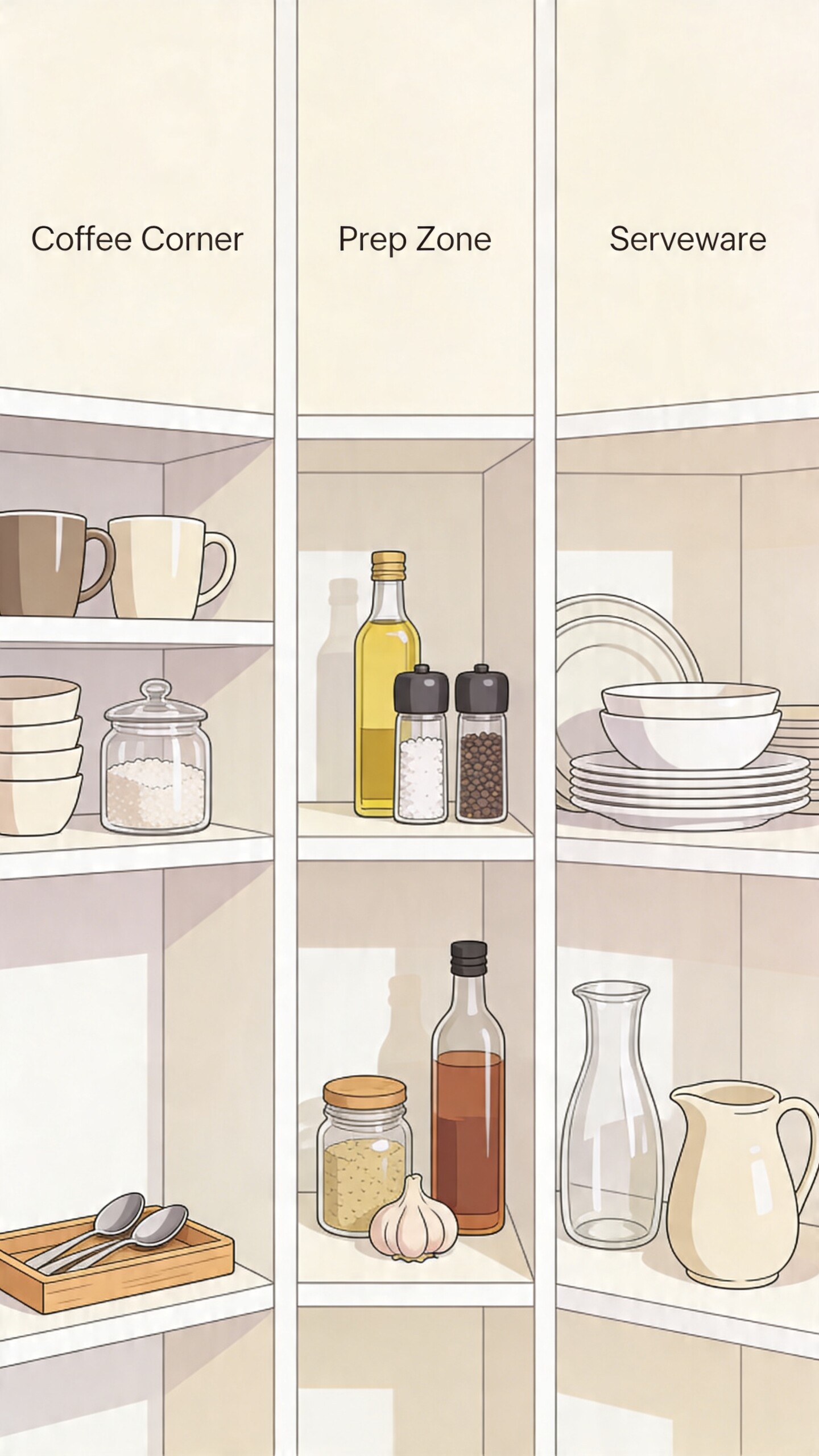
Your shelves will stay beautiful if they actually work with your routine. Create zones—coffee station, baking essentials, everyday dishes—so you don’t rummage through a jumble every morning.
Smart Zones To Try
- Coffee Corner: Mugs, sugar jar, small tray with spoons
- Prep Zone: Oils, salt, pepper, vinegar, garlic jar
- Serveware: Plates, bowls, carafes, pitchers
Label discreetly if you share a kitchen. Zones give structure, which keeps shelves tidy without you playing shelf police, IMO.
7. Layer Art And Greenery For That “Lived-In” Magic
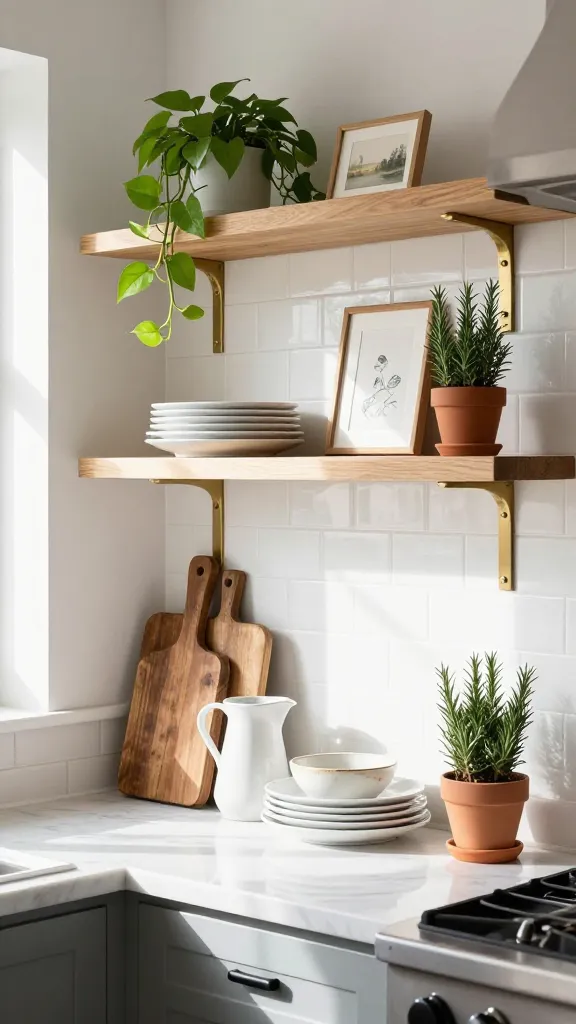
Flat stacks can feel sterile. Add personality with small framed art, leaning cutting boards, and fresh or faux greenery. These soft touches make your kitchen feel collected, not showroom-y.
Easy Add-Ons
- Lean a small landscape or food sketch behind plates.
- Tuck a trailing pothos or rosemary plant for color.
- Use vintage boards and ceramic pitchers for texture.
Art and plants add warmth and movement. Plus, they distract from that one chipped bowl you refuse to part with—trust me, it works.
8. Light It Right So Everything Glows
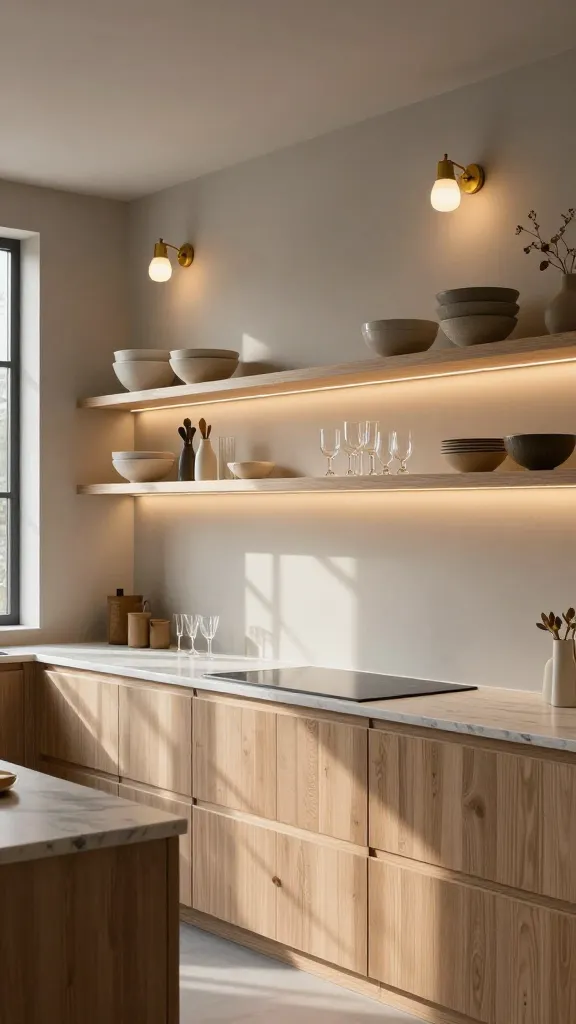
Great lighting turns open shelves into a feature wall. Use sconces, under-shelf LEDs, or toe-kick lighting to highlight textures and make those ceramics sparkle. Bonus: you’ll actually see what you’re grabbing at 6 a.m.
Lighting Ideas
- Mount small sconces above shelves for a warm wash of light.
- Add dimmable LED strips under shelves for task lighting.
- Use warm bulbs (2700–3000K) to flatter natural wood and stone.
Good lighting boosts both mood and function. It’s the secret sauce that makes your shelves look editorial and everyday-friendly.
Ready to ditch the cabinet doors and show off your style? Start small—one shelf, one color palette, one zone—and build from there. With a few smart choices, your open shelving will look curated, practical, and totally you.